Navigation
Install the app
How to install the app on iOS
Follow along with the video below to see how to install our site as a web app on your home screen.
Note: This feature may not be available in some browsers.
More options
Style variation
You are using an out of date browser. It may not display this or other websites correctly.
You should upgrade or use an alternative browser.
You should upgrade or use an alternative browser.
Chinese 6th Generation Aircraft News & Discussions
- Thread starter SiliconBit (silicon0000)
- Start date
More options
Who Replied?


NGAD IS THE BEST
Elite Member


and ai is often exaggerated things and ai in its infancy states and not 100% accurateHaven't I explained above that J-36 is flying wing in "broader sense"? why failed to grasp.
No, the J-36 does not have a conventional nose in the way you might think of the rounded or conical nose on a fighter jet with a distinct fuselage.
For your further self education, this should be objective for you as it is not coming from my mouth:
View attachment 125811
and
View attachment 125810
and
View attachment 125809
Apology I have no choice other than posting answer from AI in order to crack stubbornness.
So the nonsense and crap is your own blabbering without adequate understanding.
Antonius123
Trusted Member

You know what is you talking about, Can i show the Pic of J-36 which has traditionally Stealth optimized nose cone lol
It is not traditional when it is blended with the wing. LOL
The J-36's "nose" is integral to its aerodynamic and stealth-focused blended wing body shape, making it a non-traditional adaptation of that feature
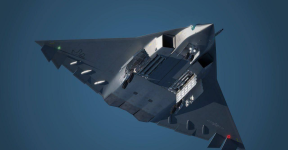
and ai is often exaggerated things and ai in its infancy states and not 100% accurate
LOL. Then why audience has to believe your baseless and empty claim rather than believe in tons of facts including neutral & non subjective AI?

You can challenge the AI by yourself.
Of course it may not be accurate sometimes, but for sure it is OBJECTIVE unlike human mere opinion like yours!
Last edited:
NGAD IS THE BEST
Elite Member
Dude first research flying wings first, The TAILLESS designs are not necessarily means FLYINNG WING or BLENDED WING designs, there were lots of FLYING WING designs which had have vertical tails on them in past for example YB-35/YB-49 of US designs after WW2Actually, the World War II era American P-51 Mustang was not a flying wing design. It was a conventional fighter aircraft with a distinct fuselage, wings, and tail.
Flying wing designs, like the Northrop B-2 Spirit J-36 we were discussing, lack a traditional fuselage and have their crew, payload, and fuel housed within the wing structure. The P-51 Mustang has a clearly defined fuselage that houses the cockpit and engine, with wings extending from it.
Thats why, you need to understand the concept of "flying wing" in the first place.
FLYING WING or BLENDED WING designs can't go SUPERSONIC, J-36 is said be have a TOP SPEED of at least MACH 2.5, at this speed FLYING WING or BLENDED WING designs will be destroyed by AERODYNAMICS FORCES
FLYING WING and BLENDED WING designs only work best at SUBSONIC or low TANSSONIC flight (slightly below the speed of sound) FLYING WING and BLENDED WING designs CAN'T FACES AERODYNAMIC FORCES OF SUPERSONIC FLIGHT
I have question for you, Please answer my question sincerely and honestly, IF CAC DESIGNED WOULD ELIMATE VERTICAL TAILS AND CANARDS FROM J-20 WHAT YOU CALLED THIS MODIFIED J-20? FLYING WING OR TAILLESS DELTA WING?
Antonius123
Trusted Member
Dude first research flying wings first, The TAILLESS designs are not necessarily means FLYINNG WING or BLENDED WING designs, there were lots of FLYING WING designs which had have vertical tails on them in past for example YB-35/YB-49 of US designs after WW2
Again, you dont understand the concept of flying wing in the first place.
Allow me to repeat: "A flying wing is a tailless fixed-wing aircraft that has no definite fuselage, with its crew, payload, fuel, and equipment housed inside the main wing structure. "
So you see ... tailless wing only doesn't qualify yet the flying wing category, if other requirement (no definite fuselage) is not met!
FLYING WING or BLENDED WING designs can't go SUPERSONIC, J-36 is said be have a TOP SPEED of at least MACH 2.5, at this speed FLYING WING or BLENDED WING designs will be destroyed by AERODYNAMICS FORCES
FLYING WING and BLENDED WING designs only work best at SUBSONIC or low TANSSONIC flight (slightly below the speed of sound) FLYING WING and BLENDED WING designs CAN'T FACES AERODYNAMIC FORCES OF SUPERSONIC FLIGHT
You talk nonsense again.
There isn't a fundamental physical law that outright prohibits a flying wing or blended wing design from reaching supersonic speeds. The principles of aerodynamics allow for various shapes to achieve supersonic flight given sufficient thrust and appropriate design.
The main challenge of flying wing to go supersonic is "drag", but it can be overcome.
Several techniques can be employed to minimize drag on a flying wing design:
- Increase Wingspan (High Aspect Ratio): A larger wingspan relative to the chord (high aspect ratio) helps to reduce induced drag, which is created by the wingtip vortices. By spreading the lift over a larger area, the intensity of these vortices is reduced.
- Optimize Wingtip Design: Wingtip devices like winglets or blended wingtips can effectively disrupt wingtip vortices, reducing induced drag and improving lift-to-drag ratio.
- Laminar Flow Control: Designing the wing to maintain a smooth, laminar flow of air over a larger portion of its surface can significantly reduce skin friction drag. This can be achieved through careful airfoil design and very smooth surface finishes.
- Smooth Surface Finish: Minimizing surface imperfections like rivets, seams, and rough paint can reduce skin friction drag. Flush rivets and smooth, carefully applied coatings are important.
- Aerodynamic Shaping (Planform Optimization): The overall shape of the flying wing, including the sweep angle and chord distribution, can be optimized to reduce wave drag, especially at higher speeds, and to manage pressure drag.
- Vortex Generators: In specific areas where flow separation might occur, small vortex generators can be used to re-energize the boundary layer and delay separation, thus reducing drag.
- Gap Seals: Sealing any gaps between control surfaces and the wing can prevent turbulent airflow and reduce drag.
- Leading and Trailing Edge Devices: Carefully designed leading and trailing edge flaps or other high-lift devices can be optimized to reduce drag during different phases of flight, not just takeoff and landing.
- Blended Wing Body Shaping: For blended wing body designs, the smooth integration of the wing and central body helps to reduce interference drag, which occurs where different aircraft components meet.
So the conclusion: Supersonic flight for these designs isn't impossible. It's just that it presents a unique set of complex engineering hurdles that need to be overcome, and the J-36 appears to be a modern example where those hurdles might have been successfully navigated.
That's why I said earlier the J-36 is a remarkable engineering achievement by CAC – achieving supersonic speed with a tailless flying wing design. It means they have overcome controlling stability in high speed + reducing drag, representing a successful integration of solutions to both the stability and drag challenges that are typically associated with such designs at those velocities.
I have question for you, Please answer my question sincerely and honestly, IF CAC DESIGNED WOULD ELIMATE VERTICAL TAILS AND CANARDS FROM J-20 WHAT YOU CALLED THIS MODIFIED J-20? FLYING WING OR TAILLESS DELTA WING?
No!
As I said above, tailless is not a SOLE requirement to meet the criteria for a "Flying Wing" design. So J-20 without tail wont make it become flying wing.
This question of yours and your misunderstanding are unnecessary, as the concept of "flying wing" has been presented several times earlier, the problem is your own failure to grasp it.
Last edited:
NGAD IS THE BEST
Elite Member
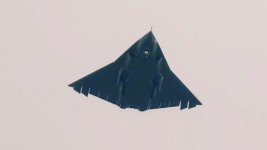
and you talk crap again name one flying that can able to reach supersonic speed and flying wing or blended wing designs have much larger wing span than their lengths such as B-2 has length of just 69 feet but has a wing span of 170 feet, Does J-36 fits in this criteria? Clearly J-36 has shorter wing span then it length hence it is not come in the flying wing or blended wing categoriesYou talk nonsense again.
There isn't a fundamental physical law that outright prohibits a flying wing or blended wing design from reaching supersonic speeds. The principles of aerodynamics allow for various shapes to achieve supersonic flight given sufficient thrust and appropriate design.
The main challenge of flying wing to go supersonic is "drag", but it can be overcome.
Several techniques can be employed to minimize drag on a flying wing design:
The perfect example of flying wing which can speed SUPERSONIC is => J-36! LOL
- Increase Wingspan (High Aspect Ratio): A larger wingspan relative to the chord (high aspect ratio) helps to reduce induced drag, which is created by the wingtip vortices. By spreading the lift over a larger area, the intensity of these vortices is reduced.
- Optimize Wingtip Design: Wingtip devices like winglets or blended wingtips can effectively disrupt wingtip vortices, reducing induced drag and improving lift-to-drag ratio.
- Laminar Flow Control: Designing the wing to maintain a smooth, laminar flow of air over a larger portion of its surface can significantly reduce skin friction drag. This can be achieved through careful airfoil design and very smooth surface finishes.
- Smooth Surface Finish: Minimizing surface imperfections like rivets, seams, and rough paint can reduce skin friction drag. Flush rivets and smooth, carefully applied coatings are important.
- Aerodynamic Shaping (Planform Optimization): The overall shape of the flying wing, including the sweep angle and chord distribution, can be optimized to reduce wave drag, especially at higher speeds, and to manage pressure drag.
- Vortex Generators: In specific areas where flow separation might occur, small vortex generators can be used to re-energize the boundary layer and delay separation, thus reducing drag.
- Gap Seals: Sealing any gaps between control surfaces and the wing can prevent turbulent airflow and reduce drag.
- Leading and Trailing Edge Devices: Carefully designed leading and trailing edge flaps or other high-lift devices can be optimized to reduce drag during different phases of flight, not just takeoff and landing.
- Blended Wing Body Shaping: For blended wing body designs, the smooth integration of the wing and central body helps to reduce interference drag, which occurs where different aircraft components meet.
So the conclusion: Supersonic flight for these designs isn't impossible. It's just that it presents a unique set of complex engineering hurdles that need to be overcome, and the J-36 appears to be a modern example where those hurdles might have been successfully navigated.
see yourself Mr.
B-2
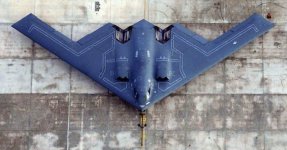
J-36
NGAD IS THE BEST
Elite Member
You're way more stupid than i thought, I'm out of here from your nonsense and crap J-36 has a definitive wing and nose structures, if you're not blind you clearly seen them on various pics and videos lolAgain, you dont understand the concept of flying wing in the first place.
Allow me to repeat: "A flying wing is a tailless fixed-wing aircraft that has no definite fuselage, with its crew, payload, fuel, and equipment housed inside the main wing structure. "
So you see ... tailless wing only doesn't qualify yet the flying wing category, if other requirement (no definite fuselage) is not met!

Yommie
Elite Member
and you talk crap again name one flying that can able to reach supersonic speed and flying wing or blended wing designs have much larger wing span than their lengths such as B-2 has length of just 69 feet but has a wing span of 170 feet, Does J-36 fits in this criteria? Clearly J-36 has shorter wing span then it length hence it is not come in the flying wing or blended wing categories
see yourself Mr.
B-2
View attachment 125871
J-36
View attachment 125873
Apples and oranges. Comparing J-36 with B-2 is like comparing P-47 with B-17.
NGAD IS THE BEST
Elite Member
was I talking to you?Apples and oranges. Comparing J-36 with B-2 is like comparing P-47 with B-17.

iblini
Trusted Member

still better than an old Vietnamese refugee MAGA that suck up to the white.Basically, a 'wing' is anything anyone on PDF who has no aviation experience interpret it to be. Just to suck up to China.

AZADPAKISTAN2009
Elite Member

Well when people are young as in 70's in USA most people believed in certain aspect of Humanity , one identity as humans. Before those views of course vanish gradually every decade
So Greta is no different , in Europe as she has Human Rights being a local citizen she has a concept about world which is based on , good is possible we just have to try to stand up against Evil
However as we know people in USA who were anti war were labelled as "hippies" (a degrading word , in 80's and 90's. Often made fun of in main stream media owned by Rich Moguls ), Greta will also face similar ridicule for going against the "Tide". When she was young people stated oh how "Cute" she has great opinion , and she is bold , but as such people grow older , the "Global" system views them as a threat, and slowly their character assassination commences in media. Or comedian will start making jokes out of them.
However in this case, going to GAZA she and her colleagues are quite young blinded by Youth and and views that they can change the world they don't realize the Evil that is residing in that Land which is on a killing spree in Gaza and West Bank
Sadly many activist in Past have been killed in Israel , their stories are never told on Western Media
- Activist were shot in past in head by snipers
- Driven over by Tanks or heavy vehicles
- Just killed
Alot of time the death of Medics , Doctors or Activist is never discussed even in Congress in USA Or circles in Europe , only recently Europe has shown own opinion against Israel
It would be more appropriate if her boat was escorted with Turkish or Egyptian frigates, or a European Nation frigate also was their to protect the activist
Someone like her if she does not gets killed may become European Union head but as I stated people with such clear views are always a threat against their system in place
Last edited:
NGAD IS THE BEST
Elite Member
I'm comparing Both B-2 and J-36 because your friend @Antonius123 insist his crap that J-36 is flying wing or blended wing design which clearly not true for J-36 all sites is sayingJ-36 is diamond double delta wing designApples and oranges. Comparing J-36 with B-2 is like comparing P-47 with B-17.

gambit
Professional
As long as it has the word 'wing' in the description, the J-36 is a 'flying wing'. Basically, anything can be a 'flying wing'. I often mocked 'Chinese physics' all these yrs, and it looks like nothing changed.I'm comparing Both B-2 and J-36 because your friend @Antonius123 insist his crap that J-36 is flying wing or blended wing design which clearly not true for J-36 all sites is sayingJ-36 is diamond double delta wing design
iblini
Trusted Member
Chinese dumb dumb, Vietnamese superior, happy? No matter the ethnicity, once you are a MAGA, the person will always go to the racial thing, It's pretty amazing.I often mocked 'Chinese physics' all these yrs, and it looks like nothing changed.
Users who are viewing this thread
Total: 5 (members: 0, guests: 5)
Pakistan Defence Latest


Country Watch Latest

Latest Posts
-
 Makkah Defence Alliance: Turkey, Saudi Arabia, and Pakistan, news & updates (36 Viewers)
- Latest: flyingorca
-
-
-

-