Pakistan has a Problem | Quwa Group - My Counter Thoughts

Status
Not open for further replies.
I am sick of the BrahMos Hype . BrahMost isn’t some silver bullet. India fired 40 to 50 of them, and what’s the outcome? A few damaged hangars? Not a single high-value target taken out. Zero.

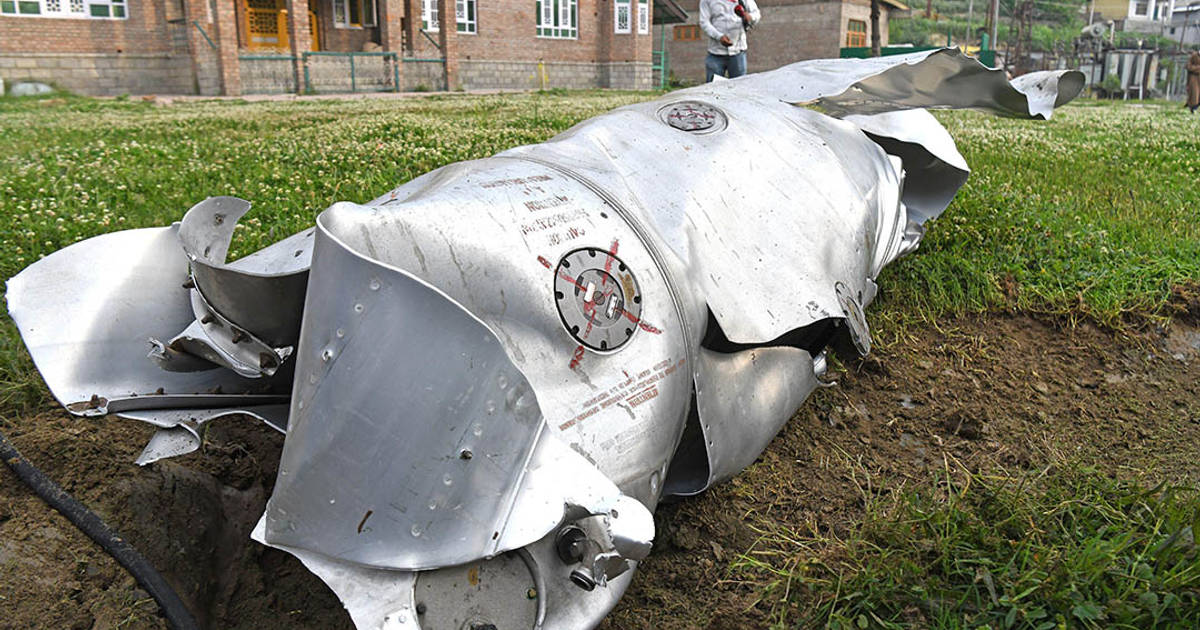
Yeah, it’s fast—but it turns like a 16-wheeler ( cant do effective midcourse correction). And it’s been jammed, spoofed, and even shot down. There are plenty of images showing the wreckage, and even a video of one slamming into an empty field outside Lahore. So let’s not pretend it was some game-changing weapon. The hype doesn’t match the results.

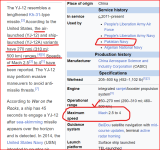
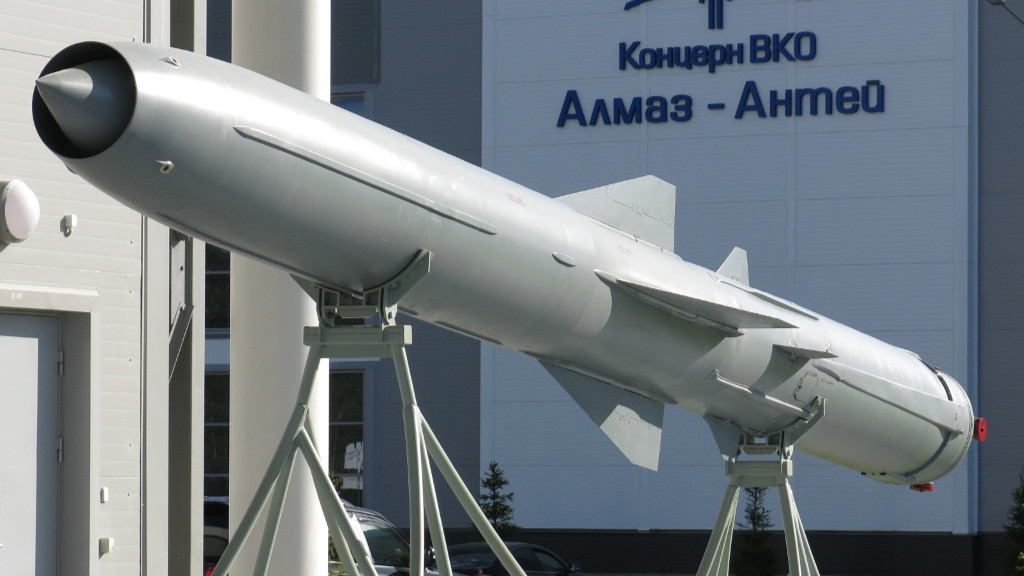
Why would Brahmos be a threat to China. The Chinese already have something far superior than the Brahmos , its called CJ-100 CM (DF-100). Its faster ( Hypersonic) and has a bigger range and better navigation.
View attachment 126201
View attachment 126202
.

The fog of war is gradually dissipating and as more information is released, we will find out the outcome of the operations from both sides. No Air Defence is invincible and no matter how sophisticated it is, due to saturation type strikes things will get through (look at other conflicts such as Ukraine/Russia and even Israel's so called invincible defence systems).

Pakistan has notably done extremely well - don't rely on the predominant western or Indian media (due to Islamophobia and global anti-muslim geopolitics - there is a massive information warfare campaign to dilute the successes of Pakistan or any other Muslim nations). A number of key think tanks have a large number of Indian/Hindu and Zionist authors/analysts and are trying their best to undermine/or dilute achievements of Pakistan etc.

I agree that self introspection is required and any weaknesses addressed but not to the point of exaggerated enemy capabilities. Yes the threat is there - but has many times been dealt with successfully (and this despite Pakistan's economic and political state being extremely weak).

The recent conflict showed that the amount of firepower dropped on Indian occupied Kashmir and mainland India had been so impressive (shock and awe) that within 4-5 hours, they were hit so hard that they quickly went behind backdoor channels to ask for a ceasefire. The Indians can be in self denial like their media - but this was a chance for India to show it's mettle, which it failed. It was nothing more than a big bully being humbled by a smaller power - which is humiliating for them.

Pakistan needs to ensure that the next time, they don't just get a bloody nose but hit them so hard that they will never try to make a 'new norm' acceptable. It'll will be an opportunity to free the Kashmiris in Indian occupied Kashmir from it's brutal suppression (it will also safeguard our waters).

"How often a small group has overcome a large one by Allah’s will. Allah is with the steadfast." (Surah Al-Baqarah, 2:249).

Pakistan as always will address the threats and have a counter capabilities

Pakistan’s Strategic Response to the BrahMos Supersonic Cruise Missile

1. Understanding the Threat

The BrahMos missile, jointly developed by India and Russia, is a supersonic cruise missile capable of speeds up to Mach 3 and precision strikes at ranges exceeding 400 km. Its speed, manoeuvrability, and low-altitude flight profile make it a formidable challenge for any air defence system.

2. Countering the BrahMos:

A Multi-Layered Defence Strategy

A. Early Detection and Tracking

Over-the-Horizon Radars (OTHR):

These provide long-range detection of incoming threats, offering critical reaction time.

Airborne Early Warning and Control Systems (AWACS):

Platforms such as the Saab 2000 Erieye/ZDK03 can detect low-flying cruise missiles and coordinate intercepts with ground-based systems.

B. Integrated Air Defence Systems (IADS)

A layered air defence network is essential:

Short-Range Systems:

LY-80 (HQ-16) for close-in protection.

Medium/Long-Range Systems:

Systems like HQ-9 or FD-2000 can engage high-speed targets at greater distances.

Point Defence Systems:

Rapid-response systems to protect high-value targets.

C. Electronic Warfare (EW)

Jamming and Deception:
platforms can disrupt the missile’s radar seeker or GPS guidance.

Decoys and Chaff:

These can mislead the missile’s targeting system, reducing its effectiveness.

D. Hardening and Mobility

Hardened Shelters:

Reinforced bunkers can protect critical infrastructure.

Mobility:
Keeping strategic assets mobile (e.g., missile launchers, command centres) reduces vulnerability.

E. Diplomatic and Strategic Measures

Arms Control Dialogue: Engaging in regional arms control initiatives to reduce the risk of escalation.

Strategic Alliances:

Strengthening defence ties with countries like China and Turkey for technology access and joint development.

3. Prospects of Indigenous Supersonic Cruise Missile Development

Current Capabilities

Pakistan has a mature missile development programme:

Babur Cruise Missile: Subsonic, land-attack capability.

Ra’ad ALCM: Air-launched, stealthy, and nuclear-capable.

Challenges

Propulsion: Developing ramjet or scramjet engines is technologically demanding.

Guidance Systems:Requires advanced INS, TERCOM, and satellite navigation.

Materials Science: Supersonic speeds generate extreme heat, necessitating specialised materials.

Feasibility

With sustained investment and strategic partnerships, Pakistan could develop a supersonic cruise missile within 1-5 years. Indigenous R&D, supported by institutions like NESCOM and SUPARCO, would be key.

4. Acquiring Supersonic Missiles from Allies

China
- Missile Options:
- CM-302: Supersonic anti-ship missile, comparable to BrahMos.
- YJ-12: Capable of Mach 3+, with a range over 400 km.
- Advantages:
- Strong defence ties.
- Potential for technology transfer or licensed production.
- Limitations:
- Export restrictions due to MTCR norms.
- Possible geopolitical backlash.

Turkey
- Current Status:
- Turkey is developing its own cruise missiles (e.g., Gezgin), though not yet supersonic.
- Advantages:
- Willingness for joint development.
- Growing defence cooperation with Pakistan.
- Limitations:
- Systems may not be export-ready.
- Dependence on NATO-standard components could complicate transfers.

5. Strategic Outlook

Pakistan has several viable paths to counter the BrahMos missile threat. A combination of layered air defence, electronic warfare, and strategic partnerships will be essential in the short term. In the longer term, developing indigenous supersonic cruise missile capability—potentially with support from China or Turkey—would significantly enhance Pakistan’s deterrence and strategic autonomy.

Pakistan does need to enhance its own R&D and find cost effective countermeasures to address this threat - which it does have the ability to successfully carry this out.
 
I didn't hear anything new or insightful that is not discussed here a hundred times already. We have known about the BrahMos since 2016 and everybody is walking around with their pants down as if this came out of the blue.
The issue is that we were confident we could intercept the Brahmos and Scalps and take em down.

Evidently, we could neither detect nor track nor were able to intercept.
 
Ratio is 70:30
But the issue isn’t the interceptions that work
Its the “good enough”
Lets say the 70:30 remains - that means 7 intercepted to 3 hits if ten launched.


But increasing the launch numbers means many more get through.

3 Brahmos caused “minor but tangible damage”
What happens when its 30?
What happens when its 60 or 90?
Is the ratio including both hard and soft kills or only hard kills? IMO the biggest thing being overlooked here is the capability of conducting soft kills. If we were able to soft kill Brahmos or at least increase their CEP via EW, then I think dedicating more resources to finding an electronic solution to the Brahmos threat is a more viable approach then spending resources on developing a hard kill system. Ideally, we would pursue both but given our resources and lack of industrial capability I don't see it happening.
 
Babur is subsonic.

BrahMos travels at Mach 3.
Theres a lot more that goes into planning a CM strike. India like NATO used its space based ISR to plot a zig zag for its Scalps (which are subsonic) avoiding all known AD's along the way and arrive over target completely undetected no?

Time n again NATO punks Russian AD with very careful planning.

Oh bhai for the love of god that $5000 Shahid S-136 has that AI/ GPS brick installed for it to mimic a CM like storm shadow no? Why is Russia using them if they are bukvaas?

A lot of people here don't know what they're saying.

Observe the wars in Ukraine and ME to learn. They've been doing it far longer than us.

Now I want Bilal bhai @Quwa to do a detailed analysis on the evident failure of our A-100/200 heavy guided artillery rockets failure and counter by indian AD.

We need to know why this happened and what lessons to take away from this.
 
If a ceasefire had occurred on May 7th, it could have been seen as a win for Pakistan, as Pakistani air defense had managed to shoot down Indian jets, while India was targeting irregular militias. However, by May 9th and 10th, India had clearly turned the tide by striking Pakistani airbases and radar installations across the entire length and breadth of the country—achieving these objectives without losing a single fighter jet, thereby emerging as the clear winner.

1. Pakistani air defense didn’t down Indian jets. Pakistani fighter jets did.

2. India grounded its Air Force and relied on ground fired munitions, both drones and missiles.

Get the basic facts right if you are going to spin.
 
Excellent summing up here by RUSI

Most of us on this forum use Western sources as their primary means of information, analysis and validation. However, we often fail to realise that such sources are rarely, if ever, uninterested neutral parties. Also, those of us that actually live in the West will try to adopt and then adapt to Western narratives. Justin Bronk is just another analyst who has written something rather anodyne, just to stay relevant. IAF tactics and crew were undoubtedly not up to scratch. But what has also failed a thorough investigation by the PAF is the much vaunted Spectra suite of the Rafale which was supposed to defeat all known threats. It is disingenuous of Justin Bronk to now raise the question of whether Spectra's software suite was "updated". We know it wasn't because the result is there to see. However, such lacunae aren't in its marketing material. The PL-15 was used for the first time in combat so its electronic signature was unknown. I imagine the Americans, the French and the Indians are now carefully studying the missiles they found. Also, for the few seconds that the PL-15's active seeker was engaged, I assume that their ELINT platforms would have recorded the signal to study for the future. It may be less effective next time around.

What happened on the night of May 6-7 is revolutionary. This is the first time the world has witnessed an entirely network driven BVR air battle. If an Air Force decides to ground its aircraft for two days in the midst of war... after having initiated this war; there can be little question as to whether or not it suffered a catastrophic defeat. How many aircraft were or weren't shot down is quite secondary given the enormity of this admission.

My 2 cents:

1. The PAF was trained by the USAF and works on US style combat strategy and tactics. However, the Electronic Warfare intensity is not something that the US shares with any ally. The battle tactics that AVM Aurangzeb shared in his briefing sound a lot like the Area Denial strategy of the PLAAF. It is likely that both the tactics and the EW weapons suite have been developed in cooperation with the Chinese.

2. The Brahmos is an excellent missile. In any war, X% of those can be expected to strike Pakistan. Some percentage of these and others can be expected to strike Pakistan even once HQ-19 and possibly, microwave and other weapons are employed. It's the nature of war. I look forward to reading Bilal and Arsalan's posts but I think they're missing the point a little bit in their podcasts.

3. India is a major non-NATO ally of the West. A couple of years ago, a senior officer in NATO Air Defence Command inadvertently told me over dinner that "We can see Indian airspace (in NATO Air Defence Command in Europe)". I immediately asked if Indian radars are networked with those of NATO? At which point, he said he didn't realise he had said too much already. If this was true, then here's the significance of this... the air battle of 6-7th May would have been observed in real time by India's NATO allies. They saw what happened, but they aren't saying and won't say.

Pakistan isn't just facing India, but also its Western allies and Israel. And Pakistan is backed by China and Türkiye. Something changed last month. It will take time to see what and how.

#Deino, I'd welcome your comments, even if they are to negate mine. I enjoy reading them. Thank you.
 
I am very sure the lessons have been taken by the people who matter.

We didn't learn or prepare in 2016 when India got their BrahMos.
Let's hope this time's better.

The issue is that we were confident we could intercept the Brahmos and Scalps and take em down.

Evidently, we could neither detect nor track nor were able to intercept.

As I have mentioned before, we have known about BrahMos since 2016 but we were woefully unprepared. And the worst part is that India used their ancient stock of BrahMos this time. Their newer variants are even more lethal.

Everybody is patting themselves on the back on the Rafale kills, and that's fair enough, but we should be spending just as much effort on countering their BrahMos because we know they have thousands and will use them in huge numbers next time.
 
The only solution is to adopt a offensive posture, target brahmos factories and storage facilities, adoption of cost effective but stealthy solutions like the Rasoob which can be produced in mass and can be launched by just about anything. They will only learn not to pull this is shit every 5 years after they get a taste of their "new normal"
 
How many Brahamos and how many are made every year, whats the solution
1749336621226.png
Chinese JY-12 missile. Pakistan needs to get them in numbers. And these must be knitted with very aggressive doctrine in case India decided to use Brahmos or other SSMs against Pakistani air bases. Brahmos is a challenge but it is not without solution. Such missiles are near impossible to stop/intercept so answer is not to invest too much in ADS but get a weapon that enemy must keep in mind he will be facing in retaliatory Pakistani strike. We don't need shield as much as we need bigger and sharper sword!!
 
Most of us on this forum use Western sources as their primary means of information, analysis and validation. However, we often fail to realise that such sources are rarely, if ever, uninterested neutral parties. Also, those of us that actually live in the West will try to adopt and then adapt to Western narratives. Justin Bronk is just another analyst who has written something rather anodyne, just to stay relevant. IAF tactics and crew were undoubtedly not up to scratch. But what has also failed a thorough investigation by the PAF is the much vaunted Spectra suite of the Rafale which was supposed to defeat all known threats. It is disingenuous of Justin Bronk to now raise the question of whether Spectra's software suite was "updated". We know it wasn't because the result is there to see. However, such lacunae aren't in its marketing material. The PL-15 was used for the first time in combat so its electronic signature was unknown. I imagine the Americans, the French and the Indians are now carefully studying the missiles they found. Also, for the few seconds that the PL-15's active seeker was engaged, I assume that their ELINT platforms would have recorded the signal to study for the future. It may be less effective next time around.

What happened on the night of May 6-7 is revolutionary. This is the first time the world has witnessed an entirely network driven BVR air battle. If an Air Force decides to ground its aircraft for two days in the midst of war... after having initiated this war; there can be little question as to whether or not it suffered a catastrophic defeat. How many aircraft were or weren't shot down is quite secondary given the enormity of this admission.

My 2 cents:

1. The PAF was trained by the USAF and works on US style combat strategy and tactics. However, the Electronic Warfare intensity is not something that the US shares with any ally. The battle tactics that AVM Aurangzeb shared in his briefing sound a lot like the Area Denial strategy of the PLAAF. It is likely that both the tactics and the EW weapons suite have been developed in cooperation with the Chinese.

2. The Brahmos is an excellent missile. In any war, X% of those can be expected to strike Pakistan. Some percentage of these and others can be expected to strike Pakistan even once HQ-19 and possibly, microwave and other weapons are employed. It's the nature of war. I look forward to reading Bilal and Arsalan's posts but I think they're missing the point a little bit in their podcasts.

3. India is a major non-NATO ally of the West. A couple of years ago, a senior officer in NATO Air Defence Command inadvertently told me over dinner that "We can see Indian airspace (in NATO Air Defence Command in Europe)". I immediately asked if Indian radars are networked with those of NATO? At which point, he said he didn't realise he had said too much already. If this was true, then here's the significance of this... the air battle of 6-7th May would have been observed in real time by India's NATO allies. They saw what happened, but they aren't saying and won't say.

Pakistan isn't just facing India, but also its Western allies and Israel. And Pakistan is backed by China and Türkiye. Something changed last month. It will take time to see what and how.

#Deino, I'd welcome your comments, even if they are to negate mine. I enjoy reading them. Thank you.
Balanced and well written post, agree. Justin does seem like he's trying to scurry to save the marketing side of the 'SPECTRA' — it's almost certain it was given the latest updates for India and it wasn't mythical to begin with, there's no reason to believe France somehow developed a significantly superior EW suite for fighters that others like the US, China, EU for some reason can't match. It seemed like an exaggerated marketing gimmick, not to say the Rafale isn't a good aircraft, but it isn't a magical wonder weapon either.

And yes the BrahMos is a lethal weapon that shouldn't be underestimated, similarly we shouldn't underestimate the importance of building our own conventional missile arsenal like we have in the past.
 
Theres a lot more that goes into planning a CM strike. India like NATO used its space based ISR to plot a zig zag for its Scalps (which are subsonic) avoiding all known AD's along the way and arrive over target completely undetected no?

Time n again NATO punks Russian AD with very careful planning.

Oh bhai for the love of god that $5000 Shahid S-136 has that AI/ GPS brick installed for it to mimic a CM like storm shadow no? Why is Russia using them if they are bukvaas?

A lot of people here don't know what they're saying.

Observe the wars in Ukraine and ME to learn. They've been doing it far longer than us.

Now I want Bilal bhai @Quwa to do a detailed analysis on the evident failure of our A-100/200 heavy guided artillery rockets failure and counter by indian AD.

We need to know why this happened and what lessons to take away from this.
The SCALPs were used mostly against lower priority targets closer to the border though I agree. Many of them were intercepted too.

BrahMos was the main lethal one, but the overall saturation alongside it & planning was a big part.
 
We didn't learn or prepare in 2016 when India got their BrahMos.
Let's hope this time's better.


As I have mentioned before, we have known about BrahMos since 2016 but we were woefully unprepared. And the worst part is that India used their ancient stock of BrahMos this time. Their newer variants are even more lethal.

Everybody is patting themselves on the back on the Rafale kills, and that's fair enough, but we should be spending just as much effort on countering their BrahMos because we know they have thousands and will use them in huge numbers next time.
Bhai dis is very fukked up no? Ye ukraine jang and Irani turani vs AL-Yahuday jang, and we didn't learn jack shit?

This is incompetence pure n simple. And completely unacceptable performance no?

I sounded the alarm a month ago when these migrant here were in desperation mode. I left in disgust!

:mad:

Why don't we get Irani help now? on da cheap?

Ye do rupay k Chinese hathyaar to kaam ne kartay na?

Evidently no?

WTF?

Do jahaz giranay per saari gareeb awaam de jashan? aur utthay theys attacked our 11 AFB's and what not? And worse yet blocked our retaliation?

Evidence is crystal now no?......can't obfuscate no more.

We need new leadership cuz dis one is fukkin compromised.
 
We didn't learn or prepare in 2016 when India got their BrahMos.
Let's hope this time's better.

Sir, even now we did manage to intercept about half of them. What i know for sure is, Rafiqui had 4 missiles on its way. Somehow none could manage to hit. How do you think it happened without at least some prior homework? But as we know, the real problem is that they can mass produce it in large numbers.

With the so many aspects of warfare, that is ever evolving, requiring attention and with the limited economic resources available. You can't find 100% foolproof solutions to every problem. However, it will now definitely get more attention than before from the people who make decisions.

I believe, couple of cruise missiles from our side in the early hours of 10th could really stop the barrage of brahMos that kept on coming throughout the day right up till the last hour of conflict by establishing the counter detterence. Unfortunately, however, we chose to hold back.
 
Last edited:
@Quwa

so naturally, we shot this episode before the HQ-19 announcement- but the ukrainians belive a ABM system would probably do a better job at intercepting P800's than other sams in their inventory.


quite interesting, but also quite sad we didnt learn from their exp
 
Status
Not open for further replies.

Users who are viewing this thread

Back
Top