Iran’s Natanz enrichment plant destroyed: IAEA chief
Israel targets Iran's nukes, missiles, and commanders in bid to halt bomb program; experts say delay may be temporary
AGENCIES
June 14, 2025
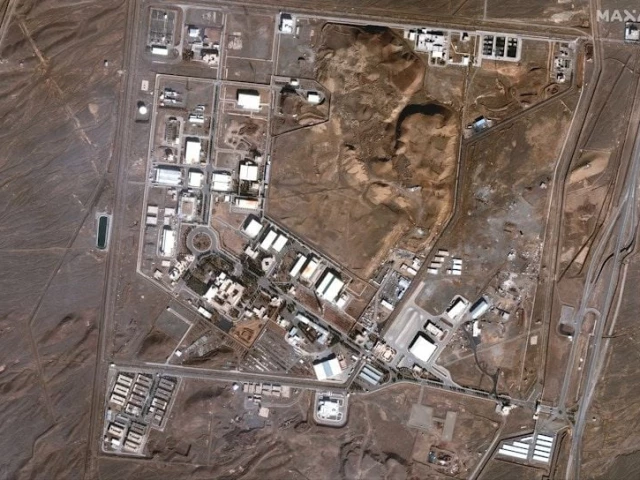
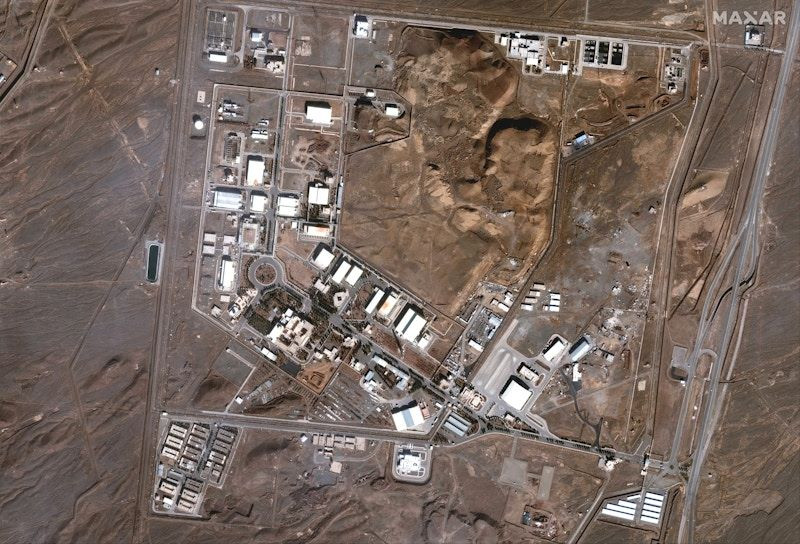
A satellite file image shows the Natanz nuclear facility in Iran in this handout image dated January 24, 2025. PHOTO: REUTERS
The above-ground pilot enrichment plant at Iran's Natanz nuclear site has been destroyed, UN nuclear watchdog chief Rafael Grossi told the Security Council on Friday.
"At present, the Iranian authorities are informing us of attacks on two other facilities, namely the Fordow fuel enrichment plant and at Isfahan," the International Atomic Energy Agency's Rafael Grossi Grossi told the 15-member council.
With the violence raising questions on whether a sixth round of talks planned between the US and Iran would go ahead on Sunday in Oman, Trump said Washington was "hoping to get back to the negotiating table".
Confirming Natanz had been among Israel's targets, the International Atomic Energy Agency (IAEA) said radiation levels outside the site "remained unchanged".
"Most of the damage is on the surface level," said the Atomic Energy Organisation of Iran's spokesman Behrouz Kamalvandi.
Fawaz Gerges, a professor of international relations at the London School of Economics, said: "I think Israel has declared all-out war against Iran."
The United States and other Western governments have repeatedly accused Iran of seeking a nuclear weapon, an ambition it has consistently denied.
Israel again called for global action after the IAEA accused Iran on Thursday of non-compliance with its obligations. The agency later said it would hold an extraordinary meeting of its board of governors in the coming days.
Iran currently enriches uranium to 60 percent, far above the 3.67-percent limit set by a largely moribund 2015 agreement with major powers, but still short of the 90 percent threshold needed for a nuclear warhead.
The damage to Iran's nuclear facilities from Israel's initial wave of air strikes early on Friday appeared to be limited, experts who have reviewed commercially available satellite imagery said. Israel's attacks succeeded in killing Iranian military leaders and nuclear scientists and in striking military command and control facilities and air defenses, but satellite imagery did not yet show significant damage to nuclear infrastructure, several experts said.
"The first day was aimed at things that you would get through surprise - killing leadership, going after nuclear scientists, air defense systems, the ability to retaliate," said nuclear expert David Albright at the Institute for Science and International Security.
"We can't see any visible damage at Fordow or Isfahan. There was damage at Natanz," said Albright, referring to Iranian nuclear sites. But "there's no evidence that the underground site was destroyed."
The sprawling Natanz nuclear complex is Iran's main uranium enrichment facility. It has both an underground enrichment plant and an above-ground operation. Two regional sources said at least 20 Iranian military commanders were killed in the attack, a stunning decapitation reminiscent of Israeli attacks that swiftly wiped out the leadership of Lebanon's once-feared Hezbollah militia last year.
Iran also said six of its top nuclear scientists were killed. Albright said his analysis was based on the latest available images from about 11:20 a.m. Tehran time (0750 GMT). He added
there may also have been drone strikes on tunnels to underground centrifuge plants and cyber attacks that did not leave visible traces.
"In terms of visible damage, we don't see much and we'll see what happens tonight," he said, adding that he believes Israel's strikes were still in an early stage.
Albright said the status of Iran's stocks of enriched uranium was not known and that it was possible Israel had avoided major attacks on nuclear sites due to concerns about harming international inspectors who were there.
Israel targets Iran's nukes, missiles, and commanders in bid to halt bomb program; experts say delay may be temporary

tribune.com.pk