Chinese Economy: General News, Updates and Discussions


CIPS signs direct participant agreements with six foreign institutions, facilitating use of yuan in cross-border transactions

By Global TimesPublished: Jun 18, 2025 11:42 PM
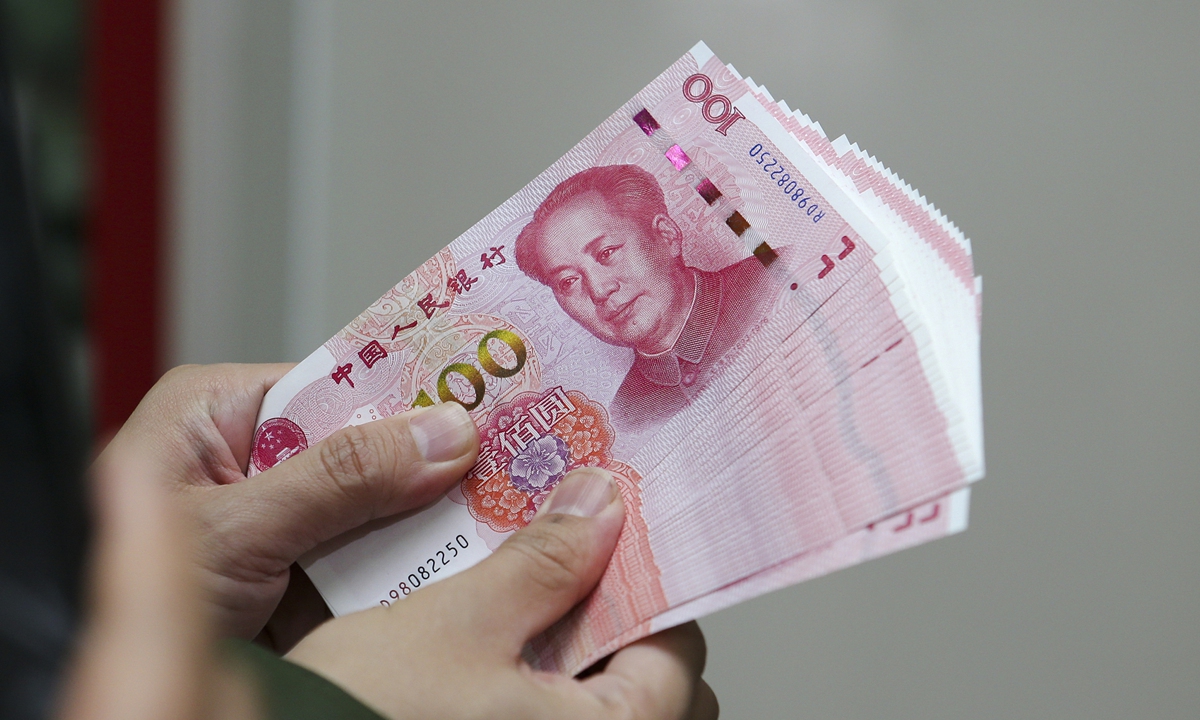
  • Chinese yuan Photo:VCG

    Chinese yuan Photo:VCG


    China's Cross-Border Interbank Payment System (CIPS) signed direct participant agreements with six foreign institutions in Shanghai on Wednesday, marking the first time that the system's overseas foreign direct participant coverage extends to offshore yuan centers in Africa, the Middle East, Central Asia, and Singapore, which will facilitate the use of the yuan in cross-border transactions, China Media Group reported.

    Standard Bank, the African Export-Import Bank, First Abu Dhabi Bank, Kyrgyzstan's Eldik Bank, and United Overseas Bank became direct participants. The CIPS also conducted an onboarding ceremony for direct participation with Bangkok Bank on Wednesday.

    China has been consistently advancing the internationalization of the yuan, with cross-border trade payments serving as the primary channel this year, but the proportion of cross-border usage in investment financing and other financial transactions remains relatively low, said Xi Junyang, a professor at the Shanghai University of Finance and Economics, stressing the importance of promoting the cross-border use of the yuan in investment financing and financial transactions.

    Various measures, including signing direct participant agreements, will continue to facilitate cross-border trade payments and provide crucial institutional and technical support for cross-border yuan investment financing and transactions with elevated efficiency, Xi told the Global Times on Wednesday.

    The CIPS is the primary channel for cross-border yuan payments and clearing. As of the end of May, the CIPS system had 174 direct participants that can directly access the system to conduct business, along with 1,509 indirect participants that conduct business through direct participants. Its operations cover more than 4,900 corporate banking institutions across 187 countries and regions worldwide, according to a report by financial news portal stcn.com on Wednesday.

    In April, China's central bank proposed measures to enhance cross-border financial services in the Shanghai International Financial Center. These include improving the functionality and global network reach of the CIPS, encouraging more banks to join the CIPS and expand its network scope, and strengthening its infrastructure.

    In late May, the CIPS and the central bank of the United Arab Emirates signed a memorandum of understanding to enhance cross-border payment cooperation. The two sides will work together to develop a cross-border payment connectivity program, which will provide local currency clearing services for financial institutions in the Middle East and North Africa, the Xinhua News Agency reported.

    The implementation of these policies will substantially elevate the financial characteristics and attributes of the yuan's cross-border usage, while making its internationalization more comprehensive in functionality and broader in its scope of application, Xi said.
 
The “inefficient” way China has invested in economic development maximized economic in a relativistic manner and minimized inequality.

Not a bad model.

To view this content we will need your consent to set third party cookies.
For more detailed information, see our cookies page.
 

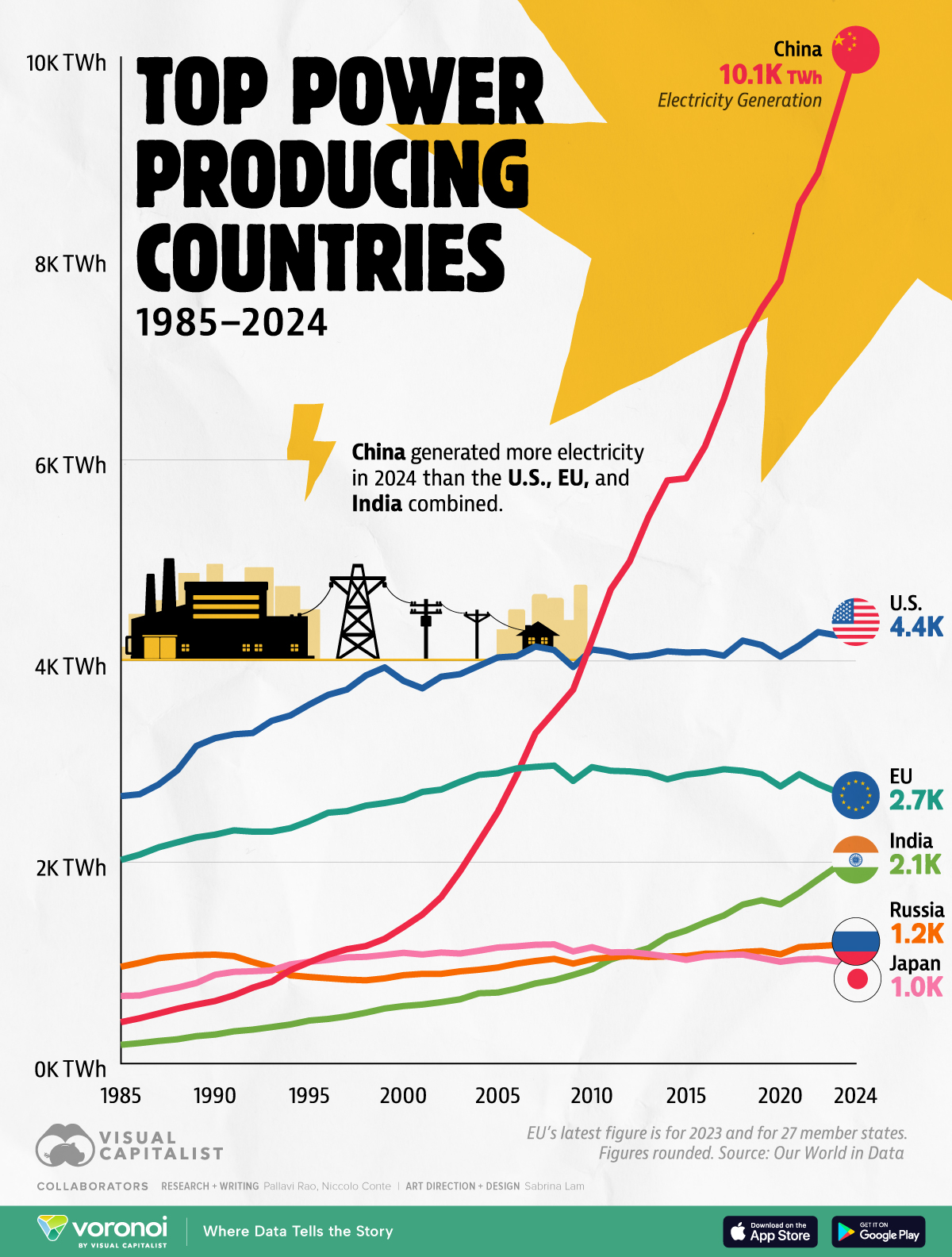
Ranked: Top Countries by Annual Electricity Production (1985–2024)​

China generated over 10,000 TWh of electricity in 2024.
For context, that’s more than the combined output of the U.S., EU, and India—the next three biggest producers.

Top-Power-Producing-Countries-1985%E2%80%932024_website_Jun4.jpg
 

Elon Musk makes this Big Claim about China: ‘Most people don’t realize how much how much solar power China has installed'​

Updated: May 10, 2025, 09:12 IST

Elon Musk recently shared a Twitter (now X)post pointing out the scale of China’s investment in solar energy. In the post, he said that most people do not realize how much solar power China has installed, adding that it is enough to power half of the United States. Musk was responding to a post by X user Jesse Peltan who wrote”If China's 888 GW of installed solar operated at U.S.

Capacity factors, it would generate 44% of U.S. electricity.We have a massive irradiance advantage, especially compared to Southeastern China.The U.S. should dominate in solar, but we are getting absolutely smoked.

Even with poorer solar resources, China generates 3x as much electricity from solar. China's solar generation now exceeds U.S. nuclear.(and exceeds Chinese nuclear by a factor of 2)Replying to the post, the Tesla CEO wroteMost people don’t realize how much solar power China has installed.Enough to power half of America!

Even with poorer solar resources, China generates 3x as much electricity from solar. China's solar generation now exceeds U.S. nuclear.(and exceeds Chinese nuclear by a factor of 2)Replying to the post, the Tesla CEO wroteMost people don’t realize how much solar power China has installed.Enough to power half of America!

To view this content we will need your consent to set third party cookies.
For more detailed information, see our cookies page.


Elon Musk emphasizes on solar energy Elon Musk, who leads companies like Tesla and SpaceX, has long supported the use of renewable energy sources like solar power. In another post, he wrote “China is deploying vast amounts of solar power” quoting Peltan's data that China has installed 278 GW of solar capacity in 2024.

To view this content we will need your consent to set third party cookies.
For more detailed information, see our cookies page.


“Solar will obviously be over a billion times more energy than everything else combined,” he wrote in an X post.

To view this content we will need your consent to set third party cookies.
For more detailed information, see our cookies page.


China hits 1 TW solar milestone

China’s solar power capacity has surpassed 1 TW, marking a historic milestone as the country accelerates its energy transition. Around 92 GW of new PV systems were installed in China in May alone, but analysts warn the pace may slow in the second half of the year.
JUNE 23, 2025 VINCENT SHAW
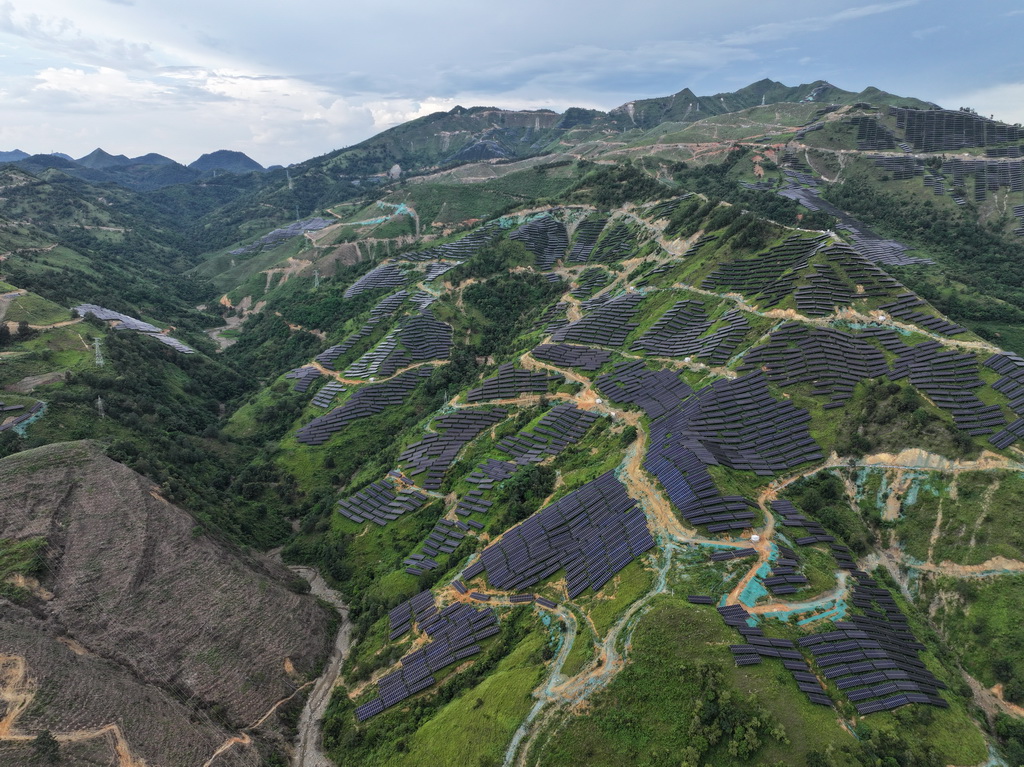
TrinaSolar-supported-agrivoltaics-power-plant-on-the-plateau-of-Guizhou-province-S.jpg

Image: Trina Solar

China’s cumulative installed solar capacity has surpassed 1 TW, according to the National Energy Administration (NEA). By the end of May 2025, solar capacity had reached 1.08 TW (1,080 GW), up 56.9% year on year.

NEA data show total power generation capacity stood at 3.61 TW at the end of May, an 18.8% increase from a year earlier. Solar was the fastest-growing segment, driven by record installations in the first five months of 2025.

From January to May, new solar installations totaled 197.85 GW, up 388.03% from the same period last year. In May alone, China added 92.92 GW of new capacity, a 105.48% increase from April and the highest monthly figure on record.

Analysts attribute the surge to favorable government policies, including support for distributed solar and mechanisms allowing renewable energy to participate in electricity market trading. These measures triggered a rush to complete installations ahead of expected policy changes in the second half of the year.

China reached its first 1 GW of installed solar in 2010 under the Golden Sun Program, which launched the country’s distributed solar segment. After trade tensions with the United States and Europe in 2011–12, Beijing shifted toward domestic support, spurring utility-scale projects in the northwest and pushing cumulative capacity to 10 GW by mid-2013.

The top-runner program later boosted deployment by promoting technological innovation and efficiency. By June 2017, total installed capacity exceeded 100 GW – a tenfold increase in four years. Eight years later, China has reached 1 TW of installed solar –an unmatched global milestone.

However, analysts warn that demand could slow in the second half of 2025 as the policy-driven surge eases. Several market research firms have issued cautious forecasts, citing a likely drop in installation momentum.
 

“Just staggering:” China installs 100 solar panels a second as total PV capacity tops 1 terawatt

Joshua S Hill
25 June 2025 1:53 PM
China solar wind mountain small iStock-2168100467


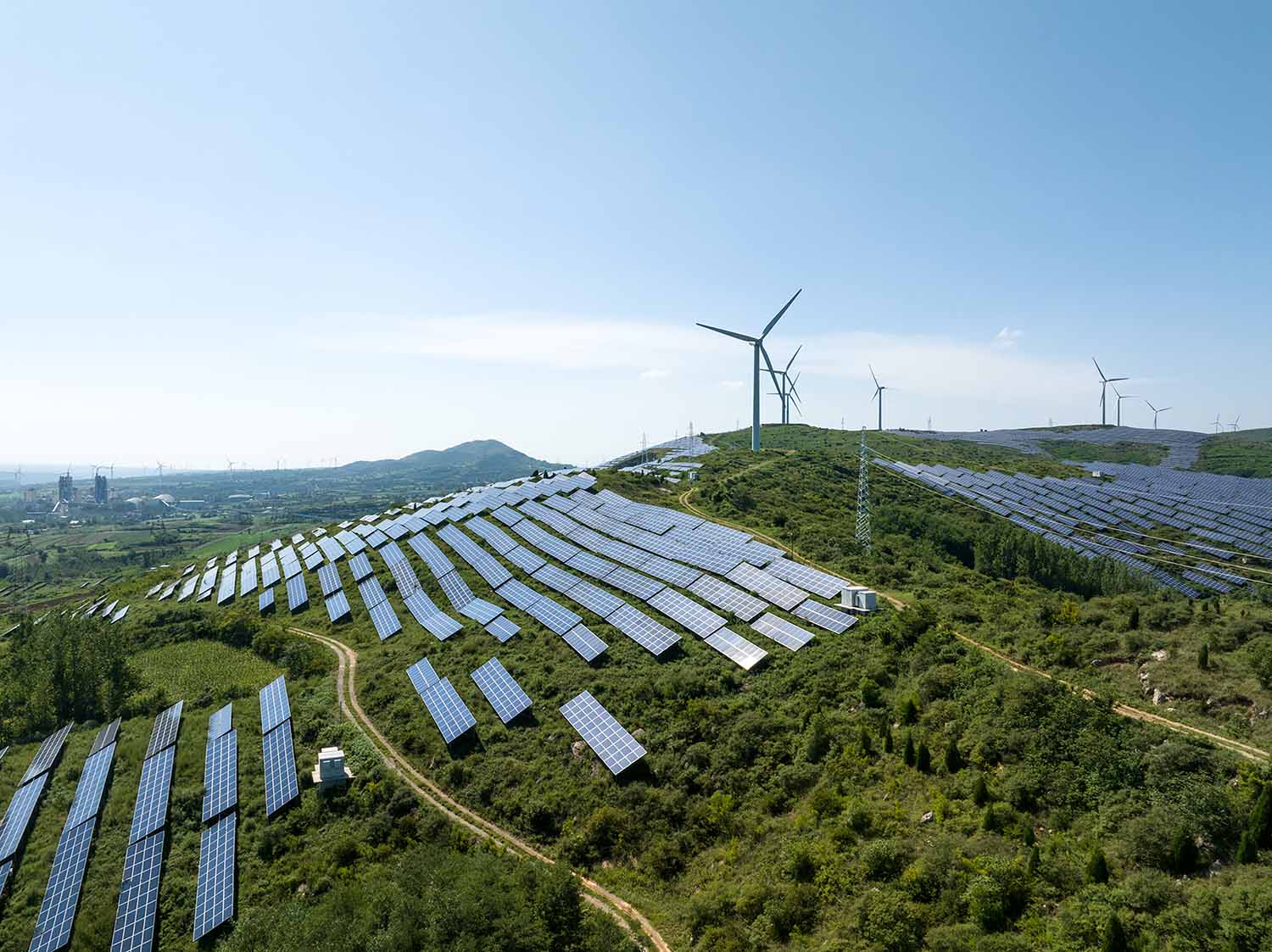
China’s cumulative solar capacity has surpassed one terawatt (1TW), after the addition of a 198 gigawatts (GW) of new PV capacity so far this year, including a “staggering” 93 GW in May alone.

The new milestone was published by China’s National Energy Administration (NEA) in an update on the country’s power industry statistics for the first five months of the year.

The NEA confirmed that installed solar capacity at the end of May stood at 1.08 TW, with growth driven in part by a rush to connect projects to the grid before new energy market rules come into play, as well as China’s general “bigger is better” approach to everything.

The terawatt milestone for solar will have been broken some time in May, a month which saw over 92GW worth of new solar capacity come online.

To put that into perspective, Lauri Myllyvirta, a senior fellow at the Asia Society Policy Institute, explained on his LinkedIn account that the solar capacity installed in May worked out to around 230 million solar panels – “almost 100 solar panels every second.”

The first five months of 2025 have also been a strong one for China’s wind industry, with 46 GW worth of new wind generation capacity coming online, including 26 GW in May, bringing the country’s cumulative total of wind capacity to just under 570 GW.

Compared to 2024, new solar and wind capacity added over the first five months of 2025 was up by 56.9 per cent and 23.1 per cent, respectively.

With the policy-driven rush coming to an end, however, many analysts expect the pace of new capacity being brought online to slow.

“Just staggering,” wrote Tim Buckley, head of Climate and Energy Finance. “China installed 92.9GW of solar and 26.3GW of wind in just the month on May 2025!

Before we get too excited, there is a pull-forward on installs with a national strategic policy change on renewables that took effect from June 2025 – so we see a real risk of a significant slowdown for the rest of 2025.

“Against that, energy security has never been more important, and China has world-leading RE install capacities supported by world-leading manufacturing capacity, and a need to stimulate their domestic economy in the fact of Trump’s trade wars. So this might be less of a slowdown that the market expects for 2HCY2025.”

Lauri Myllyverta, from the Centre for Research on on Energy and Clean Air, said the solar panels and wind turbines China installed in May alone, in a single month, will generarate as much electricity as Poland, Sweden, Norway, the UAE, the North Carolina and Maryland, or Washington and Wyoming

The 198 GW of solar and 46 GW of wind added in the first five months of the year will generate as much electricity as Indonesia, Turkey, and much more than the UK

“These wild installation numbers are made possible by rapid growth of the sector in the past few years and by strong profitability, compounded by a rush to install before a June deadline when the tariffs paid to new renewable power plants change.

T”his massive wave of capacity additions will inevitably be followed by a lull, but it still shows what is possible with the dramatically reduced costs and increased supply capacity of the solar industry in particular.


Indian entrepreneur in China travelled 1600km in single day without exhaustion, lauds China’s high-speed trains​

Bansal compared Indian stations to Chinese ones, where 30% of waiting area seats have built-in massage features.

Written by FE Online
June 26, 2025 10:26 IST

china bullet train


Rs 8000 for 1600km is what Akash Bansal paid for his journey in China. (Image: X)

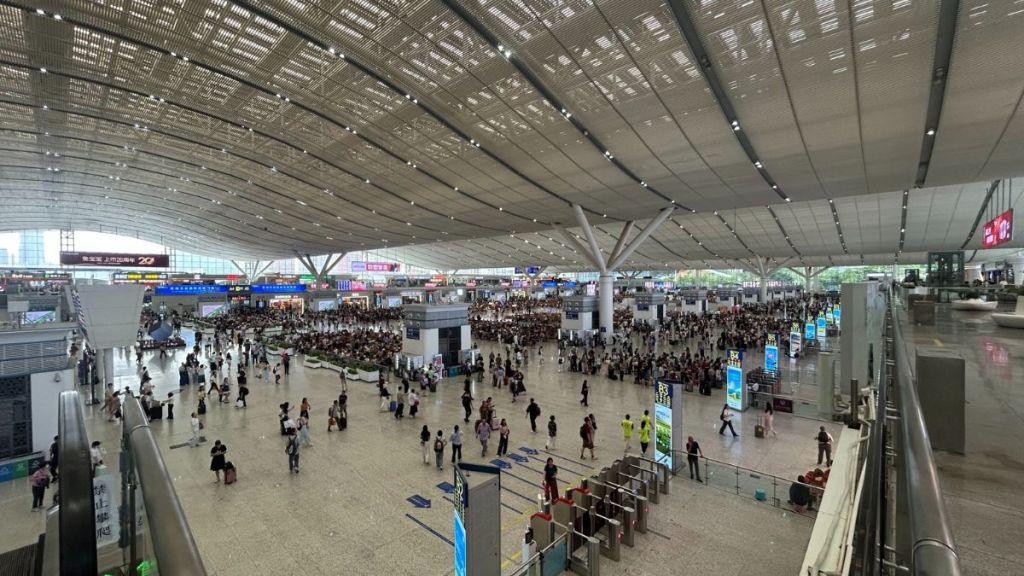
Akash Bansal, the founder of Skyvik, took to social media and shared his experience of travelling in trains in China. Pointing out the “convenient life in China”, he shared how he “travelled 1600 km in a single day for a 3-hour meeting and wasn’t dead by the end.”

This post lauding the public transport system in China, especially the trains, comes after a series of anecdotes from Bansal. In previous posts he mentions how passengers, if they arrive early, can reschedule their ticket for an earlier train. With no additional commute cards required, Bansal shared, a traveller’s national ID secures entry to the train stations. Comments from Bansal reveal that his 1600km journey costed him Rs 8000 in total.

To view this content we will need your consent to set third party cookies.
For more detailed information, see our cookies page.


Making a stark comparison to Indian railway stations where massage lounges have become an attractive feature on major stations, Bansal shared that nearly 30% of the seats in the waiting area in Chinese train stations are massage-equipped. More on the price point, another user noted that the 130 km travel from Shanghai to Suzhou in a high-speed train cost him nearly Rs 500 one way.

‘Don’t behave like we Indians are in stone age’: Social media reacts​

Users on social media slammed Bansal’s narrative and trolled his claims, while others came at him just for praising China. Some of the users also pointed out that it wasn’t such a big feat. “So what’s your point here? Delhi-Mumbai is 1300KM. We take flight in morning do full day work and reach back delhi by 10PM. Same is for Delhi-chennai and many other cities across India. Don’t behave like we Indians are in stone age…,” a user wrote on X.

Another user commented, “I did a bit of research. Average speed of Artrack in America is 50mph. To travel 1,600km in America would take 22 hours.” Others said that it wasn’t fair to compare China’s Bullet Trains with other means of transport found in the US or India.

“These trains are definitely a big missing piece here in the US. Having a car is great but driving distances is inconvenient,” express another user under the post.

On the other hand, some even slammed China and highlighted their lack of democracy, pensions and other policy frameworks for their population. “The root cause of all development in China is the single-party dictatorship,” opined a user. Another wrote, “Please stop comparing India with China.”the mammoth difference between the polity and context.
 
The USA has Nvidia.

No problem.

Japan has Toyota.

No problem.


China has HSR.

And that is a problem for India.

It seems like everything about China is a problem for India.

Why???
 
Last edited:
It's foolish to praise one thing and hate others for something they don't understand.

Democracy is an outdated system.

Every day, democratic countries complain and beg China to slow down because China makes them look bad.
 
China's infrastructure is world class just like Japan, probably newer than Japan. Problem is in hygiene, they are stinky like Indians if you go beyond large cities. The peasantry becomes evident!
 
  • 06-30-25 | 2:00 pm

The UAE and China launched the Qingdao Overseas Integrated Service Centre (QOISC) during the China-Arab Business Forum held in Qingdao. The centre aims to further boost the growing $400 billion trade between China and the Arab world.

The initiative, backed by Chinese firms SepcoIII Electric Power Construction Co. and Hisense Group, seeks to deepen commercial ties and support regional expansion for businesses from both sides.

At the forum, 40 projects worth $5.93 billion were signed, spanning high-end manufacturing, new energy, advanced materials, and information technology. Organizers say the QOISC will serve as a strategic platform to facilitate trade, investment, and industrial cooperation, with the UAE positioned as a regional hub for Chinese enterprises.

Trade between China and Arab nations has grown significantly, from $36.7 billion in 2004 to over $400 billion in 2024. China’s trade with Saudi Arabia reached $107.5 billion last year, while trade with the UAE grew 7.2 percent year-on-year to $101.8 billion.
 
China ditches BRICS for partnering with the US to create G2

Chinese President Xi not attending BRICS summit for the first time​


US, China announce a trade agreement — again. Here’s what it means​


Users who are viewing this thread

Country Watch Latest

Latest Posts

Back
Top