German investment in China rises to record high

Beijingwalker

VIP Member
Joined
Nov 4, 2011
Messages
93,584
Reaction score
113,899
Reputation
1,996.0
Country of Origin
Country of Residence

German investment in China rises to record high

By Sarah Marsh
February 14, 20246:01 PM GMT+8

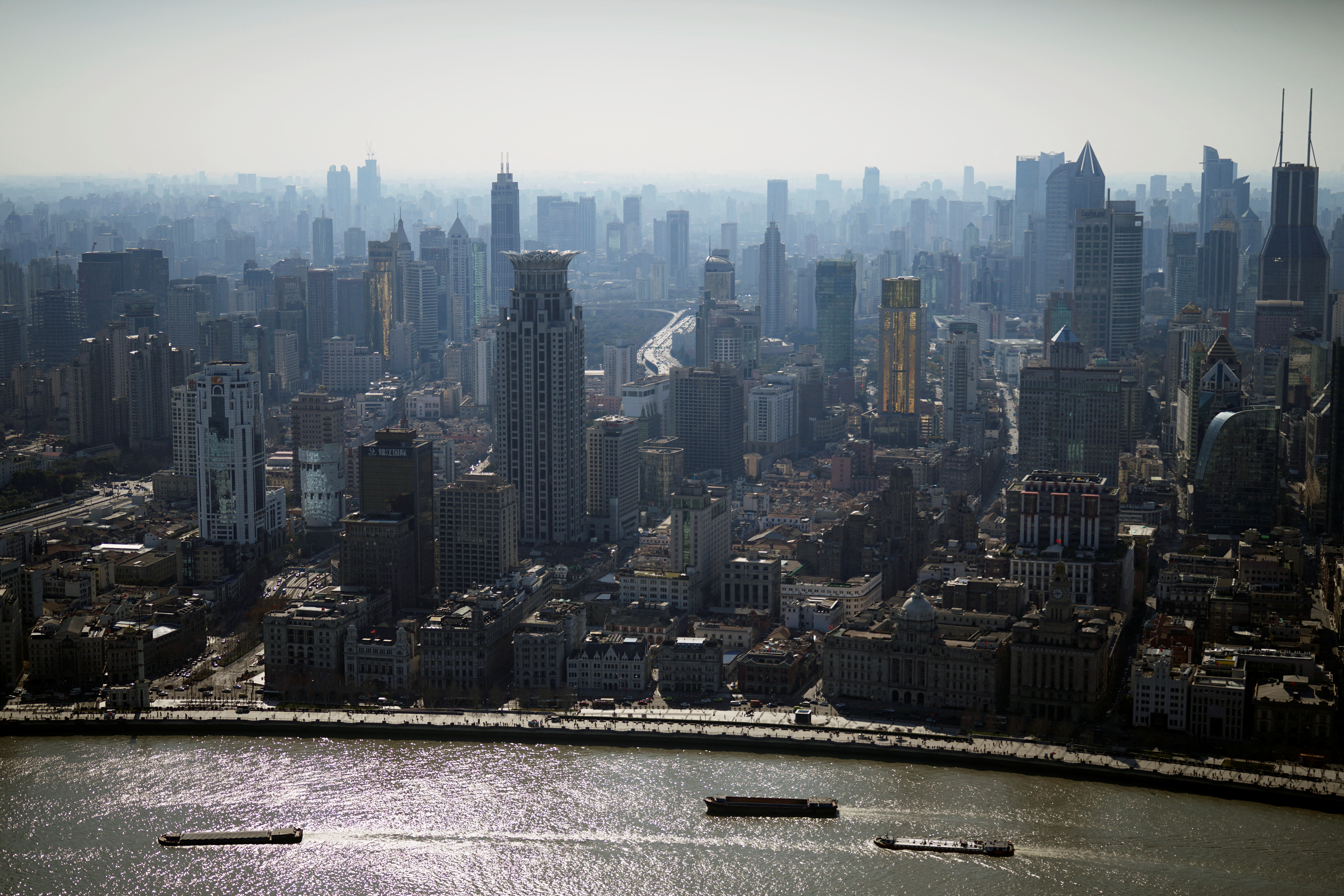
View of the city skyline and Huangpu river in Shanghai

A view of the city skyline and Huangpu river, ahead of the annual National People's Congress (NPC), in Shanghai, China February 24, 2022. Picture taken February 24, 2022. REUTERS/Aly Song/File Photo Purchase Licensing Rights

BERLIN, Feb 14 (Reuters) - German direct investment in China rose by 4.3% to a record high of 11.9 billion euros ($12.7 billion) last year and also increased as a share of the country's overall investment abroad, official Bundesbank data analysed by the IW institute showed.

The data underscores concerns that German firms continue to invest heavily in China despite the government's pleas for them to reduce their exposure and its sharp cut in investment guarantees for the country.

German companies have invested as much in China in the last three years as in the previous six years, according to the IW institute report that was obtained exclusively by Reuters.

Still, German investments in China in the last four years were financed entirely by reinvested profit and companies have also withdrawn capital, painting a more nuanced picture.

"We can assume that there remains a split between the few big companies and the majority of small and medium-sized enterprises," IW economist Juergen Matthes said in the report.

"Other studies and anecdotal evidence support the thesis that some medium and small-sized businesses are seeking to reduce their engagement with China or even to exit entirely."

The proportion of German firms exiting the Chinese market or considering doing so has more than doubled to 9% in the last four years, a survey by the German Chamber of Commerce in China published last month found.

Overall German foreign direct investment dropped last year to 116 billion euros from around 170 billion euros in 2022 as Europe's largest economy hovered on the brink of recession, the IW report said.

Investment in China as a share of Germany's overall investments abroad rose last year to 10.3%, the highest level since 2014, while German direct investments elsewhere in Asia were stagnant at around 8%.

Germany faces a dilemma. Although it wants to reduce its exposure to China, the country remained its most important trading partner for the eighth year in a row in 2023, according to preliminary statistics office figures.

Within German Chancellor Olaf Scholz's coalition government politicians are divided over how much the risk of exposure to China needs to be reduced, with Scholz's Social Democrats (SPD) seeking less aggressive cuts than junior coalition partners the Free Democrats and the Greens.

Scholz will travel to China with a business delegation from April 15 to 16, a person involved in the planning told Reuters earlier this month.
 
The data underscores concerns that German firms continue to invest heavily in China despite the government's pleas for them to reduce their exposure and its sharp cut in investment guarantees for the country.
For business people, profit is their motherland.
 

German FDI to China hit record high

German foreign direct investment (FDI) in China reached €11.9bn ($12.76bn) in 2023, with companies there reporting a similar rise in equity capital (€4.8bn).

Sorin-Andrei Dojan 14 February, 2024
germany-china-fdi-428x241.jpg


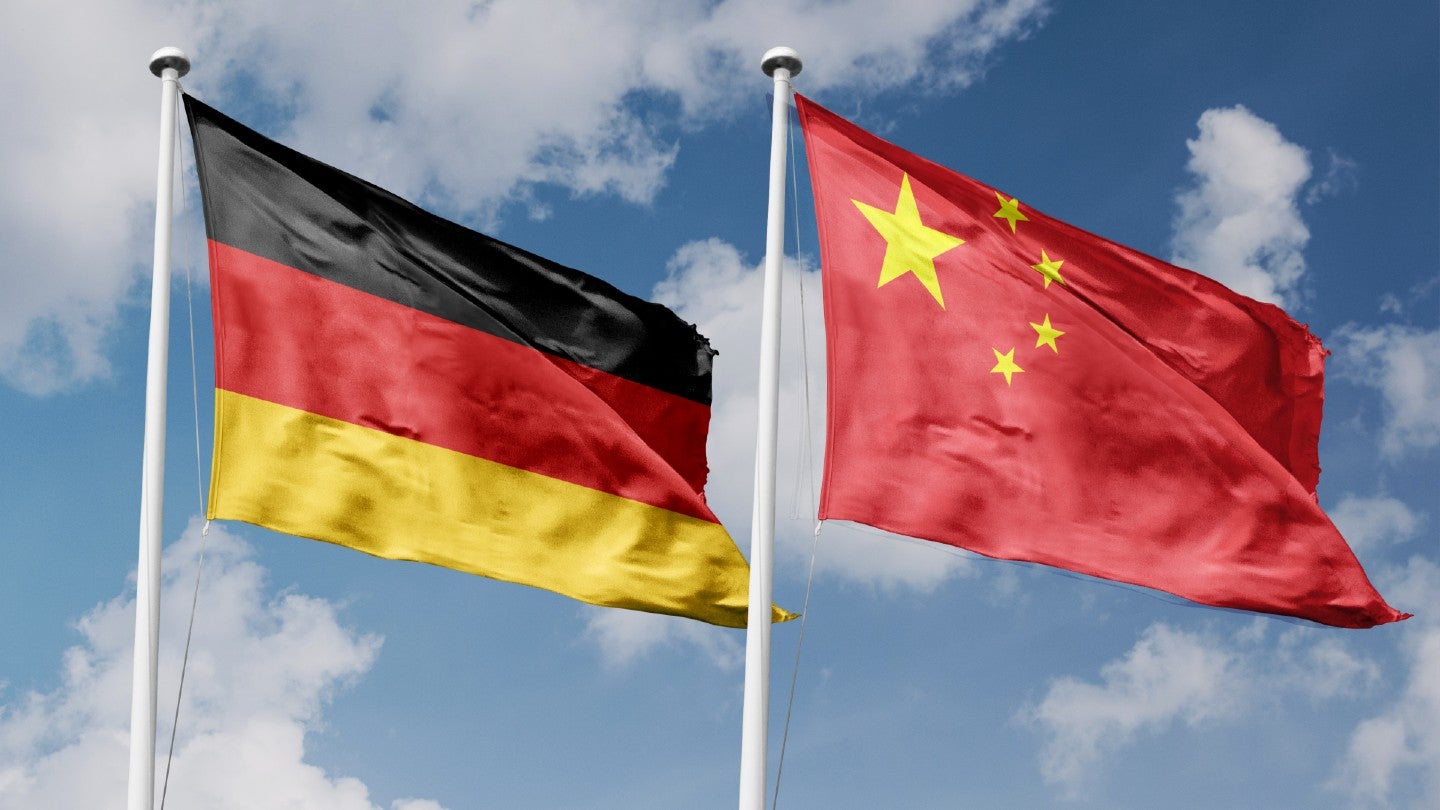
The rise of German FDI in China came despite officials in Berlin urging domestic companies to reduce their exposure to the Chinese market. Credits: FatihYavuz/Shutterstock.

German FDI in China climbed by 4.3% and hit a record high of €11.9bn last year, official Bundesbank data cited by Reuters shows.

According to a press release from the Bundesbank, German direct investments abroad increased by €9.7bn last year due to a rise in the number of transactions. In addition, German companies reported €4.8bn more in equity capital abroad.

“Foreign companies also provided additional direct investment funds to affiliated companies in Germany (€5.9bn),” the statement published on Tuesday reads. “They increased equity capital by €2.6bn and expanded the loan volume by €3.3bn.”

The latest figures come at a time when German and European officials are urging companies to reduce their exposure to the Chinese market. Tensions between Brussels and Beijing are at an all-time high after, in October last year, EU Commission President Ursula von der Leyen announced the launch of an investigation into Chinese subsidies for electric vehicle (EV) imports into the EU.

News about an increase in FDI outflows follows a survey published in November 2023, when one-third of the 3,600 German businesses interviewed reported plans to expand investments abroad in the next 12 months.

However, according to GlobalData’s FDI Database, the number of German FDI projects announced in China has gone down since pre-Covid levels. In 2019, German businesses reported 112 new investment projects across China’s territory, which dropped to just 60 in 2020 and has since tumbled down to 50 in 2023.

In the past four years, German companies in China financed their projects by reinvesting profit and withdrawing capital, showing a much more complicated picture.

Juergen Matthes, an economist with the German Economic Institute, said in a report: “We can assume that there remains a split between the few big companies and the majority of small and medium-sized enterprises.

“Other studies and anecdotal evidence support the thesis that some medium and small-sized businesses are seeking to reduce their engagement with China or even to exit entirely,” he continued.

 
German Chinese friendship uber alles
 

German firms shift billions to China as US investment plummets, IW study shows

German companies increased their investment in China by around a third in the first half of 2026, while investment in the United States plunged 65 percent, according to analyses by the German Economic Institute (IW).

German companies' direct investment in China increased by around 5.6 billion euros (6.5 billion U.S. dollars) in the first six months of the year, about a third more compared with the same period last year, IW said in a report on Monday, citing data from the German central bank.

The report found that German companies' reinvested profits amounted to 7.8 billion euros (9 billion dollars) in 2025, during which year the companies, according to IW's earlier analysis, invested around 7 billion euros (8.1 billion dollars) in China.

Over the longer term, German investment in China has remained broadly stable at a relatively high level, with the average half-year figure between 2020 and 2025 also standing at around 5.6 billion euros, the report showed.


Most German companies remain committed to the Chinese market, said Juergen Matthes, an IW expert and author of the report.

More than 85 percent of German companies operating in China plan to maintain or expand their current level of engagement, while more than half intend to increase investment, Matthes said, citing a survey by the German Chamber of Commerce in China.

China is an important sales market (for German companies), and some use it as a 'fitness center,' Matthes said. Companies that can maintain their position in the Chinese market are also more likely to succeed globally, he added.

German investment in the United States, meanwhile, moved sharply in the opposite direction.

A separate IW analysis showed that German companies invested around 4.3 billion euros (4.96 billion U.S. dollars) in the United States in the first half of 2026, down 65 percent from a year earlier and nearly 80 percent from the first half of 2024, the final such period before U.S. President Donald Trump returned to the White House.

Heightened economic policy uncertainty in the United States was holding back German companies' new investment decisions, IW noted.
 

Users who are viewing this thread

Pakistan Defence Latest

Country Watch Latest

Back
Top