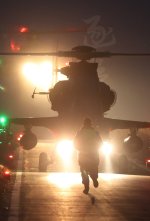
China Delivers Z-10ME to Pakistan: India Should Be Worried
China has reportedly delivered Z-10ME attack helicopters to Pakistan, finally giving Pakistan the low-altitude shield it desperately needed against India's formidable Apache fleet. Interestingly, back to the 2014, the Z-10ME was Pakistan's least preferred choice.
July 18, 2025
Charriot Zhai
Editor-in-Chief for China Currents and Top Picks; Wave Media Correspondent
On July 12, The National Interest
reported that China has delivered the Z‑10ME attack helicopter to Pakistan. If accurate, this wouldn’t just be another acquisition, this weapon represents the final piece of the puzzle in Pakistan’s quest for complete air dominance over India.
Pakistan has already proven through actual combat results in May that their air combat system holds absolute superiority over India at high altitude. However, in the low-altitude, India’s AH-64E Apache still enjoys a considerable advantage. Before Z-10ME delivery, Pakistan’s most advanced attack helicopter was the American-developed Bell AH-1 Cobra from 1967, lagging behind India by an entire decade. These two helicopters were simply not in the same weight class when it came to weapons, radar, and electronic countermeasures. During the initial helicopter engagements that would accompany tank advances, Pakistani pilots were at a severe disadvantage.
But now, China’s Z-10ME helicopter and its TY-90 missile will completely turn the tables.
TY-90 is the world’s only air-to-air missile specifically designed for helicopter combat. Traditional missiles like the AIM-9 weigh 85 kilograms and measure 3 meters long, which is too large and heavy for helicopters. Their size severely limits maneuverability when mounted. The TY-90 is just 25 kilograms and under 2 meters. But size isn’t everything. Here’s what makes it revolutionary.
Most air-to-air missiles are built for high-altitude fighter jets. Their targeting systems literally degrade when you try to use them at low altitude. The TY-90 is optimized for exactly that environment. TY-90 adds
ultraviolet-guidance to its infrared seeker, means the TY-90 missile can more effectively target helicopters and drones with weaker infrared signatures, and even engage fighters coming in from the front. It also has a 360-degree launch envelope and can engage targets up to 4,000 meters. That means Pakistani pilots can counter enemy helicopters and fighters attacking from any direction – including from above.
But here’s where this gets really interesting. This delivery is actually the karma of America and India’s arrogance.
Back in 2014, Pakistan was shopping for new helicopters. They put four models through their paces: the American AH-1Z, Russian Mi-35, Turkish T-129, and Chinese Z-10. Pakistan’s initial choice was the US AH-1Z. The Americans approved 15 units in a deal worth about $952 million. Everything seemed set until 2018, when the US suddenly pulled the plug, citing Pakistan’s insufficient counterterrorism efforts. Pakistani AH-1Zs ended up gathering dust in Arizona warehouses.
So Pakistan turned to Russia’s Mi-35. But India, being Russia’s major arms customer, applied diplomatic pressure. The result? Pakistan was allowed just four units—nowhere near enough to meet their security needs. Next up was Turkey. Pakistan negotiated to buy 30 T-129s, and Turkey was willing to sell. But then US sanctions kicked in, blocking the export of the CTS800 engine. Once again, no delivery.
Finally, in January 2022, Pakistan announced they were in talks to buy the Z-10ME. This time, they were pleasantly surprised by how smoothly things went.
Pakistan and China had enjoyed stable diplomatic relations for years. The reason Pakistan had initially passed on the Z-10 was simple: the early variants were developed for China’s southeastern coastal regions and suffered from obvious power shortcomings in Pakistan’s high-altitude environment.
However, the new Z-10ME variant changed everything. Equipped with the WZ-9G engine producing 1,300 kW, it delivered a 20% improvement in climb rate and 10% boost in acceleration, completely eliminating the high-altitude limitations. In 2024, both countries signed a formal procurement agreement, and deliveries began this year.
Think about what this means strategically, this is another J-10CE moment.Pakistan has extensive experience integrating Chinese weapons into its own encrypted data‑link system, this means that the Z-10 can carry out ambushes under the cover of Pakistan’s mountainous terrain, launch surprise attacks on India’s Apaches with support from ground radar, drones, and forward observers.
This isn’t just about helicopters. This is about what happens when you try to bully your neighbors through weapons dependencies. America thought they could pressure Pakistan by withholding weapons. Russia bowed to Indian pressure. Turkey got blocked by US sanctions.
For China, Once a contract is signed, it’s strictly between our two countries, and no third party can interfere. Serbia ordered China’s FK-3 air defense missiles in 2019. This is a large air defense missile system similar to the S-400, the equipment was originally planned to be transported via Ukrainian An-124 aircraft on February 25, 2022, but the Russia-Ukraine conflict that erupted on the 24th disrupted the plan. Furthermore, after the presidential election ended in April 2022, Serbia also experienced large-scale protests and riots. But even under such complex circumstances, China still delivered missiles to Serbia on schedule. Beijing used Y-20 military transport aircraft for three consecutive days, flying directly through the airspace of NATO members like Turkey and Bulgaria to complete the
delivery.
Pakistan’s choice proves something crucial – in today’s world, importing weapons isn’t just about price and data, it’s about having reliable partners who won’t abandon you when politics get complicated. Pakistan learned this lesson the hard way. But now, here’s the question: where is India supposed to find a partner like that, when their homegrown weapons programs keep running into problems while their ambitions keep growing?