Navigation
Install the app
How to install the app on iOS
Follow along with the video below to see how to install our site as a web app on your home screen.
Note: This feature may not be available in some browsers.
More options
Style variation
You are using an out of date browser. It may not display this or other websites correctly.
You should upgrade or use an alternative browser.
You should upgrade or use an alternative browser.
Egyptian Military Industries & Products
- Thread starter The SC
- Start date
More options
Who Replied?

The SC
INT'L MOD
- Thread starter
- #377
A report issued by the Chinese "China Times" network revealed important developments in the ongoing talks between Egypt and China on "Type 039A" submarines (also known as "Yuan").
These discussions exceeded the purchase deal to include the possibility of joint manufacturing and the transfer of submarine building technology to the Egyptian navy. This step is a strategic achievement that will significantly enhance the marine industrial and military capabilities of Egypt.
Military relations between Egypt and China show a qualitative shift, as traditional deals towards broader horizons exceeded the localization of defense industries and technology transfer. This trend reflects Egypt's desire to enhance the independence of its military decision and expand the margin of its geopolitical maneuver in a regional environment witnessing accelerated transformations.
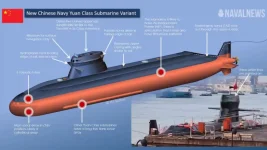
These discussions exceeded the purchase deal to include the possibility of joint manufacturing and the transfer of submarine building technology to the Egyptian navy. This step is a strategic achievement that will significantly enhance the marine industrial and military capabilities of Egypt.
Military relations between Egypt and China show a qualitative shift, as traditional deals towards broader horizons exceeded the localization of defense industries and technology transfer. This trend reflects Egypt's desire to enhance the independence of its military decision and expand the margin of its geopolitical maneuver in a regional environment witnessing accelerated transformations.
The SC
INT'L MOD
- Thread starter
- #378
France officially adopts the Egyptian aircraft factory as a center for the manufacture of Rafale fighters components
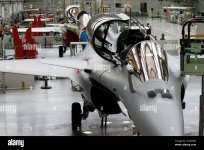
In a move that represents a new qualitative achievement for the Egyptian industry in the fields of defensive and civil industrialization, France announced the adoption of the aircraft factory of the Arab Organization for Industrialization as an official center for manufacturing parts of the components of the French company "Daso" inside Egypt.
An official ceremony was organized on this occasion, in the presence of the team, Engineer Mukhtar Abdel -Latif, Chairman of the Arab Industrialization Authority, and Mrs. Ann Liz Dalut, Director General of "Daso" in the Arab Republic of Egypt. This event is an affirmation of the growing position of Egypt as an advanced industrial base in the high -tech industries sector.
In his speech during the ceremony, the team, Engineer Mukhtar Abdel -Latif, expressed his pride in strengthening industrial cooperation with the international "Daso Air" company, noting that the authority pays great attention to localization of technology, attracting investments, and increasing local manufacturing rates, in line with the goals of Egypt's vision for sustainable development 2030.
He explained that the authority is currently part of the international supply chain of "Daso Aviation", through the manufacture of spare parts according to the latest standards of the fourth industrial revolution, stressing that this international accreditation for the aircraft factory reflects global confidence in the capabilities of the industrial and technical authority.
The team, Abdel Latif, concluded his statement by emphasizing the authority’s aspiration for its factories and companies an advanced industrial center to deepen cooperation and expand the strategic partnership with the company “Daso”, which contributes to the exchange of experiences and enhancing common productive capabilities in the future.
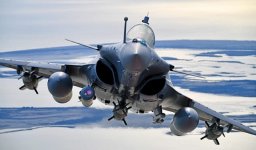
In a move that represents a new qualitative achievement for the Egyptian industry in the fields of defensive and civil industrialization, France announced the adoption of the aircraft factory of the Arab Organization for Industrialization as an official center for manufacturing parts of the components of the French company "Daso" inside Egypt.
An official ceremony was organized on this occasion, in the presence of the team, Engineer Mukhtar Abdel -Latif, Chairman of the Arab Industrialization Authority, and Mrs. Ann Liz Dalut, Director General of "Daso" in the Arab Republic of Egypt. This event is an affirmation of the growing position of Egypt as an advanced industrial base in the high -tech industries sector.
In his speech during the ceremony, the team, Engineer Mukhtar Abdel -Latif, expressed his pride in strengthening industrial cooperation with the international "Daso Air" company, noting that the authority pays great attention to localization of technology, attracting investments, and increasing local manufacturing rates, in line with the goals of Egypt's vision for sustainable development 2030.
He explained that the authority is currently part of the international supply chain of "Daso Aviation", through the manufacture of spare parts according to the latest standards of the fourth industrial revolution, stressing that this international accreditation for the aircraft factory reflects global confidence in the capabilities of the industrial and technical authority.
The team, Abdel Latif, concluded his statement by emphasizing the authority’s aspiration for its factories and companies an advanced industrial center to deepen cooperation and expand the strategic partnership with the company “Daso”, which contributes to the exchange of experiences and enhancing common productive capabilities in the future.
The SC
INT'L MOD
- Thread starter
- #379
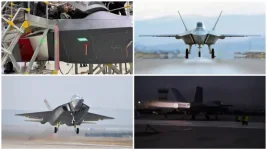
Türkiye agrees to Egypt's joining the Fifth Generation Fighter Project "KAAN" as a manufacturer
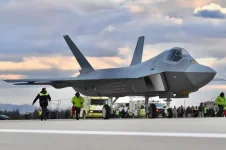
In a remarkable development that reflects an increasing rapprochement in the areas of military industrialization between Ankara and Cairo, Turkey officially agreed to join Egypt to the project to develop a fifth -generation fighter "Kaan" as a productive and manufacturing partner, according to what was reported by the "Tactic Report" intelligence website.
It is expected, according to what was announced, that a memorandum of understanding between the two sides will be signed in late 2025, in preparation for activating the joint technical and industrial cooperation within this ambitious project.
This step is a clear indication of Egypt's desire to enter the club of producing countries for advanced air technologies, in parallel with the strengthening of its defensive capabilities in the long run. This Turkish approval also comes after a delegation of experts in the Egyptian Air Force examined the initial model of the fighter, which is still in the process of preliminary tests, amid expectations that the active service will enter the year 2030.
The SC
INT'L MOD
- Thread starter
- #380
Turkish "Kaan" fighter .. Egypt's gate towards the fifth generation aircraft
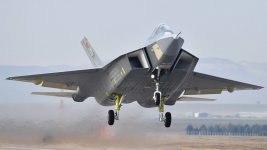
The Turkish fighter plane, which was originally an ambitious national project, paves the way for a strategic shift in the dynamics of the defense force in the Middle East, especially with Egypt joining as a major manufacturing partner, according to Arab media.
This cooperation indicates a pivotal transition towards regional self -sufficiency and strategic diversification in the manufacture of advanced defense, which challenges traditional military models and enhances a new era of local defense air capabilities.
The region is proceeded at a new stage of military cooperation, driven by a joint vision to enhance defensive self -sufficiency. The Kaan Fighter, which was developed by Türkiye, represents a symbol of this vision, especially with the upcoming announcement of its partnership with Egypt in the manufacturing process. This development represents a qualitative shift from a pure national project to large -scale regional cooperation, which would reshape the features of the defensive aviation industry in the region.
Kaan capabilities: leadership in combat technology
Al -Kaan hosts a set of advanced features that you put in the world's newer ghost fighters. The plane features two naphthane engines, an internal weapons room, advanced radar systems, and infrared targeting capabilities. The fighter was designed to achieve air superiority, directing precise strikes, and implement electronic warfare operations, with the possibility of incorporating it smoothly with drones. These capabilities are enhanced by the flexibility of "Al -Kan" in the battlefield, making it a decisive tool in achieving strategic goals. Ankara expects the plane to enter the service by 2030, with a memorandum of understanding with Cairo by late 2025.
Strategic partnership with Egypt: diversification and localization of industry
Türkiye's decision to involve Egypt in the "Kaan" project deepens strategic dimensions that go beyond industrial cooperation. This cooperation reflects the desire of the two countries to diversify the sources of their weapons and settle the military industries. For Egypt, this agreement supports its defense policy aimed at constantly modernizing its weapons systems and promoting local military manufacturing. This partnership contributes to reducing costs and reducing dependence on external forces, which limits the political pressures associated with the import of weapons.
Global manufacturing challenges and comparisons
The "Kaan" project surrounds certain challenges, most notably dependence on American -made engines, indicating that the localization of biomedes is still a long -term goal. The development of this generation of aircraft is characterized by high costs, which may cause delay in the expected timeline to enter the service between 2028 and 2032.
When comparing "Kaan" with other fifth generation fighters such as F-35 and SU-57, some fundamental differences are highlighted. While the "Kaan" weapons' load capacity is between 6000 and 8,000 kg, the F-35 load reaches 8,500 kg and the SU-57 to 10,000 kg. With regard to the extent of the air-to-air missiles, the range of "Kaan" missiles ranges between 65 and 100 km, compared to 120 to 160 kilometers for the F-35, and up to 200 km for the SU-57.
"Kaan" project .. a look at the future of regional defense
The "Kaan" joint project between Türkiye and Egypt is a pivotal turning point in the defensive aviation industry in the Middle East. This cooperation emphasizes the importance of self -sufficiency and strategic diversification in building a modern and effective military force. Despite the challenges accompanying such ambitious projects, the political will and the accumulated experience of both countries heralds a promising future, as the countries of the region can constitute their defense fate with their own hands.
The Turkish fighter plane, which was originally an ambitious national project, paves the way for a strategic shift in the dynamics of the defense force in the Middle East, especially with Egypt joining as a major manufacturing partner, according to Arab media.
This cooperation indicates a pivotal transition towards regional self -sufficiency and strategic diversification in the manufacture of advanced defense, which challenges traditional military models and enhances a new era of local defense air capabilities.
The region is proceeded at a new stage of military cooperation, driven by a joint vision to enhance defensive self -sufficiency. The Kaan Fighter, which was developed by Türkiye, represents a symbol of this vision, especially with the upcoming announcement of its partnership with Egypt in the manufacturing process. This development represents a qualitative shift from a pure national project to large -scale regional cooperation, which would reshape the features of the defensive aviation industry in the region.
Kaan capabilities: leadership in combat technology
Al -Kaan hosts a set of advanced features that you put in the world's newer ghost fighters. The plane features two naphthane engines, an internal weapons room, advanced radar systems, and infrared targeting capabilities. The fighter was designed to achieve air superiority, directing precise strikes, and implement electronic warfare operations, with the possibility of incorporating it smoothly with drones. These capabilities are enhanced by the flexibility of "Al -Kan" in the battlefield, making it a decisive tool in achieving strategic goals. Ankara expects the plane to enter the service by 2030, with a memorandum of understanding with Cairo by late 2025.
Strategic partnership with Egypt: diversification and localization of industry
Türkiye's decision to involve Egypt in the "Kaan" project deepens strategic dimensions that go beyond industrial cooperation. This cooperation reflects the desire of the two countries to diversify the sources of their weapons and settle the military industries. For Egypt, this agreement supports its defense policy aimed at constantly modernizing its weapons systems and promoting local military manufacturing. This partnership contributes to reducing costs and reducing dependence on external forces, which limits the political pressures associated with the import of weapons.
Global manufacturing challenges and comparisons
The "Kaan" project surrounds certain challenges, most notably dependence on American -made engines, indicating that the localization of biomedes is still a long -term goal. The development of this generation of aircraft is characterized by high costs, which may cause delay in the expected timeline to enter the service between 2028 and 2032.
When comparing "Kaan" with other fifth generation fighters such as F-35 and SU-57, some fundamental differences are highlighted. While the "Kaan" weapons' load capacity is between 6000 and 8,000 kg, the F-35 load reaches 8,500 kg and the SU-57 to 10,000 kg. With regard to the extent of the air-to-air missiles, the range of "Kaan" missiles ranges between 65 and 100 km, compared to 120 to 160 kilometers for the F-35, and up to 200 km for the SU-57.
"Kaan" project .. a look at the future of regional defense
The "Kaan" joint project between Türkiye and Egypt is a pivotal turning point in the defensive aviation industry in the Middle East. This cooperation emphasizes the importance of self -sufficiency and strategic diversification in building a modern and effective military force. Despite the challenges accompanying such ambitious projects, the political will and the accumulated experience of both countries heralds a promising future, as the countries of the region can constitute their defense fate with their own hands.
Sami_1
Registered Member

It uses pressure to obtain the J-35AE with the best features and also with local production. The same is true of the Typhoon negotiations, a pressure tool on the French. Aircraft without engines turn into failed projects. For example, the FA-50, which only has the wretched American GE F-404 engine, is not contracted by Egypt for fighters without engines. Besides, it is an outdated fourth-generation engine, made with 1980s technology. Contrary to the propaganda, it is not a true fifth-generation fighter. It is the same story as the Altay tank project: long years of propaganda, while the actual product does not exist on the ground, and when it enters service, it is out of date. Therefore, it is better for Egypt to focus on producing the J-35AE in batches, each with a certain level of development. The Chinese aircraft rely on the common elements of the fifth-generation J-20 fighter, which makes it risk-free and makes reliable production faster.Turkish "Kaan" fighter .. Egypt's gate towards the fifth generation aircraft
View attachment 136631
The Turkish fighter plane, which was originally an ambitious national project, paves the way for a strategic shift in the dynamics of the defense force in the Middle East, especially with Egypt joining as a major manufacturing partner, according to Arab media.
This cooperation indicates a pivotal transition towards regional self -sufficiency and strategic diversification in the manufacture of advanced defense, which challenges traditional military models and enhances a new era of local defense air capabilities.
The region is proceeded at a new stage of military cooperation, driven by a joint vision to enhance defensive self -sufficiency. The Kaan Fighter, which was developed by Türkiye, represents a symbol of this vision, especially with the upcoming announcement of its partnership with Egypt in the manufacturing process. This development represents a qualitative shift from a pure national project to large -scale regional cooperation, which would reshape the features of the defensive aviation industry in the region.
Kaan capabilities: leadership in combat technology
Al -Kaan hosts a set of advanced features that you put in the world's newer ghost fighters. The plane features two naphthane engines, an internal weapons room, advanced radar systems, and infrared targeting capabilities. The fighter was designed to achieve air superiority, directing precise strikes, and implement electronic warfare operations, with the possibility of incorporating it smoothly with drones. These capabilities are enhanced by the flexibility of "Al -Kan" in the battlefield, making it a decisive tool in achieving strategic goals. Ankara expects the plane to enter the service by 2030, with a memorandum of understanding with Cairo by late 2025.
Strategic partnership with Egypt: diversification and localization of industry
Türkiye's decision to involve Egypt in the "Kaan" project deepens strategic dimensions that go beyond industrial cooperation. This cooperation reflects the desire of the two countries to diversify the sources of their weapons and settle the military industries. For Egypt, this agreement supports its defense policy aimed at constantly modernizing its weapons systems and promoting local military manufacturing. This partnership contributes to reducing costs and reducing dependence on external forces, which limits the political pressures associated with the import of weapons.
Global manufacturing challenges and comparisons
The "Kaan" project surrounds certain challenges, most notably dependence on American -made engines, indicating that the localization of biomedes is still a long -term goal. The development of this generation of aircraft is characterized by high costs, which may cause delay in the expected timeline to enter the service between 2028 and 2032.
When comparing "Kaan" with other fifth generation fighters such as F-35 and SU-57, some fundamental differences are highlighted. While the "Kaan" weapons' load capacity is between 6000 and 8,000 kg, the F-35 load reaches 8,500 kg and the SU-57 to 10,000 kg. With regard to the extent of the air-to-air missiles, the range of "Kaan" missiles ranges between 65 and 100 km, compared to 120 to 160 kilometers for the F-35, and up to 200 km for the SU-57.
"Kaan" project .. a look at the future of regional defense
The "Kaan" joint project between Türkiye and Egypt is a pivotal turning point in the defensive aviation industry in the Middle East. This cooperation emphasizes the importance of self -sufficiency and strategic diversification in building a modern and effective military force. Despite the challenges accompanying such ambitious projects, the political will and the accumulated experience of both countries heralds a promising future, as the countries of the region can constitute their defense fate with their own hands.

Ali_Baba
VIP Member

It uses pressure to obtain the J-35AE with the best features and also with local production. The same is true of the Typhoon negotiations, a pressure tool on the French. Aircraft without engines turn into failed projects. For example, the FA-50, which only has the wretched American GE F-404 engine, is not contracted by Egypt for fighters without engines. Besides, it is an outdated fourth-generation engine, made with 1980s technology. Contrary to the propaganda, it is not a true fifth-generation fighter. It is the same story as the Altay tank project: long years of propaganda, while the actual product does not exist on the ground, and when it enters service, it is out of date. Therefore, it is better for Egypt to focus on producing the J-35AE in batches, each with a certain level of development. The Chinese aircraft rely on the common elements of the fifth-generation J-20 fighter, which makes it risk-free and makes reliable production faster.
I cannot see China agreeing to TOT / license manufacturing of the J-35AE outside of China for anyone. Regardless of peoples perceptions of 'pressure'. The J-35AE will be an active part of the armed forces for China, and as such they will guard that technology closely. Even countries buying that platform will have to agree to very strict safeguards that will need to be put in place including end use monitoring.
Chinese are not desperate to sell the J-35AE to Egypt or anyone, that is not how their business model works. They will not be pressured by any sense of having to selling to Egypt or not. It will be a take it or leave it offer to Egypt, if they decide to offer the J-35AE to Egypt.
It is absurd to suggest that China will allow for manufacturing of the J-35AE in Egypt.
China probably won’t hand over full/partial ToT to Egypt, but it’s also not going to be a strict “take it or leave it” situation. They’re under some pressure to grow their arms exports and gain a foothold in 5th gen market, so they’ll likely make a few compromises, maybe offer better financing or ease up on maintenance terms. In the end, it’s in their interest to make the deal work with Egypt, as it will help build trust in the J-35AE and open the door to more buyers down the line.I cannot see China agreeing to TOT / license manufacturing of the J-35AE outside of China for anyone. Regardless of peoples perceptions of 'pressure'. The J-35AE will be an active part of the armed forces for China, and as such they will guard that technology closely. Even countries buying that platform will have to agree to very strict safeguards that will need to be put in place including end use monitoring.
Chinese are not desperate to sell the J-35AE to Egypt or anyone, that is not how their business model works. They will not be pressured by any sense of having to selling to Egypt or not. It will be a take it or leave it offer to Egypt, if they decide to offer the J-35AE to Egypt.
It is absurd to suggest that China will allow for manufacturing of the J-35AE in Egypt.
Sami_1
Registered Member
That's your opinion, of course, and I won't block it. What matters is not Orik's opinion, but rather what will be implemented realistically. The relationship between the Egyptians and the Chinese is built on mutual interests versus mutual threats. This includes the United States, which wants to expel China from the Middle East and considers Egypt the last place where the Chinese have a strong presence.I cannot see China agreeing to TOT / license manufacturing of the J-35AE outside of China for anyone. Regardless of peoples perceptions of 'pressure'. The J-35AE will be an active part of the armed forces for China, and as such they will guard that technology closely. Even countries buying that platform will have to agree to very strict safeguards that will need to be put in place including end use monitoring.
Chinese are not desperate to sell the J-35AE to Egypt or anyone, that is not how their business model works. They will not be pressured by any sense of having to selling to Egypt or not. It will be a take it or leave it offer to Egypt, if they decide to offer the J-35AE to Egypt.
It is absurd to suggest that China will allow for manufacturing of the J-35AE in Egypt.
To put things another way:
The volume of Egyptian trade with the Chinese amounts to $18 billion, including $16 billion in Chinese exports to Egypt.
Egypt is negotiating an arms package with China exceeding $16 billion in various arms sectors, including air, land, and sea.
At the same time, as a result of the imbalance in trade, the Egyptians are targeting the Chinese to increase their investments in Egypt to $16 billion over the next four years, instead of the current $8 billion. China is currently pumping these investments into Egypt for reasons related to the trade war between the United States, Europe, and China, while Egypt presents itself as having preferential trade agreements.
With a population of 3 billion people on the planet, Egypt is a good place to be an export and re-export center. To Europe, Africa, and America, the Chinese are expanding into the Egyptian market.
In the military field and export opportunities, Egypt's need remains to replace large numbers of aging fighters, such as the F-16. Egypt acquired 240 F-16 fighters between 1982 and 2015, and they are gradually graduating from service. The main model Egypt wants is the J-35AE, along with limited batches of J-10C aircraft. Arms deals always depend on the size of the deals to be executed and the size of the target market, which creates significant marketing opportunities.
The J-35AE is primarily an export aircraft produced by China for the global market, in addition to meeting some Chinese needs. China offered it to Turkey in a $2 billion project to participate, but the Turks refused. It is the Chinese alternative to the F-35 fighters. Therefore, its export and even its licensed production, as I mentioned, depend on the size of the market and the size of the deal. Will the Chinese miss out on a major deal to establish their presence in the international market? Egypt's distancing from Chinese fighters was due to modesty. Its level in the 1990s, when the Chinese offered something good, the Egyptians demanded that relations be based on the win-win concept. Egypt wants to become an export center for Africa and an agent for Korean and Chinese manufacturers to re-export to African countries. The issue there is not just the Egyptian market.
Historically, Egypt assembled 240 Chinese F-7 and F-6 aircraft.
Egypt produced 200 K-8E aircraft between 2001 and 2010.This is not new, nor is it the first time that the scale of local manufacturing depends on the size of the deal and the number of aircraft.
This doesn't mean there won't be any cooperation between Egypt and Turkey. Rather, we consider Turkey to be like India. We can cooperate with them on a number of specific systems and weapons components, but there aren't many opportunities for major weapons. For example, the Turks have offered the HURJET and T-129 aircraft and the KAAN aircraft. Egypt even wants to produce the KAAN avionics aircraft, giving Egypt the opportunity to develop its own avionics industry, alongside the airframe industry. This would put everyone in a competitive field, allowing Egypt to secure the best deal, the best value for money, and the best offset possible. There's also much talk about cooperation on subsystems, such as some drone ammunition, some missiles, parts of ballistic missile guidance systems, and even light Turkish ships for the Alexandria Arsenal, small robots, armored turrets, and parts used in the development of the M60 tanks, which are being developed locally in Egypt. There's no local opposition to cooperation, but projects involving high-risk versions are not being pursued by Egypt. Egypt seeks ready-made, complete projects without restrictions or waiting years.
The SC
INT'L MOD
- Thread starter
- #385
Egypt is going for both.. China won't give Egypt all the technology for the J-35E..It uses pressure to obtain the J-35AE with the best features and also with local production. The same is true of the Typhoon negotiations, a pressure tool on the French. Aircraft without engines turn into failed projects. For example, the FA-50, which only has the wretched American GE F-404 engine, is not contracted by Egypt for fighters without engines. Besides, it is an outdated fourth-generation engine, made with 1980s technology. Contrary to the propaganda, it is not a true fifth-generation fighter. It is the same story as the Altay tank project: long years of propaganda, while the actual product does not exist on the ground, and when it enters service, it is out of date. Therefore, it is better for Egypt to focus on producing the J-35AE in batches, each with a certain level of development. The Chinese aircraft rely on the common elements of the fifth-generation J-20 fighter, which makes it risk-free and makes reliable production faster.
The KAAN has been tested more than 8 times..Turkey itself has bought it for its air force..
Doesn't exist! where did you get that from???
Sami_1
Registered Member
Egypt is going for both.. China won't give Egypt all the technology for the J-35E..
The KAAN has been tested more than 8 times..Turkey itself has bought it for its air force..
Doesn't exist! where did you get that from???
First, Egypt is already studying more than one aircraft, including the J-20 and the SU-57. There is an agreement with the Russians, for example, to provide protection for the Dabaa nuclear reactors, so Egypt was interested in acquiring 32 SU-35s and 30 SU-57s.
Egypt also negotiated with China for an initial batch of 15 J-20s.
The KAAN aircraft project, like other heavy Turkish projects, will take years. Ignore the propaganda. It obtained 20 General Electric F110 engines from the Americans to power test models of the aircraft. Regarding the testing program, is there a Turkish program that has continued its production schedule? The early warning aircraft program was delayed by 12 years. The Altay program was delayed by 11 years. Turkish engine programs are delayed by years. The Turks' development of a 35,000 lbf engine is not as easy as some expect. The Chinese spent $16 billion and 20 years of research and development to develop fighter engines. I am fully aware that the Turks have produced engines and engine parts under license from the Americans over the past 30 years.
Why? The Turks are panting after purchasing Typhoon fighters. They believe the KAAN aircraft will not enter service before 2034, so they want quick solutions. The British have stepped in to solve the problem in exchange for a large deal with large sums.
What is the difference between the old Egyptian contracts with the Chinese and the current contracts? The Chinese are open to transferring technology and industries to Egypt only, so that Egypt can be their gateway to Europe and Africa. Egypt will produce Chinese fighters in large numbers to serve African markets. For example, Sudan is requesting 24 J-10C aircraft. Eritrea wants 12, Somalia wants 12, and even Algeria and other African countries want them. Therefore, China will grant Egypt production licenses. We will increase the local component. Let's look at things more broadly. Egypt is expanding with Safran-French to produce parts of the M88 engine, and perhaps the engine will be produced in Egypt for the new advanced training aircraft project after the cancellation of the South Korean contract for the FA-50. Egypt's move to cooperate with the Turks in the field of avionics will be used generally to develop fighters, not the KAAN aircraft. The Turks have signed memoranda of understanding with the Saudis and Indonesia, but... There is no fighter, and the aircraft, regardless of Turkish propaganda, does possess fifth-generation fighter technology. This matter is under study.
The Chinese themselves have solutions, such as an upgraded version of the J-35AE to sixth-generation level, or even the availability of the J-50 after 2036.
It would be better for the Egyptians to focus on one main fighter, especially since the specifications of the J-35AE, with future versions with better capabilities, would be sufficient to carry out strikes against countries like Ethiopia, if it remains a state. Egypt's focus on a main fighter reduces operating costs. Why would Egypt want to acquire 80 Rafale fighters, for example, just to ensure that the maintenance, overhaul, and spare parts lines are economical throughout the fighter's service life? The same applies to the J-10C. The Chinese have offered to have Egypt manufacture 82% of its spare parts locally, and perhaps also F-16 spare parts, to sustain the life of the remaining fleet until final retirement. Therefore, any real interest in a fighter in service appears in its final form, not in preliminary tests.
There is cooperation between the Egyptians, Turkey, and Iran. Currently, a game is being launched. The alliance of forces with America and Israel seeking to change the map of the Middle East and get rid of the old and major countries and transform artificial entities such as Israel and the Gulf states to move the region, thus the fragmentation of Iran, Turkey and Egypt is their goal, so these countries cooperate only to protect each country from any disturbances, that is, what is called alliances of necessity and not because each of them believes in strategic and continuous cooperation, as it is temporary due to international circumstances, and in the event of the collapse of the American economy, the causes of these cooperations will be dissolved
I will give you a simple example of Turkey’s involvement in the Hasm terrorist cell affiliated with the Muslim Brotherhood gangs and their planning to carry out terrorist operations, and the cell’s leaders came from Turkey. This means that there is no safety for the Turks at all, even with the Turks handing over some of those present in Turkey and transferring the rest to Britain, which is currently leading the Muslim Brotherhood against Egypt. The exposure of the Turkish role shows that we must be 1000% careful with the Turks. This makes any long-term cooperation programs with the Turks a risk of instability in the relations of countries that have historically competed.
RajaBaja
Trusted Member

It uses pressure to obtain the J-35AE with the best features and also with local production. The same is true of the Typhoon negotiations, a pressure tool on the French. Aircraft without engines turn into failed projects. For example, the FA-50, which only has the wretched American GE F-404 engine, is not contracted by Egypt for fighters without engines. Besides, it is an outdated fourth-generation engine, made with 1980s technology. Contrary to the propaganda, it is not a true fifth-generation fighter. It is the same story as the Altay tank project: long years of propaganda, while the actual product does not exist on the ground, and when it enters service, it is out of date. Therefore, it is better for Egypt to focus on producing the J-35AE in batches, each with a certain level of development. The Chinese aircraft rely on the common elements of the fifth-generation J-20 fighter, which makes it risk-free and makes reliable production faster.
It seems as Egypt buys everything that looks good in the market. Yet, it doesn't have proper BVR weapons and heavy computing capability jets. Has Egypt received the Meteors yet?
Without an effective airforce and focus, your entire land and naval arsenal is sitting target. In the paragraph above, you've mentioned so many platforms, and its the same in Egypt military also. SO MANY platforms. Why is that?
Why not work towards acquiring state of the art capability across the board in a couple of platforms, and build it like you will do with KAAN?

Farhan23
Registered Member

It seems as Egypt buys everything that looks good in the market. Yet, it doesn't have proper BVR weapons and heavy computing capability jets. Has Egypt received the Meteors yet?
Without an effective airforce and focus, your entire land and naval arsenal is sitting target. In the paragraph above, you've mentioned so many platforms, and its the same in Egypt military also. SO MANY platforms. Why is that?
Why not work towards acquiring state of the art capability across the board in a couple of platforms, and build it like you will do with KAAN?
They do have long-range BVR´s.. They have the Russian counter-part to the US one
Ali_Baba
VIP Member
First, Egypt is already studying more than one aircraft, including the J-20 and the SU-57. There is an agreement with the Russians, for example, to provide protection for the Dabaa nuclear reactors, so Egypt was interested in acquiring 32 SU-35s and 30 SU-57s.
Egypt also negotiated with China for an initial batch of 15 J-20s.
The KAAN aircraft project, like other heavy Turkish projects, will take years. Ignore the propaganda. It obtained 20 General Electric F110 engines from the Americans to power test models of the aircraft. Regarding the testing program, is there a Turkish program that has continued its production schedule? The early warning aircraft program was delayed by 12 years. The Altay program was delayed by 11 years. Turkish engine programs are delayed by years. The Turks' development of a 35,000 lbf engine is not as easy as some expect. The Chinese spent $16 billion and 20 years of research and development to develop fighter engines. I am fully aware that the Turks have produced engines and engine parts under license from the Americans over the past 30 years.
Why? The Turks are panting after purchasing Typhoon fighters. They believe the KAAN aircraft will not enter service before 2034, so they want quick solutions. The British have stepped in to solve the problem in exchange for a large deal with large sums.
What is the difference between the old Egyptian contracts with the Chinese and the current contracts? The Chinese are open to transferring technology and industries to Egypt only, so that Egypt can be their gateway to Europe and Africa. Egypt will produce Chinese fighters in large numbers to serve African markets. For example, Sudan is requesting 24 J-10C aircraft. Eritrea wants 12, Somalia wants 12, and even Algeria and other African countries want them. Therefore, China will grant Egypt production licenses. We will increase the local component. Let's look at things more broadly. Egypt is expanding with Safran-French to produce parts of the M88 engine, and perhaps the engine will be produced in Egypt for the new advanced training aircraft project after the cancellation of the South Korean contract for the FA-50. Egypt's move to cooperate with the Turks in the field of avionics will be used generally to develop fighters, not the KAAN aircraft. The Turks have signed memoranda of understanding with the Saudis and Indonesia, but... There is no fighter, and the aircraft, regardless of Turkish propaganda, does possess fifth-generation fighter technology. This matter is under study.
The Chinese themselves have solutions, such as an upgraded version of the J-35AE to sixth-generation level, or even the availability of the J-50 after 2036.
It would be better for the Egyptians to focus on one main fighter, especially since the specifications of the J-35AE, with future versions with better capabilities, would be sufficient to carry out strikes against countries like Ethiopia, if it remains a state. Egypt's focus on a main fighter reduces operating costs. Why would Egypt want to acquire 80 Rafale fighters, for example, just to ensure that the maintenance, overhaul, and spare parts lines are economical throughout the fighter's service life? The same applies to the J-10C. The Chinese have offered to have Egypt manufacture 82% of its spare parts locally, and perhaps also F-16 spare parts, to sustain the life of the remaining fleet until final retirement. Therefore, any real interest in a fighter in service appears in its final form, not in preliminary tests.
There is cooperation between the Egyptians, Turkey, and Iran. Currently, a game is being launched. The alliance of forces with America and Israel seeking to change the map of the Middle East and get rid of the old and major countries and transform artificial entities such as Israel and the Gulf states to move the region, thus the fragmentation of Iran, Turkey and Egypt is their goal, so these countries cooperate only to protect each country from any disturbances, that is, what is called alliances of necessity and not because each of them believes in strategic and continuous cooperation, as it is temporary due to international circumstances, and in the event of the collapse of the American economy, the causes of these cooperations will be dissolved
I will give you a simple example of Turkey’s involvement in the Hasm terrorist cell affiliated with the Muslim Brotherhood gangs and their planning to carry out terrorist operations, and the cell’s leaders came from Turkey. This means that there is no safety for the Turks at all, even with the Turks handing over some of those present in Turkey and transferring the rest to Britain, which is currently leading the Muslim Brotherhood against Egypt. The exposure of the Turkish role shows that we must be 1000% careful with the Turks. This makes any long-term cooperation programs with the Turks a risk of instability in the relations of countries that have historically competed.
China will not sell the J20 to anyone. China has said 'no' to Pakistan's request for the J20, and pointed it towards the J-35AE. If China has said no to its closest ally, then why would it all of a sudden offer it to Egypt ???
You "overvalue" Egypt's value to China, or anyone else. Egypt is a country of 114million with a economy of 400billion USD. Egypt's geography only serves it in the context of the Suez Canal. Beyond that, I don't see how Egypt is a gateway to Africa as logistically it makes very little sense. The routes for Africa are either Saudia Arabia to Africa via a sea port, or infact more likely Gwadar to the whole of Africa.
Last edited:

MMM-E
SpeedLimited

Egypt is going for both.. China won't give Egypt all the technology for the J-35E..
The KAAN has been tested more than 8 times..Turkey itself has bought it for its air force..
Turkiye and Indonesia have signed a contract to supply of 48 KAAN Fighter Jets, as well as production, engineering, and technology sharing.
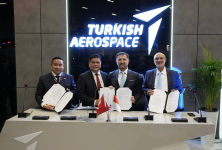
A memorandum of understanding was signed for the sale of more than 30 HURJET to Spain
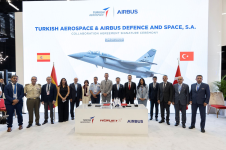
Maybe the upcoming announcement of its partnership with Egypt for KAAN and HURJET in coming years
Users who are viewing this thread
Total: 1 (members: 0, guests: 1)
Pakistan Defence Latest
-

-
-
The Gunboat That Escaped the Indian Navy - Rajshahi - Escape From Chittagong - Full Documentary (2 Viewers)
- Latest: LHA4210
-

-

Country Watch Latest


Latest Posts
-
-
-
-
 LG smart TVs caught logging audio with screen off and snooping on local devices (13 Viewers)
- Latest: Hamartia Antidote
-