C
Navigation
Install the app
How to install the app on iOS
Follow along with the video below to see how to install our site as a web app on your home screen.
Note: This feature may not be available in some browsers.
More options
Style variation
You are using an out of date browser. It may not display this or other websites correctly.
You should upgrade or use an alternative browser.
You should upgrade or use an alternative browser.
India - US Tariff and Relations | News + Updates
- Thread starter lightoftruth
- Start date
More options
Who Replied?Rationale
Registered Member

I never said if was an insurance against India getting sanctioned. I just said the investment was not done by or at the behest of the American government with some overarching strategic goal like you were suggesting , but by thousands of independent US entities acting in their own interest.Interesting:
Thousands of American firms had invested in Russia also and much earlier from 1950-1978 in Iran and Libya as well. India itself had a pretty robust economic relationship with the USA during the Kennedy-Nehru era, to be followed with no US ambassador in Delhi for 6 years from 1971-1977 ( Nixon-Indra Gandhi era) .,
So we don't see how that is an insurance against India getting sanctioned. once again.
Baibers_1260
Trusted Member


Could you explain why the investment by "thousands of independent US entities" have not been able to prevent 7 Indian petroleum importing firms from getting sanctioned?I never said if was an insurance against India getting sanctioned. I just said the investment was not done by or at the behest of the American government with some overarching strategic goal like you were suggesting , but by thousands of independent US entities acting in their own interest.
------------------------------------------------------
Six Indian companies are part of the State Department as well as the OFAC sanctions lists. These include Chennai-based Kanchan Polymers and five Mumbai-based firms—Alchemical Solutions (also known as Chemform Trading), Ramniklal S Gosalia and Company, Jupiter Dye Chem, Global Industrial Chemicals, and Persistent Petrochem.
Link below:
--------------------------------------------------------
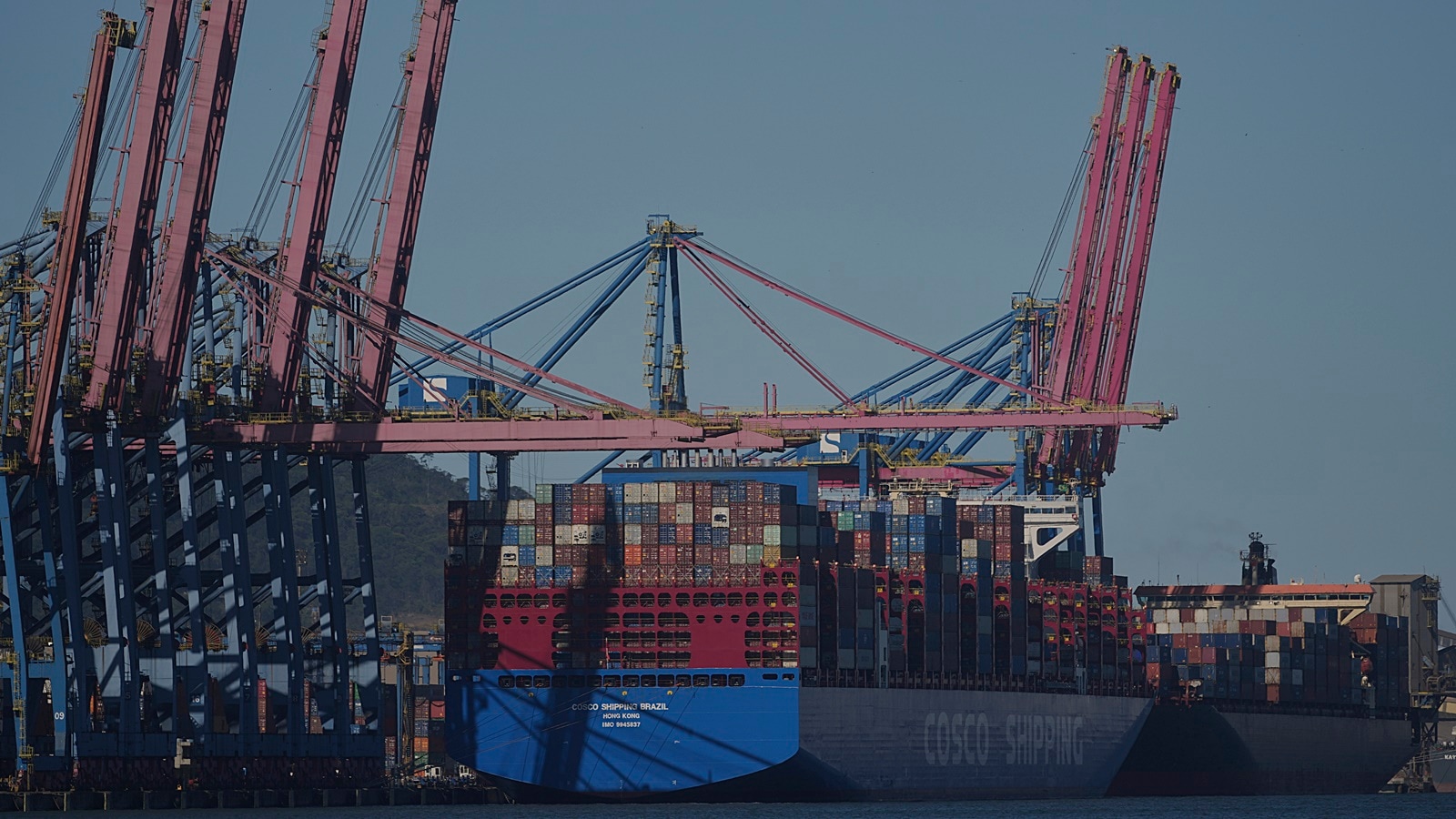
US sanctions 8 Indian companies, 5 Indian nationals as part of latest action against Iran’s energy trade, shipping network
US Sanctions on Indian Firms: The latest action is part of the Donald Trump administration’s “maximum pressure campaign” on Iran, which has now seen multiple rounds of sanctions against individuals and firms over the past few months.
 indianexpress.com
Rationale
Registered Member
What is there to explain ? These companies were engaged in sanctioned trade with Iran. The US investors in India are not involved or interested in that at all. These are all small private companies, so frankly, even the Indian government doesn't really care. Big Indian oil companies stopped buying Iranian oil years back.Could you explain why the investment by "thousands of independent US entities" have not been able to prevent 7 Indian petroleum importing firms from getting sanctioned?
------------------------------------------------------
Six Indian companies are part of the State Department as well as the OFAC sanctions lists. These include Chennai-based Kanchan Polymers and five Mumbai-based firms—Alchemical Solutions (also known as Chemform Trading), Ramniklal S Gosalia and Company, Jupiter Dye Chem, Global Industrial Chemicals, and Persistent Petrochem.
Link below:
--------------------------------------------------------
US sanctions 8 Indian companies, 5 Indian nationals as part of latest action against Iran’s energy trade, shipping network
US Sanctions on Indian Firms: The latest action is part of the Donald Trump administration’s “maximum pressure campaign” on Iran, which has now seen multiple rounds of sanctions against individuals and firms over the past few months.
Baibers_1260
Trusted Member
What is there to explain ? These companies were engaged in sanctioned trade with Iran. The US investors in India are not involved or interested in that at all. These are all small private companies, so frankly, even the Indian government doesn't really care. Big Indian oil companies stopped buying Iranian oil years back.
So now the big 3 will stop buying Russian oil also
Wow ! Even the big 3 Indian Oil Corp (IOC.NS), opens new tab, Hindustan Petroleum Corp (HPCL.NS), opens new tab, Bharat Petroleum Corp (BPCL.NS) have buckled under the threat of sanctions:
So much for Indian sovereignty.-------------------------------------
Exclusive: Indian state refiners pause Russian oil purchases, sources say
By Nidhi VermaJuly 31, 20258:44 AM EDTUpdated 12 hours ago
NEW DELHI, July 30 (Reuters) - Indian state refiners have stopped buying Russian oil in the past week as discounts narrowed this month and U.S. President Donald Trump warned against purchasing oil from Moscow, industry sources said.
India, the world's third-largest oil importer, is the biggest buyer of seaborne Russian crude.
The Reuters Power Up newsletter provides everything you need to know about the global energy industry. Sign up here.
The country's state refiners - Indian Oil Corp (IOC.NS), opens new tab, Hindustan Petroleum Corp (HPCL.NS), opens new tab, Bharat Petroleum Corp (BPCL.NS), opens new tab and Mangalore Refinery Petrochemical Ltd (MRPL.NS), opens new tab - have not sought Russian crude in the past week or so, four sources familiar with the refiners' purchase plans told Reuters.
Rationale
Registered Member
Well, it is just a economic trade-off. I guess the government calculated that the costs of additional tariffs outweighs the discount on Russian oil. It is a sovereign decision. It is not like Russia has not prioritised its own interests over India's.So now the big 3 will stop buying Russian oil also
Wow ! Even the big 3 Indian Oil Corp (IOC.NS), opens new tab, Hindustan Petroleum Corp (HPCL.NS), opens new tab, Bharat Petroleum Corp (BPCL.NS) have buckled under the threat of sanctions:
So much for Indian sovereignty.
-------------------------------------
Exclusive: Indian state refiners pause Russian oil purchases, sources say
By Nidhi Verma
July 31, 20258:44 AM EDTUpdated 12 hours ago
NEW DELHI, July 30 (Reuters) - Indian state refiners have stopped buying Russian oil in the past week as discounts narrowed this month and U.S. President Donald Trump warned against purchasing oil from Moscow, industry sources said.
India, the world's third-largest oil importer, is the biggest buyer of seaborne Russian crude.
The Reuters Power Up newsletter provides everything you need to know about the global energy industry. Sign up here.
The country's state refiners - Indian Oil Corp (IOC.NS), opens new tab, Hindustan Petroleum Corp (HPCL.NS), opens new tab, Bharat Petroleum Corp (BPCL.NS), opens new tab and Mangalore Refinery Petrochemical Ltd (MRPL.NS), opens new tab - have not sought Russian crude in the past week or so, four sources familiar with the refiners' purchase plans told Reuters.
Baibers_1260
Trusted Member
These are all small private companies, so frankly, even the Indian government doesn't really care
@Rationale
So these are "small companies " buying sanctioned Iranian oil?
and the "Indian government" doesn't care ?

So why don't "small companies " lIke IOC, HP, BP, ( and the government doesn't care' ) continue to buy and refine 2 million barrels per day Russian oil
As an expert economist , what do you think will be the price of petrol at the pump in Delhi when you start buying Saudi Arabian and Kuwaiti oil like the "good old days " ?
By the way your Sensex fell 540 points.
Rationale
Registered Member
@Rationale
So these are "small companies " buying sanctioned Iranian oil?
and the "Indian government" doesn't care ?
So why don't "small companies " lIke IOC, HP, BP, ( and the government doesn't care' ) continue to buy and refine 2 million barrels per day Russian oil
As an expert economist , what do you think will be the price of petrol at the pump in Delhi when you start buying Saudi Arabian and Kuwaiti oil like the "good old days " ?
By the way your Sensex fell 540 points.
It is very simple. There are no secondary sanctions imposed on Russian oil yet, so India has been taking advantage of the opportunity while it lasts. If the secondary sanctions are implemented , then it may not be worthwhile and so be it.
The price of crude oil is set globally. Price at the pump will for the most part move with global benchmarks like WTI or Brent. The Indian government does tax petrol and diesel quite heavily and also regulates profits at the oil majors. So, there is some room to absorb higher oil prices if needed, but broadly the impact in New Delhi will not be very different from that in Karachi. In fact, it would likely be worse in Karachi because Pakistan is under an IMF program and doesn't have much fiscal space to shied consumers.
Baibers_1260
Trusted Member
So no more Russian oil and no more Iranian oil because the tarriff hammer has fallenWell, it is just a economic trade-off. I guess the government calculated that the costs of additional tariffs outweighs the discount on Russian oil. It is a sovereign decision. It is not like Russia has not prioritised its own interests over India's.
<<<costs of additional tariffs outweighs the discount on Russian oil.>>>
Thanks ! That's a remarkably perceptive statement, which makes the case for additional US secondary tariffs as well as sanctions. So our President can look back with satisfaction as having quickly forced a $5 trillion economy 1,4 billion population "world's largest democracy " country into to dictated choice of where it can buy its 2 million barrels a day oil from.
Your Shashi Tharoor made a very intelligent statement calling for a resistance against these tarrifs saying 700 million people in India depend on agriculture, and thus require affordable fuel ( presumably diesel),
Well not so long ago India used bullocks to plow their fields. According to the 20th Livestock Census, there were 5,021,587 stray cattle in India and the vast majority are male calves and bulls. India could reduce its petroleum imports by scrapping its tractors and rounding up these stray bulls and putting them to use. A study could be done to calculate the bio-mass collected from the bulls to generate gaseous fuel.
A Gandhian vision.. when the Indian government experimented with Bullock power driven generators.
Energy for 1.4 billion people has to come from somewhere.
Just a thought..
Baibers_1260
Trusted Member
Obviously no secondary sanctions on Russian oil yet because your big 3 have "paused" ( note the word "paused") refining Russian oil so there is likely to be a jam of Russian tankers jamming your Vishakapatnam, and Kandla ports.It is very simple. There are no secondary sanctions imposed on Russian oil yet, so India has been taking advantage of the opportunity while it lasts. If the secondary sanctions are implemented , then it may not be worthwhile and so be it
The sanctions are not just for oil but also for import of Russian arms, Thats CAATSA. ( Hint : The text is green . Please click on it)
Obviously your 1.4 billion $5 trillion GDP "world's largest democracy " country is not going to want either tarrifs or secondary sanctions and will kneel.If the secondary sanctions are implemented , then it may not be worthwhile and so be it.
So what's the game plan for alternative sources of oil and arms to bought in US Dollars obviously ?
How long will your forex reserves last? In 1991 India had been reduced to just three months supply of foreign exchange reserves for fuel purchases. That was when India was a "deaf economy "
Oil prices are "set globally " and India doesn't want to pay the global oil price. India wants to buy discounted Russian oil in Rupees . Buying at the regular global price which is higher will mean higher prices at the pump. The Indian government is unlikely to sustain subsidies in keeping the price to domestic consumers affordable. Protests and public discontent at higher fuel prices will mean a leadership or even regime change in India. In any case your Vishwaguru is getting ready to retire anyway .The price of crude oil is set globally. Price at the pump will for the most part move with global benchmarks like WTI or Brent. The Indian government does tax petrol and diesel quite heavily and also regulates profits at the oil majors. So, there is some room to absorb higher oil prices if needed,
Wonder why India hasn't achieved atmanirbharta (आत्मनिर्भरता' ) in oil and gas,
Don't worry about petrol prices in Karachi. We use donkey carts.but broadly the impact in New Delhi will not be very different from that in Karachi. In fact, it would likely be worse in Karachi because Pakistan is under an IMF program and doesn't have much fiscal space to shied consumers
Good luck with your non-IMF "fiscal space to shield " consumers. Wonder w
Baibers_1260
Trusted Member
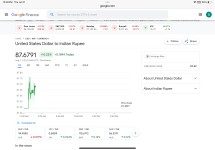
The Dollar Slide:
The USD/INR exchange rate fell to 87.4870 on July 31, 2025, down 0.22% from the previous session. Over the past month, the Indian Rupee has weakened 2.22%, and is down by 4.47% over the last 12 months. Historically, the USDINR reached an all time high of 88.10 in February of 2025.
The USD/INR exchange rate fell to 87.4870 on July 31, 2025, down 0.22% from the previous session. Over the past month, the Indian Rupee has weakened 2.22%, and is down by 4.47% over the last 12 months. Historically, the USDINR reached an all time high of 88.10 in February of 2025.
Attachments
Raj-Hindustani
Banned
His comments came a day after Mr. Trump announced the imposition of a 25% tariff on all goods coming from India starting August 1, plus an unspecified penalty for buying Russian crude oil and military equipment.
Also read | Structural cracks emerge in the India-U.S. strategic partnership
“Well, I don't know what's going to happen. It will be up to India. India came to the table early. They've been slow rolling things. So I think that the President, the whole trade team, has been frustrated with them," Mr. Bessent said in an interview with CNBC.
He also said India has been a large buyer of oil from Russia, which is facing sanctions, and reselling the crude as refined products. “So, they [India] have not been a great global actor,” he added.
Trump says open to negotiations with India, but also links tariff ‘penalty’ to BRICS membership
Mr. Trump’s surprise announcement on Wednesday is being seen as a pressure tactic to get New Delhi to agree to demands made by the U..S, which has, in recent days, got favourable trade deals with major partners such as Japan, the U.K. and the European Union.
India has said it will take all necessary steps to safeguard and promote national interest and that the implications of the tariffs are being examined.

 www.thehindu.com
Also read | Structural cracks emerge in the India-U.S. strategic partnership
“Well, I don't know what's going to happen. It will be up to India. India came to the table early. They've been slow rolling things. So I think that the President, the whole trade team, has been frustrated with them," Mr. Bessent said in an interview with CNBC.
He also said India has been a large buyer of oil from Russia, which is facing sanctions, and reselling the crude as refined products. “So, they [India] have not been a great global actor,” he added.
Trump says open to negotiations with India, but also links tariff ‘penalty’ to BRICS membership
Mr. Trump’s surprise announcement on Wednesday is being seen as a pressure tactic to get New Delhi to agree to demands made by the U..S, which has, in recent days, got favourable trade deals with major partners such as Japan, the U.K. and the European Union.
India has said it will take all necessary steps to safeguard and promote national interest and that the implications of the tariffs are being examined.
Trump and team ‘frustrated’ with India over trade talks, says U.S. Treasury Secretary
U.S. Treasury Secretary frustrated with India over trade talks, Trump imposes tariffs, India vows to protect national interest.
Rationale
Registered Member
These are all negotiating tactics. India has indicated a willingness to make major concessions that the US is happy with , but both want to squeeze every last ounce out of the deal.His comments came a day after Mr. Trump announced the imposition of a 25% tariff on all goods coming from India starting August 1, plus an unspecified penalty for buying Russian crude oil and military equipment.
Also read | Structural cracks emerge in the India-U.S. strategic partnership
“Well, I don't know what's going to happen. It will be up to India. India came to the table early. They've been slow rolling things. So I think that the President, the whole trade team, has been frustrated with them," Mr. Bessent said in an interview with CNBC.
He also said India has been a large buyer of oil from Russia, which is facing sanctions, and reselling the crude as refined products. “So, they [India] have not been a great global actor,” he added.
Trump says open to negotiations with India, but also links tariff ‘penalty’ to BRICS membership
Mr. Trump’s surprise announcement on Wednesday is being seen as a pressure tactic to get New Delhi to agree to demands made by the U..S, which has, in recent days, got favourable trade deals with major partners such as Japan, the U.K. and the European Union.
India has said it will take all necessary steps to safeguard and promote national interest and that the implications of the tariffs are being examined.
Trump and team ‘frustrated’ with India over trade talks, says U.S. Treasury Secretary
U.S. Treasury Secretary frustrated with India over trade talks, Trump imposes tariffs, India vows to protect national interest.
The main sticking points are:
1) The US wants unrestricted access for agricultural and dairy products which India is not willing to provide
2) India wants reciprocal tariffs to be in the 10-15% range, whereas the US wants it around the same levels other larger developing economies that the US has a deficit with have got.
It is the interest of both sides to do a deal, so I expect a few more days or weeks of drama, but the deal to ultimately happen.
C
Cash gk
Guest
"This was inevitable. They weren’t targeting you because they saw you as a real power but when you overreached by attacking Pakistan, you exposed your own weaknesses. The ongoing dialogue and military encounters revealed that you couldn’t even defend your own territory effectively. Now, let’s talk about oil: you were refining Russian oil and giving them access to dollar-free trade, while selling that oil at Russian prices to other countries. This opened the eyes of the West, especially America, to how Russia is managing this prolonged war — not just surviving, but draining Western resources in the process. It’s a two-way fight, not one-sided. America initially planned to focus on you, but your actions against Pakistan revealed new strategic openings they couldn’t ignore."Could you explain why the investment by "thousands of independent US entities" have not been able to prevent 7 Indian petroleum importing firms from getting sanctioned?
------------------------------------------------------
Six Indian companies are part of the State Department as well as the OFAC sanctions lists. These include Chennai-based Kanchan Polymers and five Mumbai-based firms—Alchemical Solutions (also known as Chemform Trading), Ramniklal S Gosalia and Company, Jupiter Dye Chem, Global Industrial Chemicals, and Persistent Petrochem.
Link below:
--------------------------------------------------------
US sanctions 8 Indian companies, 5 Indian nationals as part of latest action against Iran’s energy trade, shipping network
US Sanctions on Indian Firms: The latest action is part of the Donald Trump administration’s “maximum pressure campaign” on Iran, which has now seen multiple rounds of sanctions against individuals and firms over the past few months.
Raj-Hindustani
Banned
I don't know but I connect the dots more about deals that USA was expecting but india is not agreed.These are all negotiating tactics. India has indicated a willingness to make major concessions that the US is happy with , but both want to squeeze every last ounce out of the deal.
The main sticking points are:
1) The US wants unrestricted access for agricultural and dairy products which India is not willing to provide
2) India wants reciprocal tariffs to be in the 10-15% range, whereas the US wants it around the same levels other larger developing economies that the US has a deficit with have got.
It is the interest of both sides to do a deal, so I expect a few more days or weeks of drama, but the deal to ultimately happen.
USA pushed - F35 deal - india is not interested.
USA pushed - f18 for navy and F21 for airforce - india not buying it.
USA pushed - air defence - india is buying from Russia.
And the list go on !!!
USA is expecting to sell weapons to india but since india is not buying or buying from Russia.... It's hurting them most.
Users who are viewing this thread
Total: 1 (members: 0, guests: 1)


