corven
Registered Member

This kind of thing is obviously fake. Is it necessary to distinguish the real from the fake?care to post at least the source so everyone can judge if this is credible or not?
Follow along with the video below to see how to install our site as a web app on your home screen.
Note: This feature may not be available in some browsers.
This kind of thing is obviously fake. Is it necessary to distinguish the real from the fake?care to post at least the source so everyone can judge if this is credible or not?
This kind of thing is obviously fake. Is it necessary to distinguish the real from the fake?

Yes , it's Indian style boasting but the plausibility content is much higherIndian-style boasting is worthless. Please stop posting such content—it's a waste of bandwidth.
I post what I want, don't open it if you don't want to see them, simple as that.Indian-style boasting is worthless. Please stop posting such content—it's a waste of bandwidth.
We Are Watching China Become an Air Force Superpower, China has more aircrafts in development than the rest of the world combined
By Reuben Johnson
August 21 2025
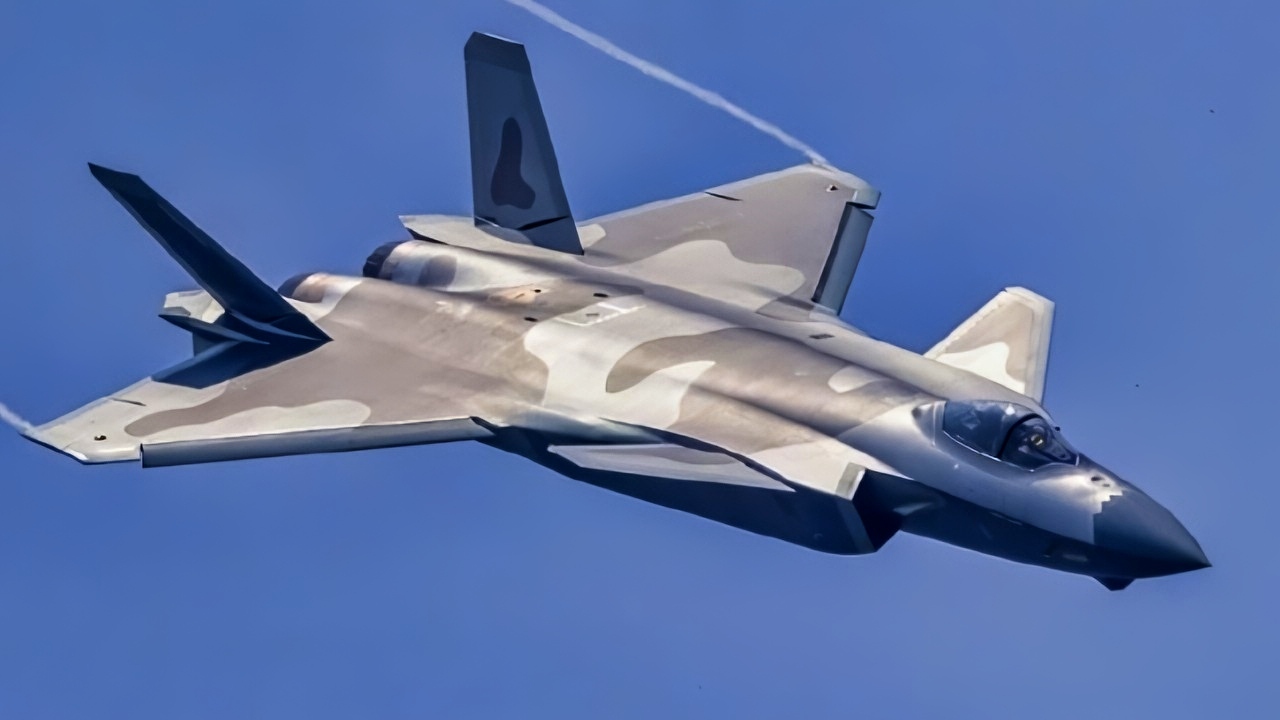
China J-20A Fighter in the Sky. Image Credit: Creative Commons.
Key Points and Summary – China’s airpower has entered a startling new era, moving beyond its history of copying Russian designs and stealing U.S. technology to producing a flurry of unique, indigenous combat aircraft.
-In the last year, several new variants and at least three truly new, tailless fighter concepts have appeared.
-While the exact purpose of these secret programs remains a mystery, two facts are clear: China is now innovating independently, and it currently has more new aircraft types in development than the rest of the world combined, raising a critical question about whether the West can keep pace.
China’s Air Force Is Rising Fast
WARSAW, POLAND – Beginning in December 2024, the world has been introduced to several new combat aircraft that were manufactured, as well as designed, in the People’s Republic of China (PRC).
The latter point is important because since the 1990s, PRC fighters and other military aircraft have been either copies of Russian designs, or there were major sections of the aircraft having not been designed in the PRC (as in the wings of the Y-20 transport/C-17 lookalike that were designed by Antonov in Ukraine), or were otherwise inspired by Russian designs.
Then there is the J-35A/B model fighter aircraft. Both the land-based “A” model and the carrier-capable “B” configuration bear a remarkable resemblance to the US F-35 design. The most significant difference is that this Chinese aircraft is powered by two engines in the class of the US GE F414 engine rather than a single, higher thrust engine with GE F110 performance, as in the case of the F-35.
In 2016, a Chinese national named Su Bin, who was living in Canada, was convicted of stealing classified data on the F-22 and F-35 programs, translating the material into Chinese, and then selling it to entities in the PRC to support their military R&D programs. He had also made numerous trips to the US to interact with hackers and other sources.
“Su assisted the Chinese military hackers in their efforts to illegally access and steal designs for cutting-edge military aircraft that are indispensable to our national defence,” said John Carlin, assistant attorney general for national security, who spoke to the media after the conviction.
What Do The New-Generation Chinese Fighters Tell Us
But the new designs we have seen from Chengdu Aerospace (CAC) and the adjoining Aircraft Plant No. 132, or the Shenyang Aircraft Works (SAC), are distinctly unique design concepts. The configurations of these aircraft appear to be a first in that they have been developed by engineering teams working without any foreign “inspiration.”
In a recent long report published by Shephard Media, one analyst looks at the new PRC designs and asks if Western analysts are drawing the correct conclusions. Is there an accurate interpretation of what the latest technologies demonstrated by these new fighters reveal about their industry, and why they were created in the first place?
There is more than one angle to the topic of what may or may not be happening with the Chinese aerospace sector. One fact that the report highlights is that “someone in Beijing is releasing money,” which may be the largest tranche of funding allocated to the PRC’s military programs in recent years.
Keeping the major defense enterprises busy and financially solvent has always been a major objective of the central planners in the PRC system, but this is not the only reason for the sudden appearance of so many new design types. Most of the Chinese defense industrial companies I have interacted with over the years have consistently described the same situation.
They say that they are frequently under pressure to develop more foreign markets so that they are not entirely dependent on procurements from the People’s Liberation Army (PLA) and become more self-supporting. So why is the PLA now turning around and spending more money on them instead of less?
There are also debates within the PLA as to which type of aircraft is more needed than others, and the different defense enterprises are also usually competing with one another for funding. But almost none of these arguments ever see the light of day in the pathologically secretive PRC.
The Major New Arrivals
Some of the “new” aircraft we have seen in the past nine months are more like “new and improved” versions of older models rather than something that has never been flown before. The J-20, which first flew in 2011, finally flew a two-seat operational variant.
The J-15, which was copied from the Russian Sukhoi Su-33, was modified this year with a new forward fuselage and nose gear to enable catapult launch capability. This fighter is now designated J-15T, and in parallel, there is another new variant that is the J-15DT – an electronic warfare version that would be the PLAN’s answer to the US EA-18G Growler.
But the real curiosities are the Chengdu J-36 and Shenyang J-50/J-XDS that both flew on Mao Zedong’s birthday on 24 December 2024 – both tailless designs with no vertical control surfaces. A third variant of the latter that flew in August of this year may be powered by two engines and also features a new, variable geometry wing.
The question remains if these aircraft are final configurations that will then enter serial production once their design is validated. Or are they competing concepts for the same mission, and only one of them will end up being built in large numbers? Or is one or more of them an “X-plane” platform that is designed to validate a specific design concept or technology?
None of this is knowable now, but two facts are clear. One is that the PRC is no longer copying other nations’ designs. The other is that no matter what class or category of aircraft you mention, the PRC has more of that type in development than the rest of the world combined. Will the West be able to keep pace is another – and that is the biggest unknown of all.
China is also working on next generation satelites, radars and mutiple 6 gen aircrafts, sometimes latecomers have the best game, they are free of old tech liabilities.While it's true that China has taken over the world in aircraft design and manufacturing (and manufacturing in general), there are other issues that still impact it's superiority.
1) The US is building F-35's in thousands. China has to catch up with the US to create parity.
2) There are nearly 5000 combat jets the US military has. All 4+ generation. With some upgrades, they will possess the latest radars and long range missiles that are currently designed for 5th gen jets.
China needs nearly 4000 fighter jets before it can have parity.
3) US is working on next generation of Satellite and Space warfare. If you noticed, they've not bought any E-7's and still using 40 year old E-3 AWACS systems, although upgraded. We know today, half the war is based on electronic warfare capability. So what does this mean? It means the US is putting all it's electronic warfare components in space so the data and capability is readily available across the world in any conflict zone real time. China is still behind here also.
4) US has a network of allies, China is a standalone nation. If China doesn't want to build allies for wars, that's fine. But it must build an eco-system of foreign military sales to generate additional revenue and fund modern technology. China has the money to do it alone, but what she really needs are partner nations like Pakistan, in its influence. Strategic value of this goes far beyond. This is soft power.
So yes, it looks like China is making a lot of advancement. It's ahead of the rest of the world, even Europeans. But lacks far behind the American military and its soft power.
China is also working on next generation satelites, radars and mutiple 6 gen aircrafts, sometimes latecomers have the best game, they are free of old tech liabilities.

We preferred the other way of just work and then come up with surprises instead of posting 10 "Breaking" news for a single pair of wing delivered.Yes , it's Indian style boasting but the plausibility content is much higher


I'm replying because your useless posts are taking up forum resources. Most importantly, they are creating a negative impression of China. This is not how Chinese people behave—just look at the attitudes of other Chinese members.I post what I want, don't open it if you don't want to see them, simple as that.

While it's true that China has taken over the world in aircraft design and manufacturing (and manufacturing in general), there are other issues that still impact it's superiority.
1) The US is building F-35's in thousands. China has to catch up with the US to create parity.
2) There are nearly 5000 combat jets the US military has. All 4+ generation. With some upgrades, they will possess the latest radars and long range missiles that are currently designed for 5th gen jets.
China needs nearly 4000 fighter jets before it can have parity.
3) US is working on next generation of Satellite and Space warfare. If you noticed, they've not bought any E-7's and still using 40 year old E-3 AWACS systems, although upgraded. We know today, half the war is based on electronic warfare capability. So what does this mean? It means the US is putting all it's electronic warfare components in space so the data and capability is readily available across the world in any conflict zone real time. China is still behind here also.
4) US has a network of allies, China is a standalone nation. If China doesn't want to build allies for wars, that's fine. But it must build an eco-system of foreign military sales to generate additional revenue and fund modern technology. China has the money to do it alone, but what she really needs are partner nations like Pakistan, in its influence. Strategic value of this goes far beyond. This is soft power.
So yes, it looks like China is making a lot of advancement. It's ahead of the rest of the world, even Europeans. But lacks far behind the American military and its soft power.
China does not have a worldwide commitment. She lacks the ambition to become a hegemon. So it doesn't need to produce that many weapons. Anyway, too much resource spending on weapons is wasteful and counterproductive.I am not disagreeing with you. One thing that goes to China's favor and in many ways, in Pakistan's favor is that these countries are working on the latest tech. Free from legacy problems and learnings. That by itself is a huge plus. All other major nations have trillions of dollars worth of systems that they've kept from the 80's and kept upgrading.
But the challenges are there as I outlined in my post. China needs to expand it's fleet to near 4000+ 4.5th and 5th gen Jets to create parity. I'd think by 2035, China should have nearly 1500 J-20's, nearly 600+ J-35's and almost 2000 other 4.5 gen jets. That gives it serious teeth of 4000+ aircraft if you add another 500 specialized 6th gen platforms
and that number reaches 4500.
With technological superiority over 4th gen platforms, this number gives it a true super power muscle it needs to create parity with the US.
What China now needs, and needs bad, is expertise in VTOL/STOVL technology. They should've done what the Americans did, buy it from Russia from YAK aircraft manufacturer. China needs to build a version of J-35 that's built on VTOL/STOVL. That's imperative for its global ambitions.
Lastly, China needs to focus heavily on deploying its air assets to create a bigger air power footprint. The US has 11 operational aircraft carriers. While it will take China another 15 years to come close, it can start to easily produce LHD's, that can be used as light carriers like Japan. With 15 - 20's of these, 1-2 squadrons of 5th gen fighters deployed all over the globe in task force level, it's real global force.