Pakistan Air Force | News & Discussions

To view this content we will need your consent to set third party cookies.
For more detailed information, see our cookies page.
 
To view this content we will need your consent to set third party cookies.
For more detailed information, see our cookies page.
 
  • Like
Reactions: TAC
To view this content we will need your consent to set third party cookies.
For more detailed information, see our cookies page.
 
To view this content we will need your consent to set third party cookies.
For more detailed information, see our cookies page.
 
Indus Sentinel Grid
@ISGofficial_

TRIDENT EA-1: PAKISTAN AIR FORCE'S DOMINANT LONG-RANGE ELECTRONIC ATTACK POWERHOUSE 🇵🇰

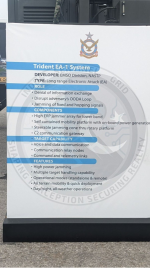
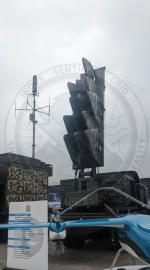
The Trident EA-1, indigenously developed by the EMSO Division of NASTP, is the Pakistan Air Force’s long-range electronic attack spearhead, built to dominate the electromagnetic battlespace. With high-power jamming, it shuts down fixed and frequency-hopping communications, cripples enemy command links, and shreds the OODA loop. Its high-ERP jammer array, steerable jamming cone, and self-powered all-terrain platform give it rapid-deployment, all-weather punch in both standalone and remote modes.

During Indian aggression of Operation Sindoor, Trident EA-1 shattered the Indian Air Force’s situational awareness, crushing AWACS connectivity, jamming communications, and rendering their fighters disoriented and vulnerable. This electronic dominance created a lethal kill zone, enabling Pakistan’s J-10Cs to engage from standoff distances with PL-15 missiles, resulting in the shooting down of 6 Indian jets (including 3 Rafales, the crown jewel of the IAF) swiftly dismantling their offensive and cementing Trident EA-1’s role as a game-changing force multiplier in contemporary aerial warfare.

1755004300088.png


1755004349374.png
 
Indus Sentinel Grid
@ISGofficial_

TRIDENT EA-1: PAKISTAN AIR FORCE'S DOMINANT LONG-RANGE ELECTRONIC ATTACK POWERHOUSE 🇵🇰

The Trident EA-1, indigenously developed by the EMSO Division of NASTP, is the Pakistan Air Force’s long-range electronic attack spearhead, built to dominate the electromagnetic battlespace. With high-power jamming, it shuts down fixed and frequency-hopping communications, cripples enemy command links, and shreds the OODA loop. Its high-ERP jammer array, steerable jamming cone, and self-powered all-terrain platform give it rapid-deployment, all-weather punch in both standalone and remote modes.

During Indian aggression of Operation Sindoor, Trident EA-1 shattered the Indian Air Force’s situational awareness, crushing AWACS connectivity, jamming communications, and rendering their fighters disoriented and vulnerable. This electronic dominance created a lethal kill zone, enabling Pakistan’s J-10Cs to engage from standoff distances with PL-15 missiles, resulting in the shooting down of 6 Indian jets (including 3 Rafales, the crown jewel of the IAF) swiftly dismantling their offensive and cementing Trident EA-1’s role as a game-changing force multiplier in contemporary aerial warfare.

View attachment 140441


View attachment 140443
Sir, if this is genuine, then IAF had no chance, and I had no idea NASTP could come up with such an advanced Electronic Attack Battlespace Solution. This is truly game-changing stuff.

Then the question arises, why are we pursuing the Turkish HavaSOJ?
 
Sir, if this is genuine, then IAF had no chance, and I had no idea NASTP could come up with such an advanced Electronic Attack Battlespace Solution. This is truly game-changing stuff.

Then the question arises, why are we pursuing the Turkish HavaSOJ?
PAF has silently made very serious/good advances in the last decade.
Why Turkish despite having own, for more variety, fail proof redundancy, new ideas to incorporate in our own future developments.
 

Users who are viewing this thread

Pakistan Defence Latest

Back
Top