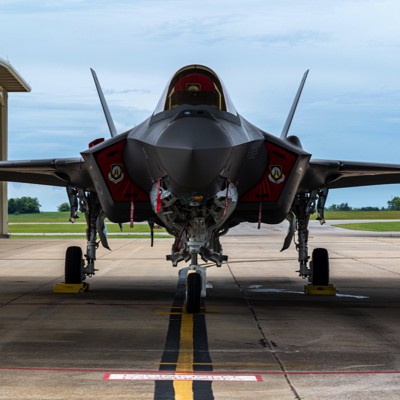
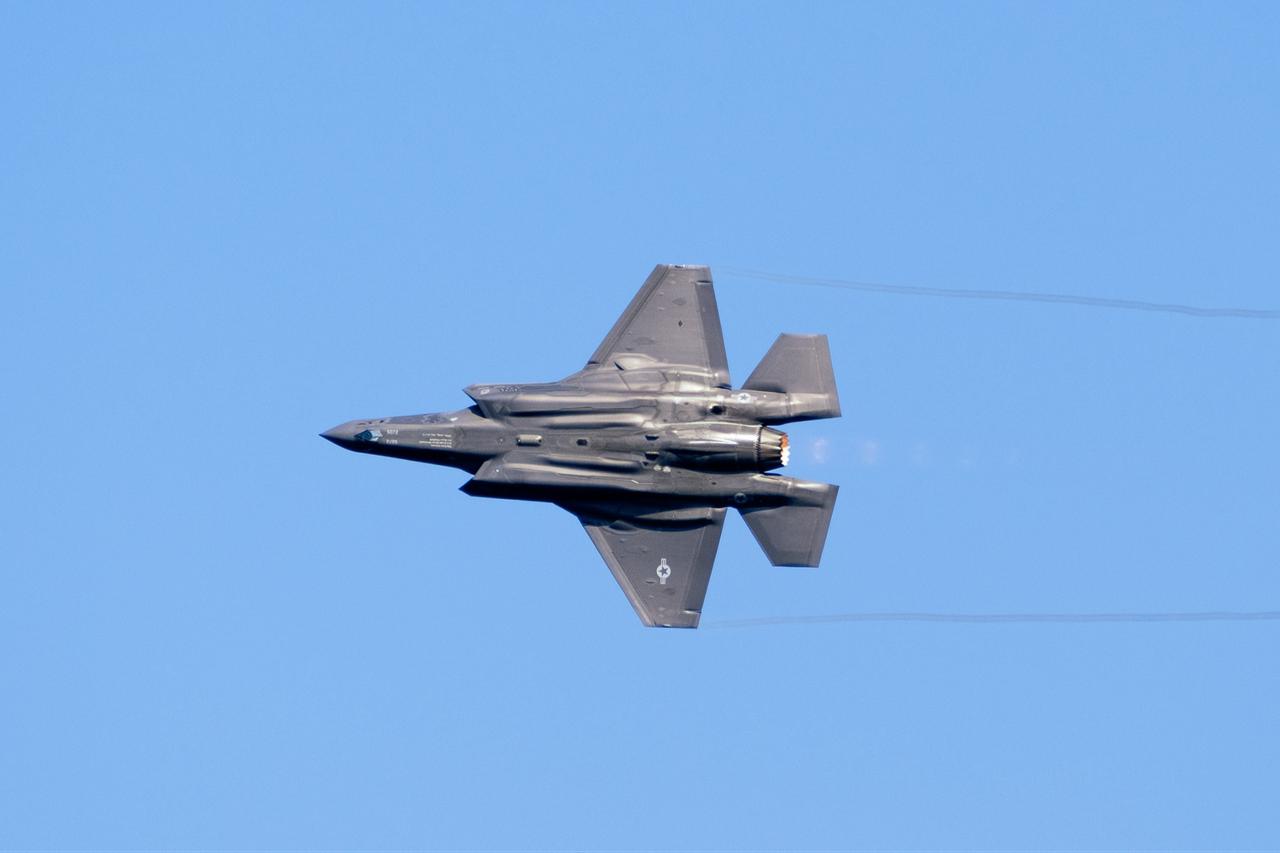
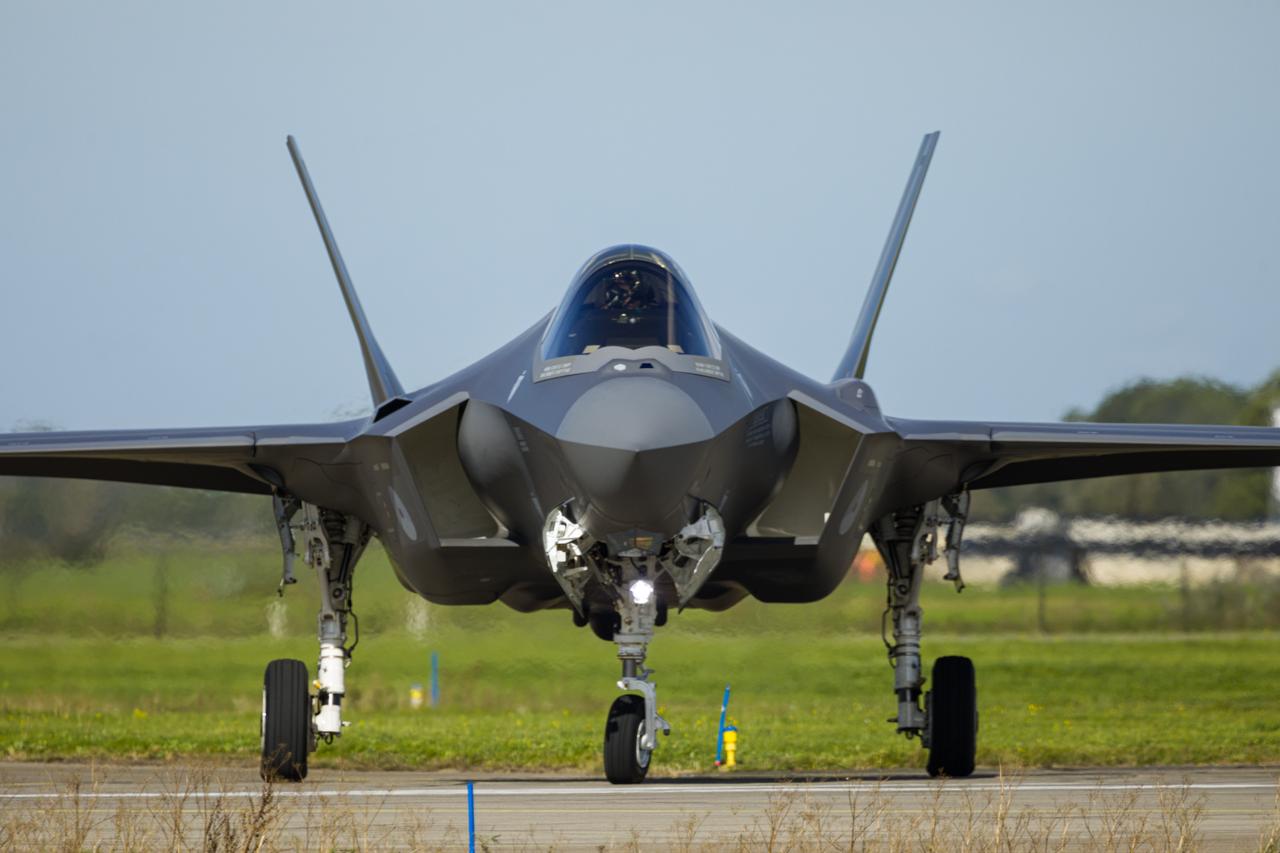
500th F-35 has been delivered to the US Air Force

Considering the cost of this programme and how long it has been running for I would have thought this would have happened years ago...
 
Total F-35 inventory is nearing 800+
 
Considering the cost of this programme and how long it has been running for I would have thought this would have happened years ago...

Total inventory is near 800 for the US, with foreign deliveries added 1,100-1,200.
 
Total F-35 inventory is nearing 800+

But only 500 delivered to USAF right?

Of those being delivered are any fully combat capable considering the software issues?

Do not get me wrong, hell of a plane, but at this point I would have thought the project for USAF would have been completed
 

Is this new about F-35 True ? haven't seen any other new channels reporting it, also its funny when Indians make fun of F-35 lol
 
But only 500 delivered to USAF right?

Of those being delivered are any fully combat capable considering the software issues?

Do not get me wrong, hell of a plane, but at this point I would have thought the project for USAF would have been completed

500 for the USAF, and yes newly delivered F-35s are fully combat capable. Over 1,200 delivered now worldwide. Lockheed has a production rate of 156 per year
 
500 for the USAF, and yes newly delivered F-35s are fully combat capable. Over 1,200 delivered now worldwide. Lockheed has a production rate of 156 per year

OK, strange, as this article states major issues.

USAF won’t resume full F-35 buys until Lockheed wrings problems from upgrade: service chief​

Gen. Allvin says the decision flows from new DOD priorities.​


By Audrey Decker

Staff Writer
July 23, 2025


ROYAL AIR FORCE FAIRFORD, England—Lockheed Martin needs to make progress on a host of delayed upgrades to the F-35 fighter jet before the Pentagon will return to buying the jet in planned levels, the Air Force’s chief said.

Frustration over delays with the Block 4 upgrade—coupled with a broader Pentagon budget reprioritization—led the service to request just two dozen new jets in its 2026 budget proposal—half of last year’s plan and down from the 44 bought in 2025.

The Air Force will increase procurement again when it can buy “F-35s that are most relevant for the fight,” Gen. David Allvin told Defense One on the sidelines of the Royal International Air Tattoo.

"In the end, because we have limited financial resources, we need to make sure that the F-35s we buy have the capability to meet the pacing threat. So, some of the delays with respect to Block 4 and TR-3 weighed into decisions by the department,” Allvin said.

Officials argue that they need a fully capable Block 4 jet from the start, rather than receive jets that will need to be retrofitted with the full suite of upgrades, which includes new software, weapons, sensors, and a new processor—capabilities the Pentagon argue would be needed in a fight against China.

Lockheed has run into problems integrating new software and hardware for the upgrade, resulting in years of schedule and cost overruns. Delays with TR-3, the “backbone” of Block 4, led the Pentagon to stop taking deliveries for a year. The military resumed accepting the jets last July, even though they come with a “truncated” version of the upgrade.

Lockheed executives recently announced that the full combat version of the TR-3 upgrade is ready, but the F-35 Joint Program Office has yet to confirm that, or say when TR-3 will get formal approval.

Beyond TR-3, the timeline for the entire Block 4 effort remains uncertain. Lawmakers have warned its planned capabilities have already been “reduced,” according to an adopted amendment from Rep. Seth Moulton, D-Mass., in the House Armed Services committee’s version of the 2026 defense policy bill.

Lawmakers “remain frustrated” over the program’s delays and performance, according to Moulton’s amendment, which requests a briefing on the status of TR-3 and Block 4. In their bill, House lawmakers did not add to the planned purchase of 24 F-35s in 2026, and HASC Chairman Mike Rogers said that the committee recognizes that the F-35 cut stems from a “strategic decision to finally prioritize funding towards sustainment and modernization.” The Senate Armed Services Committee, however, has moved to add 10 jets, bringing their version up to 34 jets.

The F-35 program came on the chopping block after Defense Secretary Pete Hegseth announced a 8 percent shift of DOD funds to pay for new priorities from the Trump administration, and the Air Force needed money to move ahead with a sixth-gen fighter jet, the F-47. Other high-ticket items got the axe as well in this year’s budget proposal, including the service’s E-7 radar plane.

While programs like the F-47 and B-21 stealth bomber are poised to win big in the budget, total aircraft procurement is taking a nosedive. The service is now saying that previous benchmarks, such as buying 72 fighters a year, are no longer achievable.


Leading up to the budget release, Allvin argued in public statements that Hegseth’s priorities necessitated “more Air Force”—and therefore more money for his service.

During the July 18 interview, Allvin maintained that his call was heard. He said he will wait until Congress finalizes its budget before issuing a final verdict.

"We were able to clearly articulate what we believe the U.S. needs from its Air Force and the value of more Air Force. To the extent that weighed against the other priorities of the Department, in the end, I’ll leave it to others to keep score. I will tell you that I am satisfied my voice was heard. I'm satisfied we are moving forward with some of the key programs, like F-47. I will continue to advocate for more Air Force, while I’ll also continue to respect the decisions that the senior leaders make,” he said.

The service is also requesting to divest 340 aircraft, including shedding all of its A-10s ahead of schedule. The service had planned a gradual decommissioning of the A-10 Warthogs but, Allvin said, Hegseth’s budget reallocation caused the service to take another look at its plans.

Congress wants to protect some of the A-10s in its defense policy bill—a move Allvin hopes will come with the funding needed to keep the aircraft flying. If not, something else will be cut: "If they don't give us more resources, then something that was above the line, that was a higher priority will have to come off."

Long term, it’s “still unknown” whether the Air Force will be able to reverse its shrinking fleet size, Allvin said. It’s more important to focus on the “outcomes” of what it buys, rather than the specific number of tails it has, he said.

"Will we have fewer aircraft? Will we have more [Collaborative Combat Aircraft]? Still an unknown question, but to me, it's the outcome that counts. What are the capabilities that we can provide? How much will it cost to sustain? How much will the investment cost? Are the investments paying off? Those are year to year conversations we have, but the overall arc, I think, will prove out that more Air Force is better for the nation,” he said.

Lessons from Midnight Hammer

The might of the U.S. Air Force was on full display last month during Operation Midnight Hammer, Allvin said, when seven B-2 bombers attacked three Iranian nuclear facilities, a testament to how gaining control of the air can help prevent a wider war.

“We're not fighting. We're not in a big war. We didn't send thousands of troops that were going to be engaged, and we couldn't disentangle for months or years. That to me, demonstrates very, very viscerally the importance of air power and air dominance,” he said.

Midnight Hammer also proved that stealth “still matters,” Allvin said. Some speculate that advanced sensors could render stealth obsolete one day, but Allvin described stealth as the “price of admission” in a future fight.

While a long-range strike on enemy territory in the Pacific would look vastly different than what the U.S. did in Iran, “the same principles apply that we need to be able to penetrate and create effects in dense threat environments,” Allvin said, pointing to the development of the future B-21 bomber, a stealthier and smaller replacement of the B-2.

The complex operation featured more than 125 aircraft, including the B-2s, fourth and fifth-gen fighters, and dozens of tankers, and the chief lauded the work of U.S. airmen, from pilots to maintainers, who made it happen.

“When you put American airmen in a tough situation, in a time that matters, they're going to perform,” Allvin said.


Is this new about F-35 True ? haven't seen any other new channels reporting it, also its funny when Indians make fun of F-35 lol

That drama that happened with the Royal Navy F-35 - South India...

...it gives you an idea how much the Americans trust their "buddies" - the Indians.
 
That drama that happened with the Royal Navy F-35 - South India...

...it gives you an idea how much the Americans trust their "buddies" - the Indians.
I know about that Kerala incident, didn't know one also landed in Japan with similar technical issues.
 
But only 500 delivered to USAF right?

Of those being delivered are any fully combat capable considering the software issues?

Do not get me wrong, hell of a plane, but at this point I would have thought the project for USAF would have been completed
Out of the 500 F-35's by USAF 200+ are TR-3/blk4 and 170-190 TR-3/blk4 F-35's will be delivered by LM. All combat coded F-35's are in block 3F and above/TR-3.
 
Real benchmark achieved for the USAF. Nice.

By the way do ask the USAF chiefs to bring the Raptor to RIAT please, I did tell the US airman that day and they promised to forward the request to the bigwigs.
 
F-35 is the most important jet in the world right now in my opinion. The number of 500 is very impressive indeed
 

F-35 Block 4 upgrade delayed until 2031, costs balloon by $6B​

Close-up of F-35 fighter jet flying at the 39th Fleet Week air show in San Francisco, Oct 12, 2019. (Adobe Stock Photo)

Close-up of F-35 fighter jet flying at the 39th Fleet Week air show in San Francisco, Oct 12, 2019. (Adobe Stock Photo)

September 06, 2025 08:04 AM GMT+03:00

The Pentagon's troubled F-35 Block 4 modernization program will not be complete until 2031 at the earliest, marking a five-year delay from its original timeline and a two-year slip from the previous 2029 estimate, according to a Government Accountability Office report released on Wednesday.

The long-awaited upgrade package, which has already grown from an initial $10.6 billion to $16.5 billion as of 2021, will include fewer capabilities than originally envisioned as the F-35 Joint Program Office reorganizes the effort under a 2023 congressional mandate aimed at improving program execution.

Scaled-back capabilities and unknown costs of F-35​

The Block 4 major subprogram will deliver fewer than the originally planned 66 capabilities, with final specifications expected in fall 2025.

Program officials told GAO they could not specify exactly which technologies would remain, but confirmed that any upgrades requiring separate engine and power management system improvements would be deferred.

"According to program officials, the new Block 4 major subprogram will have fewer capabilities, will experience schedule delays, and will have unknown costs until the program office finishes developing its cost estimate," the GAO stated.

An updated cost estimate is expected "later in 2025."

The F135 engine core upgrade, critical for several planned capabilities, will not enter production until at least 2031, pushing post-Block 4 capabilities that depend on these upgrades to 2033.

An F-35 preparing for takeoff in Leeuwarden, Netherlands, Oct. 4, 2024. (Adobe Stock Photo)

An F-35 preparing for takeoff in Leeuwarden, Netherlands, Oct. 4, 2024. (Adobe Stock Photo)

Persistent production delays plague F-35 program​

Lockheed Martin delivered all 110 F-35 aircraft late in 2024, with an average delay of 238 days behind schedule — a stark deterioration from 2021, when only 22 of 142 aircraft were delivered late with an average 16-day delay.

The delays were largely attributed to Technology Refresh 3 (TR-3) hardware and software issues.

As of May 2024, Lockheed was still working to deliver 20 aircraft originally scheduled for delivery in 2024. The company faced severe parts shortages, with more than 4,000 parts shortages in the final production stage in February — twice the historic average. Of these, more than 1,600 parts were required for TR-3 hardware.

The Defense Contract Management Agency reported that 52 in-progress jets had to be temporarily removed from the production line and stored due to parts delays. The wing flap component has been identified as one of the main drivers of production delays over the past two years.

Engine deliveries and contractor incentives under fire​

RTX subsidiary Pratt & Whitney failed to deliver any engines on time in 2023 and 2024, with 2024 deliveries averaging 155 days late.

All 123 engines delivered in 2024 arrived after projected due dates, predominantly due to production and supply chain issues, though these delays did not impact aircraft production.

Despite persistent delays, both Lockheed Martin and Pratt & Whitney continued earning incentive fees, leading GAO to criticize what it called a "reward (to) contractors for delivering engines and aircraft late."

"The F-35 program's use of incentive fees has largely been ineffective at holding the contractors accountable to delivering engines and aircraft on time," the GAO stated, noting that the Lot 12-14 contract structure allowed Lockheed to deliver aircraft up to 60 days late while still earning partial fees totaling hundreds of millions of dollars.

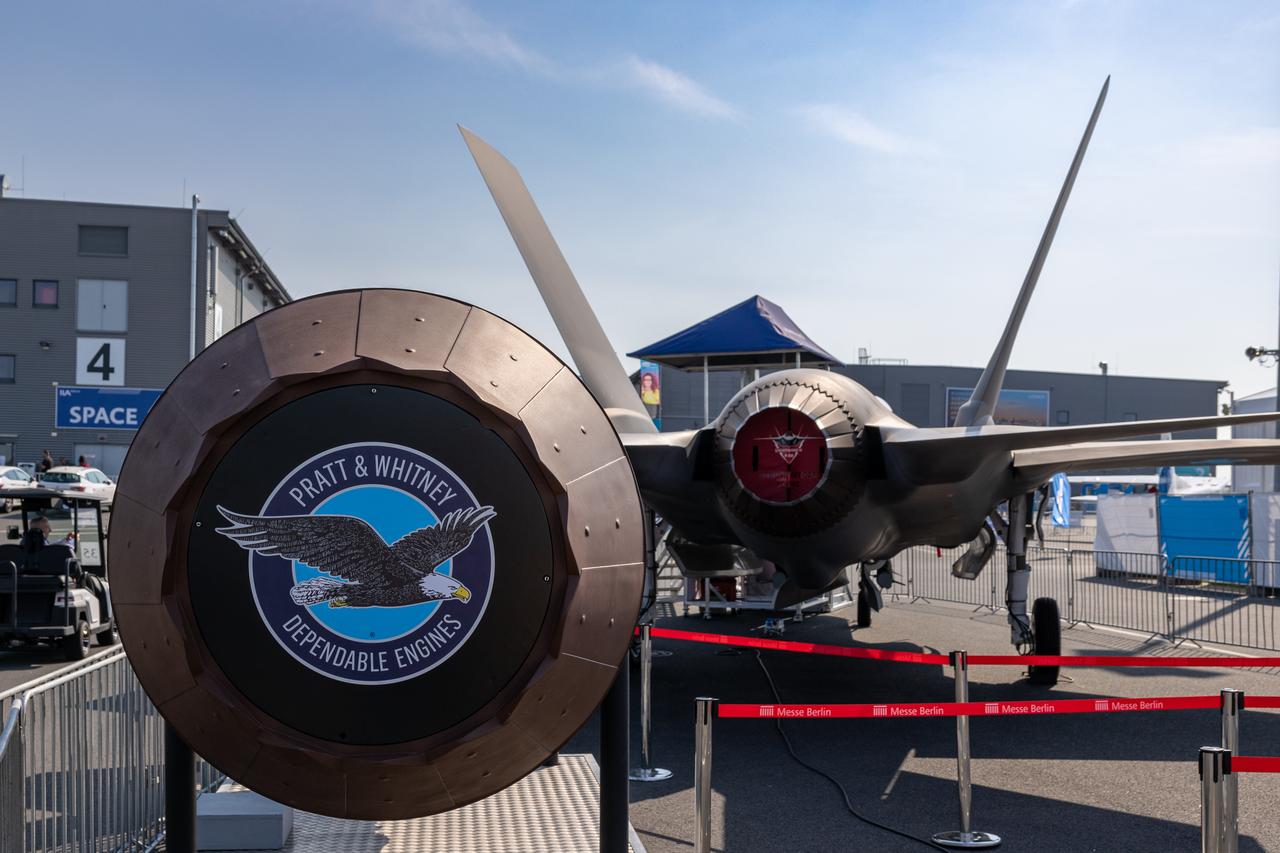
Pratt & Whitney F135 engine for the Lockheed Martin F-35 Lightning II. (Adobe Stock Photo)

Pratt & Whitney F135 engine for the Lockheed Martin F-35 Lightning II. (Adobe Stock Photo)

F-35's rising costs and lifetime expenses​

The F-35's acquisition costs have ballooned to more than $485 billion as of December 2023, nearly 10% higher than the December 2022 estimate of $442 billion and more than double the original 2001 baseline cost.

The increase represents $89.5 billion more than the 2012 rebaselining.

The program's lifetime cost, including sustainment, now exceeds $2 trillion. The enhanced power and cooling requirements for Block 4 upgrades will increase engine wear, accounting for $38 billion of the lifecycle cost estimate growth.

International concerns echo US findings​

GAO recommended that the Pentagon reassess Lockheed Martin's production capacity and increase the use of modern design tools in product development processes.

The Pentagon accepted four of GAO's six recommendations while partially agreeing with two others.

Despite the challenges, Lockheed Martin pledged to deliver between 170 and 190 F-35s in 2025 and continue fielding Block 4 capabilities.

"The F-35 is combat-proven, offers the most advanced capability and technology, and is the most affordable option to ensure America and its allies remain ahead of emerging threats," Lockheed Martin said in a statement.

"In partnership with the F-35 Joint Program Office, we will deliver 170 to 190 F-35s this year and continue fielding Block 4 capabilities to ensure the F-35 maintains its unmatched dominance in the skies," the statement added.
 
This ever increasing price tag for F-35 is just simply unsustainable, 2031 timeline will become 3031 if the cost keeps skyrocketing like this.
 

Users who are viewing this thread

Back
Top