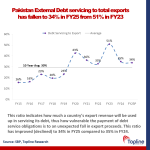
Pakistan External Debt

Pak. is'nt defaulting, does not mean, we are prospering.

but illusion of growth is too real.


as per government data and paid analysts, we are about to become next 'Asian Tiger' then in next 5 yeas (8 years from now) we will be ready to become 'Switzerland'!
 
View attachment 138749

Foreign Loans Seen As Triumphs While Pakistan Sinks Deeper Into Debt Trap​

Pakistan faces a severe debt crisis with $250 billion owed, risking economic collapse, sovereignty loss, and burdening future generations without reforms​

Incorrect and out of date information and poorly explained. A wishy washy analysis.
 

PTI obtained 76pc, not 80pc, of total debt, admits Shaukat Tarin​

Shaukat Tarin said that loans taken by the PTI government were substantial but the country's economy grew at the same pace​


By News Desk
June 12, 2022


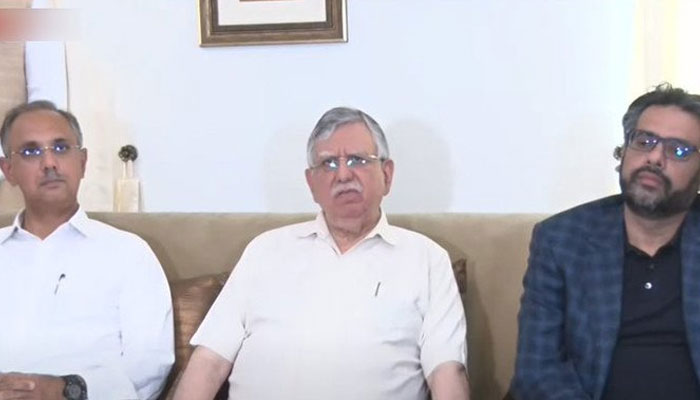
Shaukat Tarin, along with Omar Ayub and Muzammil Aslam, addressing a press conference in Islamabad on June 11, 2022. Photo: Screengrab of a geo.tv video.


ISLAMABAD: Former finance minister Shaukat Tarin on Saturday accepted that Pakistan’s debt since the country’s inception had increased by 76pc, not 80pc, during the PTI government.

Addressing a press conference, he conceded that loans taken by the PTI government were substantial but the country's economy grew at the same pace. “The government is misleading the people by saying that they faced a difficult economic situation as record growth had taken place during the PTI's tenure. All the numbers are published and public. Please take the country's economy seriously and stop misleading the people. The numbers don't lie," he added.


Ministry of finance retires Rs1.6tr debt owed to SBP in 59 days​

By Our Correspondent
September 01, 2025


This image shows a person counting currency notes. — AFP/File
ISLAMABAD: The Ministry of Finance (MoF) has retired over Rs1.6 trillion of debt owed to the State Bank of Pakistan (SBP) — and done so in just 59 days.

On June 30, 2025, the ministry early-retired Rs500 billion. Only two months later, on August 29, 2025, the Debt Management Office executed another monumental repayment of Rs1,133 billion, which brings the total early retirement of SBP debt to Rs1,633 billion.

The Ministry of Finance had earlier in 1H FY25 retired domestic commercial market debt of Rs1.0 trillion — the first such advanced debt retirement operation in Pakistan’s history.


Including both the central bank and commercial portions, the total early debt retirement in less than one year now comes to over Rs2.6 trillion — an unprecedented scale and decisive action in the country’s fiscal history.

This action marks a decisive shift from past debt-heavy practices, where reliance on borrowing crowded out fiscal space and increased risks. Now, debt discipline is firmly in action:

30 percent of SBP debt retired early: In just under two months, Pakistan cut SBP debt from Rs5.5 trillion to Rs3.8 trillion — nearly 30 percent retired well before its 2029 maturity.

Reduced risks, improved fiscal space: Early repayments eased the 2029 refinancing burden, lowered rollover risks, and created more room for development spending.

Strengthened fiscal resilience: The average maturity of domestic debt has risen to 3.8 years from 2.7 in FY24 — the sharpest single-year improvement in history, and well ahead of IMF targets.

Major taxpayer savings: With falling rates and disciplined repayments, the government has already secured over Rs800 billion in taxpayer savings (FY25).

This is not just debt repayment — it is responsible, forward-looking financial governance. By reversing the old cycle of unchecked borrowing and putting repayment at the centre of fiscal management, Pakistan is restoring credibility, strengthening resilience, and building a more sustainable future.


Ministry of finance retires Rs1.6tr debt owed to SBP in 59 days​

By Our Correspondent
September 01, 2025


This image shows a person counting currency notes. — AFP/File
ISLAMABAD: The Ministry of Finance (MoF) has retired over Rs1.6 trillion of debt owed to the State Bank of Pakistan (SBP) — and done so in just 59 days.

On June 30, 2025, the ministry early-retired Rs500 billion. Only two months later, on August 29, 2025, the Debt Management Office executed another monumental repayment of Rs1,133 billion, which brings the total early retirement of SBP debt to Rs1,633 billion.

The Ministry of Finance had earlier in 1H FY25 retired domestic commercial market debt of Rs1.0 trillion — the first such advanced debt retirement operation in Pakistan’s history.


Including both the central bank and commercial portions, the total early debt retirement in less than one year now comes to over Rs2.6 trillion — an unprecedented scale and decisive action in the country’s fiscal history.

This action marks a decisive shift from past debt-heavy practices, where reliance on borrowing crowded out fiscal space and increased risks. Now, debt discipline is firmly in action:

30 percent of SBP debt retired early: In just under two months, Pakistan cut SBP debt from Rs5.5 trillion to Rs3.8 trillion — nearly 30 percent retired well before its 2029 maturity.

Reduced risks, improved fiscal space: Early repayments eased the 2029 refinancing burden, lowered rollover risks, and created more room for development spending.

Strengthened fiscal resilience: The average maturity of domestic debt has risen to 3.8 years from 2.7 in FY24 — the sharpest single-year improvement in history, and well ahead of IMF targets.

Major taxpayer savings: With falling rates and disciplined repayments, the government has already secured over Rs800 billion in taxpayer savings (FY25).

This is not just debt repayment — it is responsible, forward-looking financial governance. By reversing the old cycle of unchecked borrowing and putting repayment at the centre of fiscal management, Pakistan is restoring credibility, strengthening resilience, and building a more sustainable future.

This is just a reversal, under IMF orders, of the monetization of debt that had previously been done. With the US Federal reserve in easing mode and global interest rates heading lower, this debt will just be replaced with lower interest rate debt issued to private players rather than Pakistan's Central Bank.


Government
Quarter
Months
Year
Debt
PML-N​
Q1​
Jul-Sept​
1997​
-​
PML-N​
Q2​
Oct-Dec​
1997​
-​
PML-N​
Q3​
Jan-Mar​
1998​
-​
PML-N​
Q4​
Apr-Jun​
1998​
$33.840 billion​
PML-N​
Q1​
Jul-Sept​
1998​
-​
PML-N​
Q2​
Oct-Dec​
1998​
-​
PML-N​
Q3​
Jan-Mar​
1999​
-​
PML-N​
Q4​
Apr-June​
1999​
$36.600 billion​
PML-N​
Q1​
Jul-Sept​
1999​
-​
Military​
Q2​
Oct-Dec​
1999​
-​
Military​
Q3​
Jan-Mar​
2000​
-​
Military​
Q4​
Apr-Jun​
2000​
$38.223 billion​
Military​
Q1​
Jul-Sept​
2000​
-​
Military​
Q2​
Oct-Dec​
2000​
-​
Military​
Q3​
Jan-Mar​
2001​
-​
Military​
Q4​
Apr-Jun​
2001​
$37.139 billion​
Military​
Q1​
Jul-Sept​
2001​
-​
Military​
Q2​
Oct-Dec​
2001​
-​
Military​
Q3​
Jan-Mar​
2002​
-​
Military​
Q4​
Apr-Jun​
2002​
$36.532 billion​
Military​
Q1​
Jul-Sept​
2002​
-​
Military​
Q2​
Oct-Dec​
2002​
-​
Military​
Q3​
Jan-Mar​
2003​
-​
Military​
Q4​
Apr-Jun​
2003​
$35.474 billion​
Military​
Q1​
Jul-Sept​
2003​
-​
Military​
Q2​
Oct-Dec​
2003​
-​
Military​
Q3​
Jan-Mar​
2004​
-​
Military​
Q4​
Apr-Jun​
2004​
$35.258 billion (p)​
Military​
Q1​
Jul-Sept​
2004​
-​
Military​
Q2​
Oct-Dec​
2004​
-​
Military​
Q3​
Jan-Mar​
2005​
-​
Military​
Q4​
Apr-Jun​
2005​
Unknown​
Military​
Q1​
Jul-Sept​
2005​
-​
Military​
Q2​
Oct-Dec​
2005​
-​
Military​
Q3​
Jan-Mar​
2006​
-​
Military​
Q4​
Apr-Jun​
2006​
$37.229 billion​
Military​
Q1​
Jul-Sept​
2006​
-​
Military​
Q2​
Oct-Dec​
2006​
-​
Military​
Q3​
Jan-Mar​
2007​
-​
Military​
Q4​
Apr-Jun​
2007​
$40.323 billion​
Military​
Q1​
Jul-Sept​
2007​
-​
Military/Caretaker​
Q2​
Oct-Dec​
2007​
-​
Caretaker​
Q3​
Jan-Mar​
2008​
-​
PPP​
Q4​
Apr-Jun​
2008​
$46.161 billion​
PPP​
Q1​
Jul-Sept​
2008​
-​
PPP​
Q2​
Oct-Dec​
2008​
-​
PPP​
Q3​
Jan-Mar​
2009​
-​
PPP​
Q4​
Apr-Jun​
2009​
$52.331 billion​
PPP​
Q1​
Jul-Sept​
2009​
-​
PPP​
Q2​
Oct-Dec​
2009​
-​
PPP​
Q3​
Jan-Mar​
2010​
$60.026 billion​
PPP​
Q4​
Apr-Jun​
2010​
$61.567 billion​
PPP​
Q1​
Jul-Sept​
2010​
$64.488 billion​
PPP​
Q2​
Oct-Dec​
2010​
$64.500 billion​
PPP​
Q3​
Jan-Mar​
2011​
$65.611 billion​
PPP​
Q4​
Apr-Jun​
2011​
$66.366 billion​
PPP​
Q1​
Jul-Sept​
2011​
$66.490 billion​
PPP​
Q2​
Oct-Dec​
2011​
$66.260 billion​
PPP​
Q3​
Jan-Mar​
2012​
$65.631 billion​
PPP​
Q4​
Apr-Jun​
2012​
$65.478 billion​
PPP​
Q1​
Jul-Sept​
2012​
$65.914 billion​
PPP​
Q2​
Oct-Dec​
2012​
$63.683 billion​
PPP​
Q3​
Jan-Mar​
2013​
$61.292 billion​
Caretaker/PML-N​
Q4​
Apr-Jun​
2013​
$60.899 billion​
PML-N​
Q1​
Jul-Sept​
2013​
$61.854 billion​
PML-N​
Q2​
Oct-Dec​
2013​
$60.814 billion​
PML-N​
Q3​
Jan-Mar​
2014​
$61.691 billion​
PML-N​
Q4​
Apr-Jun​
2014​
$65.268 billion​
PML-N​
Q1​
Jul-Sept​
2014​
$63.960 billion​
PML-N​
Q2​
Oct-Dec​
2014​
$64.563 billion​
PML-N​
Q3​
Jan-Mar​
2015​
$62.715 billion​
PML-N​
Q4​
Apr-Jun​
2015​
$65.170 billion​
PML-N​
Q1​
Jul-Sept​
2015​
$66.456 billion​
PML-N​
Q2​
Oct-Dec​
2015​
$68.896 billion​
PML-N​
Q3​
Jan-Mar​
2016​
$70.358 billion​
PML-N​
Q4​
Apr-Jun​
2016​
$73.945 billion​
PML-N​
Q1​
Jul-Sept​
2016​
$75.762 billion​
PML-N​
Q2​
Oct-Dec​
2016​
$75.936 billion​
PML-N​
Q3​
Jan-Mar​
2017​
$77.908 billion​
PML-N​
Q4​
Apr-Jun​
2017​
$83.477 billion​
PML-N​
Q1​
Jul-Sept​
2017​
$85.623 billion​
PML-N​
Q2​
Oct-Dec​
2017​
$89.317 billion​
PML-N​
Q3​
Jan-Mar​
2018​
$92.293 billion​
PML-N/Caretaker​
Q4​
Apr-Jun​
2018​
$95.237 billion​
Caretaker/PTI​
Q1​
Jul-Sept​
2018​
$96.111 billion​
PTI​
Q2​
Oct-Dec​
2018​
$99.182 billion​
PTI​
Q3​
Jan-Mar​
2019​
$105.976 billion​
PTI​
Q4​
Apr-Jun​
2019​
$106.349 billion​
PTI​
Q1​
Jul-Sept​
2019​
$107.235 billion​
PTI​
Q2​
Oct-Dec​
2019​
$110.848 billion​
PTI​
Q3​
Jan-Mar​
2020​
$110.035 billion​
PTI​
Q4​
Apr-Jun​
2020​
$113.013 billion​
PTI​
Q1​
Jul-Sept​
2020​
$114.087 billion​
PTI​
Q2​
Oct-Dec​
2020​
$117.134 billion​
PTI​
Q3​
Jan-Mar​
2021​
$116.307 billion​
PTI​
Q4​
Apr-Jun​
2021​
$122.292 billion​
PTI​
Q1​
Jul-Sept​
2021​
$127.163 billion​
PTI​
Q2​
Oct-Dec​
2021​
$130.685 billion​
PTI​
Q3​
Jan-Mar​
2022​
$129.180 billion​
PDM​
Q4​
Apr-Jun​
2022​
$130.320 billion​
PDM​
Q1​
Jul-Sept​
2022​
$127.183 billion​
PDM​
Q2​
Oct-Dec​
2022​
$126.919 billion​
PDM​
Q3​
Jan-Mar​
2023​
$125.759 billion​
PDM​
Q4​
Apr-Jun​
2023​
$124.593 billion​
PDM/Caretaker​
Q1​
Jul-Sept​
2023​
$129.760 billion​
Caretaker​
Q2
Oct-Dec​
2023​
$132.083 billion​
Caretaker/PML-N​
Q3​
Jan-Mar​
2024​
$131.115 billion (p)​
PML-N​
Q4​
Apr-Jun​
2024​
$131.045 billion​
PML-N​
Q1​
Jul-Sept​
2024​
$133.683 billion​
PML-N​
Q2​
Oct-Dec​
2024​
$130.921 billion​
PML-N​
Q3​
Jan-March​
2025​
$130.310​
 
Always do research, research and research, collate information, look at the trends, then you can make adequate projections.

Pakistan lacks data on the informal economy and this is something that Government is spending a lot of time and effort on gathering.


So more data it is then. Data of everything Pakistan.
 
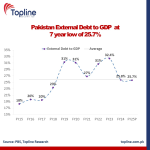
Pakistan’s total federal debt climbed by nearly Rs9 trillion in fiscal year 2025 (FY25), driven by both domestic and external borrowing, according to data released by the State Bank of Pakistan (SBP).

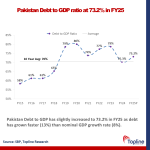
The central government’s combined domestic and external debt rose by 13% during FY25, reaching Rs77.888 trillion in June 2025, up from Rs68.914 trillion in June 2024, an increase of Rs8.974 trillion.

Analysts noted that this debt growth is outpacing the nominal GDP growth of 8%, pushing the debt-to-GDP ratio to 73.2%.


Despite the rising debt, the government executed early retirements of domestic debt worth Rs2.6 trillion. In the first half of FY25, domestic commercial debt of Rs1 trillion was retired ahead of schedule, marking the first advanced debt retirement of its kind in Pakistan.

Further repayments included Rs500 billion on June 30, 2025, and Rs1.133 trillion on August 29, 2025, carried out by the Debt Management Office. Including these, total early retirements of central bank and commercial debt exceeded Rs2.6 trillion in less than one year.

Analysts said these repayments have improved Pakistan’s overall debt profile, even as total borrowing continues to grow to finance the budget deficit.
 
Federal budget is unsustainable. New NFC award is needed. Get rid of Benazir Income support, let provinces give money to their people. Get share of Islamabad, Azad Kashmir and Gilgit from existing NFC. Sell off SOE's.
 
FY15 was ideal which retarded Nawaz/Dar combo along with many others ruined it. By signing expensive IPPs CPEC contracts when there was no need for them. By selling borrowed $$ in market to keep rupee artificially stable.

The so called corrupt Zardari/PPP left Pakistan in fiscally strong position in FY14. Nawaz bastard left it near bankruptcy.

1757523498890.png


1757523597058.png

1757523664381.png
 
Our debt is in US dollars and it should be reported in that currency.
 
This should be the last such increase. The reforms have been under taken and in the past few months, our current accounts have been in surplus after decades of loss and loans worth billions of dollars annually. Our trade is going up significantly in % and with trade profile continuing to grow, with US-Pak and Pak-world trade to grow in billions, these payment pressures will start to have less impact.

This debt now includes many reforms related payments also, like early retirements, IPP's debt, post May defense budget increase, etc. But as we head into FY 2026, we'll see some results of the reforms already done.

The real change will come in 2028, like I've been saying for many months. That's when we'll re-balance our economic size and this ratio will also drop. That doesn't mean we'll continue to take debt, it just means with reforms being done since 2022, things are now happening for a better Pakistan.
 
FY15 was ideal which retarded Nawaz/Dar combo along with many others ruined it. By signing expensive IPPs CPEC contracts when there was no need for them. By selling borrowed $$ in market to keep rupee artificially stable.

The so called corrupt Zardari/PPP left Pakistan in fiscally strong position in FY14. Nawaz bastard left it near bankruptcy.

View attachment 146043


View attachment 146044

View attachment 146045

Your posts are very intelligent. I am not sure why you think CPEC wasn't needed. If this is a political thread, I'd suggest not to further it and just have a good discussion on the economy. People now see through politically motivated threads with fake meanings and shady details.

Top line research supports Pakistan's stock market. It's not a credentialized institute like WB or ADB or IMF or even Pakistan's own SBP.
 
Your posts are very intelligent. I am not sure why you think CPEC wasn't needed. If this is a political thread, I'd suggest not to further it and just have a good discussion on the economy. People now see through politically motivated threads with fake meanings and shady details.

Top line research supports Pakistan's stock market. It's not a credentialized institute like WB or ADB or IMF or even Pakistan's own SBP.

Top line just report data released by SBP, they are not making up charts out of their ass.

Its a fact so called mr 10% left Pakistan economy in strong position. Yes there was load shedding but that could have ended without making expensive stupid IPPs on imported fuel like coal and LNG. Should have gone for more Thar coal power plants.

And now we all would have been enjoying solar boom without worrying about grid electricity debt.

But bigger disaster was selling borrowed $$ on markets to keep rupee stable, Dar sold like $15-20 billion in 4 years. Kept exports and remittances suppressed because of artificially strong rupee.
 

Users who are viewing this thread

Latest Posts

Back
Top