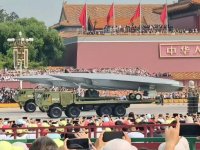
2025 China Victory Day Parade

China’s military display shows it has the might to back up Xi’s vision of a new world order​

Updated Sep 3, 2025, 3:25 AM ET
CNN

The huge military parade through central Beijing on Wednesday was a deliberately fearsome display of weaponry designed to send a message that Xi Jinping’s vision of a new world order with China at the apex will be backed up with high-tech arms that would seem, in many cases, to be ahead of its rivals.

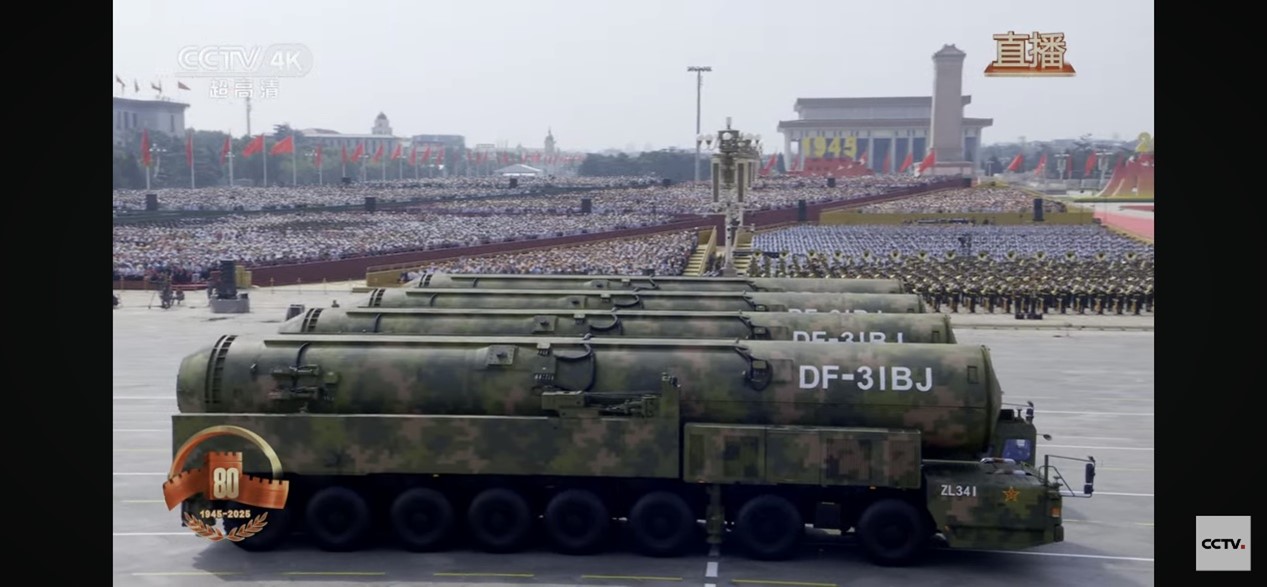
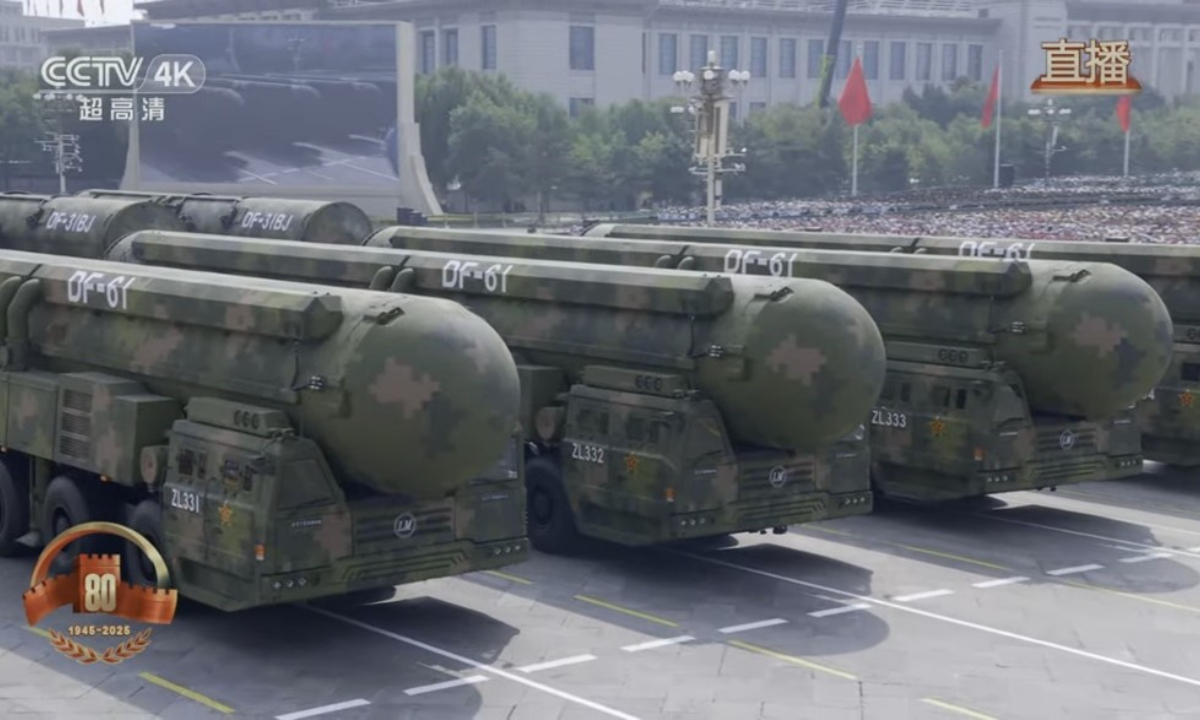
While much post-parade attention will be focused on new long-range nuclear-armed weapons – like the DF-61 intercontinental ballistic missile – what may be even more important in the long run are weapons like the new mobile truck- and ship-mounted laser air defense weapons.

If these are already deployed in numbers in the People’s Liberation Army forces (PLA), as China indicated in pre-parade press conferences, they could present real problems for any adversary’s ability to blunt Chinese military movements around the region.

But there are caveats, and it’s not time to call the PLA the world’s preeminent military just yet.

Here’s what we learned from today’s parade.

Parade highlights​

The PLA rolled out a remarkable amount of hardware down Beijing’s most famous thoroughfare, the Avenue of Eternal Peace – so much so that it was hard to focus on one weapon before the next rolled by.

But some certainly stood out, including the DF-61, a huge intercontinental ballistic missile (ICBM) carried on an eight-axle truck that would be the PLA Rocket Force’s first new ICBM since the DF-41 was introduced at a 2019 military parade.

Missiles with hypersonic glide vehicles (HGVs) were also highlighted.

HGVs can carry warheads at speeds greater than five times the speed of sound with irregular flight trajectories that can vex missile defenses.

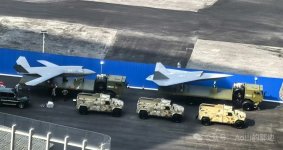
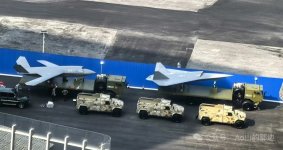
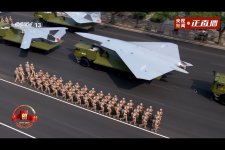
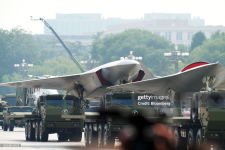
An impressive array of drones were also on display, from extra-large unmanned submarines to aircraft that can fly as “loyal wingmen” to the PLA Air Force’s state-of-the-art stealth fighters.

Ground drones, some armed with machine guns, others suited for mine-clearing or logistics, were also in the formations.

And then there were the lasers.
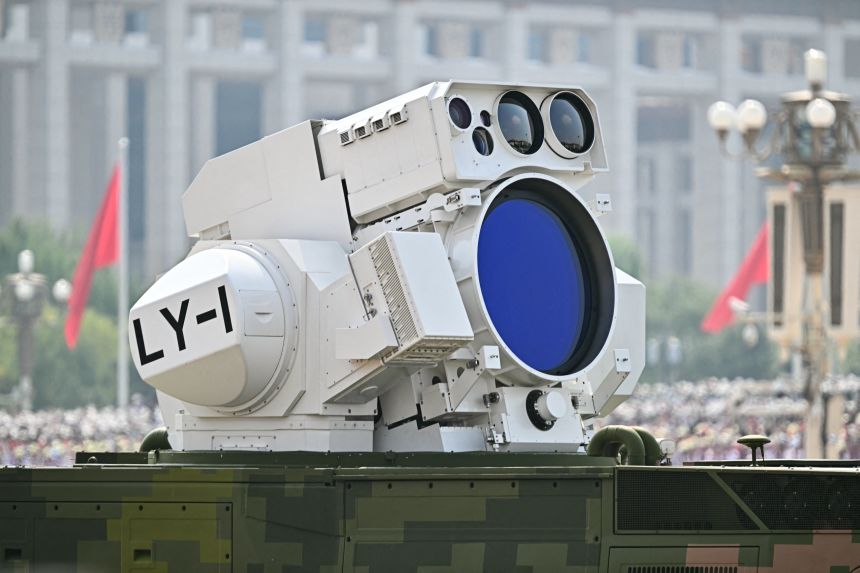
A laser weapon is seen during a military parade marking the 80th anniversary of victory over Japan and the end of World War II, in Beijing's Tiananmen Square on September 3, 2025.

A laser weapon is seen during a military parade marking the 80th anniversary of victory over Japan and the end of World War II, in Beijing's Tiananmen Square on September 3, 2025.
Pedro Pardo/AFP/Getty Images

The PLA showed two versions, one massive one designed for naval air defense, another that looked smaller and truck-mounted for to protect troops on the ground.

Lasers are among a class called “directed energy weapons,” which can also include high-powered microwave systems. Rather than using projectiles for a kinetic kill, these weapons rely on electromagnetic energy to disable a target through heat, disruption of internal electrical systems, or blinding of sensors such as optics and radar.

Directed energy weapons are more economical than kinetic weapons, with a shot from a laser costing just a fraction of a bullet or missile. Logistics are easier too as heavy metal projectiles don’t need to travel with the weapon, just its energy source.

An edge in industrial capacity​

The huge volume of military hardware exhibited shows that China has the industrial might to back up its words, and perhaps eventually enforce Xi’s vision of the world.

It’s the kind of industrial capacity the US put together to win World War II, the end of which Wednesday’s parade was said to commemorate.

But while US industry spelled the end of the Axis powers 80 years ago, America now doesn’t have the capacity to turn out weaponry in the numbers that China can.

“What the Chinese are demonstrating here is an ability to develop advanced military capabilities by themselves, deploy them operationally and do it faster than what you’re seeing happen in the West,” said Malcolm Davis, senior analyst in defense strategy at the Australian Strategic Policy Institute (ASPI). “And also do it in larger volume in terms of sheer numbers of weapons deployed.”

Numbers leaning toward Beijing​

An analysis published by the Center for Strategic and International Studies on the eve of the parade showed some of the math tipping in Beijing’s favor.

China’s defense spending has increased 13-fold in the past 30 years, according to the CSIS report, authored by Matthew Funaiole and Brian Hart, fellows in the CSIS China Power Project.

While Beijing still spends only about a third of what the US does on defense, it’s been closing the gap rapidly, cutting it in half in the past 12 years, according to the report.

But regionally, the defense spending gaps are not even close.

“China towers over its neighbors, spending five times as much on defense as Japan and nearly seven times as much as South Korea—two key US allies in the region,” the CSIS report said.

The starkest difference with the US comes at sea.

China is expected to have 48% more battle force ships than the US by 2030, the report says.

A 2023 paper by a professor at the US Naval War College, looking at the history of naval wars, found that the bigger fleet almost always wins.

Some have said the US can maintain an edge through technology like AI-powered drones. But Wednesday’s military parade showed that might be a false hope.
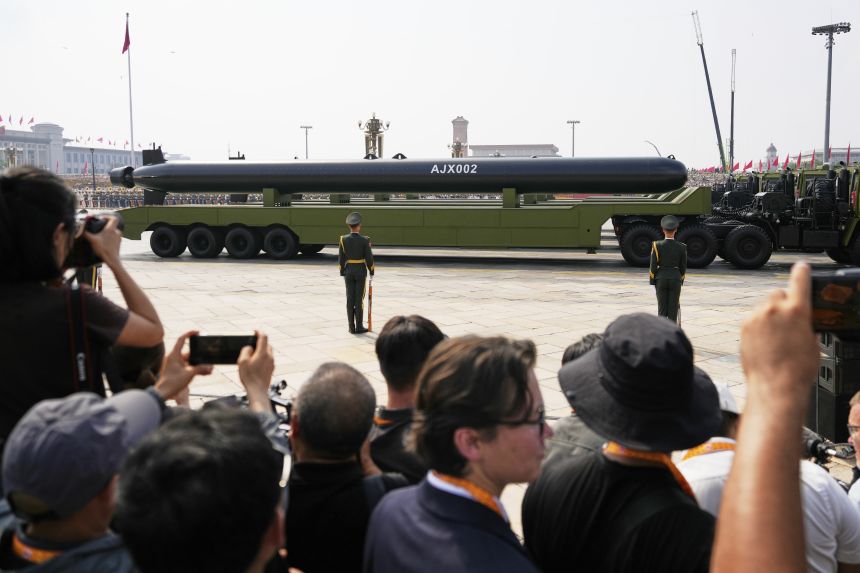
A AJX002 underwater drone passes in the military parade to commemorate the 80th anniversary of Japan's World War II surrender held in front of Tiananmen Gate in Beijing, on Wednesday, September 3, 2025.

A AJX002 underwater drone passes in the military parade to commemorate the 80th anniversary of Japan's World War II surrender held in front of Tiananmen Gate in Beijing, on Wednesday, September 3, 2025.
Ng Han Guan/AP

The PLA’s formations were packed with drones – for combat on the ground, in the air and at sea.

“The unmanned systems that the Chinese are displaying today are quite significantly advanced. They seem to be more advanced in some respects than what we’re seeing in the West, and they’re in operational service,” said the ASPI’s Davis.

And those are just for offensive combat roles.

Drone defense, through the aforementioned lasers, for example, may also be leaning in Beijing’s favor.

“We’re basically seeing before us what the Chinese describe as intelligent warfare,” said Ankit Panda, Senior Fellow at the Carnegie Endowment for International Peace. “You see a lot of autonomous capabilities, network capabilities, modern 21st century warfighting systems.”

The value of experience​

While the formations parading through and above Beijing on Wednesday provided startling visuals, putting them together into a coordinated fighting force requires a lot that couldn’t be seen.

“China famously hasn’t fought in a proper high-intensity conflict, arguably since the Korean War, certainly since the Sino-Vietnamese war (in 1979). So, what does that tell us about their ability to prevail? As we learned from Russia’s experience in Ukraine, you can’t just count the beans,” said Panda.

Meanwhile, by way of comparison, it’s hard to argue with the US military’s ability to put firepower on target.

The US strike on Iranian nuclear sites in June, when seven B-2 stealth bombers dropped 14 of the world’s most powerful conventional weapons on target while not drawing any counterfire, is hard to imagine within China’s current abilities.

The flag-guarding air echelon flies over Tian'anmen Square during a grand gathering to commemorate the 80th anniversary of the victory in the Chinese People's War of Resistance against Japanese Aggression and the World Anti-Fascist War on September 3, 2025 in Beijing, China.

The flag-guarding air echelon flies over Tian'anmen Square during a grand gathering to commemorate the 80th anniversary of the victory in the Chinese People's War of Resistance against Japanese Aggression and the World Anti-Fascist War on September 3, 2025 in Beijing, China.
VCG/AP

For one thing, the PLA Air Force has yet to show a stealth bomber in the B-2’s category, although one is said to be in the works. Even then, the next generation US bomber, the B-21, is already in the prototype stage.

So, there’s a wariness in the analyst community, even after the impressive show in Beijing Wednesday.

Retired Australian Army Maj. Gen. Mick Ryan said he believed the US remained the strongest military in the world, “but probably by a lesser margin than it has been for many decades” with China closing the gap.

“The Chinese military is very technologically sophisticated… but most importantly, it just about builds everything it needs indigenously,” he told CNN, adding that it means Beijing could not be “coerced” by foreign weapon suppliers.

But he noted none of the weapons on display have been tested in combat.

“Impressive on the surface, parades are not a good indicator of military effectiveness,” Ryan said.

 
Serial number shown on the plane, it is already operational, and this is more advanced version compared with two in the below pic, and it's IWB is huge as we can see in the pic, I say three PL-16 in each weapon bay, total 6.

Gz1QF8JaMAA-mRS.jpg
To view this content we will need your consent to set third party cookies.
For more detailed information, see our cookies page.
 

China’s Military Is Now Leading​

The parade which proved the regional military balance has irrevocably changed.​

By Sam Roggeveen

September 3, 2025, 12:42 AM

It is now widely accepted that the story Western countries once told themselves about China’s technological development—it is a mere imitator of Western technology; it steals intellectual property; its successes result from wasteful public subsidies—is inadequate. This story still has some elements of truth, but it is much less true than it used to be. China is today an innovator and technological leader in robotics, electric vehicles, nuclear reactors, solar energy, drones, high-speed rail, and AI.

If confirmation were needed, the Sept. 3 military parade through Beijing confirms that we must add military technology to this list. It is no longer enough to say that China’s military, the People’s Liberation Army (PLA), is catching up, or that it is copying foreign military equipment designs. China is now innovating, and it is leading. In the process, the regional military balance that has for decades favored the United States and its partners is being irrevocably changed.


The Victory Day Parade, marking the 80th anniversary of “the Chinese people’s war of resistance against Japanese aggression and the world anti-fascist war,” was a showcase for China’s contemporary military might and a peek into its future. China used to be reluctant to display its latest military equipment, but the shroud was lifted—if selectively—for this event.

Among the highlights was the display of aircraft that will serve aboard China’s growing fleet of aircraft carriers, which numbers three ships at present but is likely to be joined in coming years by at least one nuclear-powered supercarrier, just as large and capable as the U.S. Navy’s new Gerald Ford class. Four new types of “loyal wingman” drones were unveiled—stealthy unpiloted planes designed to fly alongside crewed aircraft and be tasked by them. And at least four previously unseen anti-ship and ground-attack missile systems were on display, as well as a new uncrewed submarine and new torpedoes.

The parade provided just the latest revelations in a frantic year for observers of China’s military-industrial complex. Just after Christmas in 2024, grainy video and photos began to appear on social media of two new stealthy combat aircraft in test flights. A few weeks later, Naval News reported that China was constructing a unique type of powered barge with extendable road bridges that could allow vehicle-carrying ships to unload their cargo at an unprepared coastal site. Subsequent photos of the barges in testing confirmed that they would be ideally suited to putting heavy armor ashore in an invasion of Taiwan.

Then, in late January, the Financial Times published commercial satellite photos showing that China was constructing a new military command center outside Beijing that is at least 10 times the size of the Pentagon. In May, Pakistan and India staged an aerial battle involving 125 aircraft over disputed Kashmir; Pakistan’s air force used Chinese equipment that appeared, on limited evidence, to have performed credibly.

China shows every indication of wanting a fully home-grown military-industrial complex. And China’s leadership has publicly stated its ambition to build a worldwide first-class military by the middle of the century. Of course, that requires more than just technology, and the recent rash of senior officer purges suggests that there are serious corruption and performance problems in the PLA.

But on the technological front, at least, there has long been ample evidence of ambition. China began its modernization in the early 1990s, and since then, the PLA has undergone arguably the most rapid technological transformation of any military force since World War II. The revelations since December 2024 only reinforce this trend and should prompt the question of whether China’s ambitions are still being underestimated.

The bigger question is, what does China want with all that military power?

One possibility is that it is building a force to directly challenge the United States with a truly global military posture. Distant Australia got a taste of China’s new capabilities in February when the PLA Navy sent a flotilla of warships to circumnavigate the continent. It sent a message that China’s military power now has new reach.

Yet if there is a broad conclusion to be drawn from the revelations of the past nine months, it is that China is not solely or even primarily focused on projecting its military power around the Pacific, much less the world. Much of the new equipment we are seeing is not explicitly designed for that purpose.

 
Basically these two are comparable with USAF CCA Increment 1 concept, YFQ-42/44 mainly for simple air mission.
Gz1QF8JaMAA-mRS.jpg

This one is like CCA Increment 2 concept, mainly for complicated air superiority mission which USAF is still under planning, or in other words, still on PPT.
672d2337ly1i50clfd8tfj22801hc7it.jpg
1756885161254.png
006Rm4MAgy1i50ii7jp5oj30w30o4442.jpg
 
China displays for first time its strategic nuclear triad, debuts air-launched JL-1, submarine-launched JL-3, land-based DF-61, DF-31BJ
By Liu Xuanzun, Fan Wei and Liang Rui
Published: Sep 03, 2025 11:11 AM

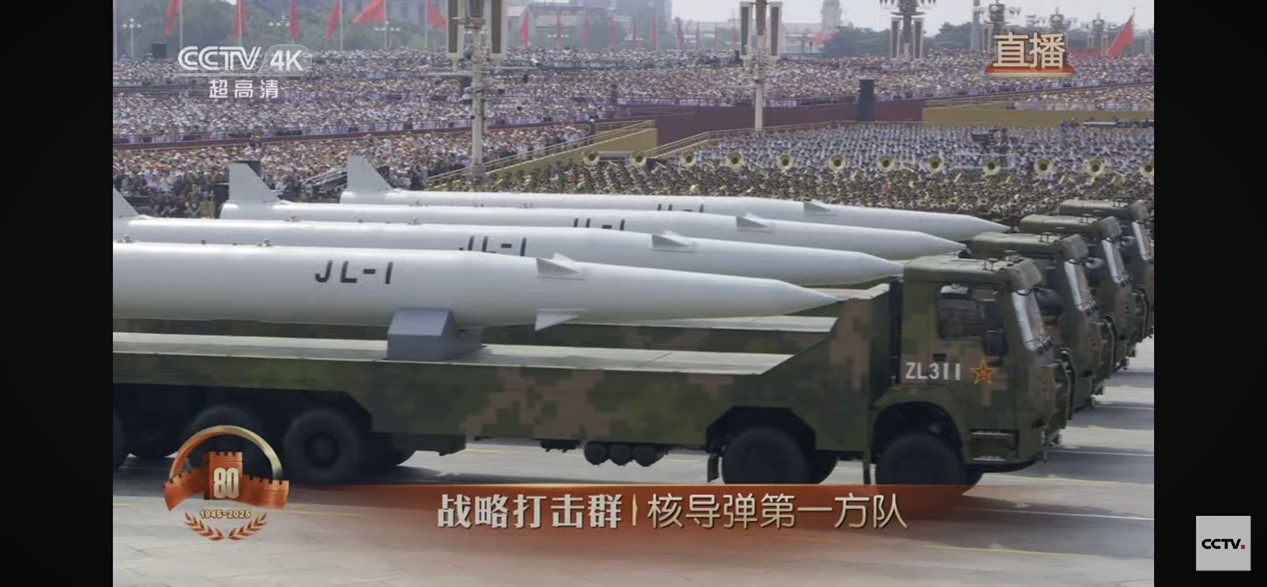
JL-1 air-launched long-range missile is reviewed at China's V-Day military parade on September 3, 2025. Photo: Screenshot from CCTV News

JL-1 air-launched long-range missile is reviewed at China's V-Day military parade on September 3, 2025. Photo: Screenshot from CCTV News

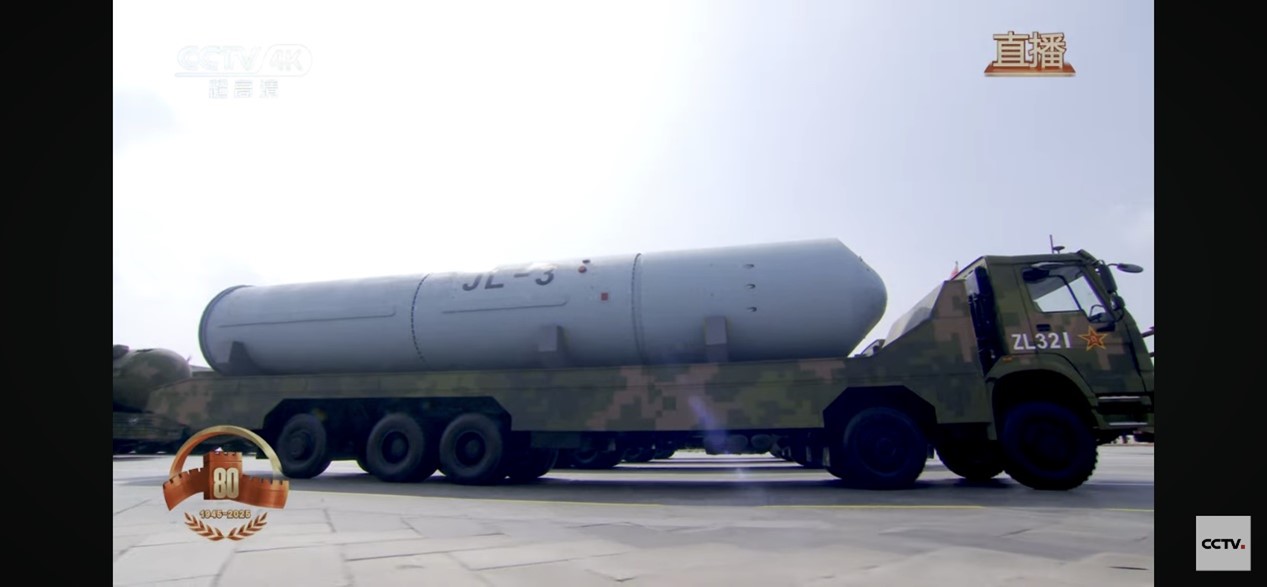
JL-3 submarine-launched intercontinental missile is reviewed at China's V-Day military parade on September 3, 2025. Photo: Screenshot from CCTV News

JL-3 submarine-launched intercontinental missile is reviewed at China's V-Day military parade on September 3, 2025. Photo: Screenshot from CCTV News

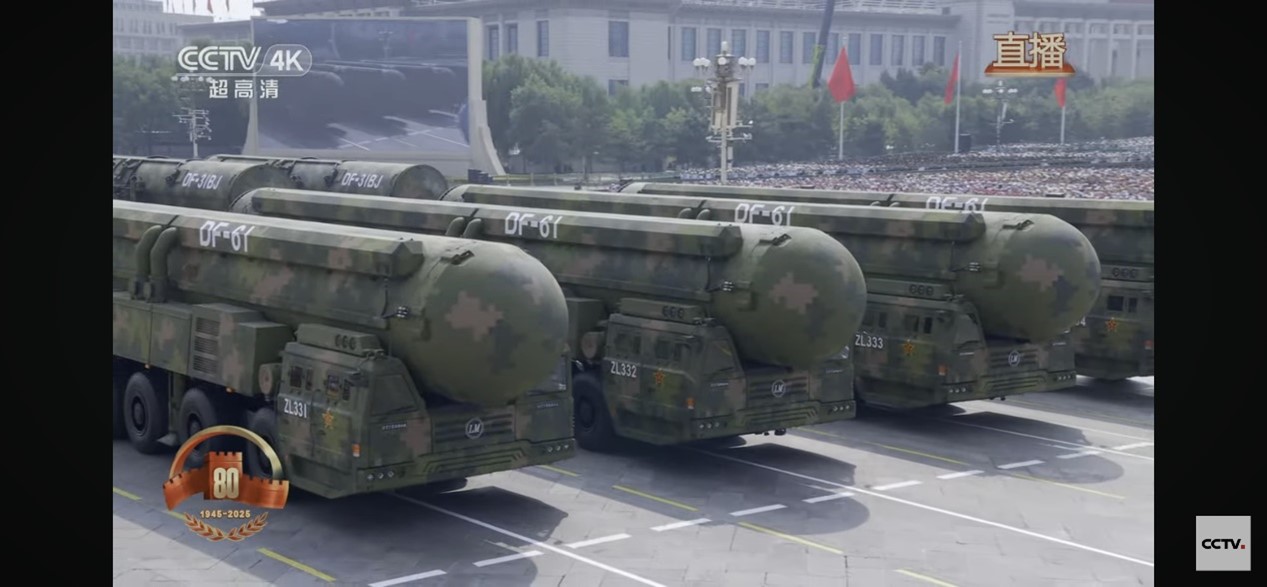
DF-61 land-based intercontinental missile is reviewed at China's V-Day military parade on September 3, 2025. Photo: Screenshot from CCTV News

DF-61 land-based intercontinental missile is reviewed at China's V-Day military parade on September 3, 2025. Photo: Screenshot from CCTV News

DF-31BJ land-based intercontinental missile is reviewed at China's V-Day military parade on September 3, 2025. Photo: Screenshot from CCTV News

DF-31BJ land-based intercontinental missile is reviewed at China's V-Day military parade on September 3, 2025. Photo: Screenshot from CCTV News

The first nuclear missile formation consisting of JL-1 air-launched long-range missile, JL-3 submarine-launched intercontinental missile, as well as DF-61 and DF-31BJ land-based intercontinental missiles were reviewed at China's V-Day military parade on Wednesday to mark the 80th anniversary of the victory in the Chinese People's War of Resistance Against Japanese Aggression and the World Anti-Fascist War, marking the first concentrated appearance of China's land, sea, and air-based strategic nuclear triad.

Military affairs experts told the Global Times that with the addition of air-launched long-range missile and the upgrade of submarine-launched strategic missile into the intercontinental range, China's nuclear deterrence and strategic nuclear counterattack capabilities have been further enhanced, providing stronger and more reliable means of defending national sovereignty, security, and development interests.

The first concentrated display of the Chinese military's land, sea, and air-based integrated strategic nuclear triad is a strategic trump card for safeguarding national sovereignty and defending national dignity. Among them, air-based strategic nuclear forces are showcased in parade for the first time, military affairs expert Shao Yongling told the Global Times, adding that the commissioning of the air-launched strategic missile provides China with an additional option for nuclear strikes, which can make China's nuclear deterrence and counterattack capabilities even more reliable and credible.

"The official debut of air-launched strategic missile means that China has become one of the few countries in the world with a nuclear triad," said military expert Zhang Junshe.

He told the Global Times that, generally speaking, air based strategic nuclear forces use strategic bombers as strike platforms, which have stronger maneuverability and survivability, making them one of the most reliable secondary nuclear strike forces. Strategic bombers can take off at any time to carry out nuclear strike readiness duty, and it is difficult to predict the location and timing of air-based strategic missile launches. This increases the difficulty for opponents to detect and reduces the probability of being intercepted, according to Zhang.

Zhang said that the air-launched long-range strategic missile can provide a supplement to China's existing nuclear strike methods. The strike method of long-range strategic bombers carrying long-range strategic missiles has a faster response time and can coordinate and support existing land-based and sea-based strategic missiles.

Meanwhile, the newly debuted JL-3 further extends the strike range of China's submarine-launched ballistic missiles. At the 2019 military parade during the celebrations marking the 70th anniversary of the founding of the People's Republic of China in Beijing, the JL-2 submarine-launched ballistic missile made its first public appearance. Designated as a new-generation submarine-launched long-range ballistic missile, it features rapid response capabilities, high stealth performance, and a broad strike range. The new JL-3 is designated as an intercontinental ballistic missile. It marks that China's submarine-launched ballistic missile, which bears the responsibility of supporting the country's sea-based nuclear deterrence, has officially entered the intercontinental era.

"From long-range to intercontinental, this means that the range of JL-3 can reach about 10,000 kilometers, and it also means that even if launched in China's coastal areas, it can still cover all countries in the world that may pose a nuclear threat to China," Zhang said. The extended range also means that China's strategic nuclear submarines need not venture beyond the so-called second island chain or the depths of the Pacific Ocean to carry out nuclear counterstrikes, Zhang added. "From our coastal regions, we can maintain sea-based strategic nuclear strike capabilities. In our nearshore areas, we can also deploy more robust support and protective forces to safeguard strategic nuclear submarines carrying out counterstrike missions, thereby enhancing the survivability of China's sea-based strategic nuclear strike forces."

Shao also said that the new submarine-launched intercontinental missile can greatly enhance China's nuclear counterattack capability. "Generally speaking, the longer the range of submarine-launched ballistic missiles, the safer the nuclear submarines are. The expected range of the new submarine-launched intercontinental ballistic missile is about 10,000 kilometers, which also means that China's nuclear submarine does not need to go out to sea to carry out nuclear counterattack missions, but to conduct a second nuclear counterattack in the better supported and safer coastal waters," she said.

"Certainly, China's nuclear-powered strategic missile submarines can still go out to far seas and carry out strategic nuclear strikes. This combined deployment capability in both coastal waters and far seas also increase the difficulty for opponents to predict and enhances the suddenness of a second nuclear counterattack," Zhang said, adding that the commissioning of the JL-3 can effectively curb nuclear threats, blackmails, and blockades imposed by certain nuclear powers on China.

The coordination of land, sea, and air-based strategic nuclear forces can also break through the existing antiballistic missile networks in the world, further enhance China's strategic nuclear counterattack capability, and effectively defend China's national sovereignty, security, and development interests, Zhang added.
 
Can you tell whats the main difference between the df 31(its variants)and the df 41/df 61 like is it MIRV or what cuz china has a large variety of ICBM including solid and liquid
DF-31, DF-41, DF-5
You can find general information on Wikipedia.

The DF-61 is a newly announced ICBM. Detailed information about it has not yet been released.

The actual technical data of these weapons is state secret information. The information we have found on the Internet is for reference only.
 
PLA Daily's weibo account has many short description of new equipments that wasn't present in the script of today's parade, I'm going to translate them one by one. (the collection of these descriptions is an effort by @Crosshairs十字线 on Weibo OP)

99B坦克:
在99A坦克的基础上通过技术融合和功能扩展,大幅提升信息化条件下一体化联合作战、多元目标火力打击、复杂地域环境机动和恶劣天候下乘员持续作战能力。

99B Tank:
Built upon the 99A tank platform, it integrates advanced technologies and expanded functions to significantly enhance integrated joint operations under modern information conditions, multi-target firepower engagement, maneuverability in complex terrain, and crew endurance in adverse weather conditions.


100坦克以及100支援战车:
能够遂行远程快速部署、战役目标夺控、战术纵深突击、城市攻防作战、联合火力引导等作战任务。

Type 100 Tank and Type 100 Combat Support Vehicle:
Capable of rapid long-range deployment, seizing and controlling operational objectives, deep tactical assaults, urban offensive and defensive combat, and joint fire coordination missions.


两栖轮式装甲步兵战车、两栖轮式装甲突击车和两栖轮式自行榴弹炮车:
都是国产新型装备,是海军陆战队遂行两栖登陆作战、纵深快速夺要、应急快反处突等多样化军事任务的主战装备,具有很强的两栖机动能力、适应复杂环境能力、通联协同能力、火力打击和防护拓展能力,是我军两栖作战能力迭代升级的强大战力支撑。

Amphibious Wheeled Infantry Fighting Vehicle, Amphibious Wheeled Assault Vehicle, and Amphibious Wheeled Self-Propelled Howitzer(the marine version of ZTL-05 family):
These are newly developed domestic platforms and serve as the primary combat equipment of the Marine Corps for diverse missions such as amphibious landings, rapid deep-penetration seizures, and emergency rapid-reaction operations. They feature strong amphibious mobility, adaptability to complex environments, seamless communications and coordination, as well as enhanced firepower and protection, providing a robust foundation for upgrading China’s amphibious warfare capabilities.


新型履带多功能输送车、新型履带空降战车、新型履带自行榴弹炮车:
满足大型军用运输机空运空投,能够远程空中投送、重装机动支援,是我军快速反应、纵深打击的“空降利刃”。

New Tracked Multipurpose Transport Vehicle, New Tracked Airborne Combat Vehicle, and New Tracked Self-Propelled Howitzer:
Designed for airlift and airdrop by large military transport aircraft, they provide long-range aerial delivery and heavy mobile support, serving as a sharp “airborne blade” for rapid reaction and deep strike missions.


191远程箱式火箭炮:
具有射程远、精度高、反应速度快、火力体系广、点面结合等特点,特别是箱式弹药补充方式能大幅缩短作战准备时间。它们集战役打击、战术支援为一体,可远程压制歼敌、精确打击破敌,深度拓展陆战能力新边界,尽显陆军长剑锋芒。

191 Long-Range Modular Rocket Launcher:
Features long range, high precision, rapid response, a wide spectrum of firepower, and both point and area strike capabilities. Its modular ammunition resupply system greatly reduces preparation time. Integrating both operational-level strikes and tactical fire support, it can suppress and destroy enemies at long distances, precisely strike key targets, and expand the boundaries of modern land combat, fully showcasing the sharp edge of the Army’s “long sword.”


海红旗-9C导弹:
主要担负水面舰艇编队中程区域反导和防空任务,具备拦截来袭反舰导弹能力。

HHQ-9C Naval Surface-to-Air Missile:
Primarily responsible for medium-range area air defense and anti-missile missions within surface ship formations, with the capability to intercept incoming anti-ship missiles.


红旗-16C导弹:
主要担负水面舰艇编队中程区域反导和防空任务,可拦截来袭反舰导弹。

HQ-16C Surface-to-Air Missile:
Performs medium-range air defense and missile interception missions for naval formations, capable of engaging incoming anti-ship missiles.


红旗-10A导弹:
主要用于拦截来袭反舰导弹。

HQ-10A Surface-to-Air Missile:
Specialized in intercepting incoming anti-ship missiles.


激光武器:
具备精准毁伤、持续打击的突出优势,可与其他防空武器系统协同作战,提升综合防御能力。

Laser Weapon System:
Offers exceptional precision strike and sustained engagement capabilities, and can operate jointly with other air defense systems to enhance overall defensive effectiveness.


鹰击-15导弹和鹰击-19、鹰击-17、鹰击-20高超声速导弹:
可部署在舰载机、水面舰艇、潜艇等多种平台,射程远、速度快、毁伤强,是打击海上之敌的“尖兵利器”。

YJ-15 Missile and YJ-19, YJ-17, and YJ-20 Hypersonic Missiles:
Deployable on carrier-based aircraft, surface ships, submarines, and other platforms. They feature long range, extremely high speed, and devastating strike power, serving as elite precision weapons for neutralizing maritime threats.


轻型鱼雷:
是新一代轻型反潜鱼雷。

Lightweight Torpedo:
A new-generation lightweight anti-submarine torpedo.


助飞鱼雷:
是火箭助飞反潜鱼雷。

Rocket-Assisted Torpedo:
A rocket-boosted anti-submarine torpedo designed for extended engagement range.


重型鱼雷:
是潜射制导鱼雷。

Heavyweight Torpedo:
A submarine-launched guided torpedo for deep-water combat.


新型特种水雷:
能够自主识别、自主攻击,是扼守要冲、奇袭制敌的“镇海神兵”。

New Generation Specialized Naval Mine:
Capable of autonomous target recognition and self-directed attacks, serving as a “strategic guardian” for blocking critical sea lanes and launching surprise strikes against enemy vessels.


国产新一代高机动雷达:
呈现探测范围广、作战职能更多、机动能力更强等特点,远近衔接、协同组网,技术体制先进,探测模式多样,能够探测隐身飞机、弹道导弹等目标,是守望国家空天安全的“千里眼”。

New-Generation High-Mobility Domestic Radar:
Features a wide detection range, diverse operational functions, and high mobility. With integrated long-range and short-range networking, advanced system architecture, and multiple detection modes, it can track stealth aircraft, ballistic missiles, and other targets, acting as the “eyes” safeguarding national air and space security.


红旗-20、红旗-19、红旗-29等6型装备:
全部由我国自主研制设计生产,可实施多段多层反导拦截,主要用于拦截直升机、飞机、导弹等目标,远中近程防空抗击,全时待战应对空天威胁,构筑起防空御天的坚固屏障。

HQ-20, HQ-19, HQ-29 and Four Other Systems:
All domestically designed and produced, capable of multi-phase, multi-layer missile interception. They defend against helicopters, aircraft, and missiles at long, medium, and short ranges, providing 24/7 readiness to counter aerial and space threats, forming a solid defensive shield over national airspace.


反无弹炮系统、高能激光武器、高功率微波武器:
成体系建设,可拦截无人机、巡飞弹等目标,既能软杀伤,又能硬摧毁,是反制无人机的强大“铁三角”。

Counter-UAV Gun System, High-Energy Laser Weapons, and High-Power Microwave Weapons:
Form an integrated system to intercept drones and loitering munitions, capable of both soft-kill (disruption) and hard-kill (physical destruction), creating a powerful “iron triangle” for countering unmanned aerial threats.


侦打突击无人车:
是一款可遂行多样化军事任务的新型无人装备,是现代无人装备融入现有作战体系的重要组成部分。

Reconnaissance and Strike Unmanned Ground Vehicle (UGV):
A new unmanned platform capable of executing diverse missions, representing an essential step in integrating modern unmanned systems into existing combat structures.


扫雷排爆无人车:
遂行扫雷排爆、通路开辟等任务,能够融入现有作战体系。

Mine-Clearing and EOD Unmanned Ground Vehicle:
Designed for mine clearance, explosive ordnance disposal (EOD), and route opening tasks, seamlessly integrated into current combat formations.


班组支援无人车:
与步兵共同构成班组作战单元,遂行弹药给养、物资器材伴随保障等任务,必要时执行伤员输送等任务。

Squad Support Unmanned Ground Vehicle:
Works alongside infantry squads to form integrated combat units, handling ammunition resupply, logistics support, and casualty evacuation when required.


新型无人潜航器、无人艇、无人布雷系统:
具备隐蔽布放封锁、自主探测识别、集群组网攻击等作战能力,是海上作战的“奇兵利器”。

New-Generation Unmanned Underwater Vehicle, Unmanned Surface Vessel, and Unmanned Mining System:
Capable of covert deployment and blockade, autonomous detection and identification, and networked swarm attacks, providing a decisive advantage in maritime warfare.


新型察打一体无人机、无人僚机、舰载无人直升机等装备:
可隐蔽出击、广域覆盖、自主协同,创新未来空战新样式。是我国自主研制的新型空中无人装备,具备陆基、舰基作战能力,主要执行战场侦察、监视、打击等多样化作战任务。

New-Generation Integrated Reconnaissance-Strike UAVs, Loyal Wingmen, and Shipborne Unmanned Helicopters:
These domestically developed unmanned aerial platforms are capable of stealthy launches, wide-area coverage, and autonomous coordination, pioneering new concepts for future air combat. They can operate from both land and sea platforms, executing missions including battlefield reconnaissance, surveillance, and precision strikes.

keep going in next post
 
continued

长剑-20A导弹:
是空军新型空射巡航导弹。

Changjian-20A (CJ-20A) Missile:
The Air Force’s new air-launched cruise missile.


鹰击-18C导弹:
是海军新型对陆攻击巡航导弹。

YJ-18C Missile:
The Navy’s latest land-attack cruise missile.


长剑-1000导弹:
是火箭军新型高超声速巡航导弹。

Changjian-1000 (CJ-1000) Missile:
A new hypersonic cruise missile of the Rocket Force.


鹰击-21、东风-17、东风-26D高超声速导弹:
飞行速度快、突防能力强、命中精度高,是具备全天候作战能力的新型杀手锏。

YJ-21, DF-17, and DF-26D Hypersonic Missiles:
These weapons feature extremely high speeds, strong penetration capabilities, and high strike precision, providing cutting-edge, all-weather strike capability.


“惊雷-1”空基远程导弹、“巨浪-3”潜射洲际导弹、“东风-61”陆基洲际导弹、“东风-31”新型陆基洲际导弹:
首次集中展示我军陆、海、空基“三位一体”战略核力量,是维护国家主权、捍卫民族尊严的战略“王牌”。

“JingLei-1” Air-Launched Long-Range Missile, “JuLang-3” Submarine-Launched Intercontinental Ballistic Missile (SLBM), “DongFeng-61” Land-Based ICBM, and “DongFeng-31” New Land-Based ICBM:
For the first time, these systems are displayed together, showcasing China’s land, sea, and air-based “triad” strategic nuclear forces — a strategic trump card for safeguarding national sovereignty and defending national dignity.


“东风-5C”液体洲际战略核导弹:
是我国战略反击体系中的重要组成,打击范围覆盖全球,全时戒备、有效威慑,以武止戈、砥定乾坤。

DongFeng-5C Liquid-Fueled Intercontinental Ballistic Missile:
A key component of China’s strategic counterattack system, with global strike coverage and constant combat readiness, providing effective deterrence and maintaining peace through strength.


空警-500A预警机:
具备空中受油能力,大幅提升了远程机动和复杂环境下的综合预警、联合指挥控制能力。

KJ-500A Early Warning Aircraft:
Equipped with aerial refueling capability, significantly enhancing long-range operational reach and joint command-and-control performance in complex environments.


空警-600预警机:
是我国自主研制的舰载固定翼预警机,具有预警探测、作战指挥等功能。

KJ-600 Carrier-Based Early Warning Aircraft:
A domestically developed carrier-based fixed-wing early warning platform, providing both detection and operational command capabilities.


运-9反潜巡逻机:
为我国自主研制的新型反潜巡逻飞机,具备多种搜潜手段,是应对和处置海空情况的重要力量。

Y-9 Anti-Submarine Patrol Aircraft:
A domestically developed new-generation maritime patrol aircraft with multiple submarine detection methods, playing a key role in managing and responding to air and maritime threats.


运-9电子侦察机:
是我国自主研制的新型侦察机。

Y-9 Electronic Reconnaissance Aircraft:
A new domestically developed aircraft specialized for electronic intelligence gathering.


运-9雷达干扰机:
是专精于雷达干扰任务的电子战飞机。

Y-9 Radar Jamming Aircraft:
An electronic warfare aircraft dedicated to radar suppression and disruption missions.


运-20A运输机:
是我国自主研制的新一代大型多用途运输机,是我军战略投送的主战力量。

Y-20A Transport Aircraft:
China’s new-generation, domestically developed large multi-role transport aircraft, forming the core of the military’s strategic airlift capability.


运-20B运输机:
在运-20A的基础上发展而来,具备空运、空投、空降等能力。它们均可执行全天候快速机动部署、大规模战略投送、非战争军事行动等多样化任务。

Y-20B Transport Aircraft:
An upgraded variant of the Y-20A, capable of airlift, airdrop, and airborne insertion. Both models can conduct rapid, all-weather deployments, large-scale strategic airlifts, and a wide range of non-combat military operations.


轰-6N:
作为国产新型远程战略轰炸机,可进行空中受油,能够实施远程奔袭、大区域巡航和防区外打击,是坚决捍卫国家核心利益的重要力量。

H-6N Strategic Bomber:
A new domestically developed long-range strategic bomber with aerial refueling capability, capable of long-distance strikes, wide-area patrols, and standoff attacks, serving as a crucial force for safeguarding core national interests.


“空中战神”轰-6K:
是我国自行研制的新型轰炸机,具备远距离奔袭、大区域巡航、防区外打击等能力,是重要的空基远程打击力量。

“Airborne War God” H-6K Bomber:
A domestically developed long-range bomber with extended strike range, wide-area patrol, and standoff attack capabilities, forming a key part of China’s air-based long-range strike force.


轰-6J:
是我国自行研制的新型轰炸机,具备远距离奔袭、大区域巡航、防区外精确打击等能力,可融入体系联合作战,是海上方向军事斗争空中远程精打拳头力量。

H-6J Bomber:
A new-generation domestically developed bomber with extended strike range, wide-area patrol, and standoff precision strike capabilities, fully integrated into joint combat systems and serving as a primary long-range precision strike force in the maritime domain.


运油-20A:
是我国自主研发的新一代空中加油装备,主要担负为航空兵部队作战行动、日常训练和演习演练提供空中加油保障的任务,并可担负与运-20A相同的各类空中投送任务。

YY-20A Aerial Refueling Aircraft:
A new-generation domestically developed aerial refueling platform, supporting combat operations, daily training, and exercises for air force units, while also capable of performing all airlift missions of the Y-20A transport aircraft.


歼-35A:
作为我国自主研制的新型隐身战斗机,可以执行制空作战任务及对地、对海多种突击任务,是隐身与反隐身作战体系的规模组成力量。

J-35A Stealth Fighter:
A domestically developed next-generation stealth fighter capable of air superiority missions as well as precision strikes against land and maritime targets, forming a critical part of both stealth and counter-stealth combat systems.


歼-20S飞机:
是我国自主研发的新型隐身多用途战斗机,具有串列双座座舱。歼-20S飞行员表示,歼-20S的入列将重塑规则,彻底改变未来战场。

J-20S Aircraft:
A new domestically developed stealth multi-role fighter featuring a tandem twin-seat configuration. According to J-20S pilots, its induction will “reshape the rules and fundamentally transform the future battlefield.”


歼-20A飞机:
是歼-20飞机的“升级版”,是未来空中作战行动的尖刀力量。

J-20A Aircraft:
An upgraded variant of the J-20 fighter, designed to be the spearhead of future air combat operations.


歼-16D:
是我国自主研制的新型电子战飞机。

J-16D Aircraft:
A domestically developed electronic warfare fighter aircraft.


歼-15T:
我国自主研发的重型舰载战斗机,适配电磁弹射系统,具备弹滑一体能力。

J-15T Carrier-Based Fighter:
A domestically developed heavy carrier-based fighter compatible with electromagnetic catapult systems and capable of both catapult-assisted and ski-jump launches.


歼-15DH:
是我国自主研发的舰载电子战飞机。

J-15DH Carrier-Based Electronic Warfare Aircraft:
A domestically developed carrier-based electronic warfare platform.


歼-15DT:
是我国自主研发的弹滑兼容型舰载电子战飞机。

J-15DT Carrier-Based Electronic Warfare Aircraft:
An electronic warfare variant of the J-15, compatible with both catapult and ski-jump launch systems.


歼-35:
作为我国自主研制的新型隐身舰载战斗机,是海军实现由近海防御型向远海防卫型转变的标志性装备。

J-35 Carrier-Based Stealth Fighter:
A next-generation stealth carrier-based fighter, symbolizing the Navy’s transition from near-shore defense to far-sea defense operations.

歼-10S:
是我国自行研制的高性能、多用途第三代战机,在具备火力打击能力的同时,可支持飞行员进行改装训练,突出教练功能。

J-10S Fighter:
A high-performance, multi-role third-generation fighter developed domestically, with full combat capability and a dual-seat configuration optimized for both combat missions and pilot conversion training.

Ends
 

Users who are viewing this thread

Pakistan Defence Latest

Back
Top