USA Rethinking the India-Pakistan Dynamic.

RajaBaja

Trusted Member
Joined
Jun 25, 2025
Messages
2,354
Reaction score
3,663
Reputation
2,065.2
Country of Origin
Country of Residence

The US Is Rethinking the India-Pakistan Dynamic​

Washington’s South Asia strategy is shifting, and it is this recalibration – rather than tariffs – that threatens to inject lasting volatility into ties with New Delhi.
September 03, 2025

https://thediplomat.com/2025/09/the-us-is-rethinking-the-india-pakistan-dynamic/
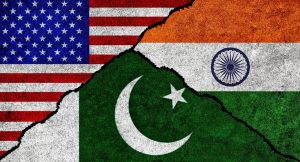
The US Is Rethinking the India-Pakistan Dynamic


The real story in South Asia today is not tariffs or Russian oil, but Washington’s quiet reassessment of Pakistan, and its implications for both the India-U.S. relationship and China’s role in South and West Asia. While critics of President Donald Trump focus on his personality and unpredictable diplomacy, they miss a deeper truth: U.S. strategy is shifting, and it is this recalibration – rather than short-term irritants – that threatens to inject lasting volatility into ties with New Delhi.

This ongoing shift is a major departure from existing policy, where successive administrations in Washington have sought to deepen relations with India while simultaneously limiting their relationship with Pakistan. Two trends drove this policy direction: growing U.S. frustration over Pakistan’s conduct during the war in Afghanistan, and a greater focus on the strategic competition with China, which increased the centrality of India as a potential net security provider in the Indo-Pacific region. These trends granted policymakers the space to limit the relationship with Pakistan, and by extension be seen as being respectful of New Delhi’s sensitivities with regards to U.S. security and economic engagement with Pakistan.

The Trump administration, however, has apparently reconsidered this approach. Many have argued that the ongoing shift is simply a function of Trump’s own unique personality. And while this may be true to some extent, much of the change in strategy is informed by a reassessment of the United States’ global geostrategy and the ways in which the competition with China is being approached.

As far as the region is concerned, the Trump administration seems to have concluded that Pakistan offers things that are of importance to the United States, especially as it relates to the country’s role in West Asia and the Middle East. Furthermore, Pakistan is home to some of the world’s largest undeveloped copper and gold reserves, which are currently being developed by a Canadian mining company that is seeking a “G-7 financing package.” Washington does not want a Chinese flag to fly over Pakistan’s critical mineral assets, and policymakers also see U.S. investments as a means to guard against a potential Chinese military footprint in Gwadar. As such, engagement with Pakistan is being seen through a different lens, where the alignment of interests is sharper than it has been in decades.


On the China front, Washington is waking up to the reality that Beijing is now a peer competitor, with economic and technological capabilities rivaling – and in some areas surpassing – the United States. At the same time, policymakers know the deep interconnectedness of the two economies cannot be unwound anytime soon, making it imperative for Washington and Beijing to find terms of coexistence. This recalibration, in turn, reduces India’s relative salience as a partner to offset U.S. dependency on China.

Finally, the recent conflict between India and Pakistan also seems to have changed Washington’s net assessment of each country’s military capabilities. More specifically, there is a belief that India is likely to be tied up in the Himalayas for the foreseeable future. As a result, it will be much more difficult for India to commit the expected level of resources into building maritime capabilities that can position it as a net security provider in the Indo-Pacific.


@PAKISTANFOREVER @Hakikat ve Hikmet @pwfi @Hakwa Nadro @NA71 @TOPGUN @TAC @Dalit @FuturePAF @Rationale @Raj-Hindustani @SoulSpokesman @Paro @Beijingwalker @chinasun @Michael @PK781 @ghazi52 @PK781
 

The US Is Rethinking the India-Pakistan Dynamic​

Washington’s South Asia strategy is shifting, and it is this recalibration – rather than tariffs – that threatens to inject lasting volatility into ties with New Delhi.
September 03, 2025

https://thediplomat.com/2025/09/the-us-is-rethinking-the-india-pakistan-dynamic/

The US Is Rethinking the India-Pakistan Dynamic


The real story in South Asia today is not tariffs or Russian oil, but Washington’s quiet reassessment of Pakistan, and its implications for both the India-U.S. relationship and China’s role in South and West Asia. While critics of President Donald Trump focus on his personality and unpredictable diplomacy, they miss a deeper truth: U.S. strategy is shifting, and it is this recalibration – rather than short-term irritants – that threatens to inject lasting volatility into ties with New Delhi.

This ongoing shift is a major departure from existing policy, where successive administrations in Washington have sought to deepen relations with India while simultaneously limiting their relationship with Pakistan. Two trends drove this policy direction: growing U.S. frustration over Pakistan’s conduct during the war in Afghanistan, and a greater focus on the strategic competition with China, which increased the centrality of India as a potential net security provider in the Indo-Pacific region. These trends granted policymakers the space to limit the relationship with Pakistan, and by extension be seen as being respectful of New Delhi’s sensitivities with regards to U.S. security and economic engagement with Pakistan.

The Trump administration, however, has apparently reconsidered this approach. Many have argued that the ongoing shift is simply a function of Trump’s own unique personality. And while this may be true to some extent, much of the change in strategy is informed by a reassessment of the United States’ global geostrategy and the ways in which the competition with China is being approached.

As far as the region is concerned, the Trump administration seems to have concluded that Pakistan offers things that are of importance to the United States, especially as it relates to the country’s role in West Asia and the Middle East. Furthermore, Pakistan is home to some of the world’s largest undeveloped copper and gold reserves, which are currently being developed by a Canadian mining company that is seeking a “G-7 financing package.” Washington does not want a Chinese flag to fly over Pakistan’s critical mineral assets, and policymakers also see U.S. investments as a means to guard against a potential Chinese military footprint in Gwadar. As such, engagement with Pakistan is being seen through a different lens, where the alignment of interests is sharper than it has been in decades.


On the China front, Washington is waking up to the reality that Beijing is now a peer competitor, with economic and technological capabilities rivaling – and in some areas surpassing – the United States. At the same time, policymakers know the deep interconnectedness of the two economies cannot be unwound anytime soon, making it imperative for Washington and Beijing to find terms of coexistence. This recalibration, in turn, reduces India’s relative salience as a partner to offset U.S. dependency on China.

Finally, the recent conflict between India and Pakistan also seems to have changed Washington’s net assessment of each country’s military capabilities. More specifically, there is a belief that India is likely to be tied up in the Himalayas for the foreseeable future. As a result, it will be much more difficult for India to commit the expected level of resources into building maritime capabilities that can position it as a net security provider in the Indo-Pacific.


@PAKISTANFOREVER @Hakikat ve Hikmet @pwfi @Hakwa Nadro @NA71 @TOPGUN @TAC @Dalit @FuturePAF @Rationale @Raj-Hindustani @SoulSpokesman @Paro @Beijingwalker @chinasun @Michael @PK781 @ghazi52 @PK781
What about Pakistan's massive oil and rare earths reserves ? The author completely forgot about them.
 

The US Is Rethinking the India-Pakistan Dynamic​

Washington’s South Asia strategy is shifting, and it is this recalibration – rather than tariffs – that threatens to inject lasting volatility into ties with New Delhi.
September 03, 2025

https://thediplomat.com/2025/09/the-us-is-rethinking-the-india-pakistan-dynamic/

The US Is Rethinking the India-Pakistan Dynamic


The real story in South Asia today is not tariffs or Russian oil, but Washington’s quiet reassessment of Pakistan, and its implications for both the India-U.S. relationship and China’s role in South and West Asia. While critics of President Donald Trump focus on his personality and unpredictable diplomacy, they miss a deeper truth: U.S. strategy is shifting, and it is this recalibration – rather than short-term irritants – that threatens to inject lasting volatility into ties with New Delhi.

This ongoing shift is a major departure from existing policy, where successive administrations in Washington have sought to deepen relations with India while simultaneously limiting their relationship with Pakistan. Two trends drove this policy direction: growing U.S. frustration over Pakistan’s conduct during the war in Afghanistan, and a greater focus on the strategic competition with China, which increased the centrality of India as a potential net security provider in the Indo-Pacific region. These trends granted policymakers the space to limit the relationship with Pakistan, and by extension be seen as being respectful of New Delhi’s sensitivities with regards to U.S. security and economic engagement with Pakistan.

The Trump administration, however, has apparently reconsidered this approach. Many have argued that the ongoing shift is simply a function of Trump’s own unique personality. And while this may be true to some extent, much of the change in strategy is informed by a reassessment of the United States’ global geostrategy and the ways in which the competition with China is being approached.

As far as the region is concerned, the Trump administration seems to have concluded that Pakistan offers things that are of importance to the United States, especially as it relates to the country’s role in West Asia and the Middle East. Furthermore, Pakistan is home to some of the world’s largest undeveloped copper and gold reserves, which are currently being developed by a Canadian mining company that is seeking a “G-7 financing package.” Washington does not want a Chinese flag to fly over Pakistan’s critical mineral assets, and policymakers also see U.S. investments as a means to guard against a potential Chinese military footprint in Gwadar. As such, engagement with Pakistan is being seen through a different lens, where the alignment of interests is sharper than it has been in decades.


On the China front, Washington is waking up to the reality that Beijing is now a peer competitor, with economic and technological capabilities rivaling – and in some areas surpassing – the United States. At the same time, policymakers know the deep interconnectedness of the two economies cannot be unwound anytime soon, making it imperative for Washington and Beijing to find terms of coexistence. This recalibration, in turn, reduces India’s relative salience as a partner to offset U.S. dependency on China.

Finally, the recent conflict between India and Pakistan also seems to have changed Washington’s net assessment of each country’s military capabilities. More specifically, there is a belief that India is likely to be tied up in the Himalayas for the foreseeable future. As a result, it will be much more difficult for India to commit the expected level of resources into building maritime capabilities that can position it as a net security provider in the Indo-Pacific.


@PAKISTANFOREVER @Hakikat ve Hikmet @pwfi @Hakwa Nadro @NA71 @TOPGUN @TAC @Dalit @FuturePAF @Rationale @Raj-Hindustani @SoulSpokesman @Paro @Beijingwalker @chinasun @Michael @PK781 @ghazi52 @PK781

Kindly look the profile of writers.

Such articles does hold any legitimacy, if there indian writer, he will similar write what best suits for indian perspective
 
No its not, india is a natural albeit unreliable partner for USA, this is just a blip. Pakistan is firmly in the china camp and always will be

There is nothing natural about India-USA relations. If India isn't willing to fight China then that relations become transactional and not strategic.
 

The US Is Rethinking the India-Pakistan Dynamic​

Washington’s South Asia strategy is shifting, and it is this recalibration – rather than tariffs – that threatens to inject lasting volatility into ties with New Delhi.
September 03, 2025

https://thediplomat.com/2025/09/the-us-is-rethinking-the-india-pakistan-dynamic/

The US Is Rethinking the India-Pakistan Dynamic


The real story in South Asia today is not tariffs or Russian oil, but Washington’s quiet reassessment of Pakistan, and its implications for both the India-U.S. relationship and China’s role in South and West Asia. While critics of President Donald Trump focus on his personality and unpredictable diplomacy, they miss a deeper truth: U.S. strategy is shifting, and it is this recalibration – rather than short-term irritants – that threatens to inject lasting volatility into ties with New Delhi.

This ongoing shift is a major departure from existing policy, where successive administrations in Washington have sought to deepen relations with India while simultaneously limiting their relationship with Pakistan. Two trends drove this policy direction: growing U.S. frustration over Pakistan’s conduct during the war in Afghanistan, and a greater focus on the strategic competition with China, which increased the centrality of India as a potential net security provider in the Indo-Pacific region. These trends granted policymakers the space to limit the relationship with Pakistan, and by extension be seen as being respectful of New Delhi’s sensitivities with regards to U.S. security and economic engagement with Pakistan.

The Trump administration, however, has apparently reconsidered this approach. Many have argued that the ongoing shift is simply a function of Trump’s own unique personality. And while this may be true to some extent, much of the change in strategy is informed by a reassessment of the United States’ global geostrategy and the ways in which the competition with China is being approached.

As far as the region is concerned, the Trump administration seems to have concluded that Pakistan offers things that are of importance to the United States, especially as it relates to the country’s role in West Asia and the Middle East. Furthermore, Pakistan is home to some of the world’s largest undeveloped copper and gold reserves, which are currently being developed by a Canadian mining company that is seeking a “G-7 financing package.” Washington does not want a Chinese flag to fly over Pakistan’s critical mineral assets, and policymakers also see U.S. investments as a means to guard against a potential Chinese military footprint in Gwadar. As such, engagement with Pakistan is being seen through a different lens, where the alignment of interests is sharper than it has been in decades.


On the China front, Washington is waking up to the reality that Beijing is now a peer competitor, with economic and technological capabilities rivaling – and in some areas surpassing – the United States. At the same time, policymakers know the deep interconnectedness of the two economies cannot be unwound anytime soon, making it imperative for Washington and Beijing to find terms of coexistence. This recalibration, in turn, reduces India’s relative salience as a partner to offset U.S. dependency on China.

Finally, the recent conflict between India and Pakistan also seems to have changed Washington’s net assessment of each country’s military capabilities. More specifically, there is a belief that India is likely to be tied up in the Himalayas for the foreseeable future. As a result, it will be much more difficult for India to commit the expected level of resources into building maritime capabilities that can position it as a net security provider in the Indo-Pacific.


@PAKISTANFOREVER @Hakikat ve Hikmet @pwfi @Hakwa Nadro @NA71 @TOPGUN @TAC @Dalit @FuturePAF @Rationale @Raj-Hindustani @SoulSpokesman @Paro @Beijingwalker @chinasun @Michael @PK781 @ghazi52 @PK781

For the first time in 3 decades, India isn't dictating the Pakistan policy in Washtington.
 
I think the recent conflict showed that India got dominated in very key aspects of the conflict - Airpower. This means that India is not even capable of handling a much smaller adversary, let alone a near super power like China. So then what is the point of propping up its military capabilities when all they can or want to do is get into fights with Pakistan and not achieve any victory (even a draw is a win for Pakistan).

India will still hold good economic power and relations, as it has a massive market and Industry to trade with - but why keep Pakistan weak specifically to appease Indian security interests, when they cannot or do not want to address western security interests vs China and Russia. From transactional point of view, if India cannot even give up cheaper Russian oil when they are invading Ukraine, why cannot west/USA sell weapons to Pakistan for reasonable security interests?
 
@Raj-Hindustani

Mr Uzair Yunus is actually quite favourably inclined towards IND. You may check his India travelogue on Youtube.

Being Pakistani, doesn't necessarily mean being biassed.

Regards
I checked his Twitter profile. He’s Pakistani, and his views lean toward Pakistan, but he’s not a hardliner. He does acknowledge and appreciate positive things, even from India, though his perspective is mostly shaped by a Pakistani point of view.
 

The US Is Rethinking the India-Pakistan Dynamic​

Washington’s South Asia strategy is shifting, and it is this recalibration – rather than tariffs – that threatens to inject lasting volatility into ties with New Delhi.
September 03, 2025

https://thediplomat.com/2025/09/the-us-is-rethinking-the-india-pakistan-dynamic/

The US Is Rethinking the India-Pakistan Dynamic


The real story in South Asia today is not tariffs or Russian oil, but Washington’s quiet reassessment of Pakistan, and its implications for both the India-U.S. relationship and China’s role in South and West Asia. While critics of President Donald Trump focus on his personality and unpredictable diplomacy, they miss a deeper truth: U.S. strategy is shifting, and it is this recalibration – rather than short-term irritants – that threatens to inject lasting volatility into ties with New Delhi.

This ongoing shift is a major departure from existing policy, where successive administrations in Washington have sought to deepen relations with India while simultaneously limiting their relationship with Pakistan. Two trends drove this policy direction: growing U.S. frustration over Pakistan’s conduct during the war in Afghanistan, and a greater focus on the strategic competition with China, which increased the centrality of India as a potential net security provider in the Indo-Pacific region. These trends granted policymakers the space to limit the relationship with Pakistan, and by extension be seen as being respectful of New Delhi’s sensitivities with regards to U.S. security and economic engagement with Pakistan.

The Trump administration, however, has apparently reconsidered this approach. Many have argued that the ongoing shift is simply a function of Trump’s own unique personality. And while this may be true to some extent, much of the change in strategy is informed by a reassessment of the United States’ global geostrategy and the ways in which the competition with China is being approached.

As far as the region is concerned, the Trump administration seems to have concluded that Pakistan offers things that are of importance to the United States, especially as it relates to the country’s role in West Asia and the Middle East. Furthermore, Pakistan is home to some of the world’s largest undeveloped copper and gold reserves, which are currently being developed by a Canadian mining company that is seeking a “G-7 financing package.” Washington does not want a Chinese flag to fly over Pakistan’s critical mineral assets, and policymakers also see U.S. investments as a means to guard against a potential Chinese military footprint in Gwadar. As such, engagement with Pakistan is being seen through a different lens, where the alignment of interests is sharper than it has been in decades.


On the China front, Washington is waking up to the reality that Beijing is now a peer competitor, with economic and technological capabilities rivaling – and in some areas surpassing – the United States. At the same time, policymakers know the deep interconnectedness of the two economies cannot be unwound anytime soon, making it imperative for Washington and Beijing to find terms of coexistence. This recalibration, in turn, reduces India’s relative salience as a partner to offset U.S. dependency on China.

Finally, the recent conflict between India and Pakistan also seems to have changed Washington’s net assessment of each country’s military capabilities. More specifically, there is a belief that India is likely to be tied up in the Himalayas for the foreseeable future. As a result, it will be much more difficult for India to commit the expected level of resources into building maritime capabilities that can position it as a net security provider in the Indo-Pacific.


@PAKISTANFOREVER @Hakikat ve Hikmet @pwfi @Hakwa Nadro @NA71 @TOPGUN @TAC @Dalit @FuturePAF @Rationale @Raj-Hindustani @SoulSpokesman @Paro @Beijingwalker @chinasun @Michael @PK781 @ghazi52 @PK781
Cannot add your comments to the title please. Not allowed.
 
It was a relationship out of necessity to counter China.

It was a scam India pulled. India real target was always Pakistan.

Question is does USA want to prop up India and risk nuclear winter on earth? No. Hence back to balancing act in south asia. And next step is mediation in Kashmir issue by implementing UN resolutions.
 

Users who are viewing this thread

Pakistan Defence Latest

Latest Posts

Back
Top