Pakistan-Saudi Arabia mutual defense pact: News & Discussion

To view this content we will need your consent to set third party cookies.
For more detailed information, see our cookies page.
 
All Pakistan needs is money and oil.
we have lots of oil but its all black...lol......we keep frying burgers and kebabs all day in same oils.......plenty available every food stall in Pak :LOL:
 
To view this content we will need your consent to set third party cookies.
For more detailed information, see our cookies page.
 
Next step should be a single currency between Saudi Arabia and Pakistan.
 
Very good to have Muslims countries to have a military pact . Muslims should take care of themselves and not depend on others like Qatar found out!
 
Last edited:
Next step should be a single currency between Saudi Arabia and Pakistan.
Afghan ki bhi ho jani ha wohi currency.
On a serious note, the way the US is behaving, what if the dollar falls and the US refuses to pay tender? SA should invest that money instead.
 
The Saudis received their first Tornado in 1986. The only conflicts we've had since then are 1999 (Kargil), 2019, and 2025. We didn't receive any direct foreign military assistance in any of them.

In 1971 the Saudis provided political and financial support. Can't seem to find any mention of warships being sent anywhere in 71 or 65.
The only military assistance we got prior to 71 conflict were Jordanian F104s that were transferred to PAF with US approval and 90 odd F86E bought by Shah of Iran from Germany and transferred to Pakistan (I believe happened in 69).
 
Saudis will most likely use Pakistan to fight wars in Yemen or aggression against Iran. Everyone is excited but when we get attacked by India and saudia looks the other way then we will realise our auqaat. Pakistan must make sure this agreement is binding upon both parties and we will only defend saudia from attacks. Also keep in mind we mentioned many times that we will defend Makka and Madina with troops on the ground, maybe the agreement is to make it official. Qatar is close to Turkey, this is why Turkey sent troops to Qatar to defend them from Saudia attack, I know Israel bombed Qatar but noone can stop that except you retaliate by trying to shoot the planes down or chase them away from your airspace. Noone dares to bomb Israel since Usa will defend Israel at all costs. All the nuke propaganda needs to be buried, Pakistan does not want to internationalise their nukes so the world will make it out like we are a threat and come after us.
It is not just propaganda. The Saudis dont need this agreement to hire Pakistani mercenaries for internal security or for Yemen. if they have chosen to risk their relationship with the US, Iran, Israel and India, it is only to get the implicit nuclear umbrella. No one from either side will deny the nuclear dimension. That is the whole value of the agreement to the Saudis and without it, it is not worth the paper it is printed on.
 
I suspect Qatar may be next to sign an agreement with Pakistan. I really hope we do not sign with UAE.

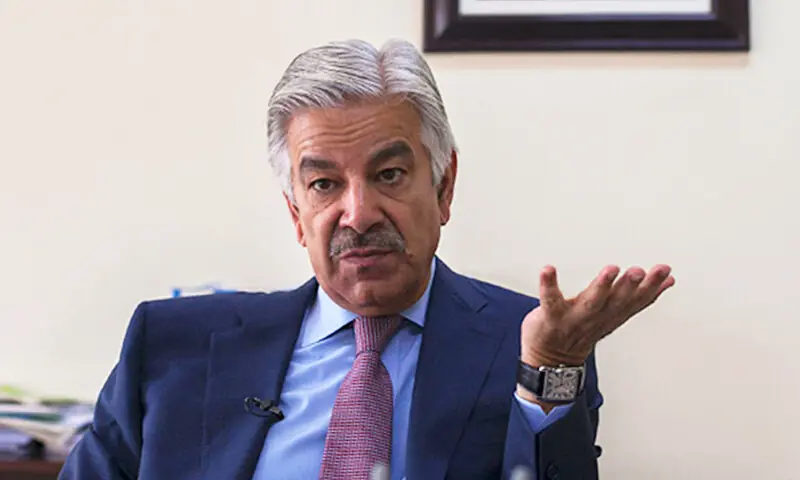
‘Doors not closed’ to entry of other Arab nations in Pak-Saudi mutual defence deal: Khawaja Asif


Defence Minister Khawaja Asif on Thursday said the entry of other Arab nations in the mutual defence deal between Pakistan and Saudi Arabia was not ruled out, saying the “doors are not closed” for such developments.

Pakistan and Saudi Arabia entered into a landmark mutual defence agreement, under which any aggression against one state will be considered an attack on both. The ‘Strategic Mutual Defence Agreement’ was signed by Prime Minister Shehbaz Sharif and Saudi Crown Prince Mohammad Bin Salman at the Al-Yamamah Palace in Riyadh on Wednesday.


Talking more about the deal in an interview on Geo News show ‘Aaj Shahzeb Khanzada Kay Sath’ and whether more Arab nations could become part of it, Asif said: “I cannot prematurely answer this, but I will definitely say the doors are not closed.”

Asif said he had always called for a similar arrangement like Nato since there was greater vulnerability for Pakistan, pointing to the history of the region in the last 40-50 years.


“I think it is a fundamental right of the countries and people here, particularly the Muslim population, to together defend their region, countries and nations.”

He said there was no clause in the agreement that ruled out the entry of any other nation or that Pakistan could not sign a similar agreement with anyone else.


Asked about whether Pakistan’s nuclear assets were also up for use under the agreement, Asif said: “What we have, our capabilities, will absolutely be available under this pact. But let me say, since Pakistan has become a nuclear state, never has anyone challenged our status of being a responsible nuclear power.”

Asif said Pakistan had always offered its nuclear facilities for inspection and never committed any violation. He added that this is in contrast to Israel, which had not allowed any inspection.

Questioned about whether any attack on one country would lead to the involvement of the other and vice versa, the minister said: “Yes, absolutely. There is no doubt in this.”

He said neither Pakistan nor Saudi Arabia had named or conditioned the implementation of the defence deal with any specific country. “It is an umbrella that has been provided by both sides, that, if there is aggression against any side from any side, it will be jointly defended against and responded to.”

Asif clarified it was not an “aggressive pact” but a defensive arrangement, similar to that of Nato.

He added that Pakistan had also been involved in training Saudi forces for quite a while and the recent development was only a formalised “extension” of all that, adding that it was a positive thing.

“If there is aggression, whether against Saudi Arabia or Pakistan, we will jointly defend against it.”

He said Pakistan had always had talks on the issue with Saudi Arabia, saying the former had always had a large military and air force contingent present in the latter for many decades.

“I think that [pre-existing] relationship has been more defined now and that understanding has been given the form of a defence agreement. This is embedded in the history of our military cooperation and our brotherly relationship with Saudi Arabia.”

Asif also said the protection of the holy Islamic sites in Saudi Arabia was also a matter of a “sacred duty” for Pakistan.


Questioned about whether the United States was taken into confidence on the matter, Asif said he felt there was no ground or justification for any other third party to be involved in the development.

“This agreement will not be a hegemonic arrangement but a defensive arrangement … we don’t have any plans to conquer territory or attack anyone. But our fundamental right can’t be denied to us and we exercised that yesterday.”

He reiterated that Pakistan could also pursue similar arrangements with other countries.

To a question about terrorist attacks on security forces, Asif reiterated that Afghan soil is being used to stage acts of terrorism in Pakistan.

“We were swept into two wars in Afghanistan. The US, on both occasions, left the region and we are still dealing with the consequences, be it the Taliban, the TTP (Tehreek-e-Taliban Pakistan), the BLA (Balochistan Liberation Army) or anyone else,” Asif said, referring to the Soviet-Afghan War of the 1980s and the US-led International Security Assistance Force mission after 2001.

“People embrace martyrdom daily; this liability emerged due to those two wars,” he added. “The Kabul government is not innocent in this, I am being categorical. Through these people, we are being blackmailed by them.

“I say with no ambiguity: Afghanistan is a hostile country.”

The defence minister added that Afghanistan was the last country to recognise Pakistan and that discussions on terrorism went nowhere.

When asked if Arab states would act in response to Afghan aggression, Asif encouraged it.

“I would not be against it, but how many times have we been there? They are involved in our politics as well, with a party I will not name,” he stated. “This party advocates for these people who have our children’s blood on their hands.

“This is a subject Pakistan should be clear on, and we are very clear.”

According to the text of the joint statement, issued simultaneously by Islamabad and Riyadh at the end of PM Shehbaz’s day-long state visit, the pact “reflects the shared commitment of both nations to enhance their security and to achieve security and peace in the region and the world”.

“[It] aims to develop aspects of defence cooperation between the two countries and strengthen joint deterrence against any aggression,” the statement said, without going into details.

Importantly, the text underscored that “any aggression against either country shall be considered an aggression against both”.

The timing of the accord, coming on the heels of an Arab summit that signalled a shift towards collective security — in the wake of Israel’s attack on Qatar — hints that it is rooted in current world affairs and reflects the defence concerns of both countries.

The agreement marks the most significant upgrade in Pakistan-Saudi defence ties in decades. Cooperation between the two states dates back to 1967 and deepened after the 1979 Grand Mosque seizure, when Pakistani special forces helped Saudi troops reclaim Masjid al-Haram.

In 1982, the two sides institutionalised security ties through a Bilateral Security Cooperation Agreement that enabled Pakistani training, advisory support and deployments on Saudi soil. At times, as many as 20,000 Pakistani troops were stationed in the kingdom, and Saudi Arabia became a key purchaser of Pakistani-made arms.

In recent years, the partnership has gained urgency amid regional instability. In February, a meeting of the Joint Military Cooperation Committee in Riyadh pledged to expand training and exchanges.


The new pact formalises commitments that had long existed in practice, creating what some analysts saw as a de facto joint defensive umbrella, though finer details of the agreement were not made public.

For Pakistan, the agreement offers both strategic and economic benefits. It secures vital Saudi investment and funding at a time of fiscal strain, while reinforcing Islamabad’s standing as a pan-Islamic security provider.

For Saudi Arabia, it strengthens defences against threats from Iran, Houthi militias and regional turbulence caused by Israel’s genocidal actions in Gaza and aggression against other countries in the neighbourhood. The Israeli attack targeting the Hamas delegation in Doha heightened the urgency for this agreement that had been under discussion for some time.

Pakistan’s earlier defence alignments, such as Cold War-era agreements with the United States and those under Seato and Cento, have long since eroded. Islamabad’s partnerships with China, Turkiye and other Gulf states remain important but lack binding mutual defence clauses.

Against this backdrop, Wednesday’s signing represented Pakistan’s most consequential formal defence commitment in decades, tying its security role inextricably to the evolving strategic architecture of the Gulf.

 
“After Qatar, Can the Gulf Still Trust Washington — or Is It Time for Turkey and Pakistan?”

Israel’s attack on Qatar has sent shockwaves across the Gulf, not only for its audacity but for what it reveals: the American security umbrella, long treated as unshakable, is looking increasingly fragile. For decades, the GCC states have outsourced their defense to Washington, trusting U.S. power to deter threats and uphold stability. Yet when a member state comes under fire, the silence—or hesitation—from their supposed guarantor speaks louder than any treaty. The time has come for the Gulf to ask a hard question: is dependence on the United States a strategic liability, and should the region begin forging alternative security partnerships with rising powers like Turkey and Pakistan?

For much of the post-Cold War era, Gulf capitals relied on American military might as the cornerstone of their survival. U.S. bases, aircraft carriers, and defense pacts projected an aura of invincibility. But recent events reveal cracks in that shield. Washington’s shifting priorities toward Asia, domestic political fatigue over Middle Eastern entanglements, and an increasingly transactional approach to alliances have left GCC leaders wondering whether U.S. protection is still guaranteed when push comes to shove. Israel’s strike on Qatar is not just an isolated incident—it is a stress test for a security model that may no longer fit the realities of today.

At the same time, the geopolitical landscape is changing. Turkey has demonstrated both willingness and capacity to project power in the region, from its military footprint in Qatar itself to its broader involvement in Syria, Libya, and beyond. Pakistan, meanwhile, holds unique value as a nuclear-armed state with deep cultural, religious, and economic ties to the Gulf. Its military has long been involved in Gulf security—from training Saudi forces to deploying troops for regional defense agreements. Together, Ankara and Islamabad present a compelling alternative: Muslim-majority powers capable of offering credible defense partnerships rooted in shared interests and identity.

Critics will argue that neither Turkey nor Pakistan can match the global reach of the United States, and that is true. But the question is not about replacing Washington wholesale—it is about diversifying security dependencies. Just as Gulf economies are seeking to diversify beyond oil, so too must their security strategies expand beyond an exclusive reliance on America. A more multipolar approach, involving Turkey, Pakistan, and even other Asian powers, could reduce vulnerability to U.S. political shifts while enhancing the region’s strategic autonomy.

This is not without challenges. Turkish foreign policy is ambitious and at times unpredictable, while Pakistan’s internal politics and economic instability raise concerns about long-term commitments. Yet both nations have demonstrated resilience and a willingness to engage where others hesitate. Most importantly, they do not carry the baggage of double standards that increasingly taints U.S. policy in the eyes of many in the Gulf.

Israel’s strike on Qatar should be a turning point. The GCC cannot afford to remain complacent, assuming that Washington’s shield will always hold. To do so is to invite vulnerability in a region where power is shifting rapidly. By exploring security partnerships with Turkey and Pakistan, the Gulf states would not only bolster their defenses but also send a clear message: the era of unilateral dependence on the United States is over.

Policy Recommendations for the GCC:
1. Joint Defense Exercises – Launch regular trilateral military drills with Turkey and Pakistan to strengthen interoperability and signal credible deterrence.
2. Intelligence Sharing Platforms – Establish secure intelligence-sharing frameworks focused on counterterrorism, cyber defense, and regional threat assessments.
3. Defense Procurement Diversification – Reduce reliance on U.S. arms by co-developing or purchasing advanced systems from Turkey and Pakistan, while investing in indigenous defense industries.
4. Security Academies and Training – Expand military training exchanges with Pakistani academies and Turkish defense institutions to build human capital within GCC armed forces.
5. Collective Security Dialogue – Create a GCC–Turkey–Pakistan security forum to institutionalize cooperation and gradually build a framework for mutual defense guarantees.

A Roadmap Forward
The Gulf’s future security lies not in nostalgia for past guarantees but in bold, pragmatic choices that reflect the realities of a changing world order. Israel’s attack on Qatar has exposed the risks of inaction. If the GCC takes concrete steps—joint drills, intelligence cooperation, diversified procurement, and institutionalized dialogue—it can gradually build a more resilient, autonomous security architecture. This roadmap is not about abandoning the United States, but about ensuring the Gulf is never again left vulnerable to the indecision or shifting priorities of a single power. The time for debate has passed; the time for decisive action has arrived.

Rizwan Warraich
PakTurk Institute

It's obvious this lengthy article was listed with ONLY Turkey in mind. Pakistan is building it's defense industry and Saudia wants to join it too with high prized high impact weapons. There is no Turkey in the immediate picture because the net security providing umbrella is Pakistan due to it's nuclear status.

Turkey can't just jump in because they are NATO and that brings in a lot of legalities for KSA and Pakistan. You have seen Germans and others views on giving KSA just Euro Fighter Typhoons. The Saudis are tired of that and want to build an industry through Pakistan.

Turkey will sell weapons to this WAPAN pact (War Alliance of Pakistan and Arab Nations, my own term) but it's not a direct contributor or partner. So these statements made, that don't meet the legitimacy of the legalities of this agreement, are useless. Pakistan using its war fighting capability along with Saudia's top tier tech and some high value projects build in Pakistan and Saudia under TOT from China, will do just fine and some items will come from Turkey like the KAAN, etc. But due to NATO adding complexities, Turkey will remain in NATO. It's better for them. There is also a history between Turkey and KSA. So keep that in mind.

Lastly, the American systems, the protective umbrella and ALL is fine, nothing is broken or breached. But you and the writer MUST understand, when it comes to Israel, the US will look the other way.

India is the same way due to Israeli backing. They upset Trump, for quick profits, ran the world's largest black market of Oil for Russia, made nearly $ 16 billion in a few months and when Trump got very upset, used Israel to cool him down. Trump's back now calling Modi a friend. That's the US for you for Israel! And that's why the Arab nations want a different alliance also.
 

Users who are viewing this thread

  • Ak01

Country Watch Latest

Back
Top