Pakistan-Saudi Arabia mutual defense pact: News & Discussion

View attachment 147491

View attachment 147492

War by Bob Woodward.

this pact will have far reaching implications. Pakistan army will be stationed in Saudi and bases will be given to Pakistan.
Pakistan should ask for bases and house one full strike core, two/three AF squadrons and some strategic strike capability. That would provide higher survivability of tactical assets in case of war with the smelly filth and provide second strike capability.
 
It is not just propaganda. The Saudis dont need this agreement to hire Pakistani mercenaries for internal security or for Yemen. if they have chosen to risk their relationship with the US, Iran, Israel and India, it is only to get the implicit nuclear umbrella. No one from either side will deny the nuclear dimension. That is the whole value of the agreement to the Saudis and without it, it is not worth the paper it is printed on.

India benefits from Saudia like it does from the US. You don't "risk" relations whom you benefit. Similarly, they don't have great friendly relations with Iran or Israel. That's dumb to even think that. Lastly, google the meaning of strategic ally. I know your entire nation is super upset but it's over for India. Check mated in May, then by the US and then by the Chinese and now by the Middle Eastern nations. Part of life. 2025 is the worst year for Indian foreign relations. Why did Modi's one of 50 Jotishis not predict it?
 
thread has got to 60 pages

That means a simple statement and declaration has got Indians wound up


Being connected to the world really is not a great thing considered who has internet access
 
Interesting comments by Arnaud Bertrand, my sense is with Israel so hated in the world right now, many people and countries totally understand this move by Pak-Saudi

Pakistan gives Saudi Arabia a landmark Article 5 collective security guarantee​

Pakistan gives Saudi Arabia a landmark Article 5 collective security guarantee

Crown Prince Mohammed bin Salman and Pakistan Prime Minister Shehbaz Sharif sign an Article 5-like collective security agreement for mutual defence. / bne IntelliNews
FacebookTwitterLinkedInTelegramFlipboardFeedly


By Ben Aris in Berlin September 18, 2025
In what is likely to be a game-changing decision, Pakistan, a nuclear power, has given Saudi Arabia an Article 5-like collective security guarantee.

The mutual defence agreement signed this week between Riyadh and Islamabad provides for mutual military assistance: “any attack on either country is an attack on both”.

The unprecedented agreement represents a strategic turning point for the region with global consequences, according to political commentator and bne IntelliNews columnist Arnaud Bertrand.

“I don’t think I’m exaggerating by saying that this truly is the US’ Suez moment,” Bertrand argued. “Saudi Arabia was in many ways THE poster child of US client states. If they no longer trust American security guarantees, why should anyone else?”

The deal, which Saudi officials described to Al Jazeera as “a comprehensive defensive agreement that encompasses all military means,” provides Riyadh with access to Pakistan’s nuclear deterrent.

“We now officially have two nuclear-backed blocs in the Middle East: US–Israel vs Pakistan–Saudi,” Bertrand said, noting that Pakistan does not adhere to a no-first-use nuclear doctrine. “Saudi Arabia now has a protector willing to use nuclear weapons pre-emptively.”

The ramifications extend beyond defence. “Given that 81% of Pakistan’s weapon imports come from China, it also means that Saudi Arabia just indirectly aligned itself with the Chinese military-industrial complex,” Bertrand observed. He added that the agreement “effectively extends the China–Pakistan Economic Corridor to the Persian Gulf, protected by Pakistani nuclear weapons and Chinese military technology — creating a secure energy corridor from the Middle East to China that completely bypasses the Strait of Malacca.”

The timing of the announcement, days after Israel’s strike on Qatar, was “the ultimate proof of the worthlessness of US protection,” he argued. Bertrand predicted that other Gulf states and countries under US security umbrellas “are likely to explore comparable models in the next few months,” potentially leading to “a cascading collapse of the US global alliance system, leading to an entirely new international system where regional nuclear powers become security providers.”

The pact also reshapes regional dynamics. The world of emerging markets is being rapidly transformed as the world’s leading emerging markets abandon the West and are actively building up their own regional alliances that exclude the West.

The deal follows on from the May alliance of China, the countries of South-East Asia (ASEAN) and the Arab states (GCC) who met in Kuala Lumpur to forge what could become the world's largest trade block. Together, these countries have over 2bn people, 30% of the world's GDP and, crucially, about 55% of world GDP growth in PPP terms.

And the security pact comes on the heels of the Shanghai Cooperation Organization (SCO) summit in Tianjin, China, that unsettled Western observers by the bonhomie between Chinese President Xi Jinping and his guests of honour, Russian President Vladimir Putin and Prime Minister Narendra Modi. Other top level emerging market dignitaries were there including the heads of Iran, North Korea and Belarus as well as all the presidents of the five Central Asia republics.

Other EM institutions like the BRICS+, G20, ASEAN and Eurasian Economic Union (EUU) are all also rapidly developing and becoming increasingly important. On the flip side, the West, and the White House in particular, are losing their sway over the rest of the world at a similar pace, catalysed by the Trump administration aggressive tariff policies amongst other things.

“It’s hard to see how [the security deal] doesn’t permanently kill any chance of Israel–Saudi normalisation,” Bertrand said, pointing out that Pakistan does not recognise Israel. For India, meanwhile, the development is “an extremely tough spot: its archenemy just became the security guarantor for one of its primary energy suppliers.”

Economically, the deal undermines Washington’s counterweight to China’s Belt and Road. “This undoubtedly kills IMEC (India–Middle East–Europe Economic Corridor), the Biden administration’s flagship grand strategy,” Bertrand said. It also weakens the US-led financial order: “This is another nail in the coffin of the petrodollar system … Saudi Arabia is now much more flexible to price oil in whatever currency it wishes.”

“As a final word,” Bertrand concluded, “if anyone had any remaining doubt that we were now in a multipolar world, that debate is now settled permanently. American global dominance is no more.”

 
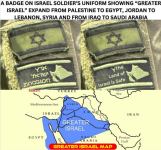
People need to remember that the idea of Greater Israel is not a conspiracy theory. Israeli soldiers (at least some) actually have a map of it on their badges. What Israel is doing today makes no sense unless we keep this in mind.

Screenshot 2025-09-18 161337.png
 
The only military assistance we got prior to 71 conflict were Jordanian F104s that were transferred to PAF with US approval and 90 odd F86E bought by Shah of Iran from Germany and transferred to Pakistan (I believe happened in 69).
Not true...both , you and SC are wrong .... During 71 war PAF was in shambles , we didn't even have spare parts for the existing fleet .
 
To view this content we will need your consent to set third party cookies.
For more detailed information, see our cookies page.
 
People need to remember that the idea of Greater Israel is not a conspiracy theory. Israeli soldiers (at least some) actually have a map of it on their badges. What Israel is doing today makes no sense unless we keep this in mind.

View attachment 147714
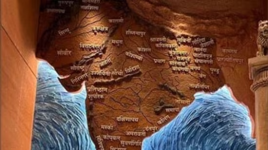
In Indian parliament. They are 2 peas of the same pod.

1758226688781.png
 
They were insensitive to modi's birthday


Sorry for the language


What the actual f***


To view this content we will need your consent to set third party cookies.
For more detailed information, see our cookies page.

look at their delusions as the world give a ****
 
Interesting comments by Arnaud Bertrand, my sense is with Israel so hated in the world right now, many people and countries totally understand this move by Pak-Saudi

Pakistan gives Saudi Arabia a landmark Article 5 collective security guarantee​

Pakistan gives Saudi Arabia a landmark Article 5 collective security guarantee

Crown Prince Mohammed bin Salman and Pakistan Prime Minister Shehbaz Sharif sign an Article 5-like collective security agreement for mutual defence. / bne IntelliNews
FacebookTwitterLinkedInTelegramFlipboardFeedly


By Ben Aris in Berlin September 18, 2025
In what is likely to be a game-changing decision, Pakistan, a nuclear power, has given Saudi Arabia an Article 5-like collective security guarantee.

The mutual defence agreement signed this week between Riyadh and Islamabad provides for mutual military assistance: “any attack on either country is an attack on both”.

The unprecedented agreement represents a strategic turning point for the region with global consequences, according to political commentator and bne IntelliNews columnist Arnaud Bertrand.

“I don’t think I’m exaggerating by saying that this truly is the US’ Suez moment,” Bertrand argued. “Saudi Arabia was in many ways THE poster child of US client states. If they no longer trust American security guarantees, why should anyone else?”

The deal, which Saudi officials described to Al Jazeera as “a comprehensive defensive agreement that encompasses all military means,” provides Riyadh with access to Pakistan’s nuclear deterrent.

“We now officially have two nuclear-backed blocs in the Middle East: US–Israel vs Pakistan–Saudi,” Bertrand said, noting that Pakistan does not adhere to a no-first-use nuclear doctrine. “Saudi Arabia now has a protector willing to use nuclear weapons pre-emptively.”

The ramifications extend beyond defence. “Given that 81% of Pakistan’s weapon imports come from China, it also means that Saudi Arabia just indirectly aligned itself with the Chinese military-industrial complex,” Bertrand observed. He added that the agreement “effectively extends the China–Pakistan Economic Corridor to the Persian Gulf, protected by Pakistani nuclear weapons and Chinese military technology — creating a secure energy corridor from the Middle East to China that completely bypasses the Strait of Malacca.”

The timing of the announcement, days after Israel’s strike on Qatar, was “the ultimate proof of the worthlessness of US protection,” he argued. Bertrand predicted that other Gulf states and countries under US security umbrellas “are likely to explore comparable models in the next few months,” potentially leading to “a cascading collapse of the US global alliance system, leading to an entirely new international system where regional nuclear powers become security providers.”

The pact also reshapes regional dynamics. The world of emerging markets is being rapidly transformed as the world’s leading emerging markets abandon the West and are actively building up their own regional alliances that exclude the West.

The deal follows on from the May alliance of China, the countries of South-East Asia (ASEAN) and the Arab states (GCC) who met in Kuala Lumpur to forge what could become the world's largest trade block. Together, these countries have over 2bn people, 30% of the world's GDP and, crucially, about 55% of world GDP growth in PPP terms.

And the security pact comes on the heels of the Shanghai Cooperation Organization (SCO) summit in Tianjin, China, that unsettled Western observers by the bonhomie between Chinese President Xi Jinping and his guests of honour, Russian President Vladimir Putin and Prime Minister Narendra Modi. Other top level emerging market dignitaries were there including the heads of Iran, North Korea and Belarus as well as all the presidents of the five Central Asia republics.

Other EM institutions like the BRICS+, G20, ASEAN and Eurasian Economic Union (EUU) are all also rapidly developing and becoming increasingly important. On the flip side, the West, and the White House in particular, are losing their sway over the rest of the world at a similar pace, catalysed by the Trump administration aggressive tariff policies amongst other things.

“It’s hard to see how [the security deal] doesn’t permanently kill any chance of Israel–Saudi normalisation,” Bertrand said, pointing out that Pakistan does not recognise Israel. For India, meanwhile, the development is “an extremely tough spot: its archenemy just became the security guarantor for one of its primary energy suppliers.”

Economically, the deal undermines Washington’s counterweight to China’s Belt and Road. “This undoubtedly kills IMEC (India–Middle East–Europe Economic Corridor), the Biden administration’s flagship grand strategy,” Bertrand said. It also weakens the US-led financial order: “This is another nail in the coffin of the petrodollar system … Saudi Arabia is now much more flexible to price oil in whatever currency it wishes.”

“As a final word,” Bertrand concluded, “if anyone had any remaining doubt that we were now in a multipolar world, that debate is now settled permanently. American global dominance is no more.”


Interesting points he made. The world powers knew this alliance was coming since January. India knew this was coming for months now.

One day I'll write about why "op sindoor" was really launched. Not clear to write it as of now.
 

Users who are viewing this thread

Pakistan Defence Latest

Back
Top