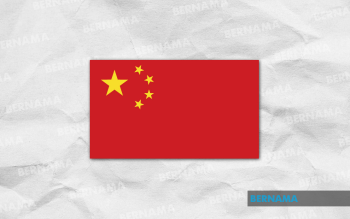
China rolls out Asean visas for 10 Asean countries

冖_冖

Registered Member
Joined
May 31, 2024
Messages
1,657
Reaction score
563
Reputation
504.2
Country of Origin
Country of Residence
CHINA ROLLS OUT ASEAN VISA FOR 10ASEAN COUNTRIES AND TIMOR-LESTE
03/06/2025 09:58 PM

BEIJING, June 3 (Bernama) -- China has rolled out an ASEAN Visa for the 10member countries of the Association of Southeast Asian Nations (ASEAN) andASEAN observer Timor-Leste, according to the Chinese Foreign Ministry.

The ministry’s spokesperson, Lin Jian, said this new programme offers five-yearmultiple-entry visas to eligible applicants visiting China for business purposesand their spouses as well as children, granting a maximum stay of 180 days.

“For anyone with more specific questions on visas to China, they are welcometo contact our diplomatic and consular missions in their countries,” he said in astatement today.

He said the initiative was to further facilitate cross-border travels in the region,on top of the visa-free arrangement between China and countries such asSingapore, Thailand, Malaysia and China’s ‘Lancang-Mekong visas’programme for Mekong countries.

In recent years, he noted that China and ASEAN have advanced the building ofa community with a shared future.“

Visits between the people of China and Southeast Asian countries have beenfrequent.

“There is a mutual hope to further ease travel between the two sides,” hepointed out.

He also said that the growing ‘visa-free list’ shows China’s firm resolve inexpanding high-level opening up.

“The various measures China has taken to ease cross-border travel are all partof China’s concrete action to create an open global economy,” he explained.

Adding to the proof, Lin said in the first quarter of this year, China received overnine million visits by foreigners, up by over 40 per cent year-on-year.

“And in the first four months, more than 18,000 foreign-invested companieswere established in China, up by 12.1 per cent year-on-year,” he said.

He further said that China will continue to improve entry policies and add morecountries to the visa-free list.“China is committed to greater openness and deeper cooperation for sharedprosperity with the rest of the world,” he added.

-- BERNAMA
 
Source:
/

Southeast Asian visitors power growth in visa-free arrivals in China

Travellers from Asean countries account for more than half of the people entering China without a visa

Published: 6:06pm, 18 Sep 2025

Visa-free entries into China by foreign nationals rose by more than half in the first eight months of the year, with visitors from Southeast Asia accounting for a big part of the growth.

The National Immigration Administration (NIA) said on Thursday that foreign nationals made 15.89 million visa-free entries from January to August.

The NIA did not give a total for the number of entries during the period but did say that visa-free entries made up roughly two-thirds of international arrivals, suggesting the total was more than 25 million.

State news agency Xinhua reported on Wednesday that nationals from Asean countries made more than 9 million trips to China under visa-free arrangements, accounting for the overwhelming majority of the 10.74 million entries by people from those nations.

One of the major developments in this area was the reciprocal visa-free agreement with Malaysia, which came into effect on July 17.

Since then, Malaysian passport holders have made 180,000 trips to China – 150,000 without visas, according to Xinhua.

Russia is expected to be another major source of visa-free arrivals to China.
 

China, Vietnam cross-border travel surges with more Vietnamese tourists​


Updated: 2025-09-18 20:35

68cbfc99a3108622d641ce7a.jpeg
Vietnamese tourists take photos inside a China Railway high-speed train carriage in August.

Cross-border tourism between China and Vietnam has surged this year, with a railway station on the China–Vietnam border reporting a sharp rise in Vietnamese visitors, according to local media.

68cbfc99a3108622d641ce7c.jpeg
Vietnamese tourists take the high-speed train to Dali, Yunnan province in August.

As of Tuesday, Hekou North Station in Yunnan's Hekou county, which borders Vietnam, had handled 1,062 groups of Vietnamese travelers, totaling 37,200 person-times, representing a year-on-year increase of nearly 74 percent, according to Yunnan.cn, a local news portal.

"Chinese high-speed trains are very fast, with the train staff providing attentive and professional service," said Pham Thu Hien, a Vietnamese traveler.

68cbfc99a3108622d641ce7e.jpeg
A Vietnamese mother and her daughter take a photo together at Honghe Station, Yunnan province.

To meet the demand during Vietnam's National Day holiday from Aug 30 to Sept 2, China Railway Kunming Group introduced a temporary direct service from Hekou North to Dali in western Yunnan, a journey of 725 kilometers. The C9526 train, designed for group travel, carried 706 passengers on its first day, including 553 Vietnamese travelers, reaching an occupancy rate of 102.24 percent.

Hekou North Station, located next to Hekou port, one of the main entry points for Vietnamese tourists, has become a hub for travel. Nowadays, more Vietnamese tourists are embracing Chinese lifestyle trends in Hekou county, from riding shared bikes and using mobile payments to drinking milk tea and wearing Hanfu, Xinhua reported.

With easier border crossings and better transport links, tourists are now venturing beyond short trips to Hekou to more destinations such as Dali and Lijiang in Yunnan.

"I've seen many Vietnamese travelling to China," said Phan Ngoc Tien from Vietnam. "Before, most took one- or two-day trips to Hekou, but now they're going further to places like Dali and Lijiang."
 

A survey shows that China has become the "most trusted country" among ASEAN people.


A survey shows that China has become the "most trusted country" among ASEAN people.


According to a report on the Asahi Shimbun website on March 13, the Japanese Ministry of Foreign Affairs released the results of an overseas opinion survey conducted for fiscal year 2025 regarding Japan. When asked about the "most trustworthy country or institution," China ranked first (22%), followed by ASEAN itself (20%), with Japan ranking third (17%). This is the first time since the survey began in fiscal year 2021 that Japan's ranking has fallen behind China.


The survey asked respondents to select the countries and institutions they trusted most from within the G20 and other groups. In the previous survey in 2023, ASEAN ranked first, Japan second, and China third. When asked about their "most important partner countries or institutions in the future" (multiple selections allowed), Japan (45%) ranked second only to China (52%), a reversal from the previous survey.


The Japanese Ministry of Foreign Affairs regularly commissions relevant organizations to conduct public opinion surveys about Japan in major countries and regions such as the United States. This survey was conducted online, and the respondents included a total of 3,000 people from all ASEAN member states.


  • Like
Reactions: Waz
To view this content we will need your consent to set third party cookies.
For more detailed information, see our cookies page.
 

China, Vietnam cross-border travel surges with more Vietnamese tourists​


Updated: 2025-09-18 20:35

68cbfc99a3108622d641ce7a.jpeg
Vietnamese tourists take photos inside a China Railway high-speed train carriage in August.

Cross-border tourism between China and Vietnam has surged this year, with a railway station on the China–Vietnam border reporting a sharp rise in Vietnamese visitors, according to local media.

68cbfc99a3108622d641ce7c.jpeg
Vietnamese tourists take the high-speed train to Dali, Yunnan province in August.

As of Tuesday, Hekou North Station in Yunnan's Hekou county, which borders Vietnam, had handled 1,062 groups of Vietnamese travelers, totaling 37,200 person-times, representing a year-on-year increase of nearly 74 percent, according to Yunnan.cn, a local news portal.

"Chinese high-speed trains are very fast, with the train staff providing attentive and professional service," said Pham Thu Hien, a Vietnamese traveler.

68cbfc99a3108622d641ce7e.jpeg
A Vietnamese mother and her daughter take a photo together at Honghe Station, Yunnan province.

To meet the demand during Vietnam's National Day holiday from Aug 30 to Sept 2, China Railway Kunming Group introduced a temporary direct service from Hekou North to Dali in western Yunnan, a journey of 725 kilometers. The C9526 train, designed for group travel, carried 706 passengers on its first day, including 553 Vietnamese travelers, reaching an occupancy rate of 102.24 percent.

Hekou North Station, located next to Hekou port, one of the main entry points for Vietnamese tourists, has become a hub for travel. Nowadays, more Vietnamese tourists are embracing Chinese lifestyle trends in Hekou county, from riding shared bikes and using mobile payments to drinking milk tea and wearing Hanfu, Xinhua reported.

With easier border crossings and better transport links, tourists are now venturing beyond short trips to Hekou to more destinations such as Dali and Lijiang in Yunnan.

"I've seen many Vietnamese travelling to China," said Phan Ngoc Tien from Vietnam. "Before, most took one- or two-day trips to Hekou, but now they're going further to places like Dali and Lijiang."
I was in China just few days ago. To be honest, visa to China is hard to get, even for us Hanoian. We need to provide certificate of living place by local police (hard copy), which was not required 20 years ago.

Vietnamese now can go visa-free to two provinces which border Vietnam, i.e. Yunnan and Guangxi. But If people want to go to Guangzhou, Shanghai, Beijing, Chongqing, Chengdu, Jiǔzhàigōu (Sichuan province), visa is still needed, which can be a nuisance for some.

Another problem is that, if you do not have Chinese language skill, you cannot go alone. We were struggled to fill the immigrant form online right at the Shanghai Pudong airport, which are nearly impossible if people are not familiar to use data SIM to access Internet, scan QR code and understand some Chinese to know what to do. I have been abroad many times and quite confident before going there, but even customs officers at Pudong airport spoke little English, not very helpful and did not give us the paper form, which would be much easier to fill;(before going there, we were informed by one who is living in Shanghai that paper form is still in use).

Other than that, our experience in China is excellent. Everything are so advanced technologically and the service are great.
 
Last edited:

Users who are viewing this thread

Pakistan Defence Latest

Back
Top