Pakistan-Saudi Arabia mutual defense pact: News & Discussion

Israel's advantage is overwhelming airpower. That is the basis of the security threat that Israel poses. The Army and Navy are totally irrelevant in that context and will only create more targets for Israel's airpower. What is needed is to neutralise that airpower and large increase in the quantity and quality of that airpower and that only comes through a better IADS, and Airforce..
yes but we cannot disregard other expects
 
have you seen the amount of pti accounts supporting anti state narratives including celebrating death of Pakistani soldiers . and how much divided we are because of party/ethnicity things .
while agree this is no the biggest threat but this can be used with other weakness to undermine Pakistan , biggest one i see is BLA ( they are basically mossad entity atp ) and our dependence on religion
 
Israel's advantage is overwhelming airpower. That is the basis of the security threat that Israel poses. The Army and Navy are totally irrelevant in that context and will only create more targets for Israel's airpower. What is needed is to neutralise that airpower and large increase in the quantity and quality of that airpower and that only comes through a better IADS, and Airforce..

That's exactly why the first thing we will deploy in KSA is our rocket force! All conventional with 3 tier deployment strategy first tier within 100 KM of Israel. Israel has the same issue Pakistan has, only 1000 times worst. "No strategic depth". All of Israel in comparison may be smaller than the Lahore division.

For a professional rocket force filled with mass produced Fatah 1,2,3 systems, how hard is it to level this much area? I hope we never go to war with Israel or anyone. But it's a war discussion so taking the worst case.

This scenario alone should answer everyone who has been jumping up and down with nuke talk as if those are toys. Conventionally, this combined force is superior than Israel's. With the new joint airforce structure being created and an addition of a 5th gen jet in decent numbers will even out the airpower also. Even currently, it's not that bad but the F-35's is what tilts the balance of air power in Israel's favor slightly.
 
Well, PR is something our idaray are great at. Couple that with the aura of mysteriousness that comes with classifying every single thing, the entire nation believes that SPD is the exception to the Pakistani rule. Of course, reality is that exceptions rarely exist and the laws of averages apply. So the only difference between PIA and SPD is that information about PIA is public and the bailouts that it gets are public. I mean, does anyone not wonder how every single one of our tests is successful? Like even ISPR can't believe that we believe that. But I guess some people here do.

The extent of the success of PR is people like me were on a solid track to joining this life. 99% of my friends did because of the line of work I was in. Thank God I got good advice. And I was lucky to see quite inside without actually being inside due to a lot of reasons. And damn was I in for a rude shock. Some of the things will shock people here. There are several programs that only exist because 2 or 3 people couldn't leave the country for love of country or more likely some majboori. So many things are hanging on by thin threads. Many many aren't but you'll never hear about them.

But is this just a Pakistani case, or, some countries operate this way including ours? Ever heard of an Israeli test of any system fail? In fact we were made to believe that from "hand made" lower-end rockets and mortars to ballistic and hypersonic missiles no matter what the number, can be stopped by Israel's iron dome like children eat cake. That there was nothing as advance and hearing about it makes you feel as if there really was a physical "iron dome" that gets hit first and incoming weapon is destroyed?
Did that turn our super false during Iran's conflict? Yes.

Ever see China fail tests? They just showed EMALS working with J-31 and KJ-600 perfectly. But the real story is, to make that footage now, it took 3 weeks worth of effort with many issues that finally got fixed and then they released this video to the world with flawless operations.

That's how Pakistan operates on it's program too! Nothing wrong in it.
 
That's exactly why the first thing we will deploy in KSA is our rocket force! All conventional with 3 tier deployment strategy first tier within 100 KM of Israel. Israel has the same issue Pakistan has, only 1000 times worst. "No strategic depth". All of Israel in comparison may be smaller than the Lahore division.

For a professional rocket force filled with mass produced Fatah 1,2,3 systems, how hard is it to level this much area? I hope we never go to war with Israel or anyone. But it's a war discussion so taking the worst case.

This scenario alone should answer everyone who has been jumping up and down with nuke talk as if those are toys. Conventionally, this combined force is superior than Israel's. With the new joint airforce structure being created and an addition of a 5th gen jet in decent numbers will even out the airpower also. Even currently, it's not that bad but the F-35's is what tilts the balance of air power in Israel's favor slightly.

The first thing that has to be deployed is a IADS and jets to protect everything else that will be deployed. That IADS has to be able to cover everything from micro-drones/uavs, to larger UAVs to fast jets, to air launched ballistic missiles. Once you have that, then you can then add the rocket force, otherwise all you are doing is adding more targets to a target list.

Just look at how IDF IAF took apart Lebanon's rocket force and Iran's rocket force(look at how many Iran was firing everyday near the end of the conflict versus the start of the conflict) ....
 
Last edited:
The first thing that has to be deployed is a IADS and jets to protect everything else that will be deployed. That IADS has to be able to cover everything from micro-drones/uavs, to larger UAVs to fast jets, to air launched ballistic missiles. Once you have that, then you can then add the rocket force, otherwise all you are doing is adding more targets to a target list.
1000% agree without strong air cover everything on land is target. israel showed that in syria ,iran and Qatar
 
The first thing that has to be deployed is a IADS and jets to protect everything else that will be deployed. That IADS has to be able to cover everything from micro-drones/uavs, to larger UAVs to fast jets, to air launched ballistic missiles. Once you have that, then you can then add the rocket force, otherwise all you are doing is adding more targets to a target list.

Just look at how IDF IAF took apart Lebanon's rocket force ....

KSA operates one of the best AD networks that's available in the world. It's probably more sophisticated compared to the Iron dome. But they don't market it like the Iron dome has been marketed to scare the world. Saudis operate this network by themselves. It covers ballistic / hypersonic missiles to loitering munitions and micro UAV's around all their sensitive locations.

They aren't going to war with any country. They need a "deterrence" in place. The air defense network is already top notch so time to build deterrence. With time, all aspects will be further enhanced.
 
If any Muslim intelligence agency can take the fight to Israel it is ISI. We wont just be sitting waiting for Mossad.

If they try and hit us we can and will hit them back hard. Really is not beyond the reach and imagination of ISI to look into using Indian assets that work with Israel to target Israeli companies, scientists and tech in Israel itself. Pretty sure this message will have been discreetly made behind the scenes....

Mossad are interesting.

The world is full of norms. It is normal not to kill children. It is normal not to bomb hospitals.

They've found a cheat code. Win by not behaving normally....their facilitators and enablers then commend this abnormal behaviour as ingenious and brave.

How do you win a game against one who cheats? I suppose that is a question that needs to be answered.
 
Mossad are interesting.

The world is full of norms. It is normal not to kill children. It is normal not to bomb hospitals.

They've found a cheat code. Win by not behaving normally....their facilitators and enablers then commend this abnormal behaviour as ingenious and brave.

How do you win a game against one who cheats? I suppose that is a question that needs to be answered.
brother do you really belive that intelligence agencies follow moral and ethical values. i dnt think so. its brutal game if people know how it works they would all be stunned and wont believe a single words which is going on in dark world.
 
If any Muslim intelligence agency can take the fight to Israel it is ISI. We wont just be sitting waiting for Mossad.

If they try and hit us we can and will hit them back hard. Really is not beyond the reach and imagination of ISI to look into using Indian assets that work with Israel to target Israeli companies, scientists and tech in Israel itself. Pretty sure this message will have been discreetly made behind the scenes....


for short term only...

Mossad can have many Epsteins, in very short amount of time!

the more Espteins, there are, the lesser good shall prevail!

I, also, do think, women who came out against Epstein, also do not deserve much accolade!

truth is often darker, darker than shown in 120 min documentaries
 
Mossad are interesting.

The world is full of norms. It is normal not to kill children. It is normal not to bomb hospitals.

They've found a cheat code. Win by not behaving normally....their facilitators and enablers then commend this abnormal behaviour as ingenious and brave.

How do you win a game against one who cheats? I suppose that is a question that needs to be answered.

Who's holding you to the rules? Anyone who achieved anything fked the rules.

The mongols threw the rules out of the window. The ottomans and Mughals would execute or exile their own brothers to ensure no threat to the crown. The Jannisary corp were made of the children of peasants. The main aim was to be surrounded by people who had no network with the ambitions of taking over the throne. Salahadin Ayubi beheaded 200 Crusader knights because he knew if he released them as per the norm at the time, he'd have to face them in battle again.

The victor writes history. Let the losers worry about the rules.
 
ISLAMABAD: Pakistan’s Deputy Prime Minister Ishaq Dar said on Friday several countries had expressed interest in signing a security pact with his country after it concluded a Strategic Mutual Defense Agreement with Saudi Arabia this week, though he stressed such accords take time and do not materialize overnight.

Pakistan and Saudi Arabia sealed the deal during Prime Minister Shehbaz Sharif’s state visit to Riyadh, where he met Saudi Crown Prince Mohammed bin Salman to discuss regional and bilateral issues. Both nations have said the pact formalizes decades of defense partnership and is not directed against any third country.


Since the signing of the agreement, analysts have widely speculated more such accords could follow amid a shifting geopolitical environment in the region.

“It is premature to say anything, but many countries desire, after this development, to have a similar arrangement,” Dar told a group of reporters in London in a video shared on social media platforms without naming them.

“However, it [takes] a due process,” he continued. “It [the accord with Saudi Arabia] wasn’t signed overnight. It took several months.”

Dar said every word of the agreement had been carefully considered by both sides.

He maintained that the two countries were “very happy” about the development, pointing out that Saudi Arabia had always stood with Pakistan in tough circumstances.

“You will recall that their support after the [nuclear] sanctions was very relevant and important,” he said, referring to the international situation for Pakistan that followed its decision to conduct nuclear tests in response to India’s in May 1998.

“Likewise, during the current crises, Saudi Arabia has also played a major role,” he added, citing Pakistan’s recent financial turmoil that brought it close to sovereign debt default and prompted it to enlist support from Saudi Arabia and other friendly countries to unlock an International Monetary Fund bailout.

Dar noted that the people of Pakistan always felt strongly about Saudi Arabia’s security, saying the newly signed pact builds on the same sentiment and years of bilateral partnership.
 

Why the Pakistan-Saudi Arabia defence pact is unsettling India​

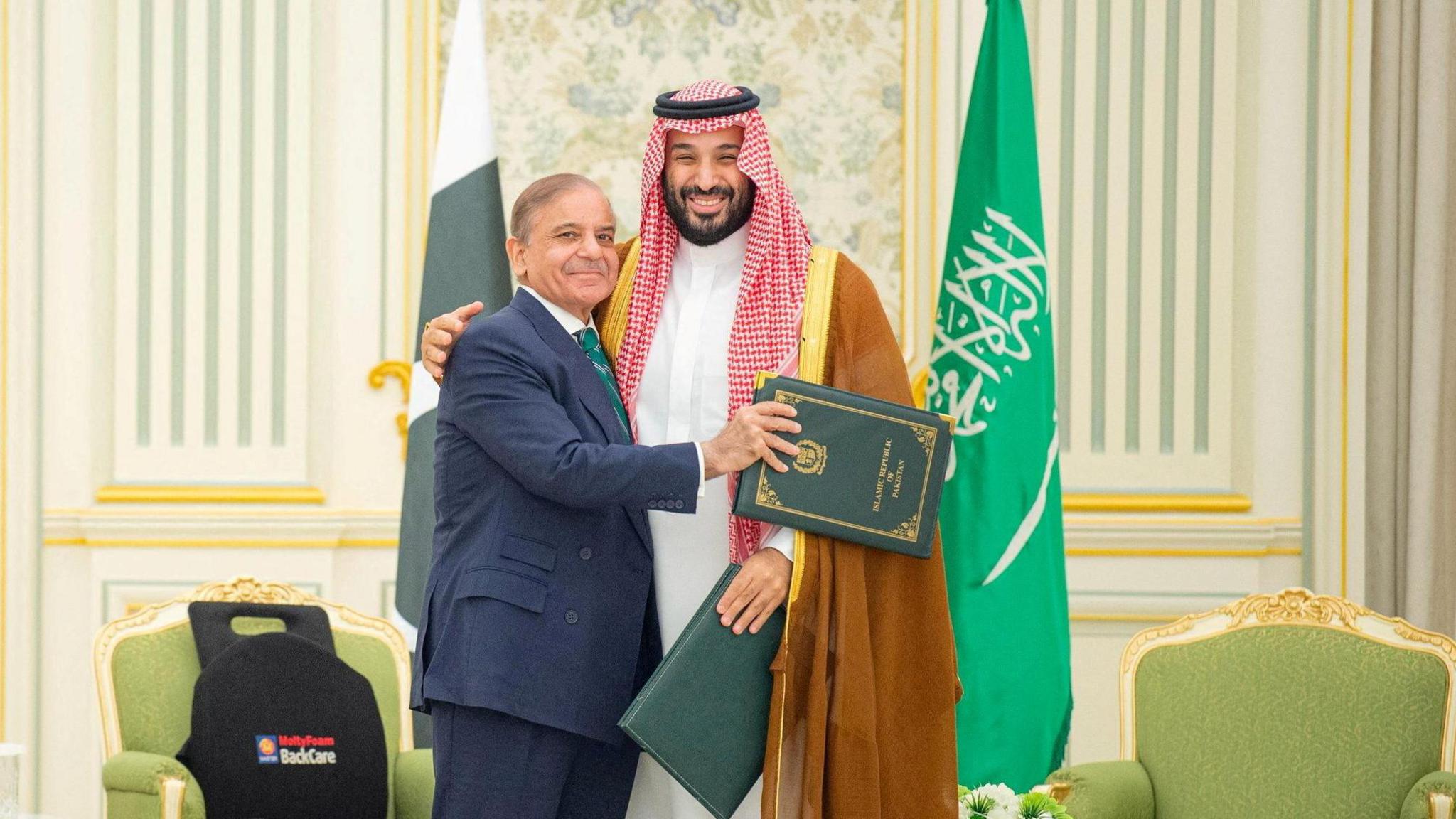
 Saudi Crown Prince Mohammed bin Salman and Pakistan Prime Minister Shehbaz Sharif embrace each other on the day they sign a defence agreement, in Riyadh, Saudi Arabia, September 17, 2025. Saudi Press Agency/Handout via REUTERS THIS IMAGE HAS BEEN SUPPLIED BY A THIRD PARTY./File Photo
Image source,Reuters
Image caption,
Crown Prince Mohammed bin Salman (right) and Shehbaz Sharif signed a landmark defence pact last week
By
Soutik Biswas
India correspondent
    • Published
      22 September 2025
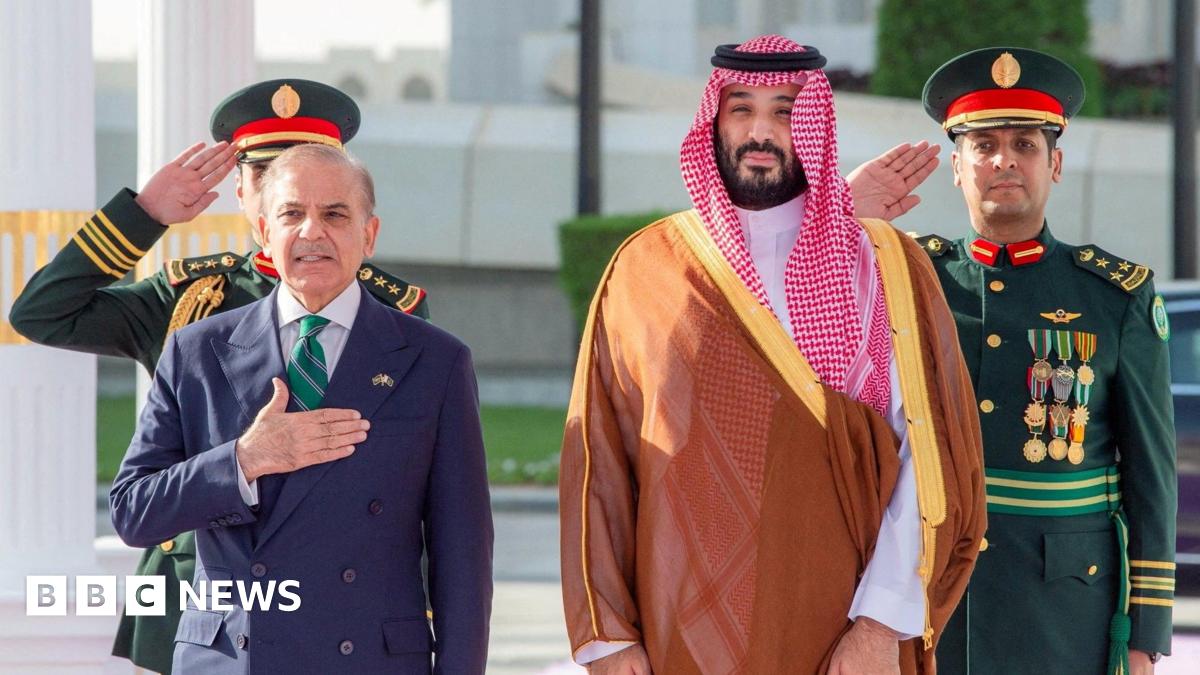
When Shehbaz Sharif, Pakistan's prime minister, clasped Saudi Crown Prince Mohammed bin Salman in Riyadh last week, the symbolism was unmistakable.

The embrace followed the signing of a "strategic mutual defence agreement", bringing the Islamic world's only nuclear-armed state closer to the Gulf's most ambitious monarchy.

A senior Saudi official told Reuters that the pact was merely an "institutionalisation of long-standing and deep cooperation, external". But many in India see it differently.

Despite Delhi's cultivated warmth with Riyadh, the pact lands amid heightened hostility with Pakistan, including a four-day conflict earlier this year. Nuclear-armed neighbours India and Pakistan have fought multiple wars and clashes over Kashmir, making any move by Saudi to underwrite Pakistan's military a direct concern.

What unsettles Indian analysts the most is the pact's commitment that "any aggression against either country shall be considered an aggression against both".

"Riyadh knew India would construe the Saudi-Pakistan pact as a direct threat to its security, yet it went ahead," Brahma Chellaney, an Indian strategist, posted on X.

"The move reflects not Pakistan's strength - it remains on the brink of bankruptcy - but Saudi Arabia's ambitions", he says. Binding a "chronically dependent" partner, he argues, gives Riyadh both manpower and nuclear "insurance", while demonstrating to India, Washington and others that it will chart its own path.

Former Indian foreign secretary Kanwal Sibal called the pact a "grave misstep" by Saudi Arabia, warning that this could have serious implications for India's national security.

"A politically unstable and economically broken Pakistan as a security provider is a dangerous proposition. Saudi Arabia knows this will be construed in India as a threat to India's security," Mr Sibal posted on X. "Given the tensions between Pakistan and India, this Saudi step is strategically most adventurous."

India's Narendra Modi-led government has been more circumspect, with a foreign ministry spokesman noting that the government will "study its [the pact's] implications for national security and regional and global stability". India also hoped that the strategic partnership between India and Saudi Arabia would "keep in mind mutual interests and sensitivities".
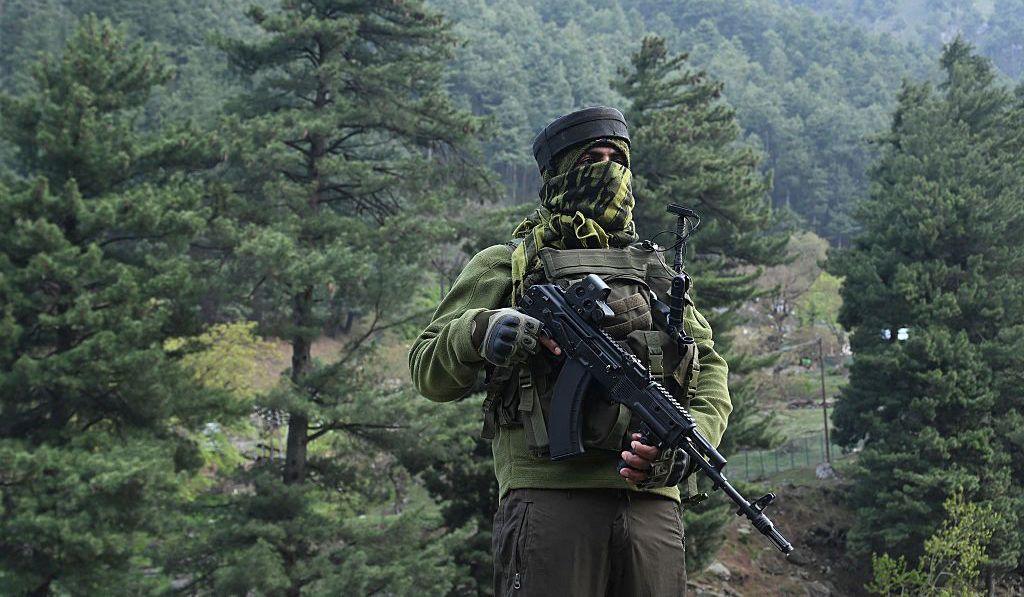
An Indian paramilitary serviceman keeps watch in Pahalgam, south of Srinagar on April 23, 2025, following an attack.
Image source,AFP via Getty Images
Image caption,
The pact landed months after a four-day conflict between India and Pakistan earlier this year
Not all analysts are alarmed, saying Delhi may be overstating the risks since Riyadh values balanced ties - India is its second-largest trading partner, external and a major buyer of Saudi oil.

Michael Kugelman, a foreign policy analyst, cautions against over-reading the agreement. It "does not hinder India in a direct way", he told the BBC. Saudi Arabia, with its own extensive ties to India, is "not about to engage in hostile retaliatory acts against India", he said.

Still, by embedding Pakistan in the security architecture of the Middle East, the deal "checkmates India" and leaves its neighbour anchored to three patrons - China, Turkey and now Saudi Arabia, Mr Kugelman said. China and Turkey supplied weapons to Pakistan in its recent conflict with India.

Others argue that the real significance of the pact lies less in any immediate threat to India and more in how it reshapes regional alignments.

Husain Haqqani, a former Pakistani ambassador who is currently a scholar at Washington DC's Hudson Institute and the Anwar Gargash Diplomatic Academy in Abu Dhabi, told the BBC that India's concerns span "multiple fronts".

He warned that the pact could make Saudi Arabia what the US was to Pakistan during the Cold War - "a country with the economic muscle to help Pakistan build its military to compete with India".

Much depends, Mr Haqqani notes, on how the pact defines "aggression" and "aggressor" and whether Riyadh and Islamabad see eye to eye. He also cautioned it could strain India's hard-won economic and diplomatic ties with Riyadh.

But not everyone sees the pact as a game-changer.
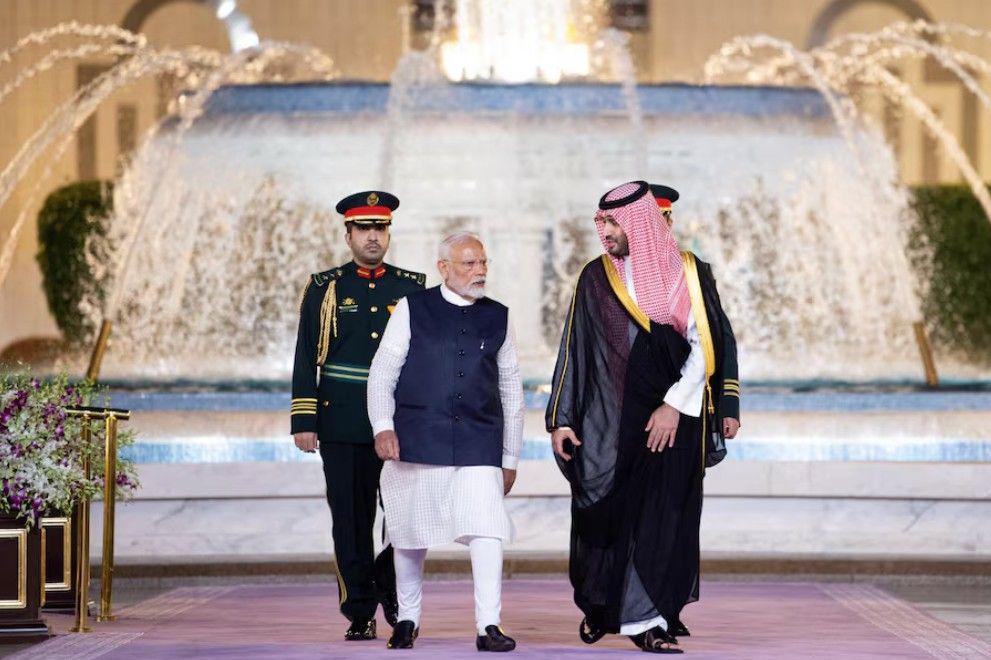
India's Prime Minister Narendra Modi meets Saudi Crown Prince Mohammed Bin Salman, in Jeddah, Saudi Arabia, April 22, 2025.
Image source,Reuters
Image caption,
India PM Narendra Modi and Mohammed bin Salman in April - India and Saudi Arabia have built deep ties
"This pact is simply the formalisation of a long-standing Saudi-Pakistan understanding that goes back to the 1960s," says Md. Muddassir Quamar of the Centre for West Asian Studies at Delhi's Jawaharlal Nehru University.

Indeed, the two countries share a resilient relationship rooted in defence ties - from Pakistani troop deployments in the 1960s to commandos helping quell the 1979 Mecca mosque siege.

Riyadh has since bought Pakistani weapons, external, relied on its officers to build up the Saudi Air Force, external, and cultivated Pakistan as both an ideological ally and security partner. In 2017 Riyadh had also tapped a retired Pakistani army chief to lead its Saudi-sponsored anti-ISIS coalition, external.

Mr Haqqani notes that Saudi political, economic and military support has underpinned this reliance for decades.

"Since the 1970s, Saudi Arabia has consistently backed Islamabad, siding with it during the 1965 and 1971 wars with India, extending economic aid in times of crisis, allowing deferred oil payments, and maintaining a close military partnership," he says.

Beyond the longstanding alliance, experts point to a bigger trigger: declining faith in the US security umbrella and growing doubt that it can - or will - defend the Gulf in a crisis.

Israel's recent attack, which rattled Qatar and other Gulf states, reinforced Riyadh's doubts - compounded by its long-running rivalry with Iran - about relying solely on Washington.

The deal is less about battlefield commitments than signalling intent, says Ahmed Aboudouh, associate fellow at Chatham House and senior researcher at Emirate Policy Center.

"It is designed to convey a message that Saudi Arabia is diversifying its security partnership without jeopardising its defence cooperation with the US," Mr Aboudouh told the BBC.

"Although the operational depth of the deal is unclear, it indicates a shift in Saudi Arabia's threat perception, seeing both Iran and Israel as a threat, and benefitting from Pakistan's nuclear power status to enhance deterrence."
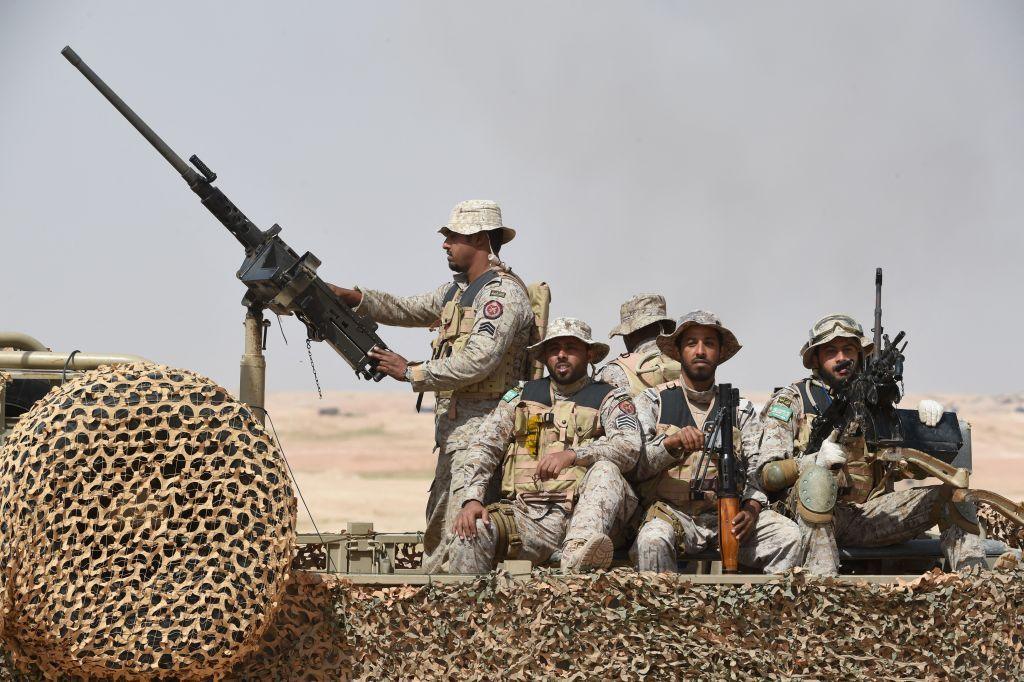
Special forces perform during the Northern Thunder military exercises in Hafar al-Batin, 500 kilometres north-east of the Saudi Capital Riyadh on March 10, 2016.
Image source,AFP via Getty Images
Image caption,
Special forces, including troops from Pakistan, participate in a military exercise near Riyadh in 2016
For India, the pact may carry wider geopolitical echoes. As Mr Aboudouh notes, India need not worry from a defence standpoint.

The real risk, he told the BBC, lies elsewhere: a broadened alliance could harden into an "Islamic Nato", complicating Delhi's 'Look West' strategy across trade, investment and strategic corridors in the Gulf.

For Pakistan, the pact leverages Saudi's financial clout to boost its military capabilities and Riyadh's soft power to secure wider political backing, leaving India to face not just Pakistan but a broader coalition of Muslim states, according to Mr Aboudouh.

Mr Kugelman says the pact tilts the regional balance in Pakistan's favour. India, which avoids formal alliances and has seen ties with Pakistan - a key US partner - nosedive again, will need to recalibrate.

"Certainly, it can count on close ties with Russia, Israel, the Gulf states and key Western partners like France," he adds. "But the issue is less about greater Indian vulnerabilities than Pakistan's growing strengths."

Even if the pact poses no immediate security threat to India, experts say it has not been good optics for Delhi diplomatically. How it ultimately plays out remains to be seen, and Delhi will be watching closely.


Users who are viewing this thread

Country Watch Latest

Back
Top