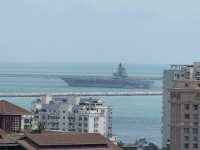
Chinese Aircraft Carriers - Liaoning, Shandong, Fujian and the future

So, next, what aircraft(excluding helicopters and small UAVs) are we looking forward to seeing on the deck of the Fujian aircraft carrier?

1. Is it a transport aircraft that shares the same platform as the KJ-600? Or is it another specialized aircraft?
Are other specialized aircraft (anti-submarine aircraft, EW aircraft) needed? This is a question worth pondering. However, fixed-wing transport aircraft should be a necessity.

2. Medium to large fixed-wing UAVs? (UCAV/CCA/UASF...)
We have seen many medium and large UAVs with various uses that have shipborne takeoff and landing capabilities. But when did they appear on the catapult track of the Fujian aircraft carrier?

What new toys are you looking forward to? ------Please be rational!
A Long range long endurance ASW platform will be seen as vital soon enough. Analysis of vessels trailing the Fujian (and other carriers) during the trials will find most were probably submarines, from multiple nations.

A platform like the S-3B is large enough to function as a tanker as well as a long endurance ELINT platform.

I am curious to see what the Chinese equivalent to the S-3B role is going to look like.
 
Houthis drove out 2 USN carrier battle groups from the Red Sea a few months ago with sustained drone and ballistic missile fire. USN carrier battle groups refuse to enter the red sea now.

Why is this thread still open?

Mods, can you please close it.

Thank you.
 
A platform like the S-3B is large enough to function as a tanker as well as a long endurance ELINT platform.
I am curious to see what the Chinese equivalent to the S-3B role is going to look like.
It is generally believed that the best way to deal with submarines is to use submarines. Other means can be used as supplementary means, but submarines are still the most effective way to deal with submarines.

Modern aircraft carriers are protected by their own submarines during combat missions.

At the same time, with the development of modern science and technology, many functions have gradually merged, and we no longer seem to need dedicated fixed-wing anti-submarine aircraft. If we examine all the photos of the KJ-600 AEW&C aircraft carefully, we'll notice that one is slightly different from the others. It has a large bulge on its belly...
Houthis drove out 2 USN carrier battle groups from the Red Sea a few months ago with sustained drone and ballistic missile fire. USN carrier battle groups refuse to enter the red sea now.
Why is this thread still open?
Mods, can you please close it.
Thank you.
Guys. This is a thread about Chinese aircraft carriers. Please do not bring other unrelated topics into this thread.
 
It is generally believed that the best way to deal with submarines is to use submarines. Other means can be used as supplementary means, but submarines are still the most effective way to deal with submarines.

Modern aircraft carriers are protected by their own submarines during combat missions.

At the same time, with the development of modern science and technology, many functions have gradually merged, and we no longer seem to need dedicated fixed-wing anti-submarine aircraft. If we examine all the photos of the KJ-600 AEW&C aircraft carefully, we'll notice that one is slightly different from the others. It has a large bulge on its belly...

Guys. This is a thread about Chinese aircraft carriers. Please do not bring other unrelated topics into this thread.
Submarines can operate in different layers of the water, and maybe hard to detect, especially with the advent of modern drones. Expecting submarines and surface ships to be able to keep up with swarms of drones may not be enough. Aerial platforms which would deploy sonobuoys that can sink to different layers and be some over a wide area relatively quickly can make the difference between early detection and detection under fire.
 
Messages released by official accounts with a certain degree of credibility:
===================================
Dalian Municipal Committee of the Communist Youth League of China:
The next step for China's aircraft carrier: catapult + nuclear power!
View attachment 149247
What we need right now is numbers, carrier, NG nuclear subs, refueling tankers, build build build.
 
What we need right now is numbers, carrier, NG nuclear subs, refueling tankers, build build build.
China's military-industrial complex has done its best. They have achieved the fastest growth rate in the world.
So, we need to moderate these excessive expectations.
 
China's military-industrial complex has done its best. They have achieved the fastest growth rate in the world.
So, we need to moderate these excessive expectations.
True, cool down our heads and followed the law of science and project management.
 
It is official, the test runs smoothly.
Transcript 16:22, 26-Sep-2025
China's Aircraft Carrier Fujian: China says Fujian carrier's test is progressing smoothly


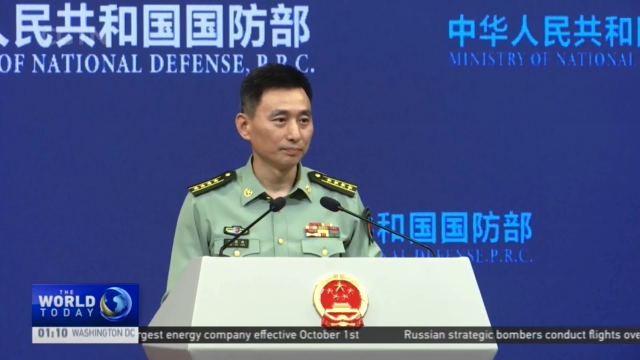
China's Defense Ministry says tests for the country's third aircraft carrier, the Fujian, are progressing smoothly. The Navy earlier this week announced three aircraft had successfully completed their first take-offs and landings on the vessel.

ZHANG XIAOGANG Spokesperson, China's Ministry of National Defense "Carrier-based aircraft J-15-T, J-35, and KJ-600 have recently successfully conducted catapult take-off and landing aboard China's Fujian aircraft carrier.

This marks the Fujian carrier's acquisition of electromagnetic catapult launch and recovery capabilities, laying a solid foundation for integrating subsequent aircraft into the carrier formation. This marks a milestone in the development of our country's aircraft carrier construction.

The Fujian carrier's test and training are progressing smoothly, as planned, and the day we've all been waiting for is not too far off."
 
by 2030 I would expect

CV-16 with 36 x J15
CV-17 with 36 x J15
CV-18 mix of J35+ J15T + KJ-600 AWACS total 48 aircraft

120 fighter jets over enemy territory

that's a serious force
 
by 2030 I would expect

CV-16 with 36 x J15
CV-17 with 36 x J15
CV-18 mix of J35+ J15T + KJ-600 AWACS total 48 aircraft

120 fighter jets over enemy territory

that's a serious force
More like 2027 and not 2030
 
According to the official account, the catapult test occurs in September and not before

Fujian’s sea trials outpace expectations, paving way for PLA Navy’s three-carrier era: official media
By Feng Fan,
Liu Xuanzun
and Liangrui Published: Sep 27, 2025 08:12 P
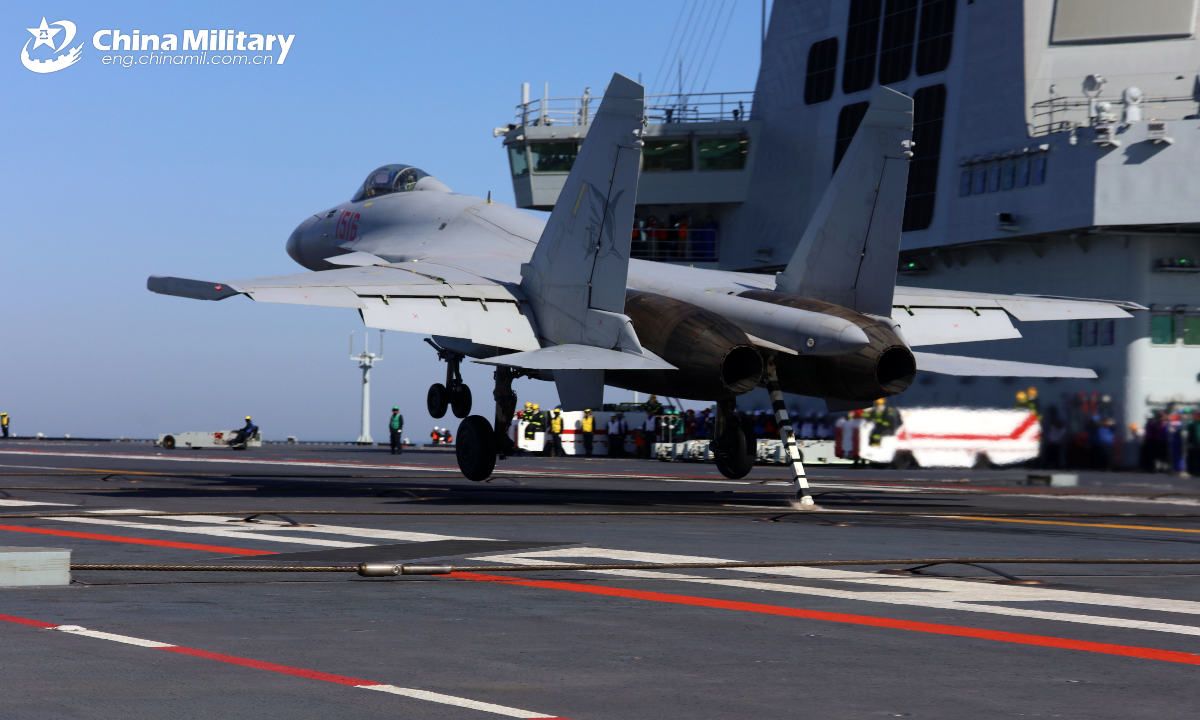
A J-15T heavy fighter jet lands on China's first electromagnetic catapult-equipped aircraft carrier, the Fujian (Hull 18). Three types of aircraft recently completed their inaugural electromagnetic catapult-assisted takeoff and arrested landing trainings on the aircraft carrier.(eng.chinamil.com.cn/Photo by Ju Zhenhua)

A J-15T heavy fighter jet lands on China's first electromagnetic catapult-equipped aircraft carrier, the Fujian (Hull 18). Three types of aircraft recently completed their inaugural electromagnetic catapult-assisted takeoff and arrested landing trainings on the aircraft carrier.(eng.chinamil.com.cn/Photo by Ju Zhenhua)

Chinese aircraft carrier Fujian has completed multiple sea trials since its maiden sailing in May 2024 and announced the successful completion of a key electromagnetic catapult test in September 2025, putting the carrier's progress "well ahead of schedule," CCTV News reported on Saturday.

The carrier's trials have included the first successful electromagnetic catapult-assisted takeoff and arrested landing trainings for three types of carrier-based aircraft — the J-15T, J-35 and KJ-600 early warning aircraft — marking China's first achievement of electromagnetic catapult launches and arrested recoveries for multiple advanced aircraft types on a single carrier, CCTV reported, quoting the Chinese People's Liberation Army (PLA) Navy's announcement on September 22.

CCTV said Fujian — China's first domestically designed and built electromagnetic catapult-equipped carrier — was launched on June 17, 2022. With a full-load displacement of more than 80,000 tonnes, the ship features a flat, continuous flight deck and is fitted with electromagnetic catapults and arresting gear, making it the world's first conventionally powered carrier to adopt electromagnetic catapult technology.

The vessel completed an eight-day initial sea trial on May 8, 2024, during which its propulsion, power and other systems underwent a series of tests and "achieved the expected results," CCTV added.

On September 12, the navy said Fujian transited the Taiwan Straits en route to the South China Sea to carry out scientific testing and training missions, according to a statement by Senior Captain Leng Guowei, a spokesperson for the PLA Navy. 10 days later, the navy publicly confirmed the multi-type catapult test successes that signal the carrier's electromagnetic takeoff and arrest systems have met operational requirements.

Chinese expert expressed optimism about Fujian's remaining trial and commissioning timeline. Based on the current sea trials and training situation, the Fujian could become combat ready in a year or so, Wang Ya'nan chief editor of Beijing-based Aerospace Knowledge magazine, told the Global Times.

Wang added that he expects the Fujian to conduct more intensive training exercises after it is commissioned in to the PLA Navy later this year.

CCTV military observer Wei Dongxu said Fujian — working in concert with the Liaoning and Shandong carriers — could form a two-carrier task-force model that expands the PLAN's blue-water escort and defensive capabilities.

Wei pointed out that, while the Shandong and Liaoning currently lack carrier-based fixed-wing early-warning aircraft, the presence of the KJ-600 aboard Fujian could enable coordinated carrier-air wing operations across the three-carrier force, improving situational awareness and providing mutual backup in demanding flight-deck or combat conditions.

Wei told CCTV that one practical benefit would be handling contingencies during operations: if one carrier were temporarily unable to recover its air wing for any reason, "the other carrier can act as a temporary sea-based airfield, allowing aircraft from Carrier A to land on Carrier B." Such redundancy, he said, would strengthen the fleet's resilience to unforeseen disruptions.

Looking further ahead, Wei predicted the emergence of a new family of intelligent carrier-based unmanned aerial vehicles. "First would be loyal wingmen for strike roles — unmanned combat aircraft that could operate in concert with the J-15T and J-35 — and second would be support types for tasks such as electronic warfare and aerial refuelling," he said.

Wei added that Fujian, or future larger and more modern carriers, may ultimately host an integrated force of manned and unmanned carrier aircraft that together form a novel carrier combat system.
 
This video effectively explains the significance of the triple launch in Fujian. Of course, with the usual caveat of US numerical superiority and experience. But that is theoretical, as real-world experience shows that not all 11 AC are available at one time. As for experience, China has been practising carrier operation for more than a decade, granted it is from a stobar

To view this content we will need your consent to set third party cookies.
For more detailed information, see our cookies page.


China's Fujian aircraft carrier just achieved a historic milestone that could redefine the future of naval warfare. Witness the groundbreaking moment as the Fujian’s advanced electromagnetic catapult system (EMALS) successfully launches the J-35 stealth fighter, KJ-600 early warning aircraft, and J-15T multirole fighter—proving China’s leap in carrier aviation technology.

This isn’t just a technological showcase; it’s a bold statement about China’s ambitions to rival the world’s most powerful navies. The Type 003 Fujian represents a new era, featuring EMALS technology comparable to the US Navy’s Ford-class carriers. These successful launches mark a turning point for regional security and global naval strategy.What

You’ll Learn in This Video:✈️ How the Fujian’s electromagnetic catapult works and why it’s a game changer⚓ The significance of the J-35’s first carrier-based launch🛡️ Strategic impact for the US, Japan, and the Asia-Pacific region📡 Technical analysis of the KJ-600’s airborne early warning capabilities🌏

What does this breakthrough mean for the balance of power in the South China Sea? Fujian’s EMALS system allows rapid, efficient launches of next-generation aircraft, giving China the ability to project power farther and faster than ever before. From the stealthy J-35 to the high-tech KJ-600, every detail signals a major shift in naval capability.
 

Could China’s Mock Test Facility Hint What Its Next Carrier Might Look Like?

Published on: September 29, 2025 at 1:35 PM

Wuhan mockup Type 004 carrier

Cropped image of the longer picture showing a new island on the mock carrier test facility, way behind at the stern, at Wuhan. (Image credit: Andreas Rupprecht on X)

The Wuhan carrier mockup previously replicated the Fujian, and the new configuration might hint at the PLA Navy’s fourth aircraft carrier.

Modifications made to a known Chinese carrier mockup in Wuhan, frequently seen in satellite images and which previously replicated the CNS Fujian (CV-18), might be representative of the PLA Navy’s upcoming fourth flattop, recent images shared by leading Chinese military researcher Andreas Rupprecht suggest.

With the Fujian now having nearly become operational with the launch of the KJ-600 AEW&C aircraft and J-35 and J-15T naval fighters earlier last week, the mockup facility has now been modified with a new island structure and some additional renovation work spotted over time in satellite and other unofficial images.

To view this content we will need your consent to set third party cookies.
For more detailed information, see our cookies page.


The rapid logistical and operational progress operating the ideal mix of all types AEW&C, Gen. 4.5 and Gen. 5 aircraft can be credited to this unorthodox approach of rehearsing their use on a full-sized mock carrier test facility. This is alongside testing with mockups of the J-15, J-35, KJ-600 and GJ-11 UCAV on both the Fujian’s mockup and the actual ship itself.

Aircraft mockups on carrier test facility and completed carrier

The Fujian was launched on Jun. 17, 2022, and began its first round of sea trials in May 2024. Its fifth, seventh and eight test campaigns were reported in December 2024, March 2025 and May 2025, respectively. The massive multi-aircraft trials off its EMALS (Electro-Magnetic Launch System) catapult, that may have taken place between Sep. 15 and 21, was part of the ninth round of sea trials.

To view this content we will need your consent to set third party cookies.
For more detailed information, see our cookies page.


Until the carrier’s first sea trials in May 2024, the test facility at Wuhan replicated the island structure, and hosted mock-ups of the GJ-11, J-15, and KJ-600, an image from December 2023 showed. Mock ups of aircraft have also been seen on the completed carrier, while still undergoing minor outfitting work on the island in November-December 2023 and March 2024.

This might be to reduce the time required by the ship to reach the IOC and FOC (Initial/Final Operational Capability). Simply put, the carrier mockup would act as an actual physical simulation to firm up the logistical procedures and suitable movement practices around the airframes through their mock ups.

To view this content we will need your consent to set third party cookies.
For more detailed information, see our cookies page.


The commissioning deck crews could be practicing moving the airframes around with tractors and refining ‘chock and chain’ procedures, while getting used to moving around them in the full range of flight deck operations, before the actual sea trials begin.

The jets would meanwhile be practicing take-offs and landings at naval air base facilities, one of which has been known to be at Huangdicun, near Xincheng, and which is complete with “ski jump” ramps and catapults for launch. At the same time, the ship undergoes tweaks and repairs every time it comes back into port after sailing tests.

To view this content we will need your consent to set third party cookies.
For more detailed information, see our cookies page.


Changes to the carrier mockup

On Jan. 4, 2025, Rupprecht shared a satellite image showing the deck area of the carrier test facility undergoing “renovation for the Type 004 nuclear-powered aircraft carrier most likely.” Another satellite image he shared on Mar. 27, showed the island had been shifted further back. Two other images surfaced on May 25 and Aug. 8, showing the island structure on the carrier test site.

The bigger, full length image emerged on Sep. 24, after the scaffoldings were removed, showed the shape of the island, largely similar to the one on the Fujian. This configuration is also similar to the USS Gerald R. Ford, but even that flattop does not have the island that far back, as we are seeing on this facility. Another mysterious structure is seen behind the island.

Another carrier, shown in concepts with a rear-placed island, is the French Navy’s (Marine Nationale) new generation aircraft carrier (Porte-avions de nouvelle génération). This ship would be nuclear-powered and feature an EMALs.

To view this content we will need your consent to set third party cookies.
For more detailed information, see our cookies page.


Rupprecht replied in the affirmative when The Aviationist asked him if this new test facility could be representative of the PLA Navy’s fourth carrier. “Yes indeed That‘s most likely how the fourth carrier will look like (even if that reward-facing part that looks like a stack is still strange,” he said, referring to the unidentified structure behind the island.


It is not known whether this structure could be a dedicated exhaust, or another island, in a twin-island configuration. The distance between the two structures is however too close for such a design, and needs a separation of several tens of meters.


Conclusion

How far the new Chinese carrier would conform to this design is not yet known. There has been no rendition from official sources or state media so far. However, we can be assured that China will build it. It would be inconceivable for it to not have nuclear propulsion, given how the PLAN skipped a steam-powered catapult system and directly adopted an EMALS system.


Atomic power would generate more electricity and power EMALS to launch even heavier aircraft. In its bid to outmatch the U.S., Beijing is pulling out all stops.

 
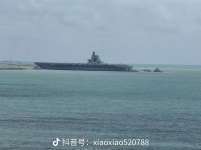
As it seems, the PLANS-18 "Fujian" has docked at Sanya, Hainan and according to some, commissioning might happen after the National Day holidays in China.However similar such claims were made before 3rd and 18th September ... let us better wait and see!
1759236064804.png
1759236011140.png
 

Users who are viewing this thread

Pakistan Defence Latest

Latest Posts

Back
Top