Chengdu J-20 5th Generation Aircraft News & Discussions

Only few cruise missiles and loitering munitions have stealth profile and have a composite material fuselage and expensive to purchase

Even USAF and USN main cruise missile is conventional tomahawk and ALCM

Sure, all militaries are still majority 4th and 4.5th jets with conventional warfare roles, so conventional weapons will exist. My post was in relevance to nations with stealth jets and their attack scenarios.
But when you talk about the J-20 or F-35, the weapon options change to stealthy profile missiles and munitions for external mounting. That's their role.
 
Sure, all militaries are still majority 4th and 4.5th jets with conventional warfare roles, so conventional weapons will exist. My post was in relevance to nations with stealth jets and their attack scenarios.
But when you talk about the J-20 or F-35, the weapon options change to stealthy profile missiles and munitions for external mounting. That's their role.
Yes you're but main concern of these stealthy cruise missiles and loitering munitions is are they haven't enough range to stay outside range of enemy defenses but major military powers starts to develop stealth cruise missiles and loitering munitions comparable to tomahawk and ALCM in range like US AGM-158XR in development for USAF and USN
 
Yes you're but main concern of these stealthy cruise missiles and loitering munitions is are they haven't enough range to stay outside range of enemy defenses but major military powers starts to develop stealth cruise missiles and loitering munitions comparable to tomahawk and ALCM in range like US AGM-158XR in development for USAF and USN

I am confused, we are out of stealth jets attack envelop like J-20's per the above post? Their "attack" roles in addition to fighting the head on battle will cover taking out air support aircraft like the AWACS, Refueling Tankers, EW / Jammers, etc. These are specialized aircraft and will act as a sniper from long distance for support aircraft on the rear.

For ALCM's, etc, other platforms will be used like J-16, J-11's, J-15's, H-6's, etc.
 
I am confused, we are out of stealth jets attack envelop like J-20's per the above post? Their "attack" roles in addition to fighting the head on battle will cover taking out air support aircraft like the AWACS, Refueling Tankers, EW / Jammers, etc. These are specialized aircraft and will act as a sniper from long distance for support aircraft on the rear.

For ALCM's, etc, other platforms will be used like J-16, J-11's, J-15's, H-6's, etc.
J-20 's job is not to target AWACS/refueling tankers/EW and jammer aircraft its main job to fight opponent stealth jets like F35

And there's a problem also when you armed J20 with PL-17 on external hard points, it will become more visible to enemy's AESAs/AWACS and sensors, so enemy would launch counter-offensive to destroy J20 before J20 could launch PL-17
 
J-20 's job is not to target AWACS/refueling tankers/EW and jammer aircraft its main job to fight opponent stealth jets like F35

And there's a problem also when you armed J20 with PL-17 on external hard points, it will become more visible to enemy's AESAs/AWACS and sensors, so enemy would launch counter-offensive to destroy J20 before J20 could launch PL-17

J-20 is a air superiority platform. It was designed for 2 roles with respect to the US. One is obvious, facing the enemy and fight in other words, fire BVR missiles. A more significant role is to wipe out the support aircraft's network of a strike package.

I write on topics that I personally know about. The structure of this aircraft was elongated to hold more fuel for long range strikes. A stealthy jet like the J-20 with a RCS of around .0005 (I believe), with PL-17 externally mounted, will still have a fraction of RCS increase compared to say J-16, J15, etc. You will lose a lot more of those if you sent them in. J-20 has a much bigger chance of achieving the objectives and come back.

Also, I believe PL-17's can be carried internally. But that's besides the point.

The US air chiefs have made multiple statements of J-20's ability to passively track US strike packages on long distances with KJ-500 / KJ-700's and take them down without turning on Radars. They referred to it as "Chinese kill chain". I think this debate needs to end here now as the point has been made multiple times.
 
Also, I believe PL-17's can be carried internally. But that's besides the point.
No according to various Chinese military websites and forums PL-17 is too large for internal weapon bays of J20, PL-17 is one of largest BVR in the world, PL-17 length is 20 feet or more than 6 meters, J20 weapon bays can only able to hold PL-15, and PL-17 is a main weapon for j16 not J20

Maybe In future upcoming Chinese 6th gen jets like j36 is able to carry PL-17 internally
 
No according to various Chinese military websites and forums PL-17 is too large for internal weapon bays of J20, PL-17 is one of largest BVR in the world, PL-17 length is 20 feet or more than 6 meters, J20 weapon bays can only able to hold PL-15, and PL-17 is a main weapon for j16 not J20

Maybe In future upcoming Chinese 6th gen jets like j36 is able to carry PL-17 internally

That's fine. I haven't focused too much on PL-17's dimensions. But I know a few things about the J-20. It's intended mission is the same, air superiority from front and especially from the rear, taking out all support aircraft to ruin strike package's strength. That's a very effective strategy.

You could have 50 fighter / bombers in a strike package. But if you take out the 15 support aircraft especially tankers, mission failed. They'll range will be cut and they'll have to re-route to South Korea or nearest Japanese island instead for fuel. The 1000 KM from the mainland China is the defensive barrier.
 
That's fine. I haven't focused too much on PL-17's dimensions. But I know a few things about the J-20. It's intended mission is the same, air superiority from front and especially from the rear, taking out all support aircraft to ruin strike package's strength. That's a very effective strategy.

You could have 50 fighter / bombers in a strike package. But if you take out the 15 support aircraft especially tankers, mission failed. They'll range will be cut and they'll have to re-route to South Korea or nearest Japanese island instead for fuel. The 1000 KM from the mainland China is the defensive barrier.
J20 is to fight enemy stealth jets not conventional jets like F35 not f18 and as for your speculation j16 is absolutely fit for this role firing PL-17 350 km away and guided by KJ500 AND KJ700

No need to equip J20 with PL-17 for anti-awacs/tanker and anti-ISR missions because enemy has no comparable BVR to target Chinese AWACS and j16 at the distance of 350 km away
 

China’s J-20 stealth fighter makes first static display as 300th jet appears​


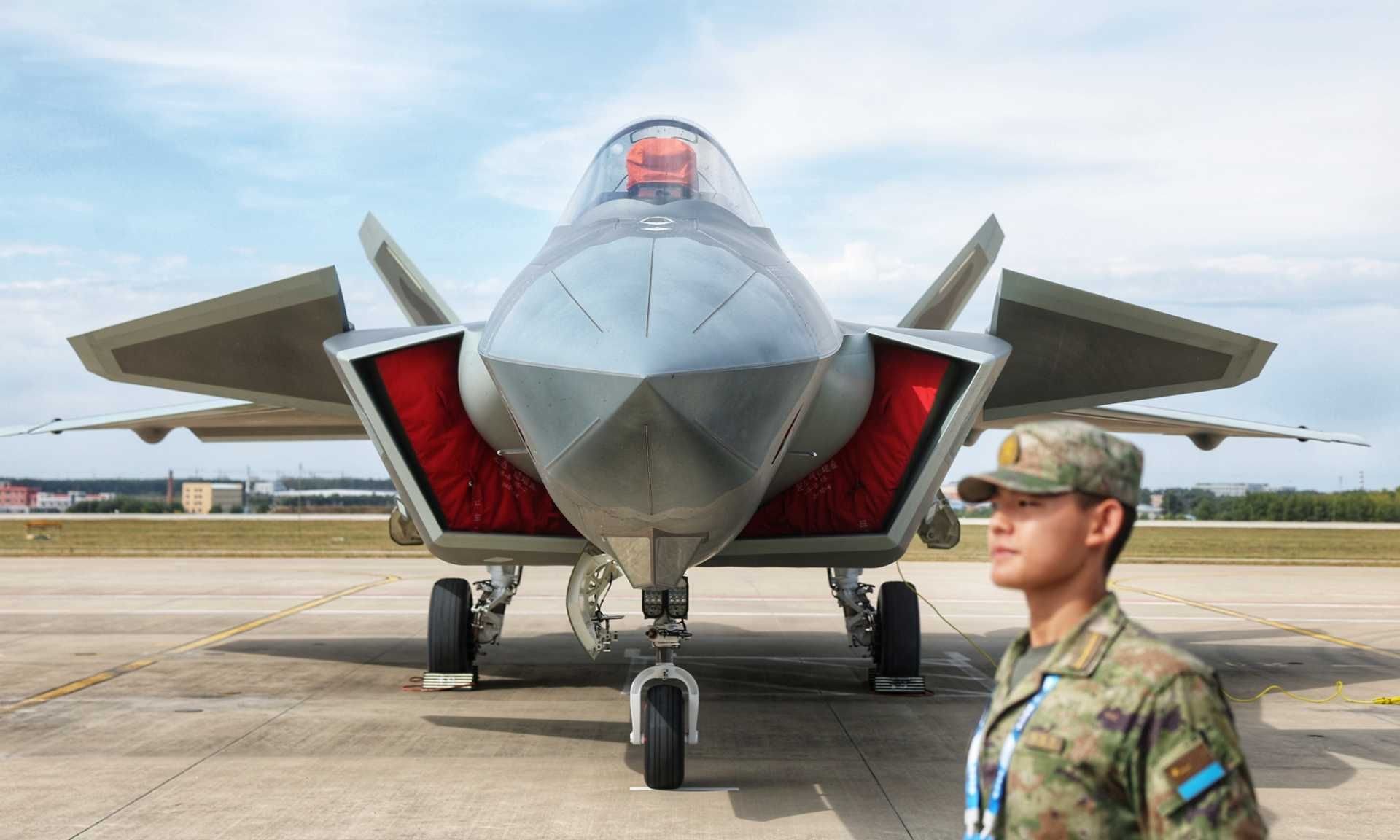
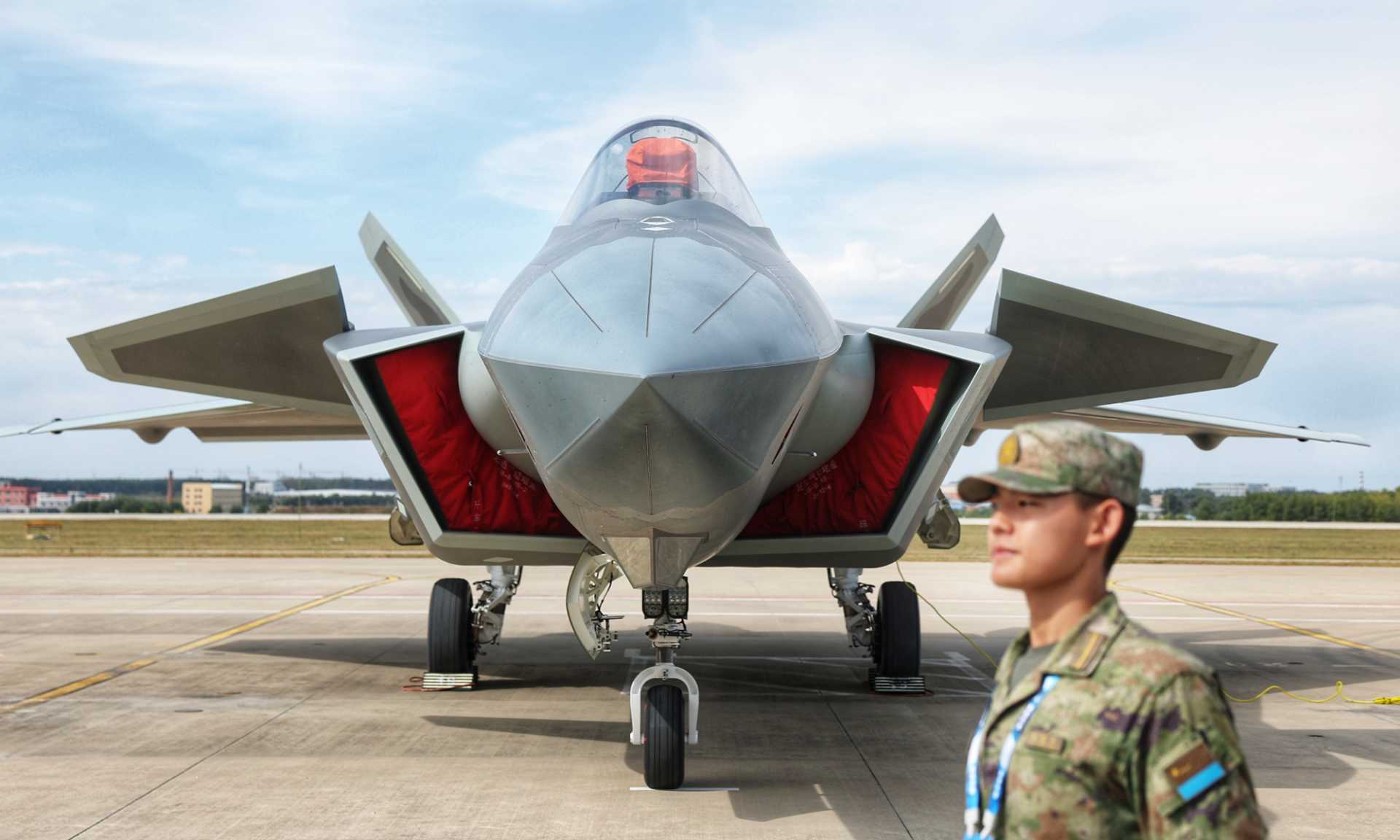
China publicly displayed its J-20 stealth fighter on static ground for the first time at the 2025 Changchun Air Show, alongside confirmation that the 300th jet has entered service.

China’s People’s Liberation Army Air Force publicly showcased its J-20 stealth fighter on static ground display for the first time at the 2025 Changchun Air Show, a notable shift from its usual flyover-only appearances. The event also marked a production milestone, with observers confirming the presence of the 300th J-20, highlighting Beijing’s rapid expansion of its most advanced operational fighter. The move signals growing confidence in the aircraft and carries implications for regional airpower balance.
Follow Army Recognition on Google News at this link

Chinas_J-20_Stealth_Fighter_Makes_First_Static_Display_as_300th_Jet_Appears_925_001-5a523ab2.jpeg

The J-20 incorporates a canard-delta wing configuration, diverterless supersonic intakes, and an internal weapons bay arrangement designed to minimize radar signature. (Picture source: Global Times)

Previously, on September 9, 2025, the X account PLA Military Updates posted older images of a J-20 fighter aircraft of the Chinese People’s Liberation Army Air Force configured in what it described as its beast mode. According to the information provided, the aircraft carried a total of twelve PL-15 long-range air-to-air missiles and two PL-10 short-range air-to-air missiles. Eight PL-15s were mounted externally on pylons, while four PL-15s and two PL-10s were carried internally in the aircraft’s bays. The post added that this arrangement reduces the aircraft’s low observable characteristics but, if supported by a KJ-500 airborne early warning aircraft, the J-20 could act as a missile-launching platform guided by external sensors under an “A guide B shoot” concept.

The PL-15 is an active radar-guided beyond-visual-range missile that has been in service since the mid-2010s and is currently the primary long-range armament of the PLAAF. It is produced by the China Airborne Missile Academy and uses a dual-pulse solid rocket motor, enabling high speeds reported above Mach 5 and an operational range estimated between 200 and 300 kilometers. The PL-15E export version, sold to Pakistan, has a reduced range of about 145 kilometers. In May 2025, during the India–Pakistan conflict, the PL-15 and PL-15E were used operationally by the Pakistan Air Force, marking their first recorded combat use. Pakistani J-10C aircraft employed the missiles against Indian Air Force assets, with a Rafale among the aircraft downed. Debris of PL-15E missiles was later found in Indian territory, confirming their use and providing material for assessment of the missile’s capabilities and limitations.

The PL-10 serves as the J-20’s short-range missile complement, carried in the aircraft’s lateral bays. It is an infrared-guided missile designed by the Luoyang Electro-Optics Technology Development Centre and has been in production since 2013. It uses an imaging infrared seeker capable of off-boresight angles of ±90 degrees, coupled with a thrust-vectoring solid rocket motor and aerodynamic strakes that allow maneuverability at over 60Gs. Its range is cited at up to 20 kilometers, giving the J-20 a short-range engagement option in addition to its long-range missile armament. The PL-10 can be cued by the pilot’s helmet-mounted display for “look and shoot” engagements, and its lock-on-after-launch capability allows mid-course updates through datalink before final homing. Assessments in open sources state that the PL-10’s overall capabilities place it in the same class as European IRIS-T or ASRAAM systems, and comparable or superior in kinematic performance to the U.S. AIM-9X.

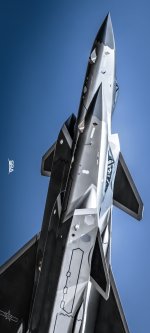
The J-20 itself is a fifth-generation stealth fighter developed by Chengdu Aircraft Corporation under the J-XX program and introduced into service in March 2017. The aircraft first flew in January 2011 and was officially revealed in 2016. It employs a canard-delta layout with diverterless supersonic intakes, a blended fuselage, and internal bays intended to maintain low observability. Its design integrates low-observable shaping, radar-absorbent coatings, and serrated exhaust nozzles on newer engines. The J-20 is designed primarily for air superiority roles, but it is capable of precision strikes as well. By September 2025, more than 300 J-20s had been produced, making it one of the largest stealth fighter fleets in service. In addition to the standard single-seat version, two significant variants have been developed: the upgraded J-20A and the twin-seat J-20S. Both were formally confirmed as part of the PLAAF arsenal on September 3, 2025.

In terms of avionics, the J-20 is equipped with an active electronically scanned array radar, distributed electro-optical sensors, and an infrared search-and-track system. These sensors feed into a glass cockpit that features a wide-angle holographic heads-up display and a large multifunction display. A helmet-mounted display system allows pilots to direct high off-boresight weapons such as the PL-10. The aircraft’s networking and sensor fusion architecture allow it to engage in data sharing with platforms such as the KJ-500 airborne early warning aircraft, enabling coordinated engagements where detection and missile guidance can be handled externally. This makes the “A guide B shoot” concept viable, where the J-20 launches long-range missiles cued by off-board sensors rather than its own radar, minimizing exposure and emissions.

Powering the J-20 are currently Shenyang WS-10C engines, which provide supercruise capability and are equipped with serrated afterburner nozzles to reduce radar cross-section. The WS-15, a higher-thrust turbofan capable of producing around 180 kilonewtons, is under integration and is expected to enhance maneuverability, range, and potential future power requirements for sensors or directed-energy systems. Aircraft dimensions are listed as 21.2 meters in length, with a wingspan of 13.01 meters, and a maximum takeoff weight of 37,000 kilograms. Its maximum speed is around Mach 2, service ceiling 20,000 meters, and combat radius approximately 2,000 kilometers. The aircraft can carry up to 11,000 kilograms of weapons across its internal bays and external pylons, which is the basis for the observed beast mode configuration.

Operationally, the beast mode arrangement reflects a tactical shift from stealth-optimized missions to high-capacity missile carriage. In stealth mode, the J-20 carries four medium or long-range air-to-air missiles internally, plus two short-range missiles in the side bays, with no external stores to minimize detection. In beast mode, it accepts the loss of stealth to mount additional weapons on under-wing pylons, expanding its missile load for missions where air defense suppression has already taken place or where permissive airspace is available. Analysts consider this configuration suitable for long-range patrols, massed missile engagements against adversary aircraft, or coordinated operations with supporting platforms that provide sensor data. The September 9 photographs, therefore, highlight a doctrinal flexibility in PLAAF operations, showing that the J-20 can be configured either for survivability in high-threat environments or for maximum firepower when conditions permit.


China’s J-20 fighter can easily penetrate air-defence networks, designer says​

Besides its stealth capability, the J-20 features strong combat prowess, said Gong Feng, deputy chief designer at the Chengdu Aircraft Design and Research Institute.

China Daily

68d08a76a3108622d641f2b5.jpeg

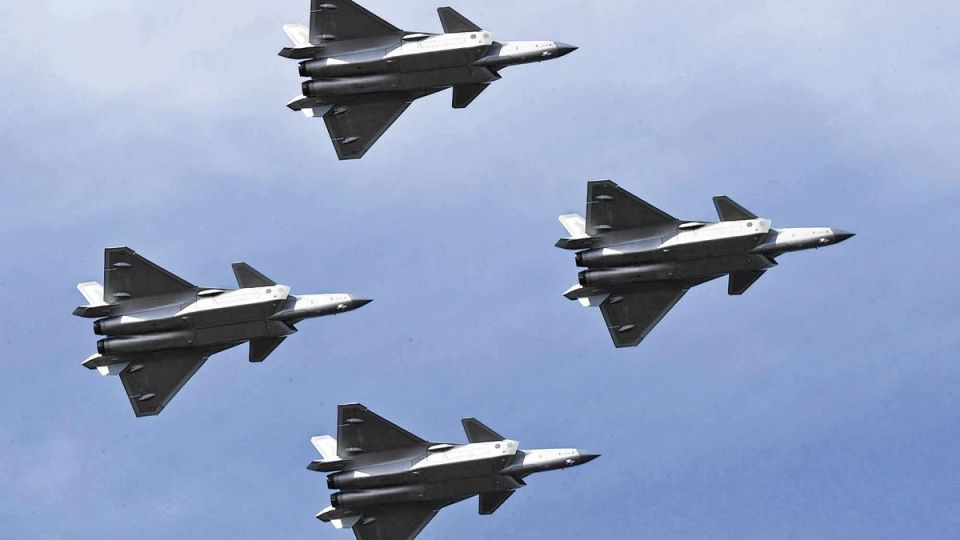
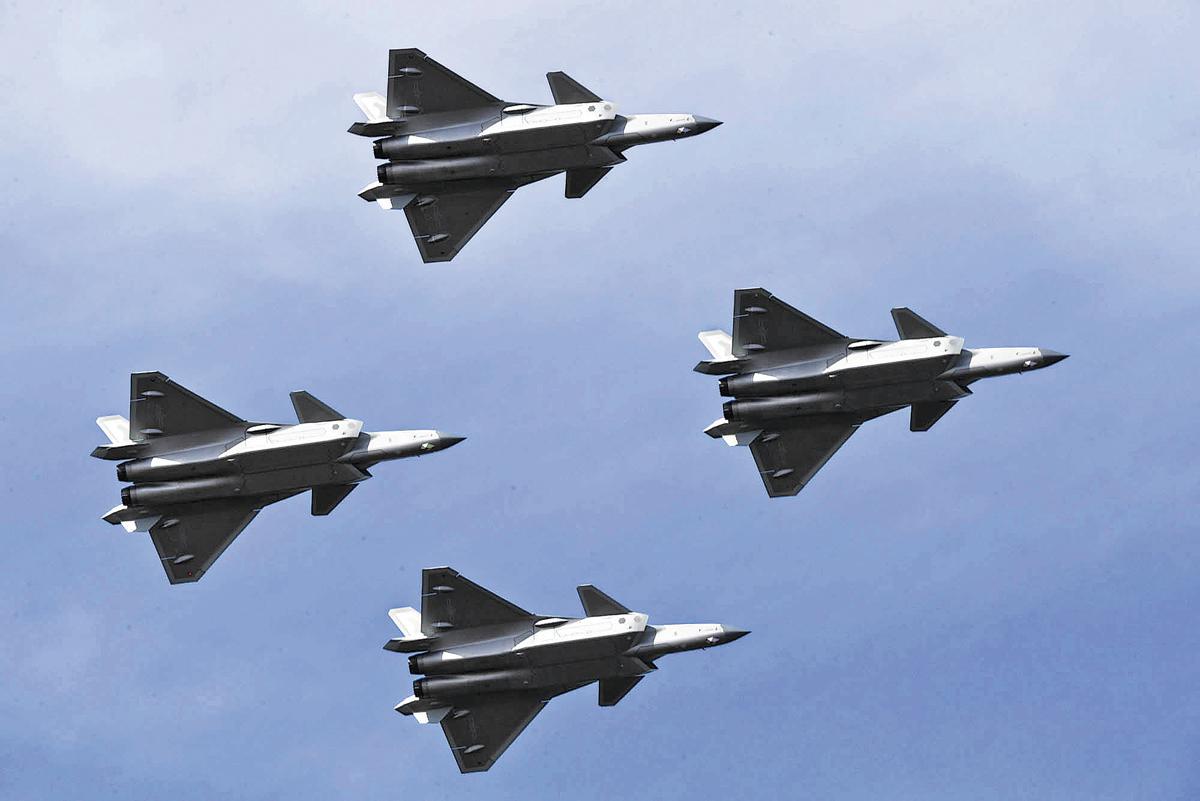
J-20 fighter jets perform in formation during the People's Liberation Army Air Force Aviation Open-House Activity and Changchun Air Show in Changchun, Northeast China's Jilin province, on Friday. The five-day event, which kicked off on Friday, displays over 100 types of active-duty aircraft, ground equipment and retired classic asset. PHOTO: CHINA DAILY

September 23, 2025

CHANGCHUN – China’s J-20 fifth-generation fighter jet has outstanding stealth capability and can easily penetrate enemy air-defense networks, a senior designer said on Saturday, marking the first time that a project insider has given a detailed introduction about the world-class combat plane.

“The J-20’s radar signature is extremely low, and its infrared characteristics are tremendously good. It can penetrate our adversaries’ air-defense networks like a needle,” Gong Feng, deputy chief designer at the Chengdu Aircraft Design and Research Institute, an Aviation Industry Corp of China subsidiary in Sichuan province, said at the People’s Liberation Army Air Force Aviation Open-House Activity in Changchun, the capital of Jilin province.

Radar signature and infrared characteristics refer to physical properties of an aircraft that can be measured by radar searching for it. They are major elements that may expose an aircraft when it flies into the scanning range of enemy planes or ground-based air defenses. The lower the levels of radar signature and infrared characteristics, the less likely the aircraft can be detected by radar.

Besides the stealth capability, the J-20 features strong combat prowess, Gong said.

“Its flight range is very long, which means the operational scope is substantially larger than those of fourth-generation planes. It has an advanced active phased array radar that gives it a target detection range much longer than those of fourth-generation jets,” he said.

“The plane’s multiple kinds of sensors can work together perfectly and complement each other, allowing for multidimensional situational awareness and accurate identification of targets. Moreover, its missiles can fly a very long distance. Together with smart strike management systems, they promise the J-20 a hit success rate that is much higher than those of previous jets,” Gong added.

In addition, the stealth fighter is able to team up with early-warning aircraft and unmanned planes to form a combat system, according to the designer.

“The J-20’s deployment enables the Air Force to carry out not only defensive tasks but also offensive operations. The jet’s excellent solo and joint combat power has resulted in the creation of new fighting patterns by the Air Force,” he said.

He also noted that the integrated aerodynamic configuration of the J-20, which features a lifter body and two fully movable canards, also known as foreplanes, is an internationally pioneering design.

Code-named the Mighty Dragon, the J-20 made its public debut in November 2016 at the 11th China International Aviation and Aerospace Exhibition in Zhuhai, Guangdong province. It entered service with the Air Force later that year, becoming only the third stealth fighter jet in the world to enter service following the F-22 Raptor and F-35 Lightning II of the United States.

To date, there have been three models in the J-20 series: the baseline configuration, which is on display in Changchun; the J-20A, an upgraded single-seat variant that is equipped with new, more powerful domestically developed engines; and the twin-seat J-20S.

All of the three types took part in a flight performance during a grand parade earlier this month in Beijing.

 
To view this content we will need your consent to set third party cookies.
For more detailed information, see our cookies page.


To view this content we will need your consent to set third party cookies.
For more detailed information, see our cookies page.
 
Last edited:
According to Hurin the 6th J20 is equipped with WS 15, so it must be LRIP
To view this content we will need your consent to set third party cookies.
For more detailed information, see our cookies page.
 
According to Hurin the 6th J20 is equipped with WS 15, so it must be LRIP
To view this content we will need your consent to set third party cookies.
For more detailed information, see our cookies page.


Sorry, thsi post alone shows you have no clue or does not - as usually - care about facts!

It is commonly known that 205X numbers are all prototypes and not LRIP and even more it is also known, that he is or better to say was wrong in his initial first post in December 2024 when we did not know that it uses WS-10C2 engines. And you - as a self-proclaimed specialist who is rarely or never wrong - should know this too!
 
Sorry, thsi post alone shows you have no clue or does not - as usually - care about facts!

It is commonly known that 205X numbers are all prototypes and not LRIP and even more it is also known, that he is or better to say was wrong in his initial first post in December 2024 when we did not know that it uses WS-10C2 engines. And you - as a self-proclaimed specialist who is rarely or never wrong - should know this too!
What is the difference between prototype and LRIP? I thought J 20 had long passed the prototype phase. The fact that 6 of them now use WS 15, according to him, should qualify as LRIP, as he said, without quoting me.
We know WS 15 is real, we have a photo unveiling the first test of J 20 with WS15 as shown on the banner
1759010337841.png

I am not so sure about WS 10 C2, that is the Sinodefence crowd designation and not official. You can believe what you want. I have no problem with it
 
Last edited:

Users who are viewing this thread

Country Watch Latest

Back
Top