Navigation
Install the app
How to install the app on iOS
Follow along with the video below to see how to install our site as a web app on your home screen.
Note: This feature may not be available in some browsers.
More options
Style variation
You are using an out of date browser. It may not display this or other websites correctly.
You should upgrade or use an alternative browser.
You should upgrade or use an alternative browser.
JF-17 PFX program
- Thread starter Zarvan
- Start date
More options
Who Replied?

Faani83
Registered Member
some interesting info
Pak-Warrior
Registered Member

They mention local development of engine for PFX. I hope they have wrong information. If we start building a local engine then we won't see PFX flying in decades to come. It will end up as project AZM. Our nation has limited resources, we have to invest those smartly. If in future, we become a MASSIVE exporter of defense equipment and is building everything else in-house only then would be a good time to do local engine endeavor.
Right now, only practical approach is to buy engine off the shelf from China.

Pakistanithinktank
Registered Member

They mention local development of engine for PFX. I hope they have wrong information. If we start building a local engine then we won't see PFX flying in decades to come. It will end up as project AZM. Our nation has limited resources, we have to invest those smartly. If in future, we become a MASSIVE exporter of defense equipment and is building everything else in-house only then would be a good time to do local engine endeavor.
Right now, only practical approach is to buy engine off the shelf from China.
Building turbofan engine is not possible, possibly building engine for something else.

Scorpio
Registered Member
Engine development is not child play ... Its need decades of effort behind otThey mention local development of engine for PFX. I hope they have wrong information. If we start building a local engine then we won't see PFX flying in decades to come. It will end up as project AZM. Our nation has limited resources, we have to invest those smartly. If in future, we become a MASSIVE exporter of defense equipment and is building everything else in-house only then would be a good time to do local engine endeavor.
Right now, only practical approach is to buy engine off the shelf from China.
Just ignore these fools bloggers .. PAF is sensible.. they know their priority very well ..
PakShaheen_79
Trusted Member
A show for the sake of a show. Nothing concerete just guess work. PFX is nowhere near prototyping ... may be some interns in NASTP playing with 3D modeling software tinkerring with Thunder's design. Though idea is correct for such a project but we are nowhere near to possess capabilities to undertake such projects. Heck, we can't even make Block IIIs without Chinese help and here we are day dreaming about improving Block IIIs on our own. Time to focus on fulfilling gaps in ADS, procure more J-10Cs, Acquiring long range supersonic cruise missile to counter Brahmos. Anything else must follow these.
m52k85
Registered Member

Did they mention turbofan in general or for PFX? A turbofan for a cruise missile, is used once, doesn't need fast throttle response, doesnt need to function in high angles of attack, and doesn't need to withstand reheat.They mention local development of engine for PFX. I hope they have wrong information. If we start building a local engine then we won't see PFX flying in decades to come. It will end up as project AZM. Our nation has limited resources, we have to invest those smartly. If in future, we become a MASSIVE exporter of defense equipment and is building everything else in-house only then would be a good time to do local engine endeavor.
Right now, only practical approach is to buy engine off the shelf from China.

Ali_Baba
VIP Member
Wasn’t aware Pakistan made a request for RD-93MA?? I know they are getting the RD-93 for the Blick 3’s.

they didnt- there is no RD93MA, development was never finished, kiterally just engagement farming.Wasn’t aware Pakistan made a request for RD-93MA?? I know they are getting the RD-93 for the Blick 3’s.

FuturePAF
THINK TANK: CONSULTANT
If the J-35s are coming and China has offered a 50% discount, such they maybe near the price of the J-10s, get a couple of squadrons (40 planes) to hold some edge, and absorb the latest tech; build the logistical ecosystem and operational experience.A show for the sake of a show. Nothing concerete just guess work. PFX is nowhere near prototyping ... may be some interns in NASTP playing with 3D modeling software tinkerring with Thunder's design. Though idea is correct for such a project but we are nowhere near to possess capabilities to undertake such projects. Heck, we can't even make Block IIIs without Chinese help and here we are day dreaming about improving Block IIIs on our own. Time to focus on fulfilling gaps in ADS, procure more J-10Cs, Acquiring long range supersonic cruise missile to counter Brahmos. Anything else must follow these.
We need to work on giving a decent MLU to the JF-17 fleet, all planes up to a Block 3+ standard (I will explain later) and work on a full ToT of the plane down to every buy and bolt; all subsystems should be made in Pakistan. Once we can do this, we should make sure these planes can be upgraded to a Block 3+ standard; nearly or as good as the J-10C, in every way that mattered to shoot down those Rafales, as well as relatively minor technologies like OBOGS, so we can improve reliability and lower weight as much as possible. Therefore, I believe we should try to limit how many additional J-10s we procure, improve our JF-17s and really push the pedal to the metal on the PFX.
With the technical capability to build these birds, and all of their sub-systems. (Except the engines), we should partner with a Chinese company, possibly Shenyang, to design and help Pakistan build, completely in Pakistan, the PFX. Using the same engine from the J-35A, the PFX in a twin seat configuration could function as a trainer for the J-35A, and in an unmanned version function as a large enough UCAV to carry heavier A2A and A2G munitions internally, ahead of J-35 fighters.
With some ToT from the J-35A program, the PFX could incorporate all the modern technologies, but perhaps only cost $40-50 million. A medium legged fighter, build for countries like Pakistan’s with combat radius of 1000-1500 km.
IMHO, if the PFX program is to succeed, Pakistan will need to bring in partner nations to put up funding and secure sales. With the New Pak-Saudi deal, perhaps a deal with the Saudis for investment into the project, and a commitment to pay for 100 jets, with Pakistan committing to 150 jets for its part. with the funding upfront, the ToT from China and help with Chinese firms can speed up the program, such that a prototype could be built and have its first flight in 3-4 years, considering the extensive knowledge of Chinese firms. Add on 2-4 years for all the flight tests, and we could see the PFX enter full scale production by 2031-2032, at a rate of 24-30 a year (across factories in Pakistan and Saudi Arabia); fulfill the entire 250 plane order by 2040.
Last edited:

Zarvan
Elite Member
- Thread starter
- #1,917
We can secure Arab funding now. PFX is must to make sure we have our local defense industry. And a robust one. Bring Arab money in making the plane plus R & D and increase your defense industry not just fighter jets.If the J-35s are coming and China has offered a 50% discount, such they maybe near the price of the J-10s, get a couple of squadrons (40 planes) to hold some edge, and absorb the latest tech; build the logistical ecosystem and operational experience.
We need to work on giving a decent MLU to the JF-17 fleet, all planes up to a Block 3+ standard (I will explain later) and work on a full ToT of the plane down to every buy and bolt; all subsystems should be made in Pakistan. Once we can do this, we should make sure these planes can be upgraded to a Block 3+ standard; nearly or as good as the J-10C, in every way that mattered to shoot down those Rafales, as well as relatively minor technologies like OBOGS, so we can improve reliability and lower weight as much as possible. Therefore, I believe we should try to limit how many additional J-10s we procure, improve our JF-17s and really push the pedal to the metal on the PFX.
With the technical capability to build these birds, and all of their sub-systems. (Except the engines), we should partner with a Chinese company, possibly Shenyang, to design and help Pakistan build, completely in Pakistan, the PFX. Using the same engine from the J-35A, the PFX in a twin seat configuration could function as a trainer for the J-35A, and in an unmanned version function as a large enough UCAV to carry heavier A2A and A2G munitions internally, ahead of J-35 fighters.
With some ToT from the J-35A program, the PFX could incorporate all the modern technologies, but perhaps only cost $40-50 million. A medium legged fighter, build for countries like Pakistan’s with combat radius of 1000-1500 km.
IMHO, if the PFX program is to succeed, Pakistan will need to bring in partner nations to put up funding and secure sales. With the New Pak-Saudi deal, perhaps a deal with the Saudis for investment into the project, and a commitment to pay for 100 jets, with Pakistan committing to 150 jets for its part. with the funding upfront, the ToT from China and help with Chinese firms can speed up the program, such that a prototype could be built and have its first flight in 3-4 years, considering the extensive knowledge of Chinese firms. Add on 2-4 years for all the flight tests, and we could see the PFX enter full scale production by 2031-2032, at a rate of 24-30 a year (across factories in Pakistan and Saudi Arabia); fulfill the entire 250 plane order by 2040.
RajaBaja
Trusted Member
If the J-35s are coming and China has offered a 50% discount, such they maybe near the price of the J-10s, get a couple of squadrons (40 planes) to hold some edge, and absorb the latest tech; build the logistical ecosystem and operational experience.
We need to work on giving a decent MLU to the JF-17 fleet, all planes up to a Block 3+ standard (I will explain later) and work on a full ToT of the plane down to every buy and bolt; all subsystems should be made in Pakistan. Once we can do this, we should make sure these planes can be upgraded to a Block 3+ standard; nearly or as good as the J-10C, in every way that mattered to shoot down those Rafales, as well as relatively minor technologies like OBOGS, so we can improve reliability and lower weight as much as possible. Therefore, I believe we should try to limit how many additional J-10s we procure, improve our JF-17s and really push the pedal to the metal on the PFX.
With the technical capability to build these birds, and all of their sub-systems. (Except the engines), we should partner with a Chinese company, possibly Shenyang, to design and help Pakistan build, completely in Pakistan, the PFX. Using the same engine from the J-35A, the PFX in a twin seat configuration could function as a trainer for the J-35A, and in an unmanned version function as a large enough UCAV to carry heavier A2A and A2G munitions internally, ahead of J-35 fighters.
With some ToT from the J-35A program, the PFX could incorporate all the modern technologies, but perhaps only cost $40-50 million. A medium legged fighter, build for countries like Pakistan’s with combat radius of 1000-1500 km.
IMHO, if the PFX program is to succeed, Pakistan will need to bring in partner nations to put up funding and secure sales. With the New Pak-Saudi deal, perhaps a deal with the Saudis for investment into the project, and a commitment to pay for 100 jets, with Pakistan committing to 150 jets for its part. with the funding upfront, the ToT from China and help with Chinese firms can speed up the program, such that a prototype could be built and have its first flight in 3-4 years, considering the extensive knowledge of Chinese firms. Add on 2-4 years for all the flight tests, and we could see the PFX enter full scale production by 2031-2032, at a rate of 24-30 a year (across factories in Pakistan and Saudi Arabia); fulfill the entire 250 plane order by 2040.
I think we are going backwards to 1998 again per the post. I've said it numerous times, JF-17 was our past. It gave the nation what it needed, a workhorse, sanction free jet with top end BVR capability that we can still fly for daily, routine airspace management. It should stop with the OCU (MLU) with all 180 jets upgraded to block III standards with GaN based AESA radars and PL-15 integration. This takes care of our peacetime workhorse capabilities.
Now, JF-17's exist in 180. That's where we should stop. With KSA now in the picture for mutual defense agreement. We need to see beyond the JF-17. We can't get stuck on it like we've been stuck at the F-16. Technology changes and so do we.
We need to acquire more J-10C's to replace our aging Mirages and F-7's. That's our 4.5 gen backbone complimenting our JF-17's for workhorse airspace management needs.
We will also get about 2 squadrons of J-35's initially. I don't see those going up above 60.
Our future: Under PFX, we need a 5th gen platform similar to how we build the JF-17. With KSA In the picture, this should be TOT product, including TOT for engine tech. China doesn't need to give it's top tier WS-21 to us, but the medium sized WS-10C is fine also.
I've written a lot about getting a 5th gen single engined customized supersonic CCA with TOT that would have a manned option too. To be produced in large numbers locally. Some models were shown at the military parade. We are now a regional power through this defense pact. We have the funding also, we need to strategize accordingly and build projects meeting future needs with the top nations in the world. Not go back to 1998. We are lucky that we have the world's largest R&D nation next door. With financials becoming less of an issue, we need to train our people, acquire and build under TOT the top capability we can also deploy across KSA and a few other nations who will join the WAPAN pact (War Alliance of Pakistan & Arab Nations).
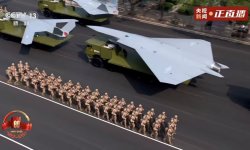
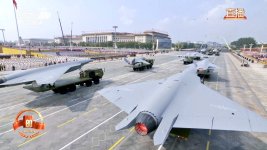
Last edited:
Pakistanithinktank
Registered Member
They don’t have any secret or inside information. They’re just talking about the PFX fighter jet program using info that’s already out there in the public, anyone can find online or in the news. There’s nothing private or confidential being shared, just what’s available for everyone to see.
Pakistan currently lacks the research and development capabilities for turbofan engines. Developing such engines requires advanced technology, specialized facilities, and significant investment, which Pakistan does not have. Instead, the Pakistan relies on foreign suppliers, mainly China, for aircraft propulsion. Local production of turbofan engines remains a long-term goal rather than an immediate reality.
Pakistanithinktank
Registered Member
We can secure Arab funding now. PFX is must to make sure we have our local defense industry. And a robust one. Bring Arab money in making the plane plus R & D and increase your defense industry not just fighter jets.
Dreaming is free, but investing is not. Why would Arab countries choose to invest in the PFX program, or in Pakistan, when Saudi Arabia, Qatar, and the UAE have the financial resources to launch their own projects? If they really wanted, they could develop a local product like KAAN or simply procure a platform directly from China. Their options are broad, and they have the means to pursue independent defense initiatives.
Users who are viewing this thread
Total: 4 (members: 0, guests: 4)
Pakistan Defence Latest

Country Watch Latest
-
 Iran - Israel/US War: Israel-US declare war on Iran, Iran responds (75 Viewers)
- Latest: Persian Gulf
-

-
-

-
Latest Posts
-

-
Iran - Israel/US War: Israel-US declare war on Iran, Iran responds (75 Viewers)
- Latest: Persian Gulf
-
-
-