Oil, Gas and Refinery Sectors - updates

During 1HFY25, total sales of petroleum products went up by 4% YoY to 8.03 million tons vis-à-vis 7.68 million tons in SPLY.

Product-wise data shows growth in MS and HSD, while sales of FO depicted a decline; the volumetric sales of MS, HSD, and FO clocked in at 3.75 million tons, 3.46 million tons, and 0.35 million tons, respectively.

Company-wise, the sales of PSO declined by 4% YoY, clocking in at 0.57 million tons in December.

Similarly, the offtake of Attock Petroleum Limited (APL) also plummeted by 14% YoY to 0.11 million tons. Whereas, the dispatches of SHEL and HASCOL improved by 5% and 59% YoY, respectively, clocking in at 0.09 million tons and 0.04 million tons in December.
 
Pakistan State Oil (PSO) is the largest oil marketing company (OMC) in the country, commanding the highest market share in the sector.

The company plays a pivotal role in the marketing and distribution of various petroleum products, including motor gasoline (Mogas), high-speed diesel (HSD), furnace oil (FO), jet fuel (JP-1), kerosene, compressed natural gas (CNG), liquefied petroleum gas (LPG), petrochemicals, and lubricants. Additionally, PSO imports key products such as Mogas, HSD, JP-1, and furnace oil to meet market demand, supported by the most extensive distribution network in the country.


To stay ahead in a dynamic energy landscape, PSO has strategically diversified its investments, targeting emerging opportunities while mitigating potential risks. These investments encompass infrastructure development, renewable energy projects, exploration and production ventures, and advancements in technology. This forward-looking approach positions PSO as a key player not only in the traditional energy sector but also in the evolving realm of sustainable and innovative energy solutions.

Historical financial performance

The downstream oil and gas sector experienced significant fluctuations in demand over recent years, largely due to the impacts of COVID-19 and shifts in the energy mix, particularly moving away from furnace oil to coal and RLNG. As the industry leader, PSO has consistently driven sector trends. In FY17, the company achieved 8 percent growth compared to -9 to 4 percent in the preceding six years, supported by higher volumes, prices, and the RLNG business, resulting in a 30 percent increase in sales revenue and a 77 percent surge in profits.

Volumetric growth continued in FY18, particularly in motor spirit and HSD, though furnace oil volumes dropped by 29.6 percent due to the energy transition. While topline increased by 20 percent, profits declined by 15.2 percent due to a one-time deferred tax reversal, lower other income, and higher exchange losses.


11_1.jpg


FY19 proved challenging for OMCs amid an economic slowdown, rising competition, falling margins, and declining sector volumes, especially for furnace oil and diesel. High interest rates, exchange losses, mounting circular debt, and receivables further pressured performance. Despite a 38 percent decline in overall sales volumes, PSO’s revenues rose modestly in the last quarter due to a rebound in volumes. However, profits fell 32 percent, weighed down by inventory losses, lower volumes, and finance costs. A key highlight of FY19 was PSO’s acquisition of a 52.67 percent stake in PRL, boosting consolidated earnings.
 

Pakistan opens 71 new blocks for oil, gas exploration after a decade

Federal Minister for Petroleum Dr. Musadik Malik invites international investors, highlights energy sector reforms

Federal Minister for Petroleum, Dr. Musadik Malik, announced on Tuesday that Pakistan has opened 40 offshore and 31 onshore blocks for oil and gas exploration, marking the first such initiative in a decade, APP reported.

Speaking at the 30th Annual Technical Conference and Oil Show, Malik emphasized that a significant portion of Pakistan’s natural resources remains untapped and urged international investors to seize the opportunities in these newly available blocks.

“Pakistan is open for business, and we will provide all necessary facilitation to investors,” he assured.

The minister outlined the government’s three-pillar strategy for advancing the energy sector: Access to Energy, Provision of Affordable Energy, and Sustainability of Energy.

To achieve these goals, the government is focusing on indigenization, electrification, and liberalization.

Malik also shared plans to introduce a deregulation policy and price capping mechanism to open up the oil sector, stressing that technological advancement alone is insufficient for sustainable progress.
 

Pakistan to get first US oil shipment as Cnergyico seals import deal


Reuters
August 1, 2025

Pakistan’s largest refiner Cnergyico will import 1 million barrels of oil from Vitol in October, its Vice Chairman Usama Qureshi told Reuters on Friday, marking the country’s first-ever purchase of US crude following a landmark trade deal.

The West Texas Intermediate light crude cargo will be loaded from Houston this month and is expected to arrive in Karachi in the second half of October, Qureshi said.

“This is a test spot cargo under our umbrella term agreement with Vitol. If it is commercially viable and available, we could import at least one cargo per month,” he said, adding that the shipment was not meant for resale.

The deal follows months of multiple negotiations, which first began in April, he said, after US President Donald Trump threatened to impose 29pc tariffs on imports from Pakistan.

On Thursday, Pakistan hailed a trade deal struck with the US, its top export market, and said the agreement would increase investments. The White House said on Thursday the US will charge a 19pc tariff on imports from Pakistan.

Qureshi said Pakistan’s finance and petroleum ministries encouraged local refineries to explore US crude imports after the April tariff announcement. Vitol did not immediately respond to a request for comment sent outside of office hours.

A key China ally, Pakistan has been warming up to Trump after he threatened tariffs. It has credited US diplomatic intervention for ending recent hostilities with neighbouring India and nominated Trump for the Nobel Peace Prize.

Oil is Pakistan’s biggest import item, and its shipments were valued at $11.3 billion in the year ended June 30, 2025, accounting for nearly a fifth of the country’s total import bill.

The import deal will help Pakistan diversify its crude sourcing and reduce reliance on Middle Eastern suppliers, who account for nearly all of its oil imports.

“Gross refining margin is on par with Gulf grades, and no blending or refinery tweaks are required,” Qureshi said.
 
Cnergyico can process 156,000 barrels of crude per day and operates the country’s only single-point mooring terminal near Karachi, enabling it to handle large tankers, unlike other refiners in Pakistan.

The company plans to install a second offshore terminal to allow larger or more frequent shipments, and to upgrade its refinery over the next five to six years, Qureshi said.

The refiner, which has been operating at an average refinery run rate of 30 to 35pc due to tepid local demand, is betting on growth in demand for oil products.

“We expect run rates to rise as domestic demand strengthens and local production is prioritised over imported fuels,” Qureshi said.

Trump said on Wednesday the US would also cooperate with Pakistan to develop the South Asian country’s “massive oil reserves”, without providing further details.
 

Pakistan shifts away from LNG imports amid rising costs and energy strategy realignment: report​


Petroleum Minister Ali Pervaiz Malik announces changes to energy strategy, highlighting a shift from LNG to local gas exploration in response to soaring prices and falling demand

Monitoring Desk

lng.jpg


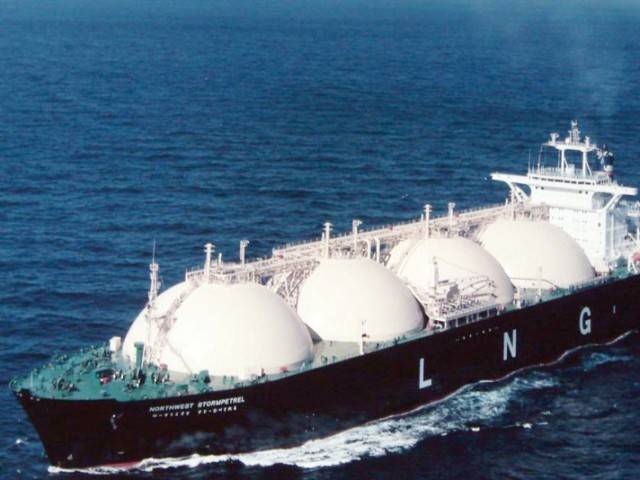
Pakistan is moving away from liquefied natural gas (LNG) imports as a key component of its energy strategy, according to the country’s Petroleum Minister Ali Pervaiz Malik. This marks a significant shift for the South Asian nation, which had previously been a growing LNG buyer, according to a news report.

LNG shipments to Pakistan peaked in 2021, but have since declined due to the surge in global prices triggered by Russia’s invasion of Ukraine. Ship-tracking data shows a 5.0% decrease in LNG deliveries so far this year, with a further decline expected as Pakistan negotiates to reduce contracted deliveries with suppliers.

“This is not a temporary blip,” Malik stated in an interview in Islamabad. “We have to readjust our strategy.”

A decade ago, Pakistan planned to expand its LNG imports significantly to offset its decreasing domestic natural gas production. However, the sharp rise in LNG prices over recent years, coupled with decreased power demand due to government efforts to secure loans from the International Monetary Fund (IMF) by raising utility rates, has made LNG imports less viable.
 
ISLAMABAD: No bids were received for 22 out of 23 oil and gas exploration blocks in the country’s latest petroleum licensing round, it is learnt.

The Directorate General of Petroleum Concessions (DGPC) opened the bids on October 2, 2025, only to find that only one company—Mari Energy—submitted a bid, and that too for a single block with a mere 131 work units. No international or other domestic exploration and production (E&P) companies participated.

The government had offered 23 onshore blocks across Balochistan, Sindh, Punjab, and Khyber Pakhtunkhwa (KPK) covering an estimated 55,000 square kilometers of sedimentary basin—an area rich in hydrocarbon potential.

When contacted, Petroleum Minister Ali Pervaiz Malik did not respond. The question put to the minister read:

“Sir, learned that bidding for 23 blocks arranged by DGPC didn’t yield the required result. Only one bidder, Mari Energy, came up with 131 units for one block. Out of 23 blocks, only one bid came in. Don’t you think it’s a fiasco? No roadshow was held to attract bidders. Why?”


Despite follow-ups, there was no reply from the minister, even after a lapse of two days.

The same question was also sent to Secretary Petroleum Momin Agha, Additional Secretary, and Zafar Abbas, the spokesperson for the Ministry of Energy (Petroleum Division). All three officials did not respond.

Below is the full list of 23 blocks offered in the failed round: From Balochistan, the bloks that were include for bids include Parkini-II Block A (Zone-I), Parkini-II Block B (Zone-I), Rasmalan-II (Zone-I), Rasmalan-II West (Zone-I), Chhalgari (Zone-II), Block 28 North (Zone-I), Sohbat Pur (Zone-II), Naoukandi (Zone-I F) and Naoukandi South (Zone-I F).

From Baluchistan/Sindh, Dera Jamal Murad (Zone-II) and Kot Magsi (Zone-III) were included.

From Sindh, Zamzama-II South (Zone-III) and Kambar (Zone-III) were there to be for the bids.

From Punjab, Alipur-II (Zone-II), Layyah-II (Zone-II), Khanpur-II (Zone-II), Rachna-II (Zone-II), Multan North-II (Zone-II), Hetu-II (Zone-II), Ladhana-II (Zone-II), Fateh Pur-II (Zone-II) and from Khyber Pakhtunkhwa (KPK), D.I. Khan West (Zone-I) and Paharpur-II (Zone-I) were included for the bids.


After exodus of MNCs another middle finger to SIFC
 
@Samlee

Why didn't they offer that huge Arabian Sea block which is supposed to be the next North Dome?

Regards
 
ISLAMABAD: No bids were received for 22 out of 23 oil and gas exploration blocks in the country’s latest petroleum licensing round, it is learnt.

The Directorate General of Petroleum Concessions (DGPC) opened the bids on October 2, 2025, only to find that only one company—Mari Energy—submitted a bid, and that too for a single block with a mere 131 work units. No international or other domestic exploration and production (E&P) companies participated.

The government had offered 23 onshore blocks across Balochistan, Sindh, Punjab, and Khyber Pakhtunkhwa (KPK) covering an estimated 55,000 square kilometers of sedimentary basin—an area rich in hydrocarbon potential.

When contacted, Petroleum Minister Ali Pervaiz Malik did not respond. The question put to the minister read:

“Sir, learned that bidding for 23 blocks arranged by DGPC didn’t yield the required result. Only one bidder, Mari Energy, came up with 131 units for one block. Out of 23 blocks, only one bid came in. Don’t you think it’s a fiasco? No roadshow was held to attract bidders. Why?”


Despite follow-ups, there was no reply from the minister, even after a lapse of two days.

The same question was also sent to Secretary Petroleum Momin Agha, Additional Secretary, and Zafar Abbas, the spokesperson for the Ministry of Energy (Petroleum Division). All three officials did not respond.

Below is the full list of 23 blocks offered in the failed round: From Balochistan, the bloks that were include for bids include Parkini-II Block A (Zone-I), Parkini-II Block B (Zone-I), Rasmalan-II (Zone-I), Rasmalan-II West (Zone-I), Chhalgari (Zone-II), Block 28 North (Zone-I), Sohbat Pur (Zone-II), Naoukandi (Zone-I F) and Naoukandi South (Zone-I F).

From Baluchistan/Sindh, Dera Jamal Murad (Zone-II) and Kot Magsi (Zone-III) were included.

From Sindh, Zamzama-II South (Zone-III) and Kambar (Zone-III) were there to be for the bids.

From Punjab, Alipur-II (Zone-II), Layyah-II (Zone-II), Khanpur-II (Zone-II), Rachna-II (Zone-II), Multan North-II (Zone-II), Hetu-II (Zone-II), Ladhana-II (Zone-II), Fateh Pur-II (Zone-II) and from Khyber Pakhtunkhwa (KPK), D.I. Khan West (Zone-I) and Paharpur-II (Zone-I) were included for the bids.


After exodus of MNCs another middle finger to SIFC

Pakistan will eventually learn the hard way.
 
I heard it would be later this month.I hope it lives up to the hype.

And it's not 1 but 41 blocks

1 offshore block cost $100m to explore, so dont expect many bids. Just hope to find world 4th largest reserves in first try.
 
1 offshore block cost $100m to explore, so dont expect many bids. Just hope to find world 4th largest reserves in first try.


Back when kekra 1 was being drilled, Experts had already warned that chances of success is between 15-20%

Having said that I have hopes for Turkish TPAO and Saudi Aramco not to mention Azerbaijani Socar and Chinese companies if they agree to put in this kind of money
 
@Samlee

Back when kekra 1 was being drilled,

This was the block which Kaptaan sb had predicted would be a blockbuster, no?

And it's not 1 but 41 blocks

Well, you would think that probability suggests that at least some of those 41 blocks would hit oil, provided the explorers have the patience and risk capital.

Regards
 
From Sindh, Zamzama-II South (Zone-III)

Not unexpected. BHP had extracted all they could and offloaded it to OPL, who were also looking to wrap up operations at that time from the chatter I heard in the field. Cool facilities though. It was fun to be there.
 

Users who are viewing this thread

Pakistan Defence Latest

Country Watch Latest

Latest Posts

Back
Top