Oil, Gas and Refinery Sectors - updates

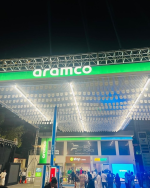
Aramco launches its first fuel station in Pakistan​

By Staff Reporter | The Business Recorder
Oct 30, 2024

Saudi oil giant Aramco unveiled its first fuel retail station in Pakistan on Tuesday with the launch in Lahore, following the acquisition of a 40% stake in Gas & Oil Pakistan (GO) earlier this year, a statement said.

GO, a diversified downstream fuels, lubricants and convenience stores operator, is one of the largest retail and storage companies in Pakistan. On its website, GO says it has a network of over 1,200 retail outlets in Pakistan providing petrol, diesel and lubricants.

Its partnership with Aramco, the world’s largest integrated energy and chemicals company, is expected to introduce high-quality fuels and an elevated consumer experience.

According to the statement, Aramco-branded stations will offer the “ProForce” branded premium fuel, high-quality Valvoline lubricants, professional Express Care automotive services, and modern convenience stores designed to provide a “seamless customer experience”.

“This is another milestone in Aramco’s downstream growth story, as we launch the first Aramco station in Pakistan — a market with significant growth potential,” Yasser M. Mufti, Executive Vice President of Products & Customers Aramco, was quoted as saying in the statement.

“Together with GO, with its deep industry expertise, strong customer service focus and shared commitment to innovation, we are confident that this partnership will deliver exceptional value to customers,” he added.

Khalid Riaz, CEO of GO, said the first Aramco-branded gas station is a testament to their “commitment to excellence and innovation”.

“Together with Aramco we aim to elevate the retail fuel landscape in Pakistan, setting new benchmarks for quality, service, and customer satisfaction,” Riaz said.

Aramco completed the acquisition of 40% stake in GO Pakistan in May this year.

The acquisition, first announced in December 2023, represents Saudi Aramco’s first downstream retail investment in Pakistan and signals the company’s growing retail presence in high-value markets.

 
The export of petroleum crude surged to 40,552 tonnes in 4MFY25 against no exports over the corresponding period of last year.

Similarly, the exports of petroleum products, excluding top naphtha, saw a growth of 634.96pc to 300,714 tonnes in 4MFY25 against 40,916 tonnes last year. The export of petroleum top naptha also recorded a growth of 69.62pc to 17,917 tonnes on year-on-year basis.
 

OGDCL discovers hydrocarbon reserves in Khyber Pakhtunkhwa


BR Web Desk
December 13, 2024

Oil and Gas Development Company Limited (OGDCL), Pakistan’s leading exploration and production company, announced the discovery of hydrocarbon reserves at the Bettani-02 (Slant) well in the district of Laki Marwat, Khyber Pakhtunkhwa.

The company disclosed the development in its notice to the Pakistan Stock Exchange (PSX) on Friday.

“We are pleased to announce that OGDCL, the operator of Wali Exploration License with a 100% working interest, has made a gas and condensate discovery in Samanasuk formation, an exploratory zone, at the Bettani-02 (Slant) well located in district Laki Marwat, Khyber Pakhtunkhwa,” read the notice.
 
Oil and Gas Development Company Limited (OGDCL), the country’s largest exploration and production (E&P) company, has revived a heavy oil well within its northern region field located in Punjab.

The company announced the development in its notice to the Pakistan Stock Exchange (PSX) on Monday.

“The initiative was undertaken at the Rajian Oil Field, located in Gujar Khan EL, district Chakwal, and represents a strategic step towards enhancing production capabilities,” OGDCL stated in its notice.

According to the E&P company, the field’s four heavy oil-producing wells were previously contributing 1,500 barrels per day (bpd). With the revival of Rajian-3A, cumulative production has now increased to 2,500bpd.

OGDCL shared that it developed a comprehensive plan to optimise production from the Rajian field, focusing on executing 11 workover jobs and implementing advanced artificial lift systems.
 
Oil & Gas Development Company Limited (OGDCL), Pakistan’s largest exploration and production (E&P) company, commenced production of oil and gas from West Well-3 located in Hyderabad district, Sindh.

The E&P shared this development in its notice to the Pakistan Stock Exchange (PSX) on Thursday.

“We are pleased to announce that Kunnar West Well-3 has been successfully brought into production at a wellhead flowing pressure (WHFP) of 1200 PSI with a choke size of 32/64”.

Sharing production details, OGDCL said the current output is 3.5 million standard cubic feet per day (mmscfd) of gas, 30 barrels per day (bpd) of condensate, and 3.8 metric tons per day of LPG.
 
Editorials Print 2024-12-20

Gas sector conundrum


The gas supply management is totally messed up. The imported RLNG is in surplus; domestic gas production is curtailed while the households across the country are facing severe load-shedding. On the surface, this situation appears illogical.

However, there is a method underlying the madness. With successive upward revisions in the gas prices, the demand fell in the last few years. The power sector’s demand for RLNG has also decreased as a result of a decline in grid demand.

The overall demand for gas during non-winter months is lower than both the production of local gas and the import of RLNG. There is no storage available in the country, while the capacity of the pipeline system is woefully limited. Thus, the supply must be cut — either by reducing local production or curtailing imports.

The logical solution is to import fewer RLNG cargoes. However, the government is reducing domestic production due to long-term commitments made with the LNG supplier (Qatar). This unfortunate situation is a result of flawed planning and poor decision-making.
 
The installation of more than needed number of power plants led to the import of RLNG. However, concurrently, low marginal cost power plants are being installed as well. The overall demand has decreased, and there is less demand for gas in the power sector. And most of the time, expensive RLNG-based power is produced while use of low-cost coal is curtailed.

That explains half of the problem. The question still remains as to why households experience gas load-shedding during the winter months. That is by design. Household tariffs are lower and being cross-subsidised by others — including industrial captive consumers.

There isn’t enough additional demand from other sources during the winter months to offset the increased supply. Thus, to curb losses, Sui companies — especially in the north — supply less in winters to low-paying consumers.

This means if the gas is not being fully supplied to households as they pay less, and additional supply means more losses for Sui companies, it would add to the gas circular debt. The other reason is to curtail high system line losses. The pipeline infrastructure is old outdated and has high leakage rates. As the supply increases, so does the leakage rate. There is no fiscal space to upgrade infrastructure.

Thus, supply is reduced in winters. The problem is likely to exacerbate from January 2025 if the gas supply to the captive power plants is to be completely abolished, as per the IMF condition. This would result in a significant reduction of 200-250 mmcfd in domestic gas production. The gas companies would struggle to cover the revenue shortfall, leading to further increases in tariffs for other consumers, primarily households. The recent increase of 8.7 percent would not be enough.

Last but not least, the government is taking credit for lowering RLNG supply from January, as the minister claims to cut five cargoes per year from Qatar and Eni each. Thus, out of 120 cargoes, the supply would be reduced to 110 cargoes, or nearly nine cargoes per month. That is to slash 100 mmcfd. This might partially address the current high supply, but it won’t be sufficient to cover the gas being supplied to the captive power plants.

Copyright Business Recorder, 2024
 

Rising crude oil imports boost exports


Mubarak Zeb Khan
December 22, 2024

ISLAMABAD: Crude oil imports increased by 17.81 per cent in the first five months of FY25, which prompted local refineries to produce more petroleum products than anticipated and boost exports.

Preliminary estimates suggest that the increase in local production of petroleum products and their exports in the past few months will likely boost economic growth in the current fiscal year.

Data compiled by the Pakistan Bureau of Statistics (PBS) showed that petroleum crude imports increased by 5.44pc in value and 17.81pc in quantity in the July-November FY25 from a year ago. In quantity, the crude import reached 3.974 million tonnes from 3.373m tonnes in the same period last year.

The rise in crude oil imports indicates booming transportation activities, indicating improved business activities. It also reflects higher capacity utilisation of local oil refineries compared to last year, which increased their profitability. The surging crude oil imports also translated into higher petroleum product production by local refineries.
 
The PBS data for the first four months of FY25 showed that the output of all 11 petroleum products was higher by 1.33pc than last year. Further analysis showed that the local production of high-speed diesel primarily used in the transport sector and agriculture — was up 3.31pc in 5MFY25. However, petroleum production post a paltry negative growth of 0.60pc during the period under review.

The furnace oil production was up by almost 0.86pc year-on-year in 5MFY25. Jute batching oil output was up by 67.33pc, solvent naphtha 40.16pc and that of kerosene by 30.06pc.

However, jet (airline oil) production dipped by 12.44pc in 5MFY25. LPG production also saw a decline of 8.96pc.
 
Surging exports

Consequently, exports of petroleum products were up by 230.33pc on a year-on-year basis in 5MFY25 to $236.71m. The details show that growth was recorded in almost all petroleum products, including petroleum crude.

The export of petroleum crude surged to 40,552 tonnes in 5MFY25 against no exports over the corresponding period of last year. Similarly, the exports of petroleum products, excluding top naphtha, saw a growth of 245.34pc to 417,539 tonnes in 5MFY25 against 120,905 tonnes last year. Naphtha topped the petroleum exports, recording a growth of 30.11pc to 27,127 tonnes.

With the rise in local production of petroleum products, imports saw a negative growth of 10.34pc in the first five months of FY25.
 
ISLAMABAD: The oil import bill surged 15.74 per cent in the first quarter of FY25, indicating that the consumption of petroleum goods is rising.

The data analysis suggests that all the groups, including petroleum goods, consumer durables and raw materials, witnessed a growth in imports during the first quarter of 2024-25 over the same period last year, according to data compiled by the Pakistan Bureau of Statistics.

The overall import bill rose 10.58pc year-on-year to $13.39 billion in July-September, mainly due to an increase in the arrival of petroleum crude, machinery and automobile sectors.

Product-wise data showed that petroleum group imports increased to $4.05bn against $3.50bn in the corresponding quarter last year.
 

Sale of petroleum products up 3% in December amid higher demand


BR Web Desk
January 2, 2025

02160549c1b021a.png


The sale of total petroleum products in Pakistan clocked in at 1.28 million tons in December, an increase of 3% on a year-on-year basis.

“The growth in dispatches is attributable to a jump in HSD [high-speed diesel] sales by 12% YoY,” said Iqbal Javaid, senior research analyst at Arif Habib Limited (AHL), in a report on Thursday.

This increase in HSD offtake comes on account of higher demand driven by a decline in the retail price, down 9% YoY, and curtailment of smuggled diesel from Iran, he added.

The offtake of petrol (MS) decreased by 1% YoY in December 2024, settling at 0.57 million tons.
 
HSD dispatches stood at 0.57 million tons in December 2024, as compared to 0.51 million tons in SPLY.

Meanwhile, Furnace Oil (FO) sale volumes reduced by 48% YoY, reaching 0.04 million tons, as compared to 0.08 million tons in SPLY.

The decline is due to lower demand for FO-based power generation, said Javaid.

On a month-on-month (MoM) basis, POL products’ offtake dwindled by 19% during December, as compared to 1.58 million tons in November.
 

Users who are viewing this thread

Back
Top