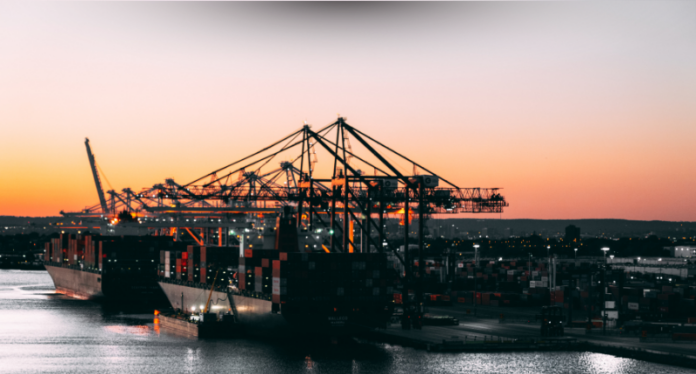
Sea Port / Dry Port and Maritime Updates.

Misdirection from the Pakistani deep state. The war against Hindustan is a multifaceted and truly hybrid one. Time to play them at their own game.

Whatever induces panic in the Delhi regime has very real effects on Delhi's maneuvering and policy outlook. We have seen the response to the KSA-Pakistan pact, which is far less meaningful than Indian analysts are making it out to be.

Likewise, any US-Pak port is a distant pipe dream, especially in the context of CPEC. However, the signalling will induce further miscalculations from Delhi.


@Hakikat ve Hikmet curious as to your opinion on this one!
 
Misdirection from the Pakistani deep state. The war against Hindustan is a multifaceted and truly hybrid one. Time to play them at their own game.

Whatever induces panic in the Delhi regime has very real effects on Delhi's maneuvering and policy outlook. We have seen the response to the KSA-Pakistan pact, which is far less meaningful than Indian analysts are making it out to be.

Likewise, any US-Pak port is a distant pipe dream, especially in the context of CPEC. However, the signalling will induce further miscalculations from Delhi.


@Hakikat ve Hikmet curious as to your opinion on this one!
IMO Pakistan needs to broaden the game by working like a "bridge' between the USA and China. President Trump wants to do a grand deal with China, and Pakistan can help him get one. Pakistan can follow a middle-of-the-path policy.....

Note that China is yet to become a belligerent Super Power, who is ready to wage wars for geo-political goals. On the other hand, the USA is very proud of her "gun culture".....
 

Pakistan National Shipping subsidiaries sign agreements to acquire two Aframax tankers

BR Web Desk Published October 13, 2025
https://www.facebook.com/sharer/sha...er.com/news/40387149&display=popup&ref=plugin
https://defencepk.com/forums/javascript:void(0)
Follow us
Pakistan National Shipping Corporation (PNSC), the country’s national flag carrier, announced that its wholly-owned subsidiaries — Karachi Shipping (Pvt) Ltd. and Lahore Shipping (Pvt) Ltd. — have signed Memoranda of Agreement (MoA) to purchase two Aframax-class tankers.

The listed company disclosed the development in its notice to the Pakistan Stock Exchange (PSX) on Monday.

Karachi Shipping (Pvt) Ltd. and Lahore Shipping (Pvt) Ltd. — both subsidiaries of PNSC — have signed Memoranda of Agreement (MoA) for the acquisition of LORAX and NAFSIKA, with deadweight tonnages (DWT) of 109,990 and 112,051 tonnes, respectively.


The Board of Directors of PNSC on Friday approved the acquisition of three vessels costing $193.115 million in a bid to expand the national fleet to 30 by 2026.

During a briefing to the Federal Minister for Maritimes Affairs, Muhammad Junaid Chaudhry, the management of the said that it has moved to fast-track its vessel procurement process following directions from the federal minister.

The PNSC management informed the minister that the corporation’s fleet expansion plan was progressing steadily, with key procurement stages nearing completion.

Officials said that the PNSC Board had earlier approved the purchase of three second-hand Aframax and MR-2 class oil tankers, with evaluation and due diligence completed in accordance with public procurement regulations.

The Board approved the acquisition of three vessels: MT LOREX, which will be renamed MT Karachi, at a cost of $74.5 million; MT NAFSIKA, to be renamed MT Lahore, also for $74.5 million; and MT STAVANGER POSEIDON, an MR-2 class vessel to be renamed MT Quetta, for $44.15 million.
 

Pakistan, Turkiye explore joint ventures in shipbuilding, ferry service


BR Web Desk

1761322722925.png

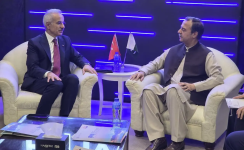
Federal Minister for Maritime Affairs Muhammad Junaid Anwar Chaudhry talking to Türkiye’s Minister of Transport and Infrastructure Abdulkadir Uraloğlu who called on him in İslamabad on 24.10.2025.

Pakistan and Turkiye on Thursday explored new areas of maritime cooperation, including potential joint ventures in shipbuilding and the possible launch of a ferry service between the two countries.

The discussions took place during a meeting between Federal Minister for Maritime Affairs Muhammad Junaid Anwar Chaudhry and Turkiye’s Minister of Transport and Infrastructure Abdulkadir Uraloglu, according to an official statement.

Both sides agreed to enhance maritime connectivity and strengthen economic linkages through sustainable initiatives that could benefit both nations.


Chaudhry said Pakistan was keen to collaborate with Türkiye in shipbuilding, port development, and the shipbreaking industry. He invited Turkish private investors to explore opportunities at Gwadar Port, which he said holds “immense potential for blue economy–related industries.”

“Pakistan is committed to transforming Gwadar into a modern maritime and logistics hub that will facilitate regional trade and contribute significantly to the national economy,” he added.

The minister noted that cooperation with Türkiye would enhance Pakistan’s technical capacity and open new channels of regional trade. He said Pakistan values its longstanding brotherly ties with Türkiye and looks forward to expanding collaboration beyond traditional sectors into shipping, logistics, and fisheries.

Turkish Minister Abdulkadir Uraloglu expressed his country’s interest in strengthening maritime cooperation and said the proposal for a ferry service would be discussed with Türkiye’s relevant ministry.

He said such a service could promote tourism, boost bilateral trade, and improve people-to-people connections by providing an affordable sea transport option.

Uraloglu also announced that a Turkish delegation comprising shipowners and port service providers would soon visit Pakistan, particularly Gwadar, to assess potential investment opportunities.

He appreciated Pakistan’s efforts to modernise its port infrastructure and said Turkish companies were keen to participate in mutually beneficial projects.

Chaudhry welcomed the announcement and assured full facilitation for the visiting delegation, noting that Pakistan was working to enhance the operational efficiency of its ports, with special focus on upgrading Gwadar.

Highlighting prospects in the fisheries sector, he said Pakistan currently holds a 25,000-ton tuna fish quota and encouraged Turkish investors to explore setting up a value addition and canning plant to target lucrative export markets.

The minister further announced plans to host a major maritime conference in Pakistan within three months, aimed at promoting regional cooperation and attracting investment in the maritime, logistics, and fisheries sectors.

Both ministers reaffirmed their commitment to deepen Pakistan-Türkiye relations through practical collaboration in maritime affairs, expressing optimism that such initiatives would promote shared prosperity and regional connectivity.
 
There was a time Pakistan built Cargo ships on it's own, through its own engineers and minds.
 
There was a time Pakistan built Cargo ships on it's own, through its own engineers and minds.
That was a different time competition wasn't as fierce so it made sense to build cargo ships at home and also secure contracts from abroad, but with with the rise of absolute shipbuilding giants like China and South Korea it would be impossible to keep up with them in production and cost, shipbuilding in most countries nowadays is exclusive to small ships and military warships.
 
ISLAMABAD: Pakistan continues to struggle with a severe decline in Foreign Direct Investment (FDI) due to a host of economic and policy challenges. At the same time, several multinational companies are either selling their stakes or exiting the market altogether.

Now, the Al-Thani Group of Qatar has also joined the list, signaling its intent to divest its 49 percent shareholding in the 1,320 MW Port Qasim coal-fired power plant, well-informed sources in the federal government told Business Recorder.

The 1,320 MW Port Qasim Power Project comprises two 660 MW supercritical coal power units established under the China–Pakistan Economic Corridor (CPEC). The USD 2.09 billion project, spread over 330.7 acres at Port Qasim—about 37 kilometers east of Karachi—was jointly developed by Qatar’s Al-Mirqab Capital and China’s Power Construction Corporation, a subsidiary of Sinohydro Resources Limited. Al-Thani Group invested over USD 1 billion in the venture.

1,320 MW coal plant: PQEPC threatens to halt operations

Like other independent power producers (IPPs), the Port Qasim plant’s management has long expressed frustration with the Central Power Purchasing Agency– Guaranteed (CPPA-G) over chronic delays in clearing outstanding dues. These financial challenges remain unresolved, reportedly due to Pakistan’s ongoing foreign exchange constraints. Chinese CPEC IPPs continue to press for payment of their remaining receivables, which are estimated at around Rs 400 billion.

In a recent communication, the management of the Port Qasim Electric Power Company (PQEPC) warned the government of a potential suspension of operations due to CPPA-G’s failure to meet financial obligations under the Power Purchase Agreement (PPA).

“A project suspension would be a lose-lose situation that all parties must work to avoid. Timely settlement of the dues is critical to ensuring sustainable power generation and preventing defaults under loan agreements and Pakistan’s sovereign guarantees,” sources quoted Mr. Dongfeng as warning top government officials. He urged authorities to provide immediate financial support to CPPA-G so that the mounting arrears could be cleared.

Last year, Prime Minister Shehbaz Sharif reportedly received a letter from former Qatari Prime Minister Sheikh Hamad Bin Jassim Bin Jaber Al Thani, requesting payment of USD 450 million owed to PQEPC for its investment in the Port Qasim project. Despite the involvement of the Prime Minister’s Special Assistant on Foreign Affairs, Tariq Fatemi, the dues remain unpaid.

In the latest development, Al-Mirqab Capital has formally communicated its intent to divest from the Port Qasim Power Project. The Qatari firm has conveyed this decision to senior officials in Islamabad, including Federal Minister for Power Sardar Awais Ahmad Khan Leghari and Minister for Economic Affairs Senator Ahad Khan Cheema.

Al-Mirqab Capital — the family office of Sheikh Hamad Bin Jassim Bin Jaber Al Thani — is headquartered in Doha and manages the Al-Thani family’s global investment portfolio across public equities, real estate, and private assets.

According to official sources, the “Notice of Intent to Divest from the Port Qasim Power Plant” has been shared through formal channels. “In compliance with the instructions, M/s Al-Mirqab Capital was contacted using the information provided in the letter. However, they advised that any coordination regarding the proposed meeting should be routed through the same official channel by which the original correspondence was conveyed,” the sources added.

Meanwhile, Pakistan’s investment climate continues to deteriorate. Over the past four years, nine multinational companies have exited or divested from the country. Four of these were manufacturers — three pharmaceutical firms (Pfizer, Sanofi-Aventis, and Eli Lilly) and one consumer goods company (Procter & Gamble). The remaining firms belonged to the services sector, including Shell, Total, Telenor, and Uber/Careem. However, when contacted, Minister for Power, Sardar Awais Khan Leghari said, “I have no such news.”

Minister for Economic Affairs Ahad Khan Cheema and PPIB Managing Director Shah Jahan Mirza did not respond to Business Recorder queries.

Copyright Business Recorder, 2025
 
I Swear To God If The Mods Merge This.....:mad::mad::mad::mad:
 
The Ministry of Maritime Affairs has constituted a high-level, multi-agency committee to identify potential sites for the establishment of new deep-sea ports along Pakistan’s coastline.

In a statement issued on Thursday, the Federal Minister for Maritime Affairs Muhammad Junaid Anwar Chaudhry said the initiative forms part of his “Hundred Years Vision 2047–2147,” unveiled during the inauguration of National Maritime Week in Karachi earlier this month.

He announced that he would personally attend the first meeting of the 12-member committee scheduled for next week, marking the beginning of efforts to materialise his long-term vision of developing Port 1, Port 2, and Port 3 at strategic coastal locations.


To expedite the process, the committee will meet fortnightly and is tasked with submitting a comprehensive feasibility report, including technical findings, hydrographic maps, satellite data, and investment recommendations to the Ministry of Maritime Affairs within three months.

Pakistan announces multi-billion upgrade for Gaddani, new Green Ship Yard at Port Qasim

The committee comprises representatives from the Port Qasim Authority (PQA), Karachi Port Trust (KPT), Gwadar Port Authority (GPA), the Ministry of Maritime Affairs, the Special Investment Facilitation Council (SIFC), the Surveyor General of Pakistan, Hydrographer of Pakistan, and the governments of Sindh and Balochistan.

Its responsibilities include collecting and reviewing all relevant empirical studies, satellite imagery, and hydrographic surveys to identify and evaluate potential sites along the coastline for new deep-sea ports, port cities, shipyards, and energy hubs.

The committee will also analyse hydrographic, oceanographic, and environmental conditions to assess the feasibility of each proposed location. It will also examine connectivity requirements such as road, rail, and pipeline networks, and assess industrial linkages and logistics corridors to ensure long-term sustainability.

Additionally, the body will assess land availability, environmental sensitivity, security parameters, and proximity to major trade routes, recommending site dimensions, indicative layouts, and investment models for shortlisted locations. It will propose a phased development roadmap and establish a national framework for prioritising new port projects.

Coordination with provincial governments and relevant federal agencies will form an essential part of the committee’s mandate to ensure a unified national approach to maritime expansion and coastal management, the statement added.

Pakistan’s coastline spans over 1,024 kilometres from Sir Creek in Sindh to Jiwani in Balochistan, encompassing an Exclusive Economic Zone of approximately 240,000 square kilometres and a continental shelf of nearly 50,000 square kilometres.

According to the statement, Chaudhry noted that the Port Qasim Authority currently operates at about 65% capacity, Karachi Port Trust at 52%, and Gwadar Port between 5-10%.

“Projections indicate that all three ports could reach full operational capacity between 2035 and 2045 due to growing industrial activity, regional transit trade, and increased shipping volumes,” the minister said.

He warned that the anticipated surge in cargo movement, particularly from Afghanistan, the Central Asian Republics, and potential transhipment traffic from the Gulf and East Africa, could lead to serious congestion at existing ports.

To address these challenges, the minister envisioned establishing three to four new deep-sea ports.
 
I'm guessing Sonmiani,Pasni and Keti Bandar. Perhaps Jiwani
 

Pakistan launches first bunkering operations at Karachi Port​

Monitoring Desk18/11/2025
port-696x374.png

ISLAMABAD: Pakistan has launched its first-ever standardised bunkering operations at the Karachi Port, aligning the country’s largest harbor with global maritime safety and operational standards.

Bunkering refers to the fueling of ships for propulsion and on-board use, including the storage, transfer, and management of marine fuels such as oil and gas. Standardised bunkering ensures safe, efficient, and environmentally compliant refueling—an essential requirement for seamless maritime transport and global shipping operations.

Minister for Maritime Affairs Junaid Chaudhry said on Tuesday the initiative was undertaken on the instructions of the Prime Minister, who has directed accelerated modernisation of port services and a broader upgrade of Pakistan’s maritime infrastructure.

He said the introduction of regulated bunkering fills a longstanding gap in Karachi Port’s service portfolio, enabling it to compete more effectively with established regional bunkering hubs. The availability of safe, reliable, and efficiently managed bunkering, he added, is expected to attract more international shipping lines, particularly operators seeking predictable service standards and streamlined port calls.

According to the minister, increased vessel traffic would boost foreign-exchange earnings through port fees, marine services, ship repairs, supplies, and maritime logistics. The expected rise in operations is also projected to create employment across various sectors of the maritime economy.

Mr Chaudhry said the new service strengthens Pakistan’s presence in the international maritime market by demonstrating its commitment to environmentally responsible and globally competitive port management. Compliance with global standards on fuel quality, safety procedures, documentation, and transparency, he noted, is essential to building confidence among shipowners and international trading companies.

The minister said the first phase of operations would be launched in collaboration with one of the world’s leading energy trading houses, which will conduct bunkering at Karachi Port using internationally certified practices. The venture is expected to expand as domestic refineries increase production of refined fuels meeting global specifications—an outcome he described as a direct benefit to the national exchequer.

He added that the Karachi Port Trust had reviewed existing bunkering practices, aligned its procedures with global benchmarks, drafted new documentation, and engaged stakeholders to bring the service online. The milestone, he said, reinforces KPT’s aspiration to operate as a leading regional hub and reflects the government’s commitment to further upgrading Pakistan’s port capabilities.
 

Karachi Port begins standardised ship-fueling services under federal initiative​

New facility will ensure safe, environmentally compliant ship refueling, smooth maritime transport


federal minister for maritime affairs junaid anwar chaudhry

Federal Minister for Maritime Affairs Junaid Anwar Chaudhry


ISLAMABAD:
Federal Minister for Maritime Affairs Muhammad Junaid Anwar Chaudhry has announced the launch of standardised bunkering operations at Karachi Port for the first time in Pakistan's history.

"The move brings Pakistan's largest port in line with global maritime safety and operational standards, a step long viewed as essential for improving the country's standing in the regional shipping market," the minister said.


Bunkering is the fueling of ships for propulsion and onboard use, involving the storage, transfer and management of marine fuels like oil and gas. Proper bunkering ensures safe, efficient and environmentally compliant refuelling, enabling smooth maritime transport and global shipping operations.


The initiative is launched on the instructions of the prime minister, who has called for accelerated modernisation of port services and a broader upgrade of Pakistan's maritime infrastructure. Chaudhry said the introduction of regulated bunkering would remove a longstanding gap in Karachi Port's service offering and enable it to compete more effectively with established bunkering hubs in the region and the wider area.

The minister emphasised that the availability of safe, reliable and efficiently managed bunkering facilities was expected to draw more international shipping lines to Karachi, particularly operators seeking streamlined port calls and predictable service standards.

He said that increased vessel traffic would translate into higher foreign exchange earnings through port fees, marine services and ancillary commercial activity such as repairs, supplies and maritime logistics. The expected increase in port operations is also projected to stimulate employment across multiple layers of the maritime economy.

Chaudhry added that the new service would enhance Pakistan's visibility in the international maritime market by demonstrating the country's commitment to modern, environmentally responsible and globally competitive port management.

Compliance with global standards covering fuel quality, safety procedures, documentation and transparency is essential for building confidence among shipowners and international trading companies.
 

Users who are viewing this thread

Pakistan Defence Latest

Back
Top