Pakistan-Af: Operation Khyber Storm

Status
Not open for further replies.
We are by extending this ceasefire cucking ourselves worse than the qataris. Two days of nothing from our side and taliban plots on how to kill more of our people. Those 7 jawans arent gonna be avenged because our foreign ministry is too busy enjoying doha
 
To view this content we will need your consent to set third party cookies.
For more detailed information, see our cookies page.


For those who say we should hold talks with Afghan regime.

Now this is stats of our engagements since 2021.

  • More than 200 x flag meetings
  • 10 x Joint Coordination Committee meetings.
  • 800 x diplomatic protests
  • More than 200 memos by ISI
  • Around 180 x demarche
  • 3 x Times engagement by China and multiple by middle eastern countries.
  • 5 x Visits of Foreign Minister
  • Visits of Interior and Defense ministers
  • Engagement by civ society, Ulema missions and Political leaderships.

Outcome
  • From 2021-2025 more than 1050 incursion attempts by FAK.
  • 3800 Casualties

What else do you want‼️‼️

Isn’t it the time to say enough is enough?

To view this content we will need your consent to set third party cookies.
For more detailed information, see our cookies page.


Sigh
 
next time dnt make an excuse that we have not enought ammo againt talibund
 
Pakistan faces a growing security dilemma as the United Nations confirms the Afghan Taliban’s support for the Tehreek-e-Taliban Pakistan (TTP), a group responsible for hundreds of cross-border attacks. According to the UN’s 35th Analytical Support and Sanctions Monitoring Team report, TTP launched over 600 attacks in Pakistan between July and December 2024. The group operates training centers in Afghan provinces such as Kunar, Nangarhar, Khost, and Paktika, and its leader Noor Wali Mehsud receives $43,000 monthly from the Taliban regime. These findings validate Pakistan’s longstanding concerns and have been formally presented to the UN Security Council by Ambassador Munir Akram.

Complicating matters further, India has recently taken steps to normalize relations with the Taliban government. Afghan Foreign Minister Amir Khan Muttaqi visited New Delhi in October 2025, where he was publicly acknowledged by his official title and hosted at the Afghan embassy. India is reportedly planning to reopen its diplomatic mission in Kabul. While India denies any role in supporting Taliban-TTP activities, its engagement undermines Pakistan’s efforts to diplomatically isolate the Taliban and build international consensus for sanctions or condemnation. Indian officials have instead accused Pakistan of deflecting blame and harboring its own militant proxies.

This shift in regional dynamics presents a strategic challenge for Pakistan. India’s outreach risks emboldening the Taliban, diluting UN pressure, and weakening regional unity on counterterrorism enforcement. In response, Pakistan must sharpen its diplomatic strategy by pushing for UN sanctions on Taliban linked individuals and TTP leadership, building coalitions with China, Iran, and Central Asian states, and framing the issue as a violation of international law and a threat to regional peace. Enhancing border security and intelligence operations along the Durand Line will also be critical.

Pakistan must also work closely with Gulf Cooperation Council (GCC) nations such as Saudi Arabia, UAE, and Qatar to apply coordinated diplomatic and economic pressure on the Taliban regime. These countries hold significant influence in Afghanistan’s financial and religious spheres and can play a pivotal role in shaping Taliban behavior. Additionally, Pakistan may consider supporting moderate or opposition factions within Afghanistan that challenge Taliban dominance, especially those advocating for inclusive governance and rejecting ties to terrorist groups. This dual track approach external pressure and internal support could help Pakistan counterbalance the Taliban-TTP nexus and restore regional stability.

As the Taliban seeks diplomatic legitimacy and India recalibrates its regional posture, Pakistan must act decisively. The UN findings offer a strong foundation, but navigating this complex landscape will require strategic clarity, regional diplomacy, and global engagement.
 

‘Ball is in their court’: PM Shehbaz says ready for talks if Afghanistan agrees to Pakistan’s conditions


Dawn.com
October 16, 2025

Prime Minister Shehbaz Sharif on Thursday said Islamabad was ready to talk if Kabul agreed to fulfil Pakistan’s “justified” conditions following recent hostilities between the two countries.

Pakistan and Afghanistan on Wednesday agreed to a temporary ceasefire after a fresh round of deadly cross-border clashes that threatened to escalate into a wider conflict. Pakistan’s Foreign Office (FO) said the ceasefire, implemented at the Taliban’s request and with mutual consent, took effect at 6pm local time on October 15 and would last for 48 hours.

The announcement followed sustained hostilities between the two countries over the weekend.

Addressing the federal cabinet today after the latest round of conflict, the premier stated that the Afghan side had requested a ceasefire and made a formal request. “Yesterday we decided the temporary 48-hour ceasefire [and] the message has been sent that if they want to fulfil our justified conditions through talks, then we are ready. The ball is in their court.”
 

Taliban regime not 'true representatives' of Afghan people: Foreign Office​


Spokesperson says both countries actively communicating but 'no formal govt currently exists in Kabul'

Our Correspondent
October 17, 2025


tribune


The current Afghan Taliban regime in place in Afghanistan is not truly representative of the Afghan people, said the Foreign Office on Friday.

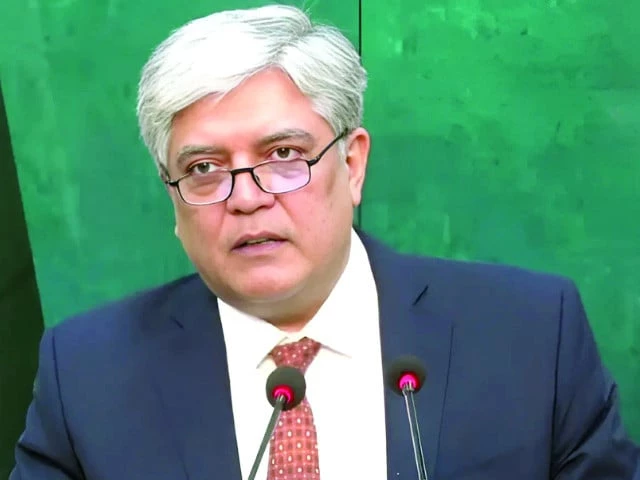
FO Spokesperson Shafqat Ali briefed the media on the prevailing situation. Pakistan's embassy in Kabul and the Afghanistan embassy in Islamabad are both fully functional and routine diplomatic communiqués are continuing, he said.

Yet, the spokesperson declared, "no formal government currently exists in Kabul, and a group is holding power by force". The current administration in Kabul does not represent the Afghan people, said Ali. "Afghans will one day elect a government led by their true representatives."

Initial direct contacts were made during the past week after tensions escalated with both sides reporting heavy losses in clashes along the Pak-Afghan border last weekend. This was done with support of friendly countries, said the FO spokesperson, adding that there no negotiations or agreements pertaining to Doha at the moment.

A 48-hour ceasefire was set in place last Wednesday at 6pm.

Ali underscored that Pakistan's targeted precision strikes were defensive and not directed against the Afghan people. Pakistan continues to prefer dialogue as the way forward, he added.
 
I don't know about forces but pdf warriors are sitting with their fingers crossed,

Ke kab ceasefire khatam ho aur woh gola Bari resume kren.
 
The Afghan Taliban regime cannot absolve itself from its obligation to ensure peace and stability in the region and beyond by deflecting responsibility from failure to control terrorism against Pakistan, asserted the FO spokesperson.

“Pakistan has hosted four million Afghan citizens and remains committed to legal and humanitarian measures regarding their presence,” he said.

He condemned the desecration of bodies by the Afghan Taliban. “This is unacceptable,” said Ali, adding that the matter has been raised before the administration in Kabul.

Islamabad reiteriated its concerns over provocations from the Afghan Taliban and terrorist groups Fitna al-Khawarij and Fitna al-Hindustan.

The latter two are terms the state introduced after the war with India in May 2025, with the first referring to terrorists affiliated with proscribed Tehreek-e-Taliban Pakistan (TTP) and the second typically reserved for banned separatist outfits.
 
The spokesperson rejected statements by Afghanistan Interim Foreign Minister Amir Khan Muttaqi made in India and criticised the joint statement issued during the interim foreign minister’s visit to India, wherein he described Indian Illegally Occupied Jammu and Kashmir (IIOJK) as part of India. “This is tantamount to denying the rights of the people of occupied Kashmir,” said Ali.

The spokesperson highlighted India’s support for terrorist groups in Afghanistan, including the TTP and banned outfit Balochistan Liberation Army (BLA), through training facilities, nurseries, and other activities. “India’s negative role is no secret, and statements from its Ministry of Foreign Affairs are publicly known.”

Ali repeated that Islamabad vehemently rejects Afghanistan's acting foreign minister's assertion that terrorism is Islamabad’s “internal problem”.

He said that references to Jammu and Kashmir as part of India violate relevant United Nations Security Council (UNSC) resolutions and disregard the legal status of the territory.

The joint statement, he added, was highly insensitive to the sacrifices and sentiments of the people of IIOJK in their just struggle for the right to self-determination.

Pakistan is maintaining contacts with the ruling group in Kabul while pressing for action against terrorism, according to the FO spokesperson.
 
Pakistan-Afghanistan ceasefire

A confrontation took place on the night of October 11–12, when Afghan Taliban forces, supported by “Indian-sponsored elements of Fitna al-Khawarij,” launched an unprovoked attack on Pakistan along the border, according to the military's media wing.

“The cowardly action, which included fire and a few physical raids, was aimed at destabilizing the border areas to facilitate terrorism, furthering FAK's nefarious designs,” said Inter-Services Public Relations in a statement.

The security forces, exercising the right of self-defence, repelled the assaults decisively along the border and inflicted heavy casualties on Taliban forces and affiliated Khawarij terrorists, said ISPR.

On October 15, the Ministry of Foreign Affairs announced that Pakistan and the Afghan Taliban regime have agreed to a 48-hour ceasefire after Pakistan’s ‘precision strikes’ on Taliban and terrorist hideouts in Kandahar and Kabul.

According to the ministry, the decision was made at the Taliban’s request and with the mutual consent of both sides. During the ceasefire, both parties will hold constructive dialogue to make sincere efforts to find a positive solution to a complex but solvable issue, the ministry had said.

“This temporary pause aims at creating space for meaningful discussions and promote stability along the border,” the ministry said in a statement.
 
I don't know about forces but pdf warriors are sitting with their fingers crossed,

Ke kab ceasefire khatam ho aur woh gola Bari resume kren.
People don't usually die from bullets fired from the keyboard.

It is a very different situation for those who have to face live rounds and explosives.
 
To view this content we will need your consent to set third party cookies.
For more detailed information, see our cookies page.


I'm not talking about negotiations cause you can't negotiate with people who want to takeover your home

But we need a different strategy cause they can take a lot more casualties than we can
Nor can we allocate a significant amount of our resources away from India

Whatever we're doing rn isn't working
This attrition warfare doesn't work in our favor

brother dnt post propaganda tweet
 
Status
Not open for further replies.

Users who are viewing this thread

Back
Top