60-hour military airlift: Chinese, Turkish aircraft to Pakistan spark defence transfer speculation

Beijingwalker

VIP Member
Joined
Nov 4, 2011
Messages
93,153
Reaction score
113,595
Reputation
2,092.9
Country of Origin
Country of Residence

60-hour military airlift: Chinese, Turkish aircraft to Pakistan spark defence transfer speculation

Heavy military transport aircraft made repeated trips to Pakistani airbases over 60 hours, amid Islamabad’s deepening defence ties with Beijing and Ankara, according to a report
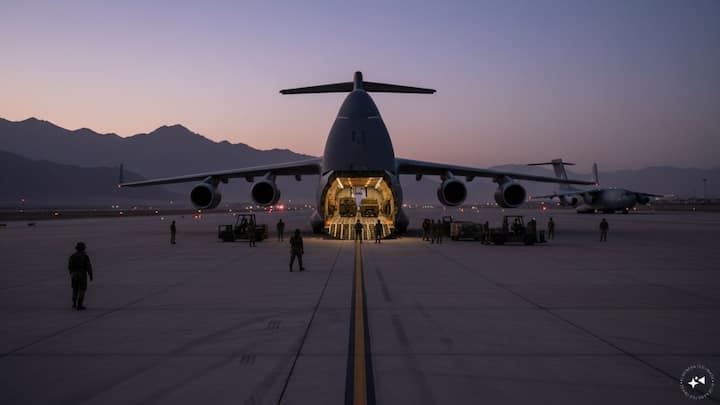
AI generated image

AI generated image

Sonam Chauhan|Aug 20, 2026, 18:56:11 IST

Areported increase in military air traffic from China and Turkiye to Pakistan has sparked fresh speculation over possible transfers of defence equipment to Islamabad, with security sources claiming that heavy military transport aircraft made repeated visits to Pakistani airbases over a period of around 60 hours.

According to a News18 report, citing a senior security source, Chinese military transport aircraft were observed landing at Pakistan’s Nur Khan airbase near Rawalpindi and Masroor airbase in Karachi. Turkish military transport aircraft were also reportedly involved in the heightened activity.

The source claimed the flights were being used to move military equipment, including drones and other defence-related matériel. However, details of the equipment allegedly transported have not been independently verified.

The reported movements come as Pakistan continues to strengthen its defence ties with both China and Türkiye, two of its key military partners.

Chinese military support​

China remains Pakistan’s largest defence supplier, with Islamabad relying heavily on Chinese systems across its air force, air defence and unmanned warfare capabilities.

The two countries’ military relationship has grown further following last year’s India-Pakistan military confrontation. Beijing had acknowledged that personnel from China’s aviation industry provided technical assistance to Pakistan during the conflict.

Pakistan has also expanded its deployment of Chinese-origin unmanned systems and combat aircraft, making China a central part of Islamabad’s efforts to modernise and replenish its military capabilities.

The latest reported aircraft movements could therefore indicate an effort to accelerate the delivery or replenishment of military equipment, particularly if the security-source claims about drones and other matériel are confirmed.

Türkiye deepens defence partnership​

Turkiye has also emerged as an increasingly important defence partner for Pakistan, with cooperation spanning drones, naval platforms, aerospace technology and other military systems.

In May, Pakistan’s air chief held high-level meetings in Türkiye, where discussions focused on defence cooperation, aerospace innovation, unmanned systems and emerging technologies.

The two countries have since taken steps to expand their cooperation in fighter-aircraft development.

Turkish officials said earlier this month that nearly 200 Pakistani engineers and officials were already involved in the development of Türkiye’s KAAN fifth-generation fighter programme. Ankara also said discussions would begin on formally including Pakistan in the project.

The reported involvement of Turkish military transport aircraft in the latest airlift would add another dimension to the expanding defence relationship between Ankara and Islamabad.

Defence pact adds to scrutiny​

The reported air activity also comes shortly after Pakistan, Turkiye and Saudi Arabia signed the Mecca Joint Defence Agreement on August 7.

Under the agreement, an armed attack against any one of the three countries would be treated as an attack against all three. Officials have described the pact as defensive and said it is not directed against any specific country.

Against this backdrop, any sustained movement of military transport aircraft involving China, Turkiye and Pakistan is likely to draw close attention, particularly if the flights are linked to the transfer of drones, weapons or other military equipment.

Unusual concentration of flights​

What has attracted particular attention is the reported scale and timing of the activity.

Security sources described the concentration of heavy military transport aircraft over roughly 60 hours as unusual, suggesting that the movements may have represented a coordinated logistical operation rather than routine military traffic, reported News18.

Pakistan has in recent years sought to expand its access to both Chinese and Turkish defence technology, while increasing its reliance on unmanned systems.

If confirmed, the reported airlift could form part of a broader effort by Islamabad to strengthen its military inventory and deepen supply links with Beijing and Ankara.

The development is likely to be closely watched in India, particularly as Pakistan continues efforts to upgrade its military capabilities following its confrontation with India and simultaneously expand defence cooperation with China and Turkiye.

China, Turkiye support during Op Sindoor​

The reported military airlift comes against the backdrop of India’s assessment that Pakistan received substantial military support from China and Turkiye during Operation Sindoor.

During a seminar on new-age military technologies last year in July, Indian Army deputy chief Lt Gen Rahul R Singh said Pakistan was supported by both countries during the May 7-10 hostilities.

He said China provided extensive assistance, including what he described as “live” satellite inputs on Indian military movements and deployments.

“We had one border and two adversaries, actually three. Pakistan was in the front. China was providing all possible support,” Times of India quoted Singh as saying.

He also pointed to Pakistan’s dependence on Chinese military hardware, saying 81% of the military equipment it receives is Chinese.

According to Indian assessments, Pakistan used several Chinese-origin systems during the conflict, including J-10 fighter jets armed with PL-15 air-to-air missiles and HQ-9 air-defence systems.

Singh further said China had an opportunity to observe the performance of its weapons in an actual conflict. “So, it's like a live lab available to them. It is something that we have to be very cognizant about,” he said.

Turkiye, meanwhile, was also accused of providing important military support to Pakistan. Pakistani forces used Turkish-origin drones during the conflict, including Baykar Yiha III kamikaze drones and Asisguard Songar systems.

Singh’s remarks on Chinese satellite support also contrasted with an earlier assessment by Chief of Defence Staff Gen Anil Chauhan, who had said there was no proof that Beijing provided Pakistan with real-time targeting assistance, although Pakistan may have used Chinese commercial satellite imagery.

The Indian Army’s assessment nevertheless highlighted the growing military coordination between Pakistan, China and Turkiye, particularly in areas such as drones, surveillance, air defence and aerospace technology.
 

Chinese, Turkish Military Aircraft Flood Pak's Noor Khan Airbase; Re-Arming After Op Sindoor?


To view this content we will need your consent to set third party cookies.
For more detailed information, see our cookies page.
 

China, Turkey Send Military Airlifters to Pakistan in 'Unusual Activity'​

To view this content we will need your consent to set third party cookies.
For more detailed information, see our cookies page.
 

60-hour military airlift: Chinese, Turkish aircraft to Pakistan spark defence transfer speculation

Heavy military transport aircraft made repeated trips to Pakistani airbases over 60 hours, amid Islamabad’s deepening defence ties with Beijing and Ankara, according to a report

AI generated image

AI generated image

Sonam Chauhan|Aug 20, 2026, 18:56:11 IST

Areported increase in military air traffic from China and Turkiye to Pakistan has sparked fresh speculation over possible transfers of defence equipment to Islamabad, with security sources claiming that heavy military transport aircraft made repeated visits to Pakistani airbases over a period of around 60 hours.

According to a News18 report, citing a senior security source, Chinese military transport aircraft were observed landing at Pakistan’s Nur Khan airbase near Rawalpindi and Masroor airbase in Karachi. Turkish military transport aircraft were also reportedly involved in the heightened activity.

The source claimed the flights were being used to move military equipment, including drones and other defence-related matériel. However, details of the equipment allegedly transported have not been independently verified.

The reported movements come as Pakistan continues to strengthen its defence ties with both China and Türkiye, two of its key military partners.

Chinese military support​

China remains Pakistan’s largest defence supplier, with Islamabad relying heavily on Chinese systems across its air force, air defence and unmanned warfare capabilities.

The two countries’ military relationship has grown further following last year’s India-Pakistan military confrontation. Beijing had acknowledged that personnel from China’s aviation industry provided technical assistance to Pakistan during the conflict.

Pakistan has also expanded its deployment of Chinese-origin unmanned systems and combat aircraft, making China a central part of Islamabad’s efforts to modernise and replenish its military capabilities.

The latest reported aircraft movements could therefore indicate an effort to accelerate the delivery or replenishment of military equipment, particularly if the security-source claims about drones and other matériel are confirmed.

Türkiye deepens defence partnership​

Turkiye has also emerged as an increasingly important defence partner for Pakistan, with cooperation spanning drones, naval platforms, aerospace technology and other military systems.

In May, Pakistan’s air chief held high-level meetings in Türkiye, where discussions focused on defence cooperation, aerospace innovation, unmanned systems and emerging technologies.

The two countries have since taken steps to expand their cooperation in fighter-aircraft development.

Turkish officials said earlier this month that nearly 200 Pakistani engineers and officials were already involved in the development of Türkiye’s KAAN fifth-generation fighter programme. Ankara also said discussions would begin on formally including Pakistan in the project.

The reported involvement of Turkish military transport aircraft in the latest airlift would add another dimension to the expanding defence relationship between Ankara and Islamabad.

Defence pact adds to scrutiny​

The reported air activity also comes shortly after Pakistan, Turkiye and Saudi Arabia signed the Mecca Joint Defence Agreement on August 7.

Under the agreement, an armed attack against any one of the three countries would be treated as an attack against all three. Officials have described the pact as defensive and said it is not directed against any specific country.

Against this backdrop, any sustained movement of military transport aircraft involving China, Turkiye and Pakistan is likely to draw close attention, particularly if the flights are linked to the transfer of drones, weapons or other military equipment.

Unusual concentration of flights​

What has attracted particular attention is the reported scale and timing of the activity.

Security sources described the concentration of heavy military transport aircraft over roughly 60 hours as unusual, suggesting that the movements may have represented a coordinated logistical operation rather than routine military traffic, reported News18.

Pakistan has in recent years sought to expand its access to both Chinese and Turkish defence technology, while increasing its reliance on unmanned systems.

If confirmed, the reported airlift could form part of a broader effort by Islamabad to strengthen its military inventory and deepen supply links with Beijing and Ankara.

The development is likely to be closely watched in India, particularly as Pakistan continues efforts to upgrade its military capabilities following its confrontation with India and simultaneously expand defence cooperation with China and Turkiye.

China, Turkiye support during Op Sindoor​

The reported military airlift comes against the backdrop of India’s assessment that Pakistan received substantial military support from China and Turkiye during Operation Sindoor.

During a seminar on new-age military technologies last year in July, Indian Army deputy chief Lt Gen Rahul R Singh said Pakistan was supported by both countries during the May 7-10 hostilities.

He said China provided extensive assistance, including what he described as “live” satellite inputs on Indian military movements and deployments.

“We had one border and two adversaries, actually three. Pakistan was in the front. China was providing all possible support,” Times of India quoted Singh as saying.

He also pointed to Pakistan’s dependence on Chinese military hardware, saying 81% of the military equipment it receives is Chinese.

According to Indian assessments, Pakistan used several Chinese-origin systems during the conflict, including J-10 fighter jets armed with PL-15 air-to-air missiles and HQ-9 air-defence systems.

Singh further said China had an opportunity to observe the performance of its weapons in an actual conflict. “So, it's like a live lab available to them. It is something that we have to be very cognizant about,” he said.

Turkiye, meanwhile, was also accused of providing important military support to Pakistan. Pakistani forces used Turkish-origin drones during the conflict, including Baykar Yiha III kamikaze drones and Asisguard Songar systems.

Singh’s remarks on Chinese satellite support also contrasted with an earlier assessment by Chief of Defence Staff Gen Anil Chauhan, who had said there was no proof that Beijing provided Pakistan with real-time targeting assistance, although Pakistan may have used Chinese commercial satellite imagery.

The Indian Army’s assessment nevertheless highlighted the growing military coordination between Pakistan, China and Turkiye, particularly in areas such as drones, surveillance, air defence and aerospace technology.

ONLY 60 hours????????.................should have been AT LEAST 600 hours considering the genocide the israelis are committing against Palestinians in Gaza including shooting a few day old babies in the head. I pray to Allah (swt) that never happens to the people of Pakistan.............. :(
 
Last edited:

Users who are viewing this thread

Pakistan Defence Latest

Back
Top