Afghanistan Strategic and Foreign Affairs

Muji.Iqbal

Trusted Member
Joined
Apr 18, 2023
Messages
6,678
Reaction score
5,320
Reputation
1,693.8
Country of Origin
Country of Residence

Was it all in vain?​

Dene Moore: Scenes of a triumphant Taliban will stay with us – and they should, because we abandoned our friends and allies to a terrible fate.
Dene MooreAug 20, 2021 2:47 PM


Afghanistan,Kabul,18,8,2021,The,War,In,Afghanistan,Taliban
On their own. ( john smith 2021 / Shutterstock.com)
In another lifetime, I remember visiting a radio station being broadcast by Canadian Forces in Kandahar. The station was in a shabby but heavily fortified outpost in the Zhari District, run by the Canadians’ psychological operations division by two young Afghan-Canadian soldiers.

From here they hosted a series of programs meant to counter a fairly sophisticated Taliban propaganda campaign in its home territory. The most popular shows were call-ins and I expected there were a lot of political rants and anger.

Nope.

Most called in to recite poetry, some written by the callers themselves, some traditional poetry banned under Taliban rule. Mostly about love.

The scenes out of Afghanistan right now are heartbreaking. The politics of the U.S. withdrawal aside, the unfolding humanitarian catastrophe was preventable.

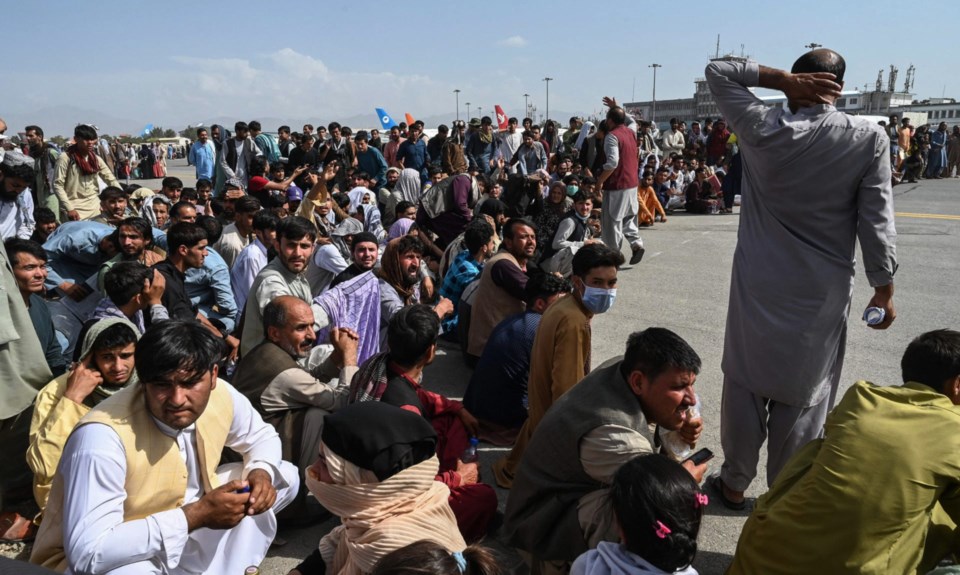
The scenes of triumphant Taliban fighters occupying the presidential palace and patrolling the streets, guns in hand; of terrified Afghans clinging to the body of a U.S. military plane as it takes off from Kabul airport; the collapse of two decades of Western warfare in a matter of days: these will stay with us.

I worry for the journalists and fixers and interpreters who worked with Canadians and other coalition entities, including military, news and aid organizations.


I worry for the women and girls who had such hopes, walking miles to attend the girls school opened by Canadians in Kandahar.

I worry for all Afghans who remember all too well Taliban rule, public hangings, books burnings, women covered in burqas head to toe and hiding at home, considered property of men akin to livestock.

I worry for the families and friends of the 158 Canadian soldiers and seven civilians who died in Afghanistan, and the thousands who were injured, and the many thousands more who served who must feel their sacrifice seems right now to have been in vain.

The way the Western exit from Afghanistan is unfolding is emblematic of the 20-year war in Afghanistan, a final testament to how little the Western coalition ever understood of what was happening on the ground or how to counter it.

It has been more than a year since the Trump administration “negotiated” a withdrawal agreement with the Taliban, an agreement the U.S. stuck to, drawing down troops from 13,000 to 2,500 despite continued attacks by the Taliban. President Joe Biden delayed the exit a few months but continued with the plan although the Taliban openly declared it would continue with its war on the Afghan government.


Biden defended his decision, and justifiably declared that there would be not good time for the U.S. to leave Afghanistan.

But when he says it was a war “that Afghan forces are not willing to fight for themselves,” he is wrong.

When he says, “We gave them every chance to determine their own future. What we could not provide them was the will to fight for that future,” he is wrong.

More than 47,000 Afghan civilians and up to 69,000 Afghan military and police have died. They have fought.

It is not only on the shoulders of the Americans that the blame lies. Canada ended its war there in 2014 but our allies deserved better than the vague 11th-hour promises we’ve heard from Ottawa. Without a clear commitment, more Afghans will die.

I have yet to see any public pressure exerted from the Canadian media or non-governmental organizations that relied on those Afghans who worked beside them demanding better. I can only hope there is more happening behind the scenes.

Time will tell.

Our Afghan allies did not leave when Canada did because they don’t want to leave their country. They love it, and they stayed to keep up the fight.

That fight is far from over but in the immediate future they need to be safe. They will be targeted for working with Canadian and other Coalition organizations and many already have been.

Our war in Afghanistan may be over but our chance to help is not. Make it an issue in this unnecessary and tone-deaf election.

Dene Moore is an award-winning journalist and writer. A news editor and reporter for The Canadian Press news agency for 16 years, Moore is now a freelance journalist living in the South Cariboo. Moore’s two decades in daily journalism took her as far afield as Kandahar as a war correspondent and the Innu communities of Labrador. She has worked in newsrooms in Vancouver, Montreal, Regina, Saskatoon, St. John’s and Edmonton. She has been published in the Globe and Mail, Maclean’s magazine, the New York Times and the Toronto Star, among others. She is a Habs fan and believes this is the year.

SWIM ON:​


The scene of the Afghan Taliban capturing the Afghanistani Palace, will be remembered by the world forever.
 

The Afghanistan War Is Over, and Pakistan Has Won​

By

The National Interest

September 04, 2019

FacebookTwitterLinkedIn
The US war in Afghanistan is winding down, and Pakistan has won. The basic outline of the agreement negotiated by US Special Envoy Zalmay Khalilzad is nothing new: The United States withdraws its forces in exchange for a Taliban pledge not to associate with terrorism or allow Afghanistan to be used as a safe-haven for terror groups.

There problems with the agreement are many. Proponents of diplomacy with the Taliban often say that wars can only end through diplomacy. “You don’t make peace with your friends. You have to be willing to engage with your enemies if you expect to create a situation that ends an insurgency,” Secretary of State Hillary Clinton explained. But the agreement outlined by Khalilzad is little different from that which Clinton administration officials struck with the Taliban in the years prior to 9/11: At the time, the Taliban promised to foreswear terrorism and quarantine Al Qaeda leader Osama Bin Laden. The subsequent terrorist attacks in New York and Washington underscored their insincerity. Perhaps the Taliban have changed, but not necessarily for the better, as the uptick in attacks throughout Khalilzad’s negotiations show. In many ways, President Donald Trump and Khalilzad seem to have embraced the John Kerry school of diplomacy, in which desperation for a deal substitutes for bringing leverage to bear and credibly convincing adversaries that failure to bargain will mean for them a far worse fate.

Members of a Taliban delegation, led by chief negotiator Mullah Abdul Ghani Baradar (C, front), leave after peace talks with Afghan senior politicians in Moscow, Russia May 30, 2019. ReutersMembers of a Taliban delegation, led by chief negotiator Mullah Abdul Ghani Baradar (C, front), leave after peace talks with Afghan senior politicians in Moscow, Russia May 30, 2019. Reuters
A more fundamental problem is Pakistan. The Taliban would not exist without Pakistani support. While Khalilzad and diplomats shroud negotiations in the idea of bringing peace between Afghan factions, the Taliban negotiators were based in Qatar and answered to leadership in Quetta which in turn took direction from Pakistan’s Inter-Services Intelligence in Islamabad. Once upon a time, Secretary of State Colin Powell spoke about the possibility of negotiating with “moderate Taliban.” He was pilloried at the time but, even if bringing the Taliban into a big tent is now preferable, these were not the Taliban with whom Khalilzad negotiated, but rather their more extreme Pakistan-controlled cousins. Simply put, the Taliban are to Pakistan what Hezbollah is to Iran.

There is also the fundamental problem of legitimacy: The Taliban justify their insurgency and terrorism in the fact that they, and not President Ashraf Ghani’s administration, are the legitimate rulers of Afghanistan. By cutting Ghani’s elected government out of negotiations, Khalilzad played to that Taliban conceit. But the logical problem remains: If the Taliban believe they are legitimate in the eyes of the Afghan public, why not simply put their weapons down and run in the elections? The answer is simple: Most Afghans see the Taliban as foreign puppets and would never cast their ballots for them. Certainly, most Afghan women would not, nor would most Afghan ethnic groups. Americans might think of the Taliban simply as Afghan, but Afghanistan is an ethnic checkerboard, and most Afghans recognize the Taliban as Pashtun supremacists and racists willing to rape and murder minorities.

Trump wants to end a war that costs $30 billion annually. That is admirable. Put aside the fact that there are other strategies that could be brought to bear in order to compel Pakistan to cease terror support. But the basic error in his calculation may be that he has a choice between $30 billion and zero. The open secret—even among those towing Trump’s line—is that the Taliban deal will bring an American exit but not peace. Indeed, the net result could be far greater expense down the road. The Taliban continues to embrace and incorporate Al Qaeda’s philosophy and personnel. The Taliban safe-haven remains and will now expand. Refugee flows brought by renewed civil war can destabilize neighbors. Nor is there an international consensus about what terrorism is, giving the Taliban a semantic loophole through which they could drive a truck bomb. There is a strong possibility that today’s savings could cost the American people exponentially more should a Pakistani regime and their Taliban proxies high on victory decide to expand their fight, Khalilzad’s piece of paper be damned.

Nor does what happen in Afghanistan necessarily stay in Afghanistan. Speaking at the University of Hargeisa in Somaliland earlier this year, students and faculty asked repeatedly whether negotiations with the Taliban would mean that negotiations with Al-Shabab, an Al Qaeda affiliate in Somalia would be next. Even if that is not the plan, every militant group now understands that the way to advance their interests is not through the ballot box but through violence and terrorism. That is a legacy to the Taliban deal which will not be easy to overcome.


The Taliban won. So why, and who, are they still fighting?​

1202-TALIBANTAKES.jpg

|
Petros Giannakouris/AP
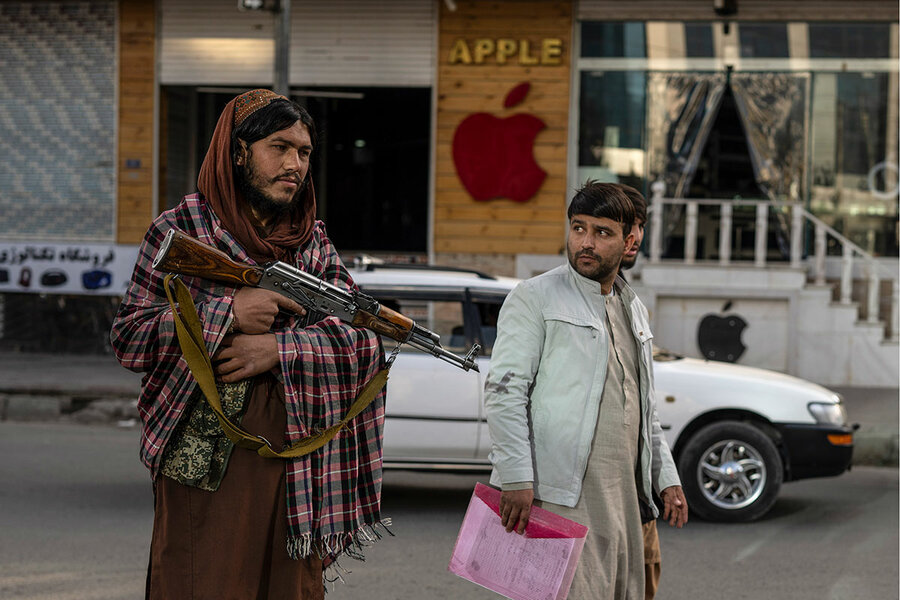
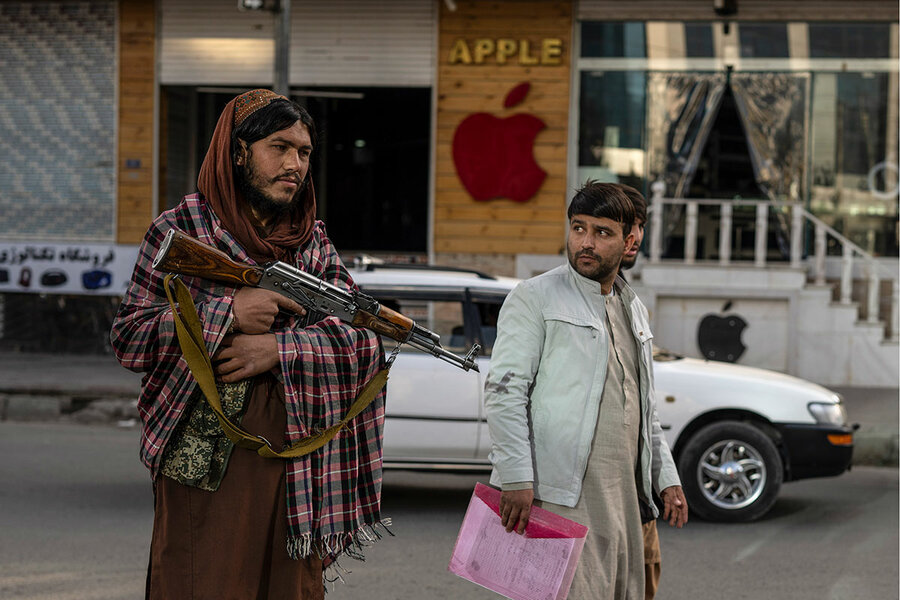
A Taliban fighter stands guard at a check point, in Kabul, Afghanistan, Nov. 17, 2021. Despite an announced amnesty, former government officials describe being targeted by fighters who still view them as the enemy.
  • Quick Read
  • Deep Read ( 6 Min. )
Updated Dec. 02, 2021, 4:43 p.m. ET|LONDON

Former Afghan officials who once served the American-backed government in Kabul say the war against them did not end with the Taliban’s victory in mid-August.

Across Afghanistan, members of the jihadist group are pursuing revenge attacks with a single-minded determination that may even be quickening in pace, according to ex-officials and independent rights monitors.

They cite incidents of Taliban violence – from the dragging of a 6-year-old boy behind a motorcycle to pressure his father, to the severe beating of the brother of another former official in an attempt to reveal his hiding place – and they say colleagues taken by the Taliban are turning up dead, one after another.

Why We Wrote This​

Behind an unrelenting wave of attacks on former Afghan officials is a story of Taliban success and failure: creation of a well-indoctrinated generation of fighters that is ill-prepared to move on.
Taliban leaders had declared a blanket amnesty that was meant to include even Afghan security forces and intelligence operatives, who had fought the Taliban for 20 years. Yet, because of their role in the collapsed U.S. nation-building exercise, the former officials instead describe still being treated as the “enemy,” as “infidels” subject to killings, disappearances, and confiscations of houses and cars.

The targeted violence – which appears to be increasing as the Taliban tap into captured government databases, according to experts and Western human rights monitors – shows how little the jihadis have shifted their thinking, and their priorities, even as Afghanistan faces new immediate crises of severe hunger and economic meltdown.

“You absolutely have a reluctance on the part of the Taliban [leadership] to acknowledge the extent to which this [violence] is happening,” says Andrew Watkins, an Afghanistan expert at the U.S. Institute of Peace.

Recommended

Transformation

Ukraine’s nationalist Azov fighters, once sanctioned by US, strive to clear name​


The Taliban have “just been unwilling or unable to challenge the militant nature of their own organization,” he says.

The Taliban’s most devoted members, he says, “look out and see a landscape of very, very recently defeated enemies. Sometimes they’re taking them out because they’re a threat; sometimes because they feel like it’s righting a wrong. Sometimes they’re just doing it because all they’ve known is ‘hunt down and seek out and eliminate the enemy.’”

Effective indoctrination​

The Taliban leadership “proved incredibly effective at indoctrinating and incubating an entire generation of fighters,” says Mr. Watkins. “Those guys have the mindsets that they do because of Taliban propaganda … and now they can’t put a lid on it.”

The result is that local Taliban commanders and fighters appear to be pursuing former government officials with the same zeal with which, for two decades, they waged an insurgency, and, a year ago, stepped up a targeted assassination campaign against officials, civil society activists, and journalists.

In central Wardak province, for example, a former finance officer shows photographs of his 6-year-old son, recently bloodied and bruised after being seized by the Taliban. The boy was beaten, tied up, and dragged behind a motorcycle for 10 yards – actions witnessed by neighbors, the father says – because the boy did not know where his father was in hiding.

Recommended

Fairness

Special treatment? How judges are handling Trump ahead of election.​


The Taliban message? “Your death is permissible and your house and all your belongings are a prize for us, because you are not Muslim, and for 20 years you [were] a slave to the Americans,” says the former official, who asked not to be named for his safety.


About these ads
The posse of a dozen Taliban fighters demanded that the former official forfeit his house, claiming it was “government” property. The family refused, noting the house had been built with private funds.

“The Taliban say former government officials are safe and secure, that no one can hurt, kill, or insult them … but this is just a slogan from the Taliban, and secret terrors are still going on,” says the former official.

War booty​

Even before the Taliban victory, the official often received death threats, he says. His fears were heightened recently when two former colleagues, arrested by the Taliban last month, turned up dead.

“They call former officials ‘unbelievers,’ not committed to Islam and God, [who] should be tortured physically and mentally,” he says. “Taking cars and houses and other property is booty for them.”

Recommended

Resilience

No pushups? No problem. The Army builds a steppingstone to boot camp.​


The disconnect between the Taliban’s official amnesty and the targeting of former officials is made clear in a Human Rights Watch (HRW) report released this week. It found that more than 100 former security and intelligence officers had been executed or “forcibly disappeared” in just four provinces between August and the end of October.

One Taliban commander from central Ghazni province told HRW that they have lists of people to target who have committed “unforgivable” acts.


“The pattern of the killings has sown terror throughout Afghanistan, as no one associated with the former government can feel secure they have escaped the threat of reprisal,” the report noted.

1131301_4_1202-TALIBANTAKES-2_standard.jpg

Rahmat Gul/AP
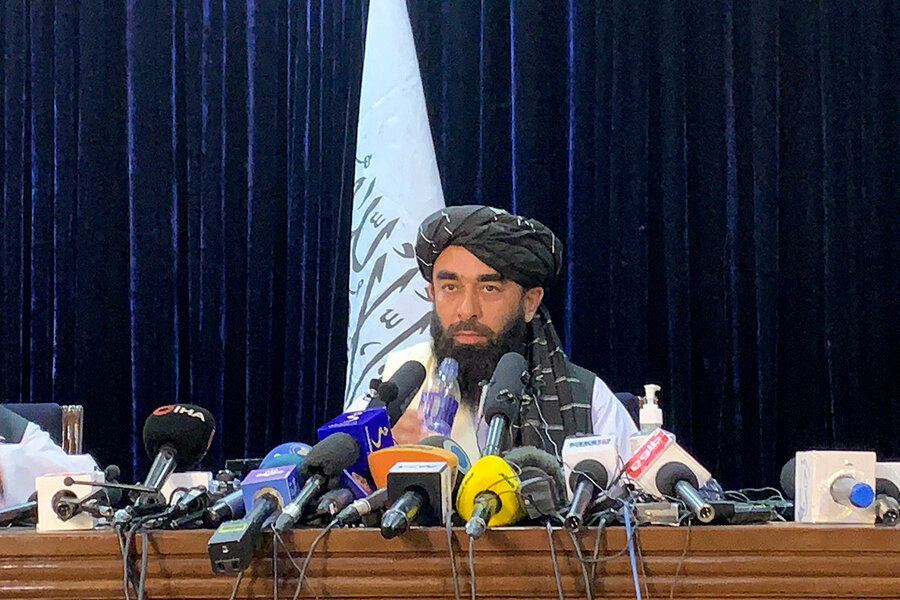
Taliban spokesman Zabihullah Mujahid, at his first news conference in Kabul, Afghanistan, Aug. 17, 2021, said the victorious Taliban sought no revenge and that “everyone is forgiven.”
The surprise, says Patricia Gossman, associate Asia director at HRW, is that Taliban revenge killings “have not only continued, but possibly increased and are more deliberate … as they’ve had time to go through documents, and all the information the fleeing government left behind” that allow them to pinpoint new targets.

Reasons for going after former officials include revenge, she says, as well as providing booty to fighters, and even going after senior district and provincial personalities to stymie the chances of organized resistance.

Placating the fighters​

The Taliban “can’t pay these guys, and they need to give them something,” says Ms. Gossman. “The revenge part of it was also a kind of payback. They recruited these guys saying, ‘You’ll get your chance to get revenge on whoever did whatever to your family.’ So they choose not to pull the plug on that now.”


About these ads
The Taliban also “fear alienating any of their ranks because they know they could be recruited by the Islamic State,” adds Ms. Gossman, who notes the volatility of a situation “where people don’t have enough food on the table.”

Recommended

‘If I would speak, I would start crying’: Our reporters grapple with loss in Gaza war​


“There are a lot of armed, angry young men who could be recruited by anyone,” she says.

In late September the Taliban established a commission to purge wrongdoers. While publicly noting “isolated reports” of unauthorized executions, the Taliban told HRW it had removed 755 members for lesser offenses and set up a military tribunal to try cases of murder and torture.

But examples abound of continued abuses. In southern Helmand province, a former district governor who worked closely with the U.S. military and diplomats is among many on the run. He was widely praised in 2015 for wrapping his arms around a would-be Taliban suicide bomber, who had infiltrated a public meeting, to prevent him from detonating his explosive vest.

The former official “had endangered himself for the lives of scores of others,” according to the letter of recommendation for a U.S. special immigrant visa, written by an American official he worked closely with.

But the former Afghan official, who asked not to be named for security reasons, was unable to get on an evacuation flight last August. Instead, he is being hunted. He shares voice messages spread between Taliban commanders, who dismiss the amnesty and order their fighters to “have no mercy” and kill former officials “wherever you see them.”


About these ads
One Taliban phone message addresses him directly: “Your killing is my only desire. I am asking Allah to find you.”

Recommended

Safety

Why Putin’s nuclear saber-rattling on Ukraine sounds different this time​


In recent weeks, he says, three of his colleagues, all former officials, have been arrested and killed by the Taliban. His own brother was held for 10 days and severely beaten in a bid to discover his whereabouts and details of property that could be seized.

A Robin Hood-esque narrative​

And in eastern Nangarhar province, the wife of one former finance ministry official recounts how even after the Taliban took the family’s car, militants later came for their house, accusing the family of serving as a “puppet of America.”

“We told them that we are Muslims, we pray and follow all Islamic rules, but the local Taliban commander said, ‘No, you are infidels in Muslim clothes, and you are our absolute enemy,’” she says.

Her husband refused to give up the house and was severely beaten, she says. The Taliban arrested him more than a month ago, and he has not been seen since. Her home and possessions were seized.

Many Taliban fighters seeking revenge have long nursed grievances, which often include abuses and corruption at the hands of the previous Western-backed political order.

Deepen your worldview
with Monitor Highlights.


By signing up, you agree to our Privacy Policy.
Already a subscriber? Log in to hide ads.
“It’s easy for people to tell themselves, ‘Well, we’re just righting a wrong,’” says Mr. Watkins of the U.S. Institute of Peace. “In some cases you have Taliban … who almost have a Robin Hood-esque narrative of, ‘We have to take away from the awful, corrupt class that was previously in charge and give back to those who were marginalized, sidelined, or ignored.’

“The only problem now is the people doing the taking are the new power brokers, the new abusers,” says Mr. Watkins. “And there is really nothing to check their behavior.”

 
Taliban have anti-terrorism deal with the US (Doha Agreement), this is how they "won."

But Pakistan has unresolved issues with Taliban. WOT continues for Pakistan, not so much for the US. So this was the strategic depth? Hats off to our planners.

Pakistan's win was in having anti-terrorism deal with the US to help keep all elements in Afghanistan in check. In this way, Pakistan could preserve US - Pak bilateral relations and keep Taliban in check. This was the balance that we could have. It is wise to have options.

Now we have a hint of anti-terrorism cooperation with China but China will hit TTP and others? I doubt this. China is in talks with Taliban to explore ways for mining and development. China also give drones to Pakistan to fight terrorists. This is how China works lol.
 
Last edited:
Taliban have anti-terrorism deal with the US, this is how they "won."

But Pakistan has unresolved issues with Taliban. WOT continues for Pakistan, not so much for the US. So this was the strategic depth at the expense of US - Pak bilateral relationship? Hats off to our planners or leaders.

Pakistan's win would have been in having anti-terrorism deal with the US to help keep all elements in Afghanistan in check. This was the balance that we could have.

Now we have a hint of anti-terrorism deal with China but China will hit TTP and others? I doubt this. China is in talks with Taliban to explore ways for mining and development. China will also give drones to Pakistan to fight terrorists. This is how China works lol.
Afghan Taliban have certainly won the day.
Now they have to prove themselves to the world they can govern Afghanistan.
 
Afghan Taliban have certainly won the day.
Now they have to prove themselves to the world they can govern Afghanistan.
They can do that.
They have learned much from past experience.
This I do not doubt.
They might outplay us lol.
 

Afghanistan crisis: How America watched as Taliban won the war​

17 August 2021
Share
Save
Aleem Maqbool & Chelsea Bailey
BBC News, Pennsylvania and Virginia
BBC Veterans honour Dylan Elchin
BBC
US President Joe Biden admitted the Taliban's lightning-fast return to power would be "gut-wrenching" to the many Americans with a profound connection to Afghanistan. We spent the day with military veterans who served - and lost loved ones - in the conflict, and with Afghans who now call the US home.
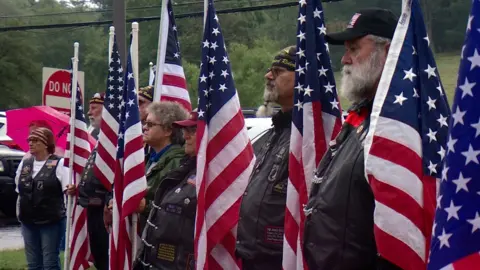
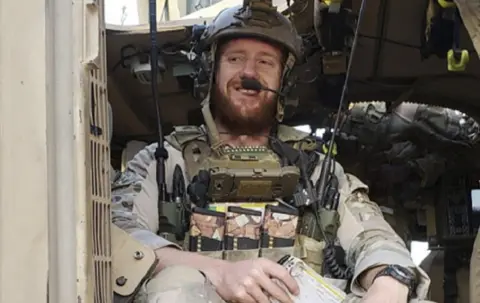
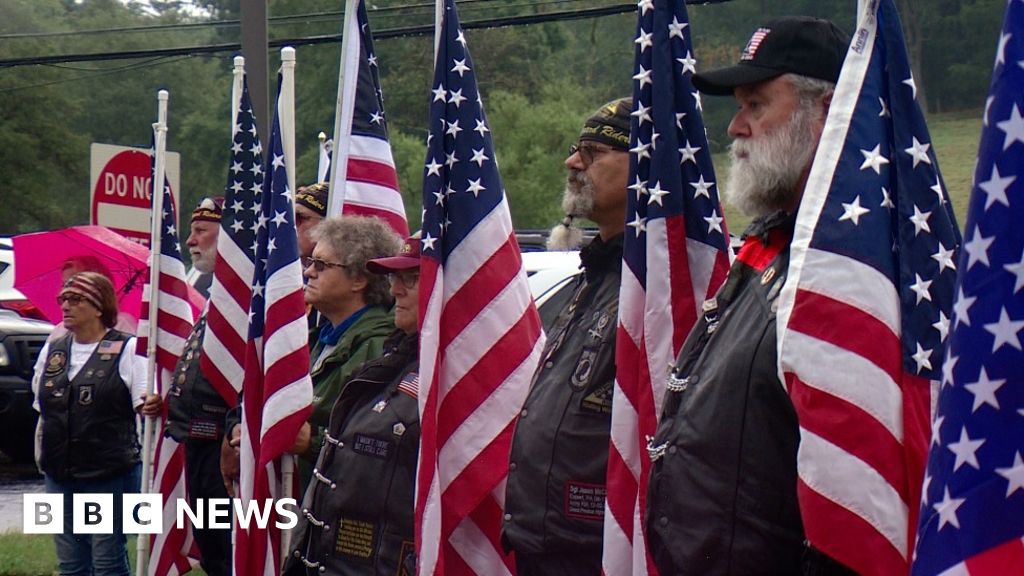
Despite the driving rain, dozens of people congregated outside the post office in Hookstown, Pennsylvania, as it was renamed after Staff Sergeant Dylan Elchin, a son of the town killed by a roadside bomb in Afghanistan.
"It's very wonderful to see Dylan honoured," said Sgt Elchin's grandfather Ron Bogolea.
"He sacrificed everything for our country and I believe that we should all be honouring our military more - for what they do for not only the USA but for the entire world," he said.

ADVERTISEMENT

Though the process to pay this tribute to Sgt Elchin started soon after the 25-year-old died in 2018, the renaming event ultimately happened as the US scrambles to leave Afghanistan and with the Taliban now in charge. That was not lost on the speakers at the Hookstown ceremony.
Elchin family Staff Sergeant Dylan Elchin
Elchin family
Staff Sergeant Dylan Elchin
"The events of the last several days have shown that we don't always succeed, we certainly are not perfect, but our hearts are in the right place," said US Congressman for this area, Conor Lamb, during his speech here.
But Christian Easley, an Air Force recruiter who helped train Sgt Elchin, told me that for him the current circumstances in Afghanistan had not changed his perspective at all.
"Dylan had to follow his orders to go accomplish his mission. He did everything that was asked of him and then some," Mr Easley said.

"Regardless of what has happened during this past week I knew that Dylan did everything right."
For some though, this has clearly been a time for profound reflection.
Captain Jeremy Caskey, the Chaplain that offered the invocation at the ceremony here, had himself served in Afghanistan. His brother, Marine Sgt Joseph Caskey, was killed in action there in 2010.
When asked about the turn of events in Afghanistan this week, he took a moment to collect his thoughts.

"It has been very difficult. You always want to know that what you are doing has purpose and meaning, but purpose and meaning doesn't just come in victory. I believe sometimes it comes in the sacrifice and the experience of it," says Capt Caskey.
"Are we better off? Is the country better off? Are they better off? It's hard to say."
Couple

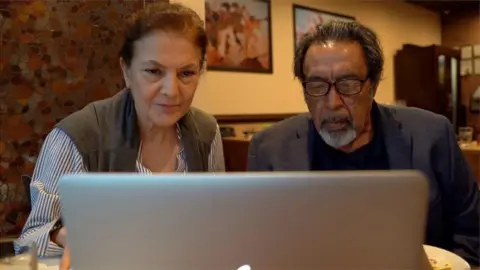
Just miles from the White House, Fawzia Etemadi and her cousin, Hamid Naweed, watched President Biden's address in numb silence.
"We trusted Joe Biden, but we are a little disappointed - the world is disappointed," Fawzia said. She had hopes that Mr Biden would uphold his promise to bring peace to her country.

"Afghans have suffered for the last 40 years. America is the world's father, democracy's father. No-one can explain why this is happening."
Like thousands of Afghans living in northern Virginia, Fawzia and Hamid both fled Afghanistan as refugees in the 1980s and ultimately settled a few miles away from the nation's capital. The area is home to one of the largest Afghan diasporas in the country.
As we sip tea at Afghan Bistro, the family's restaurant, Fawzia and Hamid admit they've spent much of the last week in stunned disbelief.
"We couldn't go to sleep, we were worried about our loved ones back home," said Hamid, a former professor at the University of Kabul. Seeing so many people trying to flee their homeland, "running away from their hopes", was also difficult.
"I don't know how the Taliban came in power so fast," Hamid continued, "but I hope that the world will recognise that people of Afghanistan need their freedom and independence and we deserve to live in peace."


And the Afghan people will be seeking revenge, they will seeking it.
 
Last edited:
To view this content we will need your consent to set third party cookies.
For more detailed information, see our cookies page.
 

Afghan, Iranian officials discuss expanding bilateral agriculture cooperation​


by The Frontier Post

Iran-810x456.jpg


KABUL (Pajhwok): Afghan and Iranian officials have discussed enhancing bilateral cooperation in agriculture, modern irrigation and livestock sectors.

Deputy Minister of Agriculture, Irrigation and Livestock Mawlawi Sadr Azam Usmani met with Iran’s Deputy Minister of Water and Soil is Safdar Niazi Shahraki, the Ministry of Agriculture, Irrigation and Livestock (MoAIL) said.

A statement from the ministry said the two sides discussed technical exchanges in water management, efficient use of resources and modern irrigation technologies such as drip and sprinkler systems.

Usmani assured that the Islamic Emirate of Afghanistan (IEA) would facilitate Iranian private sector investment in agriculture, irrigation, livestock and cross-border cultivation.

For his part, the Iranian deputy minister highlighted Iran’s readiness to share expertise, participate in Afghan agricultural exhibitions, facilitate product transit and expand trade ties.

The officials also discussed improving marketing opportunities for Afghan agricultural and livestock products in Iran.

Iranian companies engaged in designing and producing modern irrigation systems were invited to invest in Afghanistan.

Afghan private sector representatives also raised issues regarding Iran’s table egg import monopoly and Afghanistan’s need for hatching eggs and one-day-old chicks.
 

Afghanistan, Oman agree to launch direct Kabul–Muscat flights​


by The Frontier Post

New-Project-1.png


KABUL (TOLONews): Following the visit of Amir Khan Muttaqi, the Foreign Minister of the Islamic Emirate, to Oman, Hamidullah Akhundzada, Afghanistan’s Minister of Transport and Civil Aviation, has also traveled to the country.

According to the Ministry of Transport and Civil Aviation, Akhundzada signed an agreement with Omani officials to initiate direct flights between Kabul and Muscat.

The ministry spokesperson said the agreement aims to ease passenger travel and expand economic and trade cooperation between the two nations.

Hekmatullah Asifi, spokesperson for the ministry, stated: “An agreement has been reached with Oman’s Civil Aviation Authority to launch direct flights between Kabul and Muscat, covering key technical and aviation-related aspects to enhance service efficiency.”

During his visit, Akhundzada held separate meetings with Saeed bin Hamoud bin Saeed Al Mawali, Oman’s Minister of Transport, Communications and Information Technology, and Nayef bin Ali Al-Amri, head of the country’s Civil Aviation Authority.

The discussions focused on strengthening transportation ties, bilateral cooperation in air traffic services, cargo transport, establishing air corridors, and capacity building of professional staff.

Imam Mohammad Warimach, former deputy minister of transport and aviation, welcomed the agreement, saying: “This is a positive step and a good achievement for Afghanistan, but it’s crucial to send a technical team, including representatives from the Ministry of Commerce and Afghan Chambers of Commerce, to assess the market.”

Economist Abdul Shukor Hadawal added: “This is a good start with significant economic, social, and diplomatic implications for both countries, with potential direct impact on their economies.”

Earlier, Amir Khan Muttaqi also discussed key cooperation topics with Omani officials, including facilitating Afghan exports, launching direct flights, creating ease in bilateral cooperation, and reducing the detention period for Afghan prisoners in Oman.
 
Afghanistan Faces Growing Global Isolation Due to the Taliban’s Extremist Policies

Afghanistan is facing severe international isolation as a result of the Taliban regime’s undemocratic and violent policies

Due to the Taliban’s extremist policies, multiple countries have suspended their diplomatic relations with Afghanistan

Since the Taliban came to power, there has been a continuous increase in the closure of Afghan embassies

Following the United Kingdom, Turkey, and Norway, Japan has now also announced the closure of the Afghan embassy

The ongoing closure of Afghan embassies indicates that the Taliban regime has suffered a diplomatic failure and is facing global isolation

The Afghan newspaper Kabul Times has also confirmed the closure of the Afghan embassy in Japan and clarified that:

As of January 31, 2026, all political and economic affairs at the embassy will be suspended.

Kabul Times has also warned that:

The closure of diplomatic missions for Afghan citizens residing abroad could lead to serious consequences, as it will increase their legal and administrative issues

Due to the Taliban regime’s authoritarian and extremist mindset, several countries have further tightened laws regarding the entry of Afghan citizens

According to the Afghan newspaper Aama:
Citing security concerns, Russia has also refused to recruit Afghan workers

Due to Afghan extremists and security concerns, Afghan refugees are being expelled from the United States, Germany, Pakistan, Iran, and other countries, experts say

Due to the Taliban’s extremist and undemocratic policies, Afghanistan is increasingly facing isolation on the global stage, which is a matter of extreme concern
 

U.S. aid cuts are impacting millions of Afghans​

As humanitarian needs grow, lifesaving programs are being shut down

Families in Afghanistan continue to face food insecurity, disease and ongoing instability. For 23 million Afghans, U.S. aid funding has been a critical lifeline—but that support is now in jeopardy. Funding cuts are already having devastating impacts on the country’s most vulnerable communities, especially women and children.

Since the 1980s, the International Rescue Committee (IRC) has been delivering critical assistance to Afghans. Today, these programs—and the hope they provide—are at risk.

Due to cuts in U.S. aid funding, the IRC has been forced to suspend some of our life-saving services in Afghanistan. We remain committed to supporting the people of Afghanistan—but we need your support. Meet the Afghans whose lives have been transformed by IRC programs and find out how you can make a difference.
 

Humanitarian assistance and development cooperation​


The Australian Government is committed to working with partners to support the Afghan people. Since 2001, Australia has provided over $1.7 billion in development and humanitarian assistance to Afghanistan. In doing so, we helped support meaningful gains in the lives of Afghans, including in the form of dramatic improvements in women’s education, health and participation, and in preventing violence against women.

Since 2021, Australia has committed over $260 million in humanitarian and basic needs assistance to respond to the Afghanistan crisis, with a focus on supporting women and girls. Our assistance includes support for the provision of food, shelter, nutrition, sexual reproductive health services, essential health and education services, psychosocial counselling, and supporting the protection and empowerment of women and girls. Australia’s support contributes to the UN’s Humanitarian Response Plan for Afghanistan.

Australia is working to support Afghans in Afghanistan and those displaced in the region largely through UN agencies – including the World Food Programme, the Afghanistan Humanitarian Fund (managed by the Office for the Coordination for Humanitarian Affairs), the United Nations Population Fund, and the United Nations High Commissioner for Refugees – to deliver humanitarian assistance, while also ensuring compliance with relevant sanctions obligations.

Australia's humanitarian assistance and other programs are implemented in accordance with UNSC sanctions and do not benefit the Taliban directly.

Australia also provided humanitarian assistance to support people in Afghanistan impacted by the devastating earthquakes of 22 June 2022 and October 2023 and August 2025. Our support provided emergency assistance including shelter, health, food and protection for vulnerable people.


Only ‘bilateral dispute’ with Kabul is terrorism emanating from Afghan soil: FO


Tahir Khan
January 8, 2026

ISLAMABAD: The Foreign Office (FO) said on Thursday that Islamabad had no “bilateral dispute” with Kabul other than terrorism emanating from Afghan soil.

“We do not have any bilateral dispute with Afghanistan except for this one issue. Terrorism emanating from Afghanistan is a major issue. So we need verifiable assurances, commitments that these acts will be stopped,” said FO spokesperson Tahir Andrabi during the weekly briefing in Islamabad.

The FO spokesperson also reiterated Pakistan’s longstanding demand for Kabul to take concrete and verifiable actions against those involved in terrorism against Pakistan from the Afghan territory.

During the briefing, the spokesperson clarified that Islamabad “does not wish to be hostile to Afghanistan” and Pakistan’s demand to Afghanistan “is very simple”.

The spokesperson reiterated Pakistan’s demand for written assurances from the Afghan Taliban that the neighbouring country’s soil would not be used by Fitna-al-Khawarij — the term the state has designated for the banned Tehreek-i-Taliban Pakistan.

“And this demand will stand unless we get concrete, verifiable, written assurances from the Afghan side that their soil will not be used. If this terrorism issue is resolved by Afghanistan, we have tremendous potential for improving bilateral relations,“ said Andrabi, adding that the landlocked country could become a hub for regional connectivity.

“The potential of such projects is immense, and it needs to be realised once we have those written commitments on terrorism from Afghanistan. Such commitments from Afghanistan are in the interest of its own country. This is a legal demand and could be fulfilled. This could lead to improvement in all bilateral relations,” the FO spokesperson elaborated.

The FO spokesperson’s statement comes as tensions between Islamabad and Kabul continue, mainly centred on Islamabad’s demand that Kabul take measures to end cross-border terrorism, which remains unfulfilled.
 

Users who are viewing this thread

Back
Top