Afghanistan Strategic and Foreign Affairs

US says UN aid to Afghanistan needs evaluation​

Food shortages hit 17 million Afghans as debate grows over UN mission funding

Reuters
March 10, 2026

Despite what it called a humanitarian "disaster" in Afghanistan, the US said on Monday international assistance to the country should be evaluated, given Taliban "intransigence" and its exclusion of the female population from basic rights.

Speaking to a ‌UN Security Council meeting on Afghanistan, the US ambassador to the United Nations, Mike Waltz, noted that the budget for the United Nations Assistance Mission in Afghanistan (UNAMA), the mandate of which is up for renewal next week, is the largest of any special UN mission in the world.

"In light of the Taliban's intransigence, we must ⁠carefully evaluate the utility of international assistance and engagement in Afghanistan," Waltz said, even as he highlighted an ongoing "humanitarian disaster" there.
 
"This council must consider carefully the funds we collectively provide for this mission's budget, when the mission's female national staff are not even able to go into the office to work," he added.

Afghanistan under the Taliban faces one of the world's most pressing humanitarian crises.

According to the UN World Food Programme, more than 17 million Afghans - or one-third of the population - are facing acute food shortages, ‌including 4.7 ⁠million facing emergency levels of hunger.

The temporary head of UNAMA, Georgette Gagnon, told the meeting Afghanistan had "urgent" humanitarian needs and the humanitarian crisis there had worsened due to funding cuts. She said humanitarian agencies aimed to assist 17.5 million Afghans in 2026 through an appeal for $1.71 billion, ⁠but this was currently only 10% funded.
 
Gagnon said Afghanistan's nearly two-week conflict with Pakistan had had "punishing human and economic costs" and the Iran war on its other border was causing prices of ⁠basic commodities to rise.

She said some positive developments showed the value of international engagement, including the Taliban ban on opium poppy cultivation. She warned that if rights and ⁠humanitarian issues were not dealt with, Afghanistan could "once again become a driver of regional and global instability in the form of outmigration, terrorism, narcotics and more."
 

US designates Afghanistan as ‘state sponsor of wrongful detention’​


by The Frontier Post

4692310-2067517889.jpg


WASHINGTON, United States (AFP) : US Secretary of State Marco Rubio announced Monday he has designated Afghanistan as a “State Sponsor of Wrongful Detention,” demanding Taliban authorities release two Americans and commit to ending its “hostage diplomacy.”

The move comes just over a week after Iran became the first country added to Washington’s new “wrongful detention” blacklist.

President Donald Trump in September signed an executive order that created the blacklist, similar to designations by the United States on terrorism.

“The Taliban continues to use terrorist tactics, kidnapping individuals for ransom or to seek policy concessions,” Rubio said in a statement.

He said it was “not safe for Americans to travel to Afghanistan because the Taliban continues to unjustly detain our fellow Americans and other foreign nationals.”

“The Taliban needs to release Dennis Coyle, Mahmoud Habibi, and all Americans unjustly detained in Afghanistan now and commit to cease the practice of hostage diplomacy forever,” he added.

Habibi, an Afghan-American businessman, previously served as Afghanistan’s director of civil aviation.

He was arrested in August 2022 in Kabul along with dozens of other employees of his telecommunications company, according to US authorities.

The State Department has issued a reward of $5 million for information leading to Habibi’s return.

Coyle is an academic from Colorado who worked for two decades in Afghanistan before being detained in January 2025, according to the James Foley Foundation.
 
To view this content we will need your consent to set third party cookies.
For more detailed information, see our cookies page.
 

Kabul calls for stronger Afghanistan-Qatar cooperation​


by The Frontier Post

Mullah-Abdul-Wase-810x455.jpeg


KABUL (Pajhwok): The Prime Minister’s Office has described Qatar’s implemented projects in various sectors in Afghanistan as beneficial and called for the expansion of bilateral cooperation during a meeting with the Qatari ambassador in Kabul.

In a statement, the Prime Minister’s Office said Mullah Abdul Wasi, Chief of Staff to the Prime Minister, met with Mirdaf bin Ali Al-Qashouti, the Ambassador of Qatar to Kabul.

Mullah Abdul Wasi described relations between Qatar and Afghanistan as important, noting that over the past 20 years Qatar, as a brotherly Muslim country, has made significant efforts to strengthen peace and stability in Afghanistan.

He said Qatar’s implemented projects in various sectors in Afghanistan are valuable and called for further expansion of cooperation.

He added that the Islamic Emirate of Afghanistan (IEA) seeks positive bilateral relations with neighbouring, regional and global countries based on mutual respect and within the framework of Afghanistan’s national interests and Islamic principles.
 
Russia and Afghanistan signed a military cooperation agreement on Wednesday, just one year after the Kremlin removed the Taliban from a list of banned terrorist groups.

The new agreement underscores the deepening ties between the Kremlin and the Taliban, and while the exact details remain murky, Afghan Defense Minister Mohammad Yaqoub said the agreement marked an expansion of the bilateral relations between the two countries.

“Interaction with Russia is important for us,” Yaqoub said following a meeting with Russian Security Council Secretary Sergei Shoigu at the International Security Forum in Moscow. “Afghanistan and Russia have long-standing and historic relations, and we want to move forward in this direction.”

The Soviet Union invaded Afghanistan in 1979 and spent the next decade fighting a bloody war against the mujahideen, Islamic guerrilla fighters resisting the occupation, many of whom would later found the Taliban.

In the years after Soviet troops withdrew, relations between Moscow and Kabul remained tense. However, following the U.S. invasion of Afghanistan, Russia was accused of supplying arms to the Taliban as the group moved to consolidate its control over the country.

On Wednesday, Shoigu called for Western countries to “unfreeze” sanctions on the Taliban and “fully acknowledge their full responsibility for their 20-year presence in Afghanistan.”

In April 2025, Russia removed the Taliban from its list of banned terrorist groups, a designation that had been in place since 2003. Then, in July of the same year, it became the first and only country to formally recognize the Taliban as the government of Afghanistan.

Earlier this month, the European Commission confirmed that it had invited Taliban officials to Brussels, although a spokesperson said that the invitation “does not by any means constitute a recognition.”
 

Russia, Afghanistan sign military cooperation deal​


Agreement comes amid growing contacts between Moscow and Taliban authorities

Anadolu Agency
May 28, 2026

tribune


Russia and Afghanistan signed an agreement on military-technical cooperation during the International Security Forum in the Moscow region, as Moscow continues expanding ties with the Taliban-led authorities in Kabul.

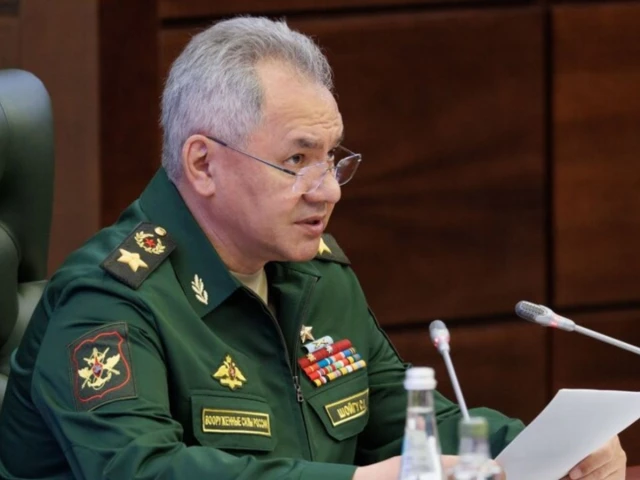
The agreement was signed Wednesday evening by Russian Security Council Secretary Sergei Shoigu and Afghan Defense Minister Mohammad Yaqoob.

“Interaction with Russia is important for us. Afghanistan and Russia have long-standing historical relations, and we want to continue moving in this direction. We have expanded bilateral relations,” Yaqoob said.


Shoigu said Western countries should unfreeze Afghan assets and assume responsibility for rebuilding the country after two decades of military presence.

“We are convinced that Western countries should unfreeze blocked Afghan assets, fully recognize their responsibility for their 20-year presence in Afghanistan and bear the burden of the country’s post-conflict reconstruction,” he said.

The agreement comes amid growing contacts between Moscow and the Taliban authorities.

Earlier this month, speaking at a meeting of Shanghai Cooperation Organisation security council secretaries in Bishkek, Kyrgyzstan, Shoigu said Russia had established dialogue with the Taliban and was developing a “full-fledged partnership” with the group.
 

Kabul warning to TTP fails to convince Islamabad​


Taliban say their supreme leader warned TTP to stop cross-border violence or risk losing allegiance

Kamran Yousaf
June 01, 2026

tribune


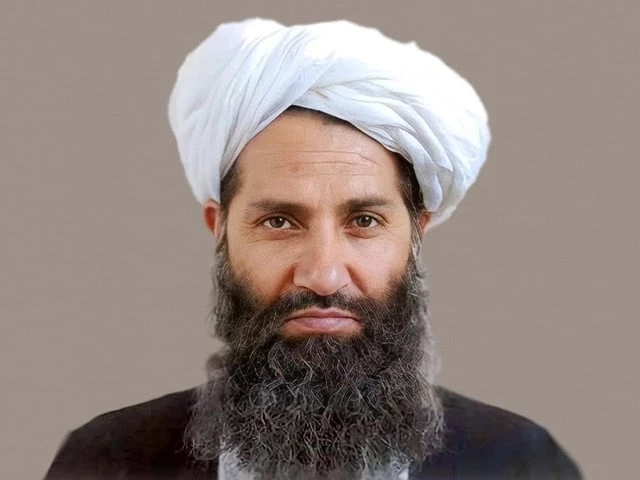
ISLAMABAD: In an effort to convince Pakistan of its sincerity in addressing Islamabad's security concerns, the Taliban regime has informally conveyed that Taliban Supreme Leader Hibatullah Akhundzada has warned the banned Tehreek-e-Taliban Pakistan (TTP) to halt attacks inside Pakistan or risk losing the Taliban's allegiance.

A credible Pakistani source told The Express Tribune that the message was part of the Taliban regime's broader effort to demonstrate that it is taking steps to rein in the TTP and other terrorist groups operating from Afghan territory. However, according to the source, Pakistan viewed the move as insufficient and lacking the substance required to bring about any meaningful change on the ground.

Officials familiar with the matter said the prevailing assessment within the relevant authorities is that the latest Taliban assurances appear aimed more at easing international and regional pressure than addressing the root causes of the problem.

A senior official, speaking on condition of anonymity, said that Pakistan's assessment suggests there has been no tangible shift in the Taliban regime's approach toward terrorist groups operating from Afghanistan. "The recruitment of Afghan nationals into terrorist networks continues," the official said, despite repeated claims by Taliban authorities that they have taken a series of measures to address Islamabad's concerns.

According to the official, the Taliban leadership believes such steps can buy time and reduce pressure from Pakistan, but Islamabad remains unconvinced. "The problem is not the absence of assurances, the problem is the absence of verifiable action," the official added.
 
News|Taliban

Afghanistan is ‘a free nation’: Taliban celebrates US defeat​

Taliban congratulates Afghans on their victory after the withdrawal of the last US soldier, says it wants good relations with Washington.

Save

Click here to share on social media
Share


Add Al Jazeera on Google
AP21242517845451.jpg

The withdrawal of US troops came just before the August 31 deadline set by President Joe Biden to end the two decades-long war [File: Khwaja Tawfiq Sediqi/AP]
Published On 31 Aug 202131 Aug 2021
The Taliban are celebrating their return to power after they took charge of Kabul airport following the departure of the last US troops from Afghanistan.

The Afghan group said on Tuesday Afghanistan is now a “free and sovereign” nation as it hailed the exit of US troops, describing their departure as a “historic moment”.

Recommended Stories​

list of 3 items
end of list
“Congratulations to Afghanistan… this victory belongs to us all,” Taliban spokesman Zabihullah Mujahid told reporters from the runway of the Hamid Karzai International airport.

“America was defeated, they could not achieve their targets through military operations,” he said.

The United States’s longest military conflict drew to a close on Monday night when its forces left Kabul airport, where it had overseen a frenzied airlift that saw more than 123,000 people evacuated since the Taliban took over on August 15.

Taliban fighters swept into the airport and fired weapons into the sky across the city in jubilation – an astonishing return after US forces invaded in 2001 and toppled them for their links to al-Qaeda, which was blamed for the 9/11 attacks.

Marine General Frank McKenzie, head of US Central Command, announced that the last American troops flew out of Kabul just before midnight local time (19:30 GMT).

“We did not get everybody out that we wanted to get out. But I think if we stayed another 10 days, we would not get everybody out that we wanted to get out.”


image.jpg


Play Video
01:56
  • Now Playing
    01:56

    US finishes Afghanistan withdrawal, ends longest war​

  • Next
    02:14

    What is the deadly disease threatening the US’s cattle industry?​

  • 00:52

    Israeli soldier shoots Palestinian baby dead near Hebron​

  • 02:00

    Africa Faces AI Risks as Regulation Lags Behind Innovation​

  • 01:52

    Seven-Month-Old Baby Killed in West Bank Shooting Near Hebron​


New phase​

Some Afghans are worried about a return to the Taliban’s previous rule from 1996 to 2001, which was marked by curbs on women rights and a brutal justice system.

Advertisement

However, the Taliban has repeatedly promised a more tolerant and open brand of rule compared with their first stint in power, and Mujahid continued that theme.

Sign up for Al Jazeera​

Breaking News Alert​

Get real-time breaking news alerts and stay up-to-date with the most important headlines from around the globe.
Subscribe

right-mark-icon.3a446adc.svg

By signing up, you agree to our Privacy Policy
protected by reCAPTCHA
“We want to have good relations with the US and the world. We welcome good diplomatic relations with them all,” he said.

Mujahid also insisted Taliban security forces would “be gentle and nice”.

Reporting from Kabul, Al Jazeera’s Charles Stratford said: “From the start, the Taliban have been very keen to try to convince both the Afghans and the international community that they are more aware of the needs of a functioning country in the modern world … and that we [they] have changed to a different political entity.”

Stratford added, however, that “issues of trust” remain. “There are big countries, American rivals, that have already reached out to the Taliban, including China, Russia and Iran,” he said.


Play Video
03:04
Al Jazeera exclusive on Taliban control of Kabul airport


All eyes will now turn to how the Taliban handles its first few days of sole authority over the country, with a sharp focus on whether it will allow free departure for those wanting to leave – including some foreigners.

Blinken said a small number of US citizens remained in the country – “under 200” but likely closer to just 100.

Many thousands of Afghans, who worked with foreign missions or the US-backed government over the years and fear retribution, also want to get out.

The UN Security Council adopted a resolution on Monday urging the Taliban to honour a commitment to let people freely leave Afghanistan in the days ahead and to allow humanitarian access to UN and other aid agencies.

Talks are ongoing as to who will now run Kabul airport. The Taliban has asked Turkey to handle logistics while they maintain control of security, but President Recep Tayyip Erdogan has not yet accepted that offer.

Biden faces criticism​

The US troops’ withdrawal came just before the August 31 deadline set by US President Joe Biden to end the war that killed hundreds of thousands of Afghans and more than 2,400 American service members.

Facing stinging criticism from the opposition as well as from fellow Democrats for his handling of the withdrawal, Biden said he would address the nation on Tuesday in Washington, DC.

“We can’t fight endless wars, but the scope and consequence of Biden’s failure here is staggering,” Republican Senator Rick Scott said.

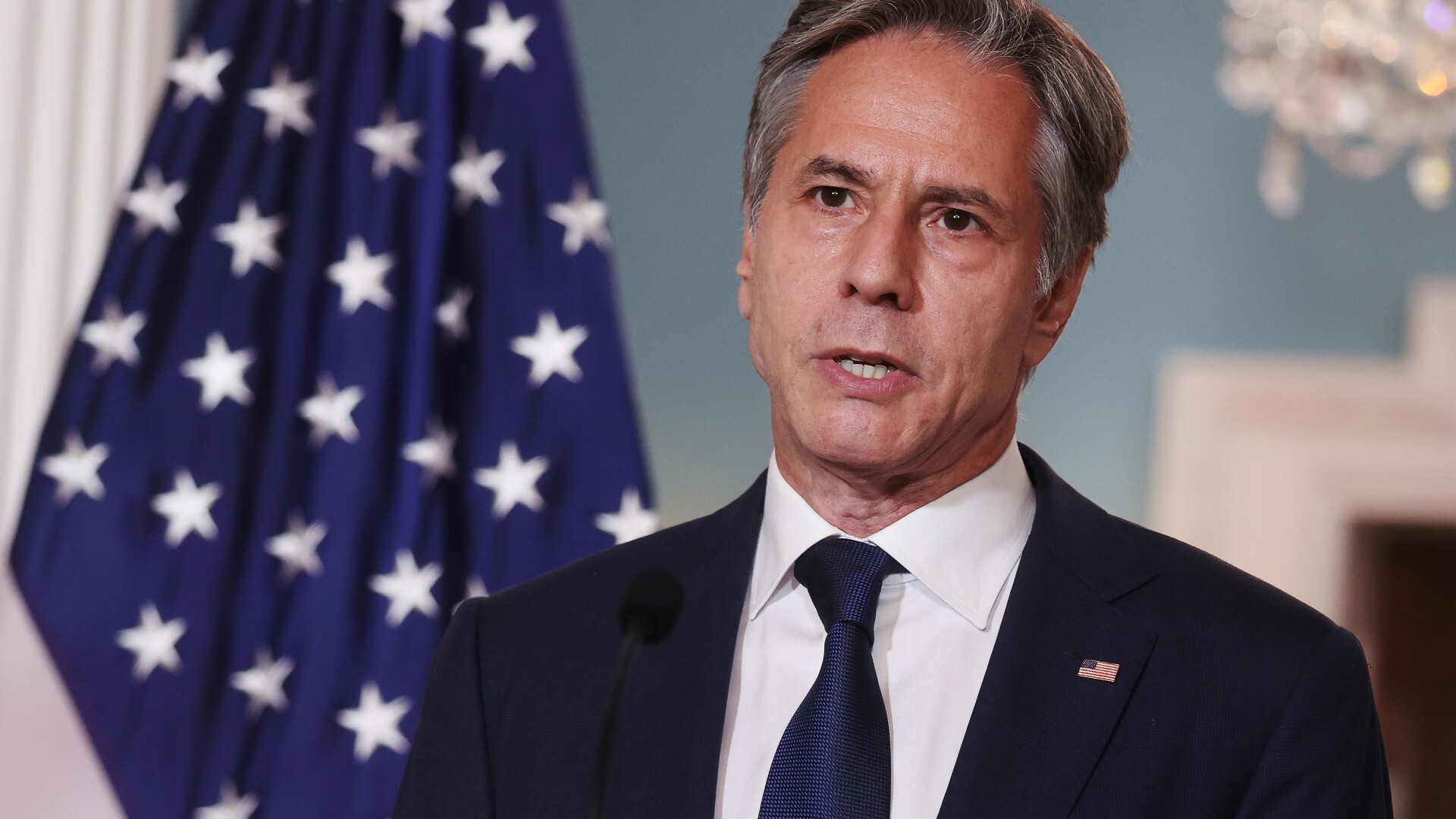
Biden’s top diplomat, Secretary of State Antony Blinken, was able to offer little more than stern words for the Taliban.

“Any legitimacy and any support will have to be earned,” Blinken said, as he announced the US had suspended its diplomatic presence in Kabul and shifted its operations to Qatar.


1780731431549.png

1780731452646.png
 
So it was the heyday of the American Empire. The atheistic elites of USA who are running USA.

I am waiting for the day China equalizes their economy with USA's.
 
Last edited:

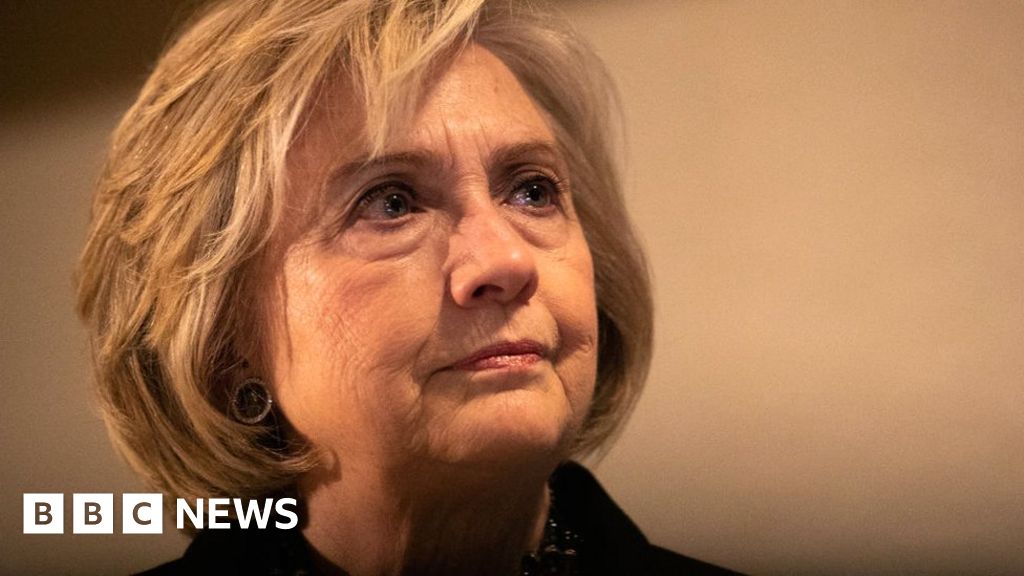
Hillary Clinton warns of 'huge consequences' in Afghan US troop withdrawal​

3 May 2021
Share
Save
Add as preferred on Google

Getty Images Hillary Clinton in New York City, 9 December 2019
Getty Images
Hillary Clinton said the withdrawal of US troops from Afghanistan could lead to the "resumption of activities by terrorist groups"
Former US Secretary of State Hillary Clinton has warned of "huge consequences" of President Joe Biden's decision to withdraw American troops from Afghanistan.

Mrs Clinton told CNN there was a risk the Taliban - the Islamist group ousted in 2001 by the US-led invasion - could retake control.

The US aims to complete the withdrawal by 11 September.

However, the Taliban have been carrying out more attacks.

"This is what we call a wicked problem," Mrs Clinton told CNN. "There are consequences both foreseen and unintended of staying and of leaving," she said.

Mrs Clinton, like Mr Biden a Democrat, was a strong supporter of the US intervention in Afghanistan after the 9/11 attacks in 2001.

Mr Biden wants to complete the withdrawal by the 20th anniversary of the attacks later this year.


At least 2,500 US troops are currently deployed as part of the 9,600-strong Nato Afghan mission.

The president said the US pull-out was justified as American forces had ensured that the country could no longer be a base for foreign jihadists to plot against the West.

Asked about the president's decision by CNN's Fareed Zakaria on Sunday, Mrs Clinton said, "Our government has to focus on two huge consequences", notably the resumption of activities by extremist groups and a subsequent outpouring of refugees from Afghanistan.

She said the potential collapse of the Afghan government and a possible takeover by the Taliban could result in a new civil war.

Mrs Clinton said it was also important to protect the "many thousands of Afghans" who had worked with the US and Nato during the conflict, and said a large visa programme should be set up to provide for any refugees.

The remaining US troops in Afghanistan began formally withdrawing on 1 May, amid escalating violence.

Afghan security forces are on high alert for reprisal attacks.

On Monday, Afghan officials said at least seven soldiers had been killed in a Taliban attack on a military outpost in the south-western Farah province.


They said militants had blown up the post after digging a tunnel for about 400m (1312ft) to access it from a nearby house. One soldier had been captured by the insurgents, they said. Other reports put the Afghan army casualties much higher.


p09dqj32.jpg


1:51
Are the Taliban preparing for peace or more war?
Speaking at a press conference in London on Monday, US Secretary of State Antony Blinken said the Biden administration was "very focused on a deliberate, safe and orderly" withdrawal of troops, but that the US would continue to assist the Afghan government.

"Even as our forces are pulling out of Afghanistan, we are not withdrawing - we are not disengaging," he said, adding that if US troops were attacked before leaving the country, "decisive action" would be taken.

2px presentational grey line

A warning from the Washington establishment​

Analysis box by Tara McKelvey, White House reporter

Hillary Clinton represents the view of foreign-policy experts: The US should show its strength and deploy its military. Her criticism of Biden's plan reflects this sensibility.


Her criticism matters, in part because so many in the foreign-policy establishment, both Democrats and Republicans, agree with her. Condoleezza Rice, who served as secretary of state under President George W Bush, has also warned about the risks of withdrawing troops, and the threat of terrorism.

Yet liberals, such as Senator Bernie Sanders of Vermont, do not think the troops should be there. Nor do many Americans. A 2019 Gallup poll showed 58% of Democrats think the war in Afghanistan has made the US less safe from terrorism.

Clinton's views are important, but Biden has the support of many Americans. Plus, he's the president, and has made his decision. His views are the ones that matter now, not hers.

2px presentational grey line

As vice-president to Barack Obama, Mr Biden frequently opposed a large US presence in Afghanistan.

He has said that the US will continue to support Afghan government forces - and encourage peace negotiations with the rebel Taliban leaders. However, correspondents say that may not be enough to ensure stability in the region.

Last year, then-President Donald Trump - who was keen for US troops to return home and criticised US military interventions for being costly and ineffective - set in motion a full US withdrawal from Afghanistan by 1 May this year.

The US then started withdrawing troops after the Taliban promised to stop carrying out attacks on international forces and "soft targets", and said it would not allow al-Qaeda or other militants to operate in areas it controls.


2px presentational grey line

US military involvement in Afghanistan​

October 2001: US-led bombing of Afghanistan begins following the 11 September attacks on the United States

February 2009: Nato countries pledge to increase military and other commitments in Afghanistan after US announces dispatch of 17,000 extra troops

December 2009: US President Barack Obama decides to boost US troop numbers in Afghanistan by 30,000, bringing total to 100,000. He says US will begin withdrawing its forces by 2011

October 2014: The US and UK end their combat operations in Afghanistan

March 2015: President Obama announces his country will delay its troop withdrawal from Afghanistan, following a request from President Ashraf Ghani

August 2017: US President Donald Trump says he's sending more troops to fight a resurgent Taliban
September 2019: Protracted peace talks between the Taliban and the US break down

February 2020: After months of on-off talks, the US signs a troop withdrawal agreement in Doha with the Taliban

1780794177701.png

The West knows they have done wrong, they know it.
 
Last edited:
1780796306089.png

People should now seek alternatives to American products and education like Canada and Europe.

Saudi Arabia should lessen USA's influence in their country and seek alternatives like China, Japan, Russia, Germany, and Italy.
 
Last edited:
OPINIONOPINION,
Opinion|Taliban

The US, the Taliban and the stunning defeat in Afghanistan

The Taliban victory is a major humiliation for the US, but perhaps that’s the silver lining of the Afghan tragedy.


By Marwan Bishara
Senior political analyst at Al Jazeera.
Published On 16 Aug 202116 Aug 2021
Save

Click here to share on social media
Share

Add Al Jazeera on Google
AP21227744279067.jpg

Taliban fighters take control of Afghan presidential palace after Afghan President Ashraf Ghani fled the country, in Kabul, Afghanistan on August 15, 2021 [AP/Zabi Karimi]
Last week’s turn of events in Afghanistan has been utterly shocking but hardly surprising.

The Taliban’s blistering takeover of the country’s main cities was breathtaking in its speed and ease, culminating in their march on the capital almost unopposed as President Ashraf Ghani fled the country.

Recommended Stories​


list of 4 itemslist 1 of 4

Biden administration to review US-Taliban deal

list 2 of 4

US freezes Afghan central bank’s assets of $9.5bn

list 3 of 4

Pakistan says ‘operation continuing’ in Afghanistan amid deadly attacks

list 4 of 4

Pakistan denies hospital strike in Afghanistan as death toll hits 400

end of list
It was expected, yes, but no so rapidly, so victoriously, so humiliatingly.

Since the war began almost 20 years ago, successive US administrations have ignored the writing on the wall, prolonging the inevitable, while failing to prepare for it.

It took the US and its allies only two months to “liberate” Kabul from the grip of the Taliban in 2001, and less than two years for the smug Secretary of Defense, Donald Rumsfeld, to declare at a news conference in Kabul on May 1, 2003, that “major combat activity” was over.

But it was not over. Not by any measure.

As the US occupation stumbled, the deposed Taliban regrouped and launched a merciless asymmetrical war on the US and Afghan government forces for much of the following two decades.

But successive US administrations deliberately deceived the American public into thinking everything was dandy on the war front in Afghanistan, when in fact, it was anything but – just as they did previously during the Vietnam war.

The scene of US personnel fleeing Kabul last week, just as they did Saigon in 1975, was downright eerie.

The US has suffered a few thousand casualties, but tens of thousands of Afghan security forces have died, and an untold number of civilians have become the real victims of the war, which has destroyed the lives and livelihoods of countless families and communities.

Advertisement

During the past decade, the Taliban has demolished Washington’s “clear, build and hold” strategy, terrorising entire communities that cooperated with the US forces.

Want to come back to this article? Save itfor later.
Save

The total collapse of the Afghan government forces following the withdrawal of the remainder of US combat troops has left many in Washington and other western capitals scratching their heads for answers.

Some of these answers have been readily available by the “we-told-you-so” war sceptics, who long warned that Afghanistan was a proven “graveyard of empires”, whether it is the 19th-century British empire or the 20th-century Soviet empire.

In the words of the ancient Greek Macedonian emperor, Alexander the Great, Afghanistan is “easy to march into but hard to march out of”.

But an overconfident post-Cold War America was in no mood for such historical references after the 9/11 attacks hit at the heart of its economic and military symbols in New York and Washington and killed almost 3,000 Americans.

Those of us who warned against waging vengeful wars and occupying faraway lands as a way to combat “global terrorism” and establish a “pax America” in the greater Middle East, were ignored.

The Bush administration’s decision to launch a second disastrous and costly war against Iraq left Afghanistan in dire straits, and for all practical purposes, Washington was unable to recover the initiative afterwards.

The failure of the Obama administration’s Afghanistan-Pakistan strategy of troop surge signalled the beginning of the end of the war. From then on, only its pride prevented it from recognising the obvious and acting on it.

The Trump administration’s decision to engage the Taliban diplomatically appeared to be the beginning of the US surrendering the country to the hardline group in part or as a whole.

The Biden administration’s decision to speed up US withdrawal regardless of the diplomatic, military or strategic outcome, left the Afghan government to fend for itself, while knowing all too well it could not last long.

But was it really inevitable?

It is hard to say what would have been the outcome if the US remained focused on Afghanistan, rooting out al-Qaeda and paving the way towards a more stable regime with the help of neighbouring countries. Even Iran offered to help during those early years.

But the Bush administration’s decision to launch the “global war on terror”, including the disastrous war on Iraq, eventually downgraded and bungled its Afghan mission.

It also alienated major regional and international allies by its exclusionary “US or against US” approach to the Middle East and international affairs.

Advertisement

Afghanistan was left on the backburner and came to be known as the “forgotten war” as US attention focused on Iraq. Then came the 2008 financial crisis further forcing Washington to turn inward, weakening its foreign commitments.

But even if the US had remained totally focused on Afghanistan, there was no guarantee that it could have accomplished the more modest mission of stabilising the country.

In fact, since World War II, the US has failed to decisively win any major war, whether in Korea, Vietnam or Iraq.

Moreover, geography has long trumped strategy in such asymmetrical conflicts as that of Afghanistan, where local forces and regional dynamics outperform and outmanoeuvre the more sophisticated imperial forces deployed from across the seas.

Such is the lesson most 20th-century colonial powers learned the hard way, as any military historian would tell you.

Afghans knew that the US may have controlled the timings of its deployments but the Taliban had the time. And it had the will.

The US may have won certain hearts and minds, especially in Kabul, where it spent untold sums of money, but Afghans knew deep in their hearts that America will depart sooner or later, and they would have to deal with the Taliban.

It did not help that their successive governments were rather inept and corrupt, garnering little or no confidence. Their complete dependency on US military and financial aid ensured they would never be able to try to stand on their own.

The same applied to the armed forces. Despite outnumbering the Taliban four to one, corruption, nepotism and neglect reigned high, especially among the top brass.

In sum, this may have been inevitable considering the US blunders and its partners’ failings, but it did not have to be so utterly humiliating.

But then again, the humiliation may be the one silver lining after the two decades of tragedy, teaching Washington to avoid war at all cost in the future, especially those horrific wars of choice in the greater Middle East.

  • Marwan Bishara
    Marwan Bishara
    Senior political analyst at Al Jazeera.
    Marwan Bishara is an author who writes extensively on global politics and is widely regarded as a leading authority on US foreign policy, the Middle East and international strategic affairs. He was previously a professor of International Relations at the American University of Paris.
 

Users who are viewing this thread

Country Watch Latest

Latest Posts

Back
Top