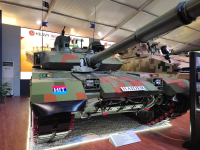
Pakistan purchases 679 Chinese VT4 tanks that will be assembled locally
According to the latest report of the SIPRI Arms Trade Database 2022, Pakistan signed a contract with China for the purchase of 679
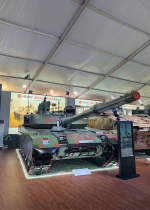
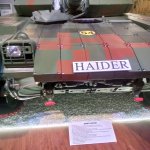
VT4 MBTs (Main Battle Tanks) that will be assembled and produced under license in Pakistan under the brand name of Haider.
View attachment 274
The VT4, also known as the MBT-3000, is a Chinese third-generation main battle tank (MBT) designed and manufactured by NORINCO (China North Industries Corporation). The VT4 is an advanced and versatile tank that has been developed for export, with several modern features and technologies that make it competitive in the global arms market.
View attachment 272
The VT4 design is similar to the family of Chinese-made MBTs with the driver at the front of the hull, a turret in the middle, and the engine at the rear. It has a crew of three including a driver, commander, and gunner. The VT4's interior layout is designed with better ergonomics and improved crew comfort in mind. This can help reduce fatigue and improve operational efficiency.
View attachment 273
The
VT4 MBT represents a significant evolution in Chinese tank technology compared to its predecessors. While it shares some similarities with earlier Chinese tanks, such as the Type 96 and Type 99, the VT4 incorporates various technological advancements and improvements that enhance its capabilities on the battlefield. It features an advanced fire control system (FCS) that includes a digital ballistic computer, thermal imaging, and a laser rangefinder. These enhancements allow for better target acquisition and engagement, even in low light or poor weather conditions, compared to earlier Chinese tanks.
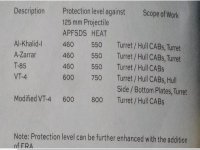
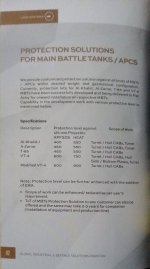
The VT4 is equipped with a modern 125mm smoothbore gun, which is an improvement over the 105mm rifled gun found on Type 85 and Type 90 tanks. Additionally, the VT4 features an autoloader that allows for a higher rate of fire and a reduced crew requirement. It is fitted with modular composite armor and explosive reactive armor (ERA) to provide better protection against anti-tank threats. This is a significant advancement compared to the steel armor used in earlier Chinese tanks like the Type 59.
View attachment 267
The VT4 is powered by a water-cooled, turbocharged diesel engine that provides greater horsepower, allowing the tank to reach a top speed of around 70 km/h. This is faster than previous Chinese tanks like the Type 85, which had a top speed of around 60 km/h.
These advancements demonstrate the progress made by China's defense industry in developing modern and competitive main battle tanks. The VT4 reflects China's growing expertise in tank design and manufacturing, as well as the country's commitment to providing advanced military equipment for export.
Pakistan showed the local production of Chinese 3rd-gen VT-4 tank
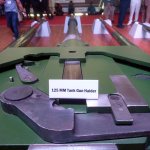
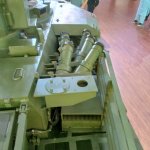
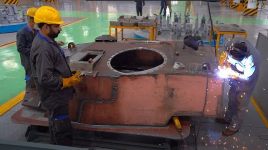
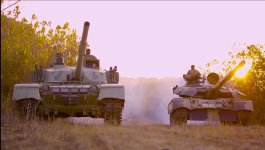
In a comprehensive television broadcast, Pakistani media unveiled the state-of-the-art production process of the Chinese VT-4 tanks [VT-4 MBT or MBT-3000]. These top-notch war machines are being constructed under China’s license at Pakistan’s eminent Heavy Industry Taxila [HIT] manufacturing plant.
View attachment 268
The discourse disseminated indicates that this establishment has been particularly designed for the manufacturing of the esteemed VT-4. The initiation of domestic production has led to rapid growth in the production of Al-Khalid/Al-Khalid-1 and T80UD’s power units, resulting in a persistent 70% localization. A noteworthy advancement has been seen in the past years.
View attachment 271
Moreover, a staggering 95% of the electrical apparatus and control systems inherent in the armored fighting vehicles have been integrated into the local manufacturing processes, a considerable reflection of self-reliance.
View attachment 269
In what constitutes a significant revelation, the report confirms the existence of the Al-Khalid-1 fire control system, an innovation originating from Pakistan. Heretofore, the system had been an object of mere conjecture and speculation, making this official confirmation a noteworthy development.
Notwithstanding, the production of a wholly Pakistani tank remains elusive. While a significant number of its constituents, including electronics and day and night vision sights for the tank driver, are manufactured domestically, the steel and composite components necessitate import from China.
The Heavy Industries Taxila [HIT] is reportedly engaged in the assembly of Chinese tanks under license, as per the provided sources. Further down the pipeline, reports from Pakistani sources suggest that the manufacturing of the gun will also be localized. The specific model set for indigenization is the 155mm M109A5 gun.
View attachment 266
The choice of VT-4
The first batch of Pakistan Army’s VT-4s, a type of main battle tank from China, was dispatched on April 20, 2020. Pakistan is now the third country, after Thailand and Nigeria, to use this tank variant.
View attachment 270
The total number acquired by Pakistan’s Army is 100. The production and export of the MBT-3000 tanks strengthen China’s position in the global market. Their line of tanks includes the simpler WZ-120 and the more advanced MBT-3000. They cater to different regions, including the Middle East, Africa, Southeast Asia, and Latin America.
Pakistan first considered acquiring VT-4 tanks in 2014. However, the military hadn’t made a final decision even after extensive testing and Thailand’s purchase of the tanks in 2016. Pakistan tested both the VT-4 and the Ukrainian T-84 “Oplot M” tanks within its borders.
VT-4 tank
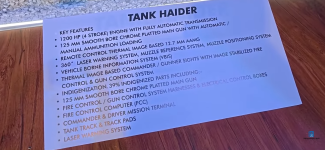
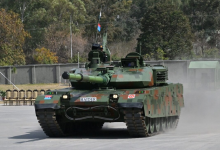
The VT-4 is a third-generation main battle tank by China North Industries Corporation (Norinco). Often associated with the ‘Khalid’ tank, it features a 125mm smoothbore gun and an automatic loader with 22 rounds. It has a firing rate of 8 rounds per minute.
Along with the gun, the tank can launch different types of rounds and missiles, offering a firing range of 5 kilometers. It uses a 1500-horsepower diesel engine and a Chinese-produced CH10000B hydraulic mechanical automatic transmission.
The layout of the VT-4 includes a driver position upfront, a combat compartment, and an engine in the rear. It’s built with a fully welded turret and composite armor with an option to add reactive armor plating. The VT-4 can reach speeds of 71 kph and maintain a speed of 42 kph, with a range of 500 kilometers. It can traverse water barriers of 4-5 meters and pits of 2.7 meters.
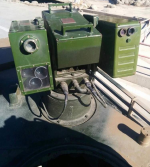
Further, the VT-4 features advanced technology in its combat reconnaissance capabilities, including a thermal imager and a panoramic observation system. It has provisions for installing remote control weapon stations and a state-of-the-art integrated fire control system. To enhance protection, it uses active protection systems, laser alarms, smoke bomb linkages, and an interface for millimeter-wave radar. The side skirts are constructed with composite materials.
VT-4’s design
The tank’s design incorporates modern technology, such as air conditioning, departing from China’s previous simplistic style. It brings it to par with Western tanks. The homegrown FY-4 reactive armor of the Pakistani version boosts its defense.
Pakistan and China’s relationship has grown through shared tank tech. Possible collaborations with countries like Ukraine highlight the reach of their alliance.
In April 2020, Pakistan arranged the purchase of China’s advanced VT-4 tank, funded by the Gulf region. The large 300-tank deal, with a confirmed 176 tanks for $860 million, hinges on their satisfaction with the first shipment. The same day, two testing vehicles equipped with FY-4 armor and an improved 1500 horsepower engine were delivered. Other upgrades are not confirmed.
By September 2020, Pakistan showcased its new Chinese VT4 tanks. The 52-ton VT4, also called the MBT3000, was ordered in 2019 and began delivering in 2020. The goal to buy more VT4s is currently restrained by financial issues, as they cost $3 million each.
----------------------------------------------------------------------------
PA-1 Strike Armoured Core 6th Division Prime Assets -
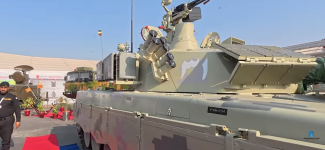
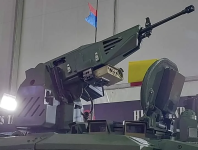
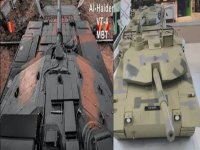
The Al-Haider VT-4 MBT live firing of Remote WS 12.7 mm AA Machine guns.
The Tanks are assembled under ToT at HIT. APS is inline.
View attachment 231