
Feroze
Trusted Member


Alberta independence vote tests Canada’s unity amid US tensions
Short Url
Alberta independence vote tests Canada’s unity amid US tensions
Alberta independence vote tests Canada’s unity amid US tensions
 arab.news
AFP
October 14, 202622:39
Follow
- Separatists cite oil industry grievances as Carney campaigns for national unity
- Vote raises questions over Alberta’s future, energy policy and US influence
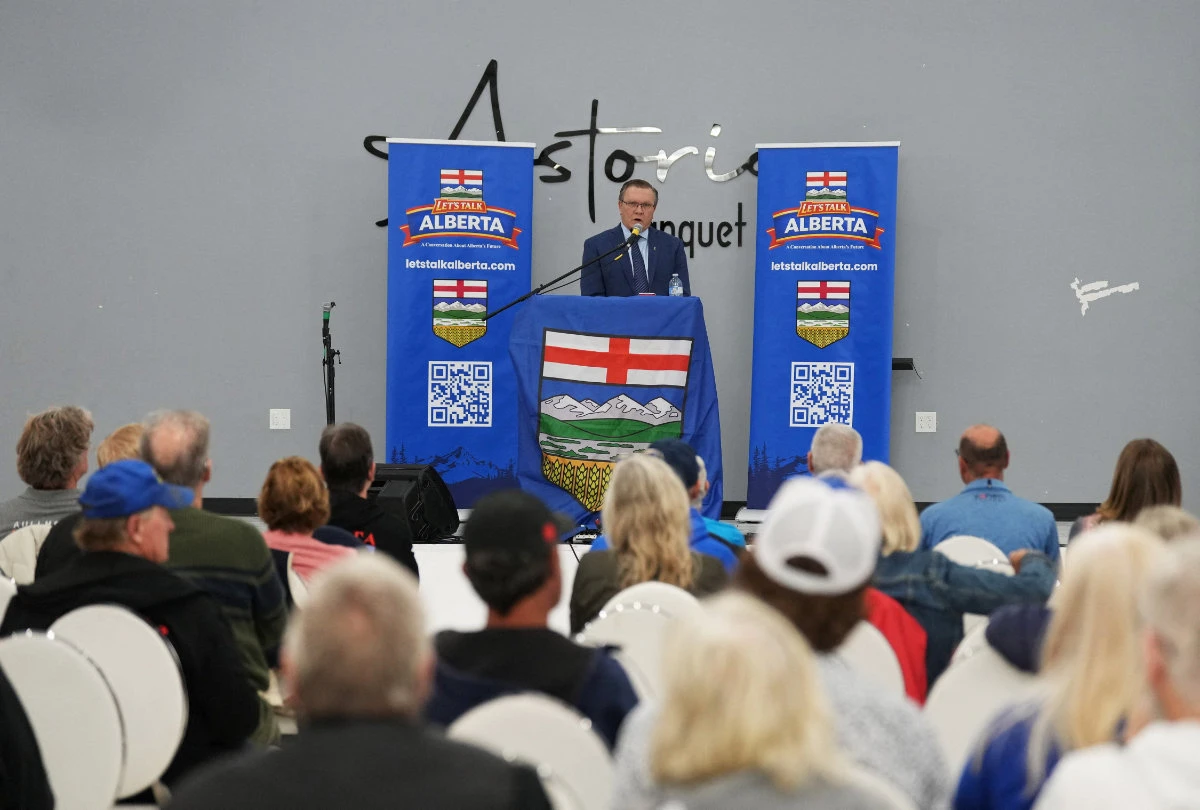
Polling indicates less than a quarter of Alberta’s roughly five million people want independence, but in an interview with AFP on Tuesday, a separatist leader insisted those numbers were off.
“I wouldn’t be surprised if we actually win this referendum,” said Mitch Sylvestre, who heads the Alberta Prosperity Project, the most prominent separatist organization.
“I would be very surprised if we got less than 40 percent,” he said.
Monday’s vote is a personal challenge for Prime Minister Mark Carney, who grew up in Alberta and returned there this week to campaign for national unity.
US-Canada hostility triggered by President Donald Trump has defined Carney’s tenure.
Alberta’s oil industry is central to his plans for solidifying Canada’s economy and reducing US reliance.
Carney has backed a new pipeline and other projects to increase crude production, marking a clear break from his predecessor, Justin Trudeau, who was broadly reviled in Alberta over allegations that he stifled oil industry growth in favor of environmental policies.
In a video address on Monday, Canadian Thanksgiving, filmed at his Edmonton high school, Carney highlighted the pipeline as a chance “to create lasting opportunity and prosperity... in this province and across the country.”
“We can’t achieve any of this if we are divided,” he said.
‘Outlier’
Oil’s prominence in a debate about Canadian unity has highlighted the unusual nature of Alberta’s independence push.
Alberta separatists voice familiar conservative frustrations, from concerns about immigration levels to generalized fears about fraying individual liberty, but their grievances often hinge on oil industry management.
That makes Alberta’s independence movement “mostly an outlier,” said Syracuse University professor Ryan Griffiths, an expert on global separatist groups.
Secessionist movements regularly have “economic motivations,” but typically those are married to a linguistic or nationalist component, Griffiths said.
“There’s no magic line” dictating what defines a nation, he told AFP, but noted Alberta’s case for nationhood appears harder to make than that of other groups, like Catalans, Scots and French-speaking Canadians in Quebec.
Commenting on Alberta’s frustration with Ottawa, Premier Danielle Smith also focused on Trudeau’s alleged hostility to the oil industry.
“When you have a federal government that is actively trying to kill your principal industry, that has a real impact on people,” she told the CBC last week.
Smith says she is voting against independence and has praised Carney’s openness to the oil industry.
She says she called the nonbinding referendum to settle a question dividing the province.
If a majority supports leaving Canada, Smith said she’ll begin the legally binding process of leaving Canada. If a majority votes to stay, she won’t approve another referendum, she told the CBC.
American influence?
The alleged influence of Trump allies in Alberta has attracted intense scrutiny in Canada.
Treasury Secretary Scott Bessent has called Alberta a “natural partner” for the United States, and Alberta Prosperity Project leaders held several meetings at the State Department.
Earlier this month, Canada’s Globe and Mail newspaper detailed contacts between Sylvestre, his team and Republican Party operatives.
Sylvestre told AFP that, for him, US interests “don’t play any role” in Alberta “until we win and become government,” at which point he would work to ensure free-flowing trade.
“There’s no animosity toward America here,” he said. “I can’t see why we wouldn’t want to continue trading with the biggest economy in the world.”
Alberta independence vote tests Canada’s unity amid US tensions
Alberta independence vote tests Canada’s unity amid US tensions
www.arabnews.com


