
Beijingwalker
VIP Member

Algeria’s Reported J-10CE Deal Could Break Russia’s Fighter Monopoly and Expand China’s Reach Into the Mediterranean
Algeria’s reported negotiations for 30–40 J-10CE fighters and up to five KJ-500 airborne early-warning aircraft could weaken Russia’s historic defence monopoly, strengthen China’s Mediterranean presence and transform the Maghreb air-power balance from 2027.
On Aug 9, 2026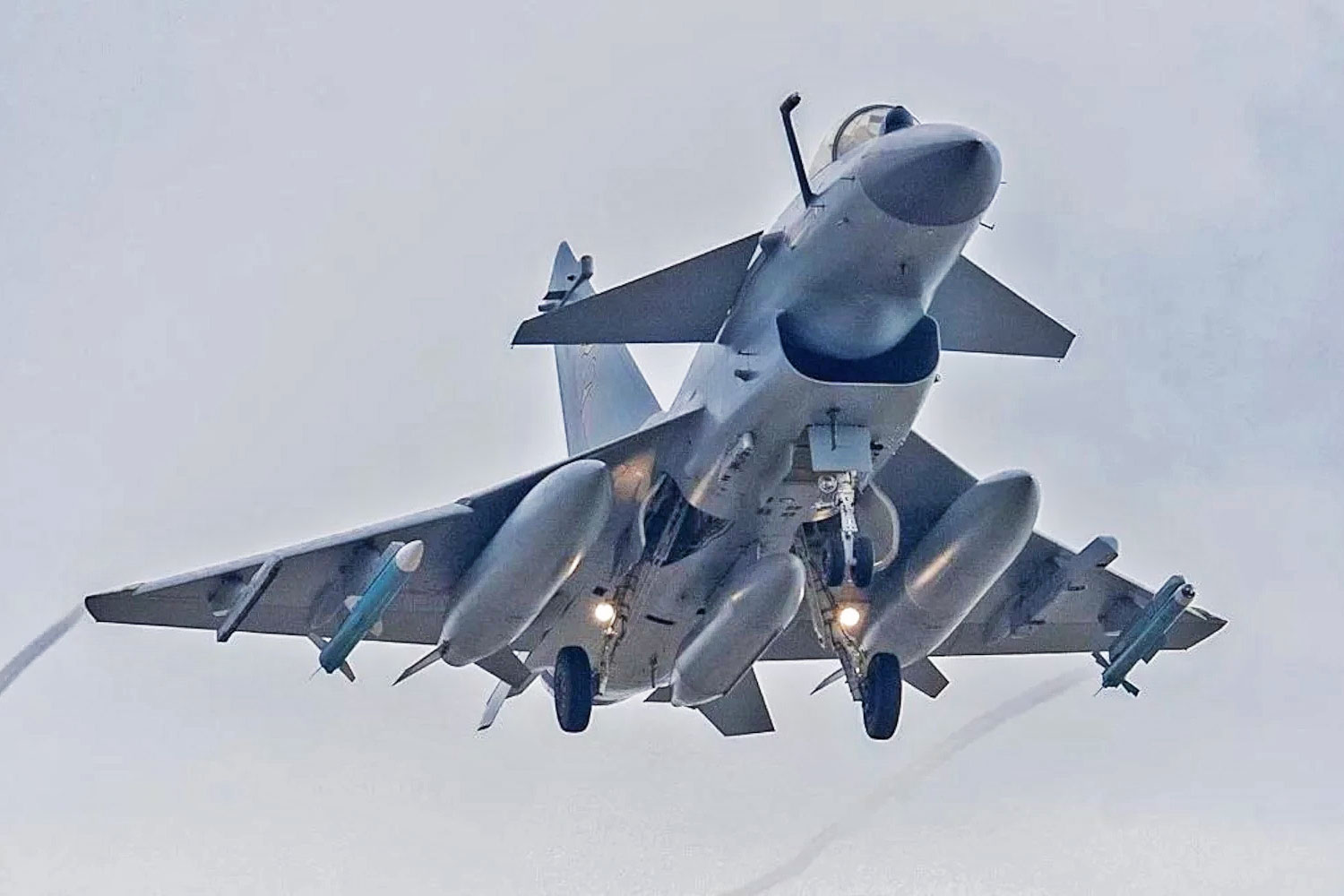
Algeria is reportedly negotiating, or finalising, an acquisition of approximately 30–40 Chinese J-10CE multirole fighters and three to five KJ-500 airborne early-warning aircraft, with initial deliveries potentially beginning during 2027.
Neither Algiers nor Beijing has officially confirmed the package, making aircraft quantities, contract status, weapons, financing, training arrangements and delivery schedules reported propositions rather than established procurement facts as of August 2026.
If executed, the programme would end more than six decades of near-exclusive Algerian dependence on Soviet and Russian combat aircraft while establishing China as a high-end combat-aviation supplier in North Africa.
The J-10CE would reportedly replace or reinforce Algeria’s ageing MiG-29 component, creating a modern medium-weight layer beneath its heavier Su-30MKA, Su-35, Su-34M and emerging Su-57E force structure.
Pairing an AESA-radar-equipped fighter with KJ-500 airborne early warning and control would matter beyond fleet renewal because it could extend detection, coordinate interceptions and improve beyond-visual-range engagement across a contested electromagnetic battlespace.
The possible inclusion of PL-15E long-range air-to-air missiles would further strengthen that architecture, although the weapons package remains unconfirmed and effective combat reach would depend upon sensors, datalinks, doctrine and crew proficiency.
China’s offer reportedly combines faster availability, competitive pricing and fewer political conditions than Western alternatives, addressing Algerian concern that Russia’s Ukraine-war commitments could disrupt fighter production, spare parts and upgrade timelines.
Algeria nevertheless appears to be diversifying rather than abandoning Moscow, preserving access to advanced Russian aircraft while building supply-chain redundancy against production delays, sanctions exposure and single-vendor political leverage.
This dual-supplier approach transforms procurement into strategic hedging, allowing Algiers to balance Moscow and Beijing while maintaining the non-aligned decision-making autonomy that has long shaped its foreign and defence policies.
The reported package could sharpen the Algeria–Morocco rivalry by strengthening Algerian situational awareness and long-range interception capacity opposite Morocco’s Western- and Israeli-supported modernisation, particularly around Western Sahara and their closed frontier.
For NATO and European governments, Chinese combat aircraft and command-and-control systems near the Mediterranean would introduce unfamiliar electronic signatures, operating concepts and intelligence requirements beside an already sophisticated Russian-origin Algerian arsenal.
The programme’s ultimate strategic value will depend not upon headline aircraft numbers but upon logistics, weapons integration, secure networking, training quality, sortie generation and whether politically sensitive negotiations become an executable contract.
Russia’s Monopoly Gives Way to Algerian Strategic Hedging
Algerian combat aviation began with Soviet assistance after independence in 1962, progressing through MiG-15, MiG-17, MiG-21, Su-7 and MiG-23 fleets before Algeria became the MiG-25’s first export customer.That relationship deepened through the 2006 Russian package, which exchanged approximately USD4.7 billion, equivalent to RM18.8 billion, in cancelled debt for an arms agreement valued around USD7–8 billion, or RM28–32 billion.
The package introduced 28 Su-30MKA fighters, MiG-29SMTs, Yak-130 trainers and S-300 air-defence systems, but Algeria returned the MiG-29SMTs after determining that refurbished airframes had been supplied instead of expected new-build aircraft.
Converting that rejected order into additional Su-30MKAs demonstrated Algerian willingness to enforce procurement standards while simultaneously consolidating the heavy fighter as the air force’s primary long-range multirole combat platform.
Follow-on contracts reportedly expanded the Su-30MKA inventory to roughly 60–72 aircraft, while a 2019 agreement worth about USD1.8 billion, or RM7.2 billion, added further Su-30MKAs and 14–16 MiG-29M/M2 fighters.
Open-source 2026 estimates additionally identify nine or more Su-35s, at least two Su-57Es from a reported 12–14-aircraft order, roughly 30–37 upgraded Su-24s and approximately 14 Su-34Ms arriving or ordered.
Those numbers remain estimates, yet they portray a force whose high-end capability still rests on Russian design bureaus, engines, weapons, maintenance chains and specialist training despite the prospective Chinese acquisition.
At least 167 Russian-affiliated cargo flights reportedly reached Algeria between March 2025 and April 2026, illustrating continuing logistical depth even as wartime production pressure creates uncertainty around aircraft, components and spares.
Introducing J-10CEs would therefore reduce exposure to one industrial ecosystem without displacing Russia’s installed base, giving Algeria alternative delivery capacity and greater bargaining power over pricing, schedules and lifecycle support.
The resulting Moscow–Algiers–Beijing triangle would represent calibrated diversification: Russia retains premium-platform access, China enters the operational core, and Algeria converts supplier competition into resilience and political manoeuvring space.
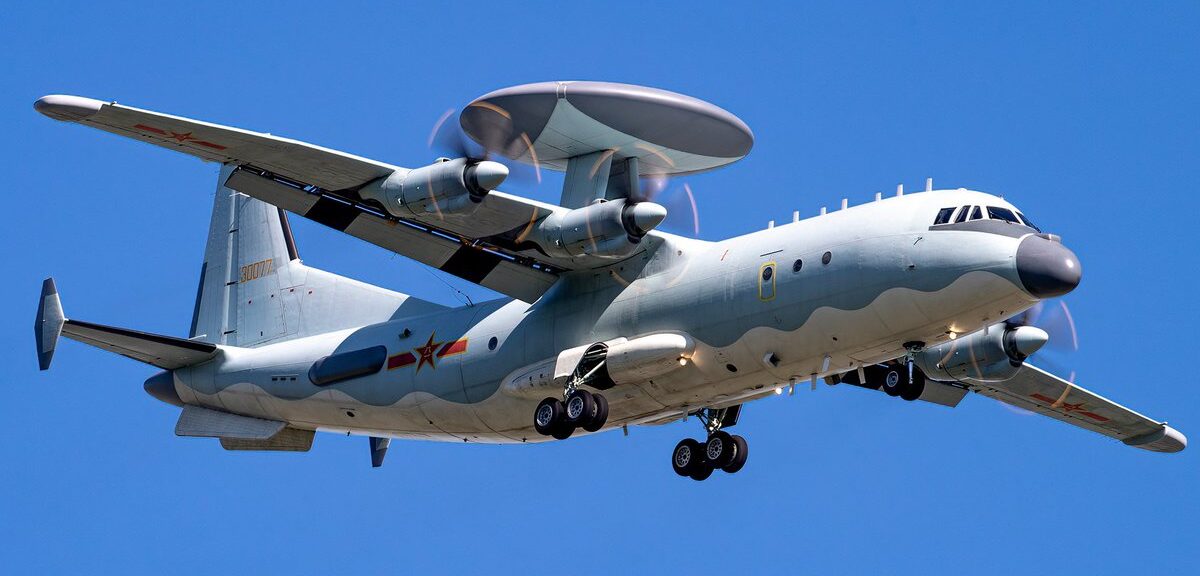
KJ-500 AEWC
J-10CE and KJ-500 Could Create a Networked Combat System
The J-10CE’s military significance derives from its 4.5-generation configuration, combining active electronically scanned array radar, canard-delta agility, reduced-signature features and compatibility with long-range air-to-air weapons in a medium-weight multirole platform.Against ageing MiG-29 variants, those features could improve detection, track quality, electronic resilience and first-shot opportunities, although manufacturer specifications cannot substitute for independently demonstrated Algerian operational performance under contested conditions.
The KJ-500 would potentially deliver the greater force multiplier by extending radar coverage beyond ground-sensor horizons, directing fighters toward targets and supporting distributed command-and-control across Algeria’s vast territory and Mediterranean approaches.
Operating three to five aircraft, however, would impose demanding availability calculations because maintenance, crew conversion and training cycles could leave fewer platforms simultaneously available for persistent airborne early-warning coverage.
Effective integration would require secure datalinks between Chinese fighters, KJ-500 controllers, Russian combat aircraft and ground-based air defences, including Chinese HQ-9 batteries alongside Algeria’s Russian S-300 and reported S-400 architecture.
Cross-vendor interoperability is therefore the programme’s decisive technical uncertainty, since incompatible data standards, encryption, identification systems and mission-planning software could create parallel networks rather than one integrated air-defence picture.
Algeria already operates Chinese CH-3, CH-4, Wing Loong II and WJ-700 unmanned systems, radars, coastal missiles and HQ-9-family defences, providing institutional familiarity that could reduce—but not eliminate—fighter integration risk.
Possible PL-15E acquisition would expand beyond-visual-range threat geometry, yet advertised missile range alone reveals little about effective engagement without reliable offboard cueing, mid-course updates, electronic protection and positive target identification.
Logistics would require new engine-support arrangements, weapons-storage procedures, simulators, ground equipment, software governance and Chinese-language technical expertise, increasing near-term complexity before dual sourcing produces genuine operational resilience.
If Algeria successfully connects sensors, shooters and command nodes, the package could shift its air force from platform-centric deterrence toward networked air combat, improving interception efficiency without requiring every fighter to radiate continuously.
Maghreb Rivalry and the Western Sahara Battlespace
Algeria’s immediate strategic calculation remains shaped by rivalry with Morocco, unresolved Western Sahara tensions and competition over regional influence, making fighter modernisation inseparable from deterrence credibility along their frontier and Atlantic approaches.Morocco’s F-16 upgrades, Apache helicopters, HIMARS launchers, Israeli systems and reported interest in additional advanced fighters create a modernisation benchmark that Algiers may interpret as requiring stronger airborne surveillance and long-range engagement.
A J-10CE–KJ-500 combination could push Algerian sensor coverage forward while keeping valuable command aircraft behind fighter and surface-to-air missile protection, complicating opposing route planning, emissions control and low-altitude penetration tactics.
The package would not automatically establish air superiority because Morocco’s force readiness, electronic warfare, basing dispersal, weapons inventories and external intelligence support remain critical variables absent from simple aircraft-count comparisons.
Western Sahara increases the value of endurance and battlespace awareness, as wide operating distances reward platforms capable of correlating radar tracks, prioritising threats and assigning interceptors before tactical fighters exhaust fuel searching independently.
Algeria’s heavy Su-30MKA and Su-35 aircraft could supply range and payload, while J-10CEs potentially provide a more economical alert and interception tier, preserving scarce high-end airframe hours for demanding missions.
KJ-500 coordination might also enhance defensive counter-air coverage over critical bases, energy infrastructure and coastal corridors, translating improved warning time into more survivable force dispersal and more efficient surface-to-air missile activation.
Conversely, concentrated dependence on a small airborne early-warning fleet would create high-value targets whose loss, jamming or grounding could sharply degrade the network, requiring hardened bases, redundant ground sensors and protective combat air patrols.
The acquisition could encourage Morocco to accelerate Western procurement and Israeli technical cooperation, producing an action-reaction cycle in which qualitative improvements shorten decision time and raise the financial cost of maintaining regional parity.
Because Beijing maintains economic ties with both Maghreb competitors and calibrated neutrality on Western Sahara, an Algerian sale would signify commercial-strategic opportunity without necessarily constituting Chinese political alignment against Rabat.
China Gains a Mediterranean Showcase as Russia Faces Constraints
The prospective sale would be China’s most consequential combat-aviation export success in Africa, moving Beijing beyond drones and lower-tier platforms toward delivery of an integrated fighter, missile, surveillance and command architecture.Pakistan’s operation of the J-10CE provides China with an existing export reference, but Algeria would offer a geographically distinct showcase facing Mediterranean, European and NATO surveillance environments rather than primarily South Asian contingencies.
Embedding KJ-500 sensors within Algerian operations would deepen dependence beyond airframe procurement because command-and-control architecture shapes tactical doctrine, data management, training standards, software upgrades and future weapons-selection pathways.
That systems-level foothold could support Chinese military diplomacy across Africa and the Middle East, especially among governments seeking advanced capability without Western political conditions or uncertain access to increasingly constrained Russian production.
Russia’s reported Su-57 production remained limited during 2023–2024, while Ukraine-war demand strains manufacturing and sustainment capacity, creating openings for Chinese suppliers even among customers maintaining close strategic relations with Moscow.
Beijing can exploit those openings without openly displacing Russia, presenting itself as a complementary supplier while accumulating market share, operational feedback and influence wherever Moscow cannot guarantee predictable delivery or lifecycle support.
For Algeria, supplier competition can reduce vulnerability, yet managing Chinese and Russian ecosystems simultaneously raises inventory costs, training fragmentation and technical-security concerns regarding access to mission data and electronic signatures.
The country’s hydrocarbon-funded defence budget reportedly reached approximately USD24–25 billion, equivalent to RM96–100 billion, during 2025–2026, providing short-term capacity for parallel acquisitions despite deficits and dependence on volatile energy revenue.
Europe’s increased reliance on Algerian gas following the Ukraine conflict indirectly expands Algiers’ procurement headroom, linking European energy security to a defence modernisation strategy that strengthens Russian and Chinese industrial relationships.
The transaction would consequently illustrate multipolar arms-market change: wartime industrial bottlenecks weaken exclusive supplier relationships, energy exporters monetise strategic autonomy, and China converts manufacturing capacity into durable security influence near Europe.
NATO’s Southern Flank, Logistics and the Test of Execution
Algeria is not described as a NATO adversary, but Chinese AESA radars, datalinks and long-range missiles operating near the alliance’s southern flank would generate new requirements for electronic intelligence, identification and operational monitoring.European governments would simultaneously weigh military-technological concerns against Algerian importance to gas supply, migration management and Mediterranean stability, limiting the utility of coercive responses that might jeopardise broader bilateral interests.
Washington has previously raised possible CAATSA exposure surrounding Algerian Russian acquisitions, while a Chinese package would further demonstrate Algiers’ willingness to absorb external pressure when protecting its multi-vector defence relationships.
Any sanctions threat could also reinforce diversification logic by making Western-dependent supply chains appear politically vulnerable, although financial restrictions might complicate payments, insurance, components and international maintenance arrangements across the programme.
Delivery beginning in 2027 would represent an ambitious timeline requiring production slots, pilot and controller training, base preparation, weapons certification, spare-parts provisioning and acceptance testing to advance concurrently after contract signature.
Algeria must also determine whether J-10CE units replace older MiG-29 squadrons directly or form new organisations, because each approach creates different manpower, infrastructure, readiness and transition risks during conversion.
Sustained sortie generation will depend upon engine availability, depot maintenance, consumables, test equipment and secure software support, making the logistics footprint more strategically consequential than ceremonial handovers or isolated demonstration flights.
Likewise, three to five KJ-500 aircraft cannot provide uninterrupted coverage automatically; operational persistence requires adequate crews, maintenance depth, protected basing and doctrine that integrates airborne surveillance with fighters and ground defences.
Official silence means analysts should treat claimed quantities, 2027 deliveries, PL-15E weapons, Y-20 transports and final contract status separately, avoiding the false precision created when repeated reports become mistaken for government confirmation.
If confirmed and competently integrated, the package would strengthen Algerian autonomy, dilute Russia’s monopoly, expand China’s Mediterranean influence and intensify Maghreb competition; if integration falters, it could instead produce an expensive fragmented force.


