Flight 15 of
Starship is preparing to launch as soon as Friday, November 13, pending regulatory approval. The 75-minute launch window will open at 4:45 p.m. CT.
A live webcast of the flight will begin about 30 minutes before liftoff, which you can watch here and
on X @SpaceX. Coverage is planned to continue through ship catch, with the potential for hours of live views from Starship as it orbits Earth, powered by Starlink. As is the case with all launches, the schedule is dynamic and likely to change, so be sure to check in here and stay tuned to our X account for updates.
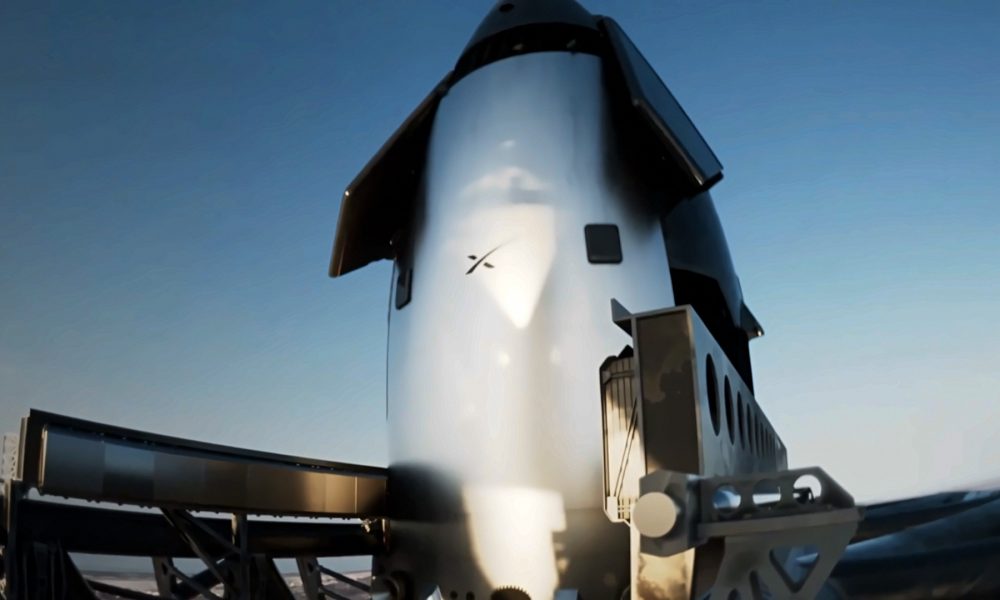
The upcoming flight is planned to be the first to return both Starship and Super Heavy to the launch site for catch. If successful, this will mark the first full recovery of an orbital launch system and a breakthrough moment in making Starship a reliable, rapidly reusable rocket.
Starship’s initial return to launch site mission is expected to orbit the Earth at an altitude of ~275 km and complete approximately 14 orbits around the planet over the course of a more than 22-hour flight. Similar to Starship’s first orbital mission, the flight profile has been designed with the opportunity to insert into a passively safe suborbital trajectory or safely deorbit at multiple pre-determined areas over the ocean after raising to an orbital altitude.
Read more about the testing, mission design, and safety measures for first planned Starship catch.
Starship’s previous mission was the culmination of more than a dozen flight tests and years of development, sending Starship to orbit and deploying meaningful payloads to space for the first time.
Watch “Go For Orbit”, the latest episode in the ongoing Starship series experience the moments behind flying the most ambitious Starship mission yet.
The booster’s primary objective on Flight 15 will be executing a successful launch, ascent, stage separation, boostback burn, and return to the launch site for catch. This will be the first return and catch attempt for a Super Heavy V3 booster. Three V1 boosters were
successfully caught on earlier flight tests with two demonstrating successful reflights.
The Starship upper stage’s primary objectives include the deployment of 26 Starlink V3 satellites and the first return to launch site and catch at Starbase. Starship will only execute a return to launch site if the flight control team has ensured that the vehicle systems critical for reentry maneuvers and final landing burn and tower approach are healthy.
Starship will deliver 26
Starlink V3 satellites to orbit, which aim to greatly expand the network's capacity and user speeds. Each Starlink V3 satellite will add 1 Terabit of capacity to the constellation, with all 26 satellites equaling ~10 Starlink V2 Mini launches on Falcon 9.
After deploying from Starship, the Starlink V3 satellites will unfold their antennas and deploy their solar arrays and make initial contact with the ground and the rest of the Starlink constellation via radio frequency and laser links. The satellites will then begin raising their orbits with their onboard thrusters. Following their on-orbit checkouts, the satellites should begin serving customers as soon as a few weeks after launch.
Three of the satellites have been modified with a suite of cameras to scan Starship’s heatshield and transmit imagery down to operators. This method of analyzing Starship’s heatshield has been
tested on previous flights and is one of several data sources to help inform Starship’s readiness to return to the launch site on Flight 15.
Starship’s heatshield will incorporate the improvements made on Flight 14 including additional retention mechanisms on tiles in areas deemed to be at highest risk of falling off during ascent and addressing areas with a flow path for plasma to get behind the tiles. The vehicle will also have a large portion of the heatshield equipped with a curved tile design that has shown the ability to reduce heating in the gaps between tiles.