Amazon’s Ambitious Project Kuiper Progresses Towards Providing Global Connectivity

Hamartia Antidote

Elite Member
Joined
Nov 17, 2013
Messages
47,270
Reaction score
26,979
Reputation
584.0
Country of Origin
Country of Residence

An up-close, high-definition image of a representational model of Project Kuiper, the ambitious initiative by a multinational technology company. The model exhibits a multitude of satellites in a precise formation orbiting Earth, intending to provide global connectivity. The Earth is vividly depicted with defined continents and oceans, while the satellites are composed of intricate engineering elements. They are displayed against the vast expanse of space with distant stars and celestial bodies enhancing the perception of depth and vastness. The image reflects the advanced notion of providing global internet coverage through satellite broadband technology.

Amazon’s Project Kuiper is steadily progressing as it gears up to deliver a satellite broadband service as a potential moneymaker for the tech giant. According to CEO Andy Jassy, this initiative will open significant revenue streams in the long term, though the precise timeline remains flexible. Amazon’s ambitions with Project Kuiper include delivering connectivity to hundreds of millions globally, directly competing with SpaceX’s established Starlink network.

In a grand investment exceeding $10 billion, Amazon plans to deploy 3,232 satellites to low Earth orbit by 2029, adhering to the Federal Communications Commission’s stipulation to launch half by mid-2026. Last October’s launch of the first two prototypes aboard the United Launch Alliance’s new Vulcan Centaur rocket marked a significant milestone. This was a precursor to the anticipated launch of production-grade satellites in 2024, with customer tests slated for the year’s end.

Jassy, in a discussion with CNBC, hinted at a broadened timeline, mentioning the latter half of 2024 and beyond for major satellite deployments and service commencement. Amazon has strategically secured several launch partnerships, including Blue Origin, United Launch Alliance, Arianespace, and even with competitor SpaceX for three Falcon 9 launches.

Project Kuiper, once operational, will offer initial services to partner entities within the telecommunications and government sectors. Amazon envisions the integration of satellite broadband into its vast product ecosystem, promising transformations within Amazon Web Services and synergies with Prime Video. This integration could enhance the profitability of both the Project Kuiper service and Prime Video as they merge to provide comprehensive offerings to users worldwide.

Industry Overview

Amazon’s Project Kuiper is part of a broader and highly competitive industry known as satellite broadband. This industry has garnered immense attention due to the growing demand for reliable internet access across the globe, especially in rural and underdeveloped regions where traditional broadband infrastructure is lacking. The key players in this market include SpaceX’s Starlink, OneWeb, and Telesat, each investing heavily in launching their own constellations of satellites to provide high-speed internet.

Market Forecasts

The global satellite broadband market is expected to witness substantial growth over the next decade. According to market research reports, the industry could be worth several billion dollars, with expectations that it will grow at a compound annual growth rate of over 20%. This growth is attributed to the increasing need for high-speed internet, advancements in satellite miniaturization, and lower costs of satellite launches.

Industry-Related Issues

However, the satellite broadband industry faces various challenges, such as the escalating issue of space traffic management due to the sheer number of satellites being launched. This raises concerns about space debris and the potential for collisions, which can have ramifications for space safety and sustainability. Furthermore, regulatory challenges persist, as governments work to establish frameworks for satellite operations, spectrum use, and competition laws.

Another issue is the cost and scalability of the consumer equipment required to connect to satellite broadband services. For widespread adoption, the industry must find ways to lower the cost of satellite dishes and modems to make the service accessible to a broad consumer base.

Related Links

For information on global internet access and related technologies, suitable resources could include the official websites of organizations like the International Telecommunication Union at International Telecommunication Union or the World Economic Forum at World Economic Forum. These sources provide data on connectivity trends and digital infrastructure policies.

To learn more about current developments in the satellite broadband industry, visit the main websites of rival companies such as SpaceX at SpaceX and OneWeb at OneWeb, for news on their latest technological advancements and launch plans.

Amazon itself is a major force in the technology sector, and updates about Project Kuiper could periodically appear on its main domain, which is Amazon.com. This site may also offer insights into how the project synergizes with other Amazon services like AWS and Prime Video.

By keeping an eye on these and other key players, stakeholders and interested audiences can gain a comprehensive view of the satellite broadband landscape and anticipate how Project Kuiper will fit into it.
 

Amazon Will Soon Start Testing Hundreds of Prototype Dishes for Project Kuiper​


Amazon’s Starlink rival, Project Kuiper, is going to start testing hundreds of prototype dishes to connect to the company’s satellite internet network.

The FCC today granted Amazon subsidiary Kuiper Systems special temporary authority to operate “up to 1,000” dish prototypes in various locations across the US.

The company filed for the license last month “to validate the over-the-air performance” of the prototype dishes “prior to commencing product manufacturing,” Kuiper Systems said in its application to the FCC. Kuiper System plans conduct the tests over a six-month period, starting in April. “Amazon will operate no more than 200 of the CTs [customer terminals] at the same time,” the company added.

Kuiper dishes

Kuiper dishes (Credit: Amazon)
Hence, it looks like the company is close to finalizing the satellite dish designs for Project Kuiper, which will beam high-speed internet to users on the ground. The company plans on beta testing Project Kuiper with early commercial customers sometime in the second half of 2024.

Pricing for the service has not been revealed. But a year ago, Amazon said it would offer three kinds of satellite dishes for Project Kuiper. The largest, an enterprise-grade receiver, promises to offer 1Gbps download speeds, while the “standard” Project Kuiper dish will support maximum speeds of up to 400Mbps and cost less than $400 to manufacture. The company also plans on releasing a third model designed for portable use that’ll offer speeds up to 100Mbps.
 

Amazon has deployed enough satellites to launch Leo service later this year​


  • Amazon says it has deployed enough satellites to launch its Leo commercial service later this year.
  • Leo will compete with SpaceX’s Starlink, which was created four years before Amazon’s announced its entry into the market, and has more than 10,000 satellites in its constellation.
  • Network coverage will likely be limited to certain geographies until Amazon can bring more satellites online.

Amazon said it now has enough satellites in orbit to begin “initial service” of its Leo internet-from-space network later this year.

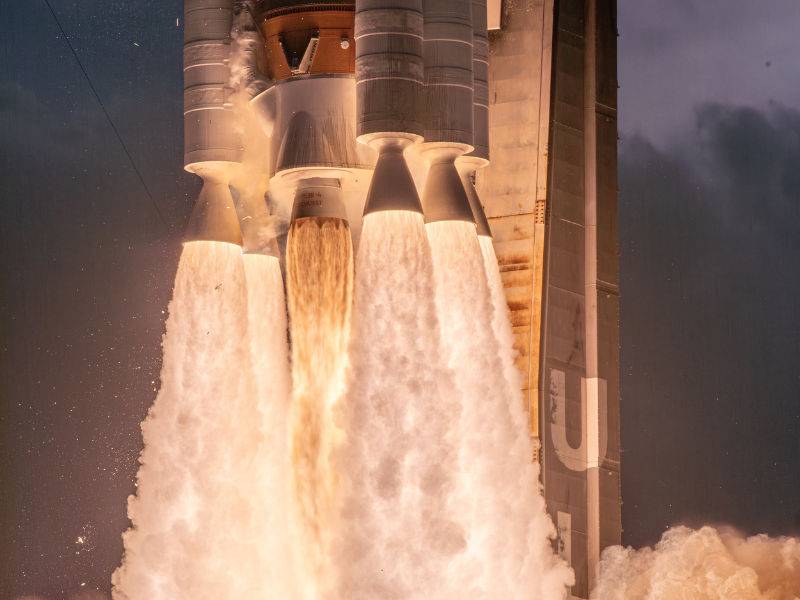
The company shipped 29 satellites into orbit around 12:30 a.m. ET on Thursday atop a United Launch Alliance Atlas V rocket. The mission brings Amazon’s total constellation to more than 390 satellites, which is “enough to support continuous service across initial latitudes,” Chris Weber, vice president of business and product for Amazon Leo, wrote in a post on X.

It’s a key milestone for Amazon as the company tries to make Leo a competitor to SpaceX’s Starlink in the low Earth orbit satellite market. In November, Amazon began offering an “enterprise preview” of Leo for select businesses, but it has yet to launch its service for consumers and government customers.

Amazon’s initial commercial service will likely be limited to users in certain geographies. Future missions will “add coverage and capacity,” Weber said.

SpaceX had a four-year head start on Amazon, launching Starlink in 2015. It has since amassed a constellation of around 10,000 satellites and more than 10 million subscribers. Amazon announced the creation of Kuiper in 2019, and later changed the name to Leo.

Amazon aims to build a constellation of roughly 7,700 satellites, but the effort has been slowed by a shortage of rocket capacity. In its January request for an extension on regulatory deployment deadlines, the company cited delays beyond its control, including a “shortage in the near-term availability” of rockets. Amazon in 2022 signed a historic deal to reserve rocket launches with ULA, Arianespace and Jeff Bezos’ Blue Origin, before purchasing rides with SpaceX. Many of those providers have experienced delays with their launch vehicles.

Another setback came in May, when one of Blue Origin’s New Glenn rockets exploded on the launchpad during a hot-fire test, just days before it was slated to carry a batch of Amazon satellites. The company is currently rebuilding the pad, and working to determine what caused the anomaly.


Bezos and Blue Origin CEO Dave Limp have said the company is determined to return New Glenn to flight later this year. New Glenn is a giant, partially reusable rocket that seeks to compete with SpaceX’s Starship rocket and can carry heavier payloads of up to 45 metric tons to low Earth orbit.

Amazon said Thursday its next Leo mission will use ULA’s Vulcan heavy-lift rocket, “which will carry even larger Leo payloads and help increase our deployment rate.”

“With hundreds of flight-ready satellites standing by at the Cape and a new, dedicated vertical integration facility ready to support Leo Vulcan 1 and subsequent missions, we have a clear path to increase launch and deployment cadence, helping us quickly expand network coverage following an initial service rollout later this year,” Melissa Wuerl, Leo’s director of launch systems, said in a statement.


To view this content we will need your consent to set third party cookies.
For more detailed information, see our cookies page.
 

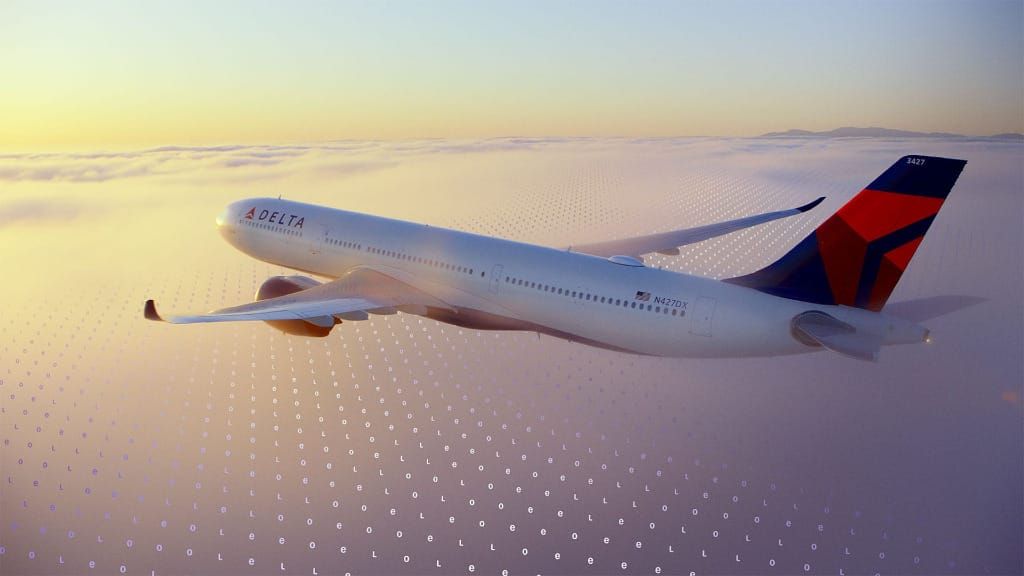
Amazon Leo Lands Delta Deal as Satellite Rollout Lags Behind Starlink​

kuiper_delta_planeexterior_aurora_d_v03_sm-1.jpg


Delta Air Lines plans to equip hundreds of aircraft with Amazon’s low Earth orbit satellite service, Amazon Leo, even as the network remains in early deployment and faces launch delays that could affect its long-term rollout.

Delta said it would begin installing Amazon Leo connectivity on 500 aircraft starting in 2028, part of a broader partnership with Amazon to expand in-flight Wi-Fi and digital services.


JetBlue to enhance onboard Wi-Fi with Amazon's Kuiper network by 2027​

RJMP43CX7VO4JJAJD2WVNRRRXA.jpg
 
Last edited:

NBN Co selects Amazon’s Project Kuiper to bring low Earth orbit (LEO) satellite broadband to Australia


NBN Co and Amazon today announced an agreement to deliver high-speed, wholesale fixed broadband to customers in parts of regional, rural and remote Australia via Project Kuiper’s low Earth orbit (LEO) satellite technology.

Project Kuiper is Amazon's satellite broadband business that will provide fast, reliable internet to customers around the world. Amazon is planning to launch its service in Australia from the middle of 2026.

When Project Kuiper launches in Australia, NBN Co plans to offer wholesale residential-grade fixed LEO satellite broadband services to more than 300,000 premises within our existing satellite footprint via participating Retail Service Providers (RSPs).

nbn’s wholesale LEO satellite offering powered by Project Kuiper will be available to both eligible1 existing and new customers within nbn’s satellite footprint, via participating RSPs.

The agreement will enable NBN Co to transition from its existing geostationary Sky Muster satellite service over the coming years and will complement NBN Co’s investments in fibre and fixed wireless upgrades for regional Australia.

NBN Co will shortly start consultation with RSPs, regional communities and stakeholders, to help inform what speed tiers are offered, wholesale pricing and the upgrade for customers.

The consultation will consider the offer of equipment and professional initial standard installation and assurance at no cost for existing eligible1 nbn satellite customers, via participating RSPs.

Project Kuiper’s low-latency, high-bandwidth satellite network will provide significant improvements to the quality and reliability of broadband for eligible regional, rural and remote communities.

To achieve its goals, Project Kuiper is deploying thousands of satellites in low Earth orbit —connected to each other by high-speed optical links that will create a mesh network in space—and linked to a global network of antennas, fibre, and internet connection points on the ground.
 
Just now reading this. Am I right that this is a direct competitor to Starlink?

FWIW, I'm seeing a number of homes in my area with Starlink dishes on their roofs.
 
Just now reading this. Am I right that this is a direct competitor to Starlink?

FWIW, I'm seeing a number of homes in my area with Starlink dishes on their roofs.

Amazon trying to get around fiber optic internet traffic to its AWS sites. Companies do a direct satellite dish link instead.

projectLeo.png
 
Last edited:

Users who are viewing this thread

Back
Top