India's Fifth-Generation Stealth Fighter Program Advances as Three Bidders Submit AMCA Proposals
By Surendra Singh
Nov 16, 2026
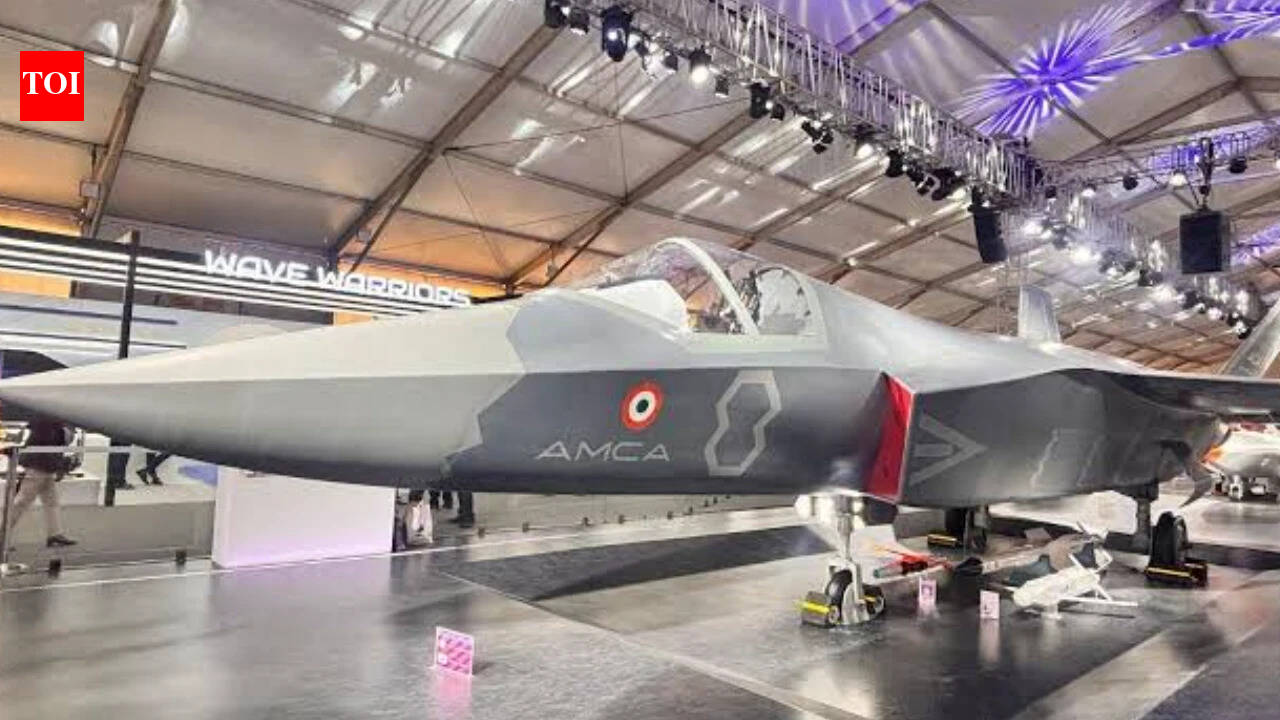
NEW DELHI – India's efforts to develop a fifth-generation stealth fighter aircraft have reached a significant milestone, with three domestic bidders submitting proposals for the
Rs 15,000-crore Advanced Medium Combat Aircraft (AMCA) program.
The bids are currently being evaluated by a high-level review committee established by India's Ministry of Defence.
Three Bidders Compete for Prototype Development
Industry sources confirmed to
The Times of India (TOI) that three contenders submitted their proposals by the October 30 deadline:
- Larsen & Toubro (L&T)-led consortium: Comprising Bharat Electronics Limited (BEL) and Dynamatic Technologies.
- Tata Advanced Systems Limited (TASL): The only company bidding independently.
- Bharat Forge-led consortium: Comprising BEML Limited and Data Patterns.
The bids were opened on November 1 to select a
Development-cum-Production Partner (DCPP) responsible for manufacturing five AMCA prototypes.
The aircraft has been designed by the Aeronautical Development Agency (ADA), a laboratory under India's Defence Research and Development Organisation (DRDO).
Based in Bengaluru, ADA conceived the program and will oversee the manufacturing of five twin-engine AMCA prototypes.
Engine Development and Flight Testing
The AMCA is expected to use two
General Electric F414 engines, provided a proposed agreement between India's state-owned Hindustan Aeronautics Limited (HAL) and US-based GE for joint engine production in India is finalized.
ADA requires
15 F414 engines to support the development and testing of the five flying prototypes.
The prototypes are expected to conduct approximately
1,800 test sorties over seven years to validate the aircraft's critical capabilities, including flight-control systems, stealth characteristics, sensors and radar, weapons integration, and propulsion performance.
Fifth-Generation Capabilities and Development Timeline
The AMCA is intended to provide the Indian Air Force (IAF) with an indigenous fifth-generation fighter aircraft.
Its planned advanced capabilities include:
- Stealth design: Internal weapons bays to reduce radar detectability.
- Supercruise: The ability to sustain supersonic flight without afterburners.
- AI-driven avionics: Advanced onboard systems supporting aircraft operations.
- Next-generation sensor fusion: Integration of information from multiple sensors to improve situational awareness.
The first batch of AMCA aircraft is expected to be ready around
2034–2035.
The program is also intended to help address the Indian Air Force's fighter squadron shortage. Its operational strength has declined to
29 squadrons, compared with an authorized strength of
42.5 squadrons.
The original bidding deadline of August 27 was extended to October 30 after prospective bidders requested additional time to complete the formalities required for the complex stealth fighter program.
Regional Fifth-Generation Fighter Developments
India's AMCA program is advancing amid developments in fifth-generation fighter capabilities across the region.
China already operates the
Chengdu J-20 and
Shenyang J-35, according to the report.
Meanwhile, Pakistan is reportedly planning to acquire
40 Chinese J-35 stealth fighter aircraft.
The AMCA program represents India's effort to develop an indigenous fifth-generation fighter platform while strengthening its domestic aerospace and defense manufacturing capabilities.
Source: The Times of India, Surendra Singh.
The Times of India brings the Latest & Top Breaking News on Politics and Current Affairs in India & around the World, Cricket, Sports, Business, Bollywood News and Entertainment, Science, Technology, Health & Fitness news & opinions from leading columnists.

timesofindia.indiatimes.com