ghazi52
THINK TANK: CONSULTANT


An Education System Under Strain
Nazish Mehmood
January 29, 2026

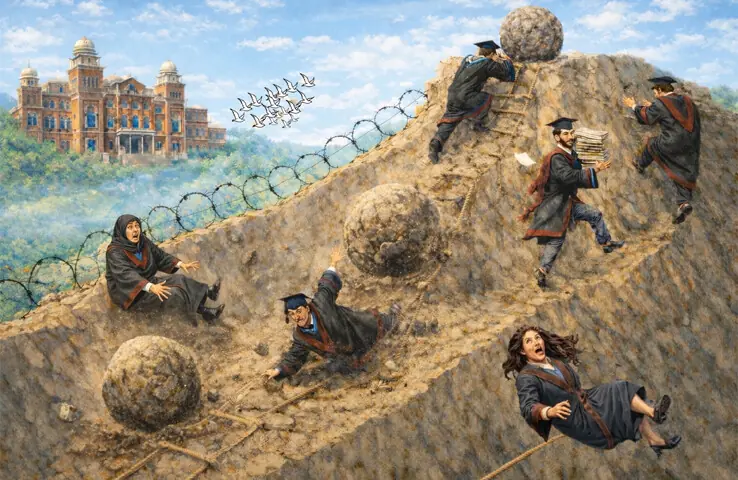
Education systems rarely collapse overnight. They weaken slowly, year after year, through neglect, poor priorities, and the absence of strong political ownership. Khyber Pakhtunkhwa (KP), Pakistan’s third-largest province, is a clear example of how failures at the top directly shape lost opportunities at the bottom. Despite repeated promises and reform slogans, KP’s education indicators show a system struggling under administrative neglect and lack of direction.
One of the clearest signs of this failure is the absence of sustained Chief Minister–level focus on education. KP continues to have between 4.7 and 4.9 million out-of-school children. This number alone should have triggered an emergency response. Instead, it has become a routine statistic, quoted in reports, briefly discussed, and then ignored. For a province with one of the youngest populations in South Asia, this is not a minor policy gap. It is a long-term development failure.]
Globally, regions with similar out-of-school numbers, such as northern Nigeria or parts of Ethiopia, are treated as education crisis zones. In KP, however, this crisis has unfolded openly, without consistent executive ownership. Education has remained scattered across departments and programs, with no single authority held clearly responsible for results.
The impact of this neglect is visible inside classrooms across KP. Schools face overcrowding, teacher shortages, and safety concerns, all of which weaken learning and push children out of the system. Classrooms built for 30 students often hold 60 or more. In many rural and mountainous areas, one teacher is expected to handle several grades at the same time, an approach widely recognized as ineffective.

An Education System Under Strain - Stratheia
KP’s education system is weakening under poor governance, leaving millions of children out of school and stalling literacy growth.
 stratheia.com