Apple Unveils Its First Foldable iPhone Duo with a Starting Price of 15,999 Yuan: Redefining the Value of "Made in China" Beyond Hardware Innovation As Apple officially launches its debut foldable device, the iPhone Duo, with a price point starting at 15,999 yuan, the product’s most notable...

eu.36kr.com
Priced at 15,999 Yuan, the foldable screen reshuffles supply chain value: China's precision manufacturing ushers in a "cabin upgrade" moment.
2026-09-21 11:37
Apple's first foldable iPhone Duo is priced starting at 15,999 yuan. The highlight does not lie in the mobile phone itself, but in redefining the value of Made in China.
Apple's first foldable iPhone Duo starts at 15,999 yuan. Its highlight does not lie in the device itself, but in redefining the value of Made in China. In the past, the industry competed for higher assembly capacity, while now it competes for better control over engineering risks. As the value of a single unit shifts from "scale" to "complexity", China's supply chain is moving from end-stage assembly to process definition. This is not a simple order transfer, but a brutal revaluation of value.
In the early hours of September 10, 2026, Apple's autumn launch event dropped a major announcement.
Tim Cook's successor, the new CEO John Ternus, unveiled the biggest hardware transformation since the birth of iPhone: the first foldable model iPhone Duo officially debuted. Its domestic starting price is 15,999 yuan, and the top-tier configuration goes up to 26,499 yuan.
The outside world is focusing on two core hardware indicators: the ultra-slim thickness of 5.2mm, and the crease optimization brought by the hinge. But the real major event across the entire industrial chain is unfolding under the stage of the launch event:
Compared with traditional bar smartphones, the material cost of a single foldable iPhone has multiplied; high value-added core component orders are rapidly concentrating on high-quality Chinese Apple supply chain enterprises. Apple's procurement logic has completely shifted: from "whoever has larger capacity gets the order" to "whoever can control engineering risks gets the market share".
The industry status of the domestic supply chain is being redefined. This round of industrial restructuring just coincides with the golden inflection point where the overall foldable screen market breaks through 100 million units in shipment volume.
01
Single unit value surge: Profits shift from "scale" to "complexity"
The iPhone Duo adopts a horizontal book-style inward fold design, with a 5.4-inch outer screen and a 7.6-inch inner screen, equipped with a 2-nanometer A20 Pro chip, and its annual production target is about 8 million to 10 million units.
The foldable form factor has rewritten the bill of materials of the whole device: the hinge becomes a unique incremental part for foldable products, ultra-thin flexible glass replaces the ordinary cover plate, the size and specification of flexible OLED are upgraded simultaneously, and dual batteries and flexible circuit boards that traverse the hinge further push up the material cost per unit.
According to estimates from the supply chain, the cost of the foldable display module is about 139.8 USD higher than that of a bar flagship phone, and the flexible screen and hinge account for nearly half of the total cost of the device; among them, the BOM cost of the hinge module is about 90 to 100 USD — this is a completely new increment that does not exist on bar smartphones at all.
Counterpoint predicts that the shipment of foldable panels will increase by 46% year-on-year in 2026, and the revaluation of per-unit value has already taken place before orders are placed. The display panel segment is also concentrating on leading players: Samsung Display has won the 3-year exclusive supply right for the foldable OLED of iPhone Duo, with the first batch of orders of about 3 million units, and the 2027 shipment target has been raised to 15 million units. The upgrade of specifications and usage in the panel sector directly benefits leading suppliers with mass production certification.
What is more thought-provoking is the pricing environment: in 2026, the prices of core components such as memory have risen sharply, and the entire industry has generally raised prices, but Apple has kept the starting price of Duo below 1999 USD. It chooses to use the premium space of high-end form factors to absorb costs, rather than passing the pressure downwards. The support for this level of complexity also comes from the manufacturing process — A20 Pro is one of the first flagship mass-produced chips using TSMC's 2-nanometer process. The superposition of process dividend and foldable structure gives the premium of Duo a dual technical foundation.
A single phone has redistributed the value across the supply chain. Flexible screens and hinges begin to take up the largest share, which reflects that industrial value is shifting from scale-oriented to complexity-oriented — whoever masters complex manufacturing capabilities can get this part of the new added profit.
02
The "upgrade" of China's supply chain: from end assembly to process definition
Foldable screens have restructured value distribution, but profits are not evenly distributed to all suppliers.
The top-level "full assembly" is still dominated by Amphenol and Taiwan's Shin Zu Shing; the real upgrade of China's supply chain lies in the precision component layer further down — in the past, they could only supply standard parts and earn processing fees, but now they have taken control of the two complex links of hinges and ultra-thin glass, and start to participate in process definition in turn.
First, look at the hinge segment.
Lingyi iTech is the core supplier of the hinge structural parts and screen support layer for iPhone Duo, with a share of about 60% for small parts, and the per-unit value is as high as 100 to 120 USD, far higher than the hinge-related components of bar iPhones. The hinge consists of more than 100 components. Apple independently develops the variable torque structure with magnetic-assisted closing. The hinge cover is 3D printed with 100% recycled titanium, with embedded titanium metal plates and ceramic fiber inserts inside to improve rigidity. Lingyi can take on this kind of work not because of its large scale, but because of its precision manufacturing capabilities.
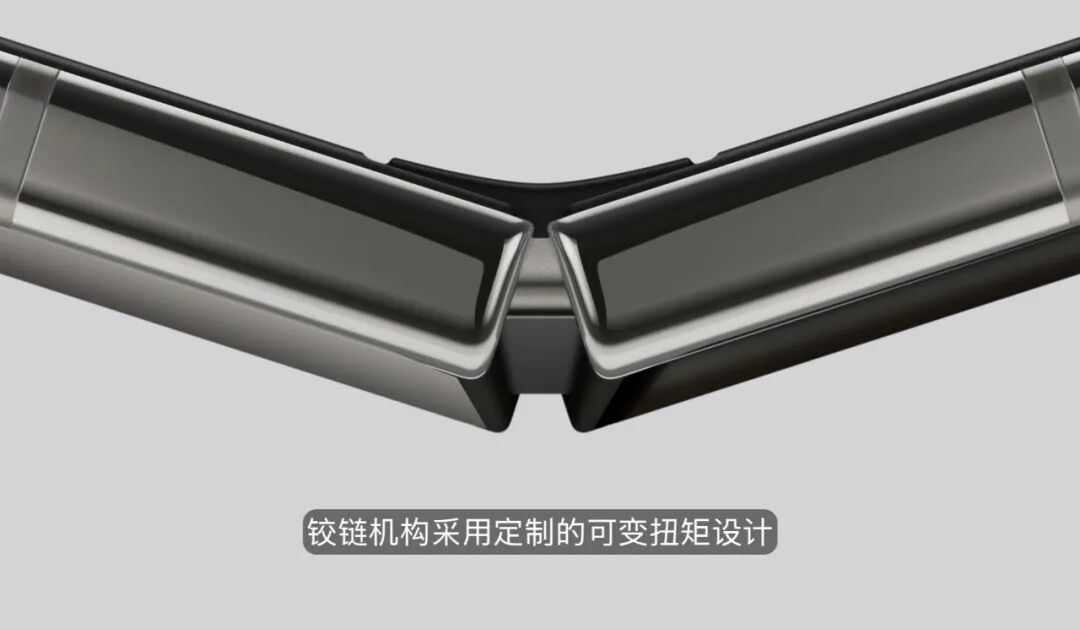
This segment is not monopolized by Lingyi. The share of Changying Precision in the precision structural parts of hinges has exceeded 25%, and it is also an important participant in Apple's hinge system. Yian Technology produces the zirconium-based liquid metal hinge shaft, with the per-unit value of liquid metal structural parts being about 70 to 100 yuan and a gross profit margin of 35% to 45%, which is significantly higher than the company's overall level of about 25%. They have taken control of high gross profit segments, not low-value drudgery.
Next, look at the UTG ultra-thin glass segment.
Lens Technology supplies UTG ultra-thin glass for Duo, with the mass production yield of the central thinning technology reaching over 95%, and the first batch of orders are locked at the level of 10 million units. It should be noted that the previously circulating market rumor that "Lens Technology monopolizes about 70% of the share" has been confirmed to be false, and the final pattern is set as a dual-main supplier pattern — Lens Technology and Biel Crystal are both main suppliers, with roughly equal 50/50 shares. Lens Technology's supply scope also extends to PET functional films, 3D glass cover plates and back cover glass, covering almost all key links of the foldable screen's transparent protection and support layers.
Other segments are also upgrading: Jinyan Technology, Pengding Holdings, Dongshan Precision, Crystal Optoelectronics and Rongqi Technology are distributed in segments such as MIM parts, flexible circuit boards, optics and process testing, and the final assembly is undertaken by Foxconn Industrial Internet. In addition, Luxshare Precision is developing hinge technology and plans to enter this high-value segment later. This is a widely covered but clearly prioritized supply network.
The upgrade does not come for free. During the trial production stage, the consistency of hinge assembly was difficult to maintain, and the yield rate of some batches was once lower than 50%. It was the process iteration of Chinese suppliers that brought the yield back to the right track. As a result, China's supply chain has moved from "supplying parts" to "defining processes" — which is more significant than simply selling several million more units. China's Apple supply chain is upgrading from the OEM label to complex manufacturing capabilities, and what it has obtained is not only orders, but also the right to define processes and a longer voice cycle.
03
The brutal dividing line of China-India division of labor: whoever takes on difficult work gets the new ticket
iPhone Duo puts a highly difficult process on the table, and also puts factories in China and India on the same test paper — but the questions they are answering are not the same.
In 2025, India assembled about 55 million iPhones, accounting for about a quarter of the global total, and it has indeed crossed the scale threshold. But between "being able to assemble a huge number of standard phones" and "being able to handle the production ramp-up of the first-generation foldable screen", what separates them is not just the number of workers, but whether local components, equipment and engineering teams can cooperate intensively in the same region.
The cost of manufacturing iPhones in India is still about 5% to 10% higher than in China, and the domestic added value of electronics manufacturing is currently about 18% to 20%. To achieve the goal of launching high-end new products locally, there is still a whole local supply chain to build.
China's supply chain remains in this complex device not because of lower wages, but because of a geographical density dividend: in the areas around Shenzhen, Dongguan and Suzhou, when the R&D end modifies a dimension, the surrounding mold, fixture, circuit board and testing factories can respond synchronously on the same street. A few hours of production line shutdown or a few percentage points drop in yield during new product mass production will be amplified into inventory and delivery accidents elsewhere, but can be quickly remedied here.
Apple's logic of selecting locations for complex product production is to obtain this speed of turning uncertainty into guaranteed delivery, rather than just pure production capacity scale.
Therefore, what Apple is doing is not an either-or choice, but splitting the risks into two parts for guarantee: India helps it disperse the geopolitical and tariff risks caused by excessive concentration of production locations, and China's mature supply chain helps it control the learning cost of the first-generation new products. The two demands exist at the same time, so the expansion of orders to India and the retention of high-difficulty products in China will coexist for a long time.
From the overall market perspective, global foldable screen shipments are expected to grow by 21% to 30% in 2026, and Apple is expected to rank second in the world with a share of about 25% in the first year; in the Chinese market, Huawei still holds about 60% of the share. This entry pushes foldable screens from the early adopter stage to the mainstream, and Apple's overall gross profit margin has long remained above 40%, so the starting price of 15,999 yuan can still maintain a healthy profit margin.
But this hierarchy is not a geographical privilege. The Indian government launched a new mobile phone manufacturing plan in 2026, specifically offering incentives to encourage local procurement of key components; Foxconn's Indian factory has imported display components, cover glass and mechanical shells from China for the trial production of iPhone 17 — which indicates that the trend of "assembling more phones" is shifting towards "manufacturing more components". As long as India completes the layout of display modules, precision structural parts, equipment maintenance and engineering teams, and proves that it can also achieve stable production ramp-up for first-launched high-end phones, Apple is very likely to further transfer complex products there; conversely, the old production capacity of Chinese suppliers with stagnant process capabilities will be moved out of high-value segments first.
Upgrading is not a one-time promotion, but a continuous race: whoever can reduce yield loss faster on more complex products and complete production line adjustment in a shorter time will stay in the segment with thicker profits and slower substitution.
However, the value surge on the supply side cannot fully cover the reality on the demand side. A report from China.com after visiting physical stores found that for every 10 bar smartphones sold, less than 1 foldable phone is traded; two repairs cost about 10,000 yuan, and the second-hand residual value is about 30% of the original price. All these data remind that there is still a long way to go for the popularization of foldable screens.
The value surge is taking place on the supply side, and the divergence between market popularity and transaction volume is exactly the most real two-sided state during the introduction period of high-end new products. Whether consumers are willing to pay for foldable screens starting at 15,999 yuan is far more unpredictable than the process sprint on the supply side.
This upgrade is far from reaching the final stage. For China's supply chain, obtaining the right to define processes is only the first step; how to continuously maintain the leading edge in complex manufacturing capabilities, and how to truly expand the popularization space of foldable screens on the demand side, are the more long-term propositions.



 www.chinadaily.com.cn


