The SC
INT'L MOD
In the midst of the most severe security storm the region has witnessed in decades, the Arab Gulf states have proven that true victory is not always measured by the number of battles they fight, but rather by the number of wars they succeed in avoiding.
While the skies over the Middle East were ablaze with missiles and drones, and the wills of the major powers clashed in a fateful confrontation, the Gulf chose a completely different path: the path of armed neutrality, smart deterrence, and managing the crisis with superior diplomatic skill, so that the Gulf region would emerge, in the end, with a true strategic victory without a single bullet being fired in direct confrontation.
The essential question:
Does the Gulf now possess a mature security doctrine that enables it to deal with the most complex regional crises?
The answer provided by the facts of recent months is yes, and with distinction.
A complex equation in a time of regional chaos
In the midst of the accelerating escalation between Iran and Israel, the Gulf states faced what could be described as the “impossibility equation”: How do they maintain their national security without sliding into a war that they did not start and in which they have no interest? The entire region has turned into a potential targeting arena, and the Gulf states are standing on a thin line separating a sovereign violation and deliberate provocation on the one hand, and being drawn into a comprehensive confrontation on the other hand.
What distinguished the Gulf response was that it did not neglect either side of the equation. The Gulf states refused to allow their lands to be turned into corridors for military operations, and at the same time maintained their network of relations with the conflicting parties without bringing them down, and managed a very sensitive crisis with the tools of pragmatic flexibility, not the tools of emotional impulsiveness. This same delicate balance constitutes the first component of Gulf strategic victory.
Military success: a steadfast shield in the face of the hurricane
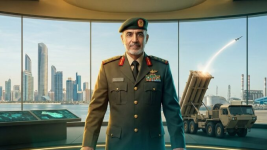
It is not possible to talk about Gulf victory without acknowledging the military achievement achieved by air defense systems in the region. These systems intercepted more than 3,600 missiles and drones launched in the context of the escalating conflict, achieving a success rate approaching 99%, a number that defense experts describe as exceptional in the history of modern warfare.
These numbers reveal a fundamental qualitative shift in the Gulf defense system. The countries of the region no longer rely on the principle of theoretical deterrence or external security promises alone. Rather, they now possess actual field capabilities that test themselves in extremely complex operational environments. This high performance reflects the fruits of years of accumulated investment in modernizing air defense systems, in training operational personnel, and in integrating the various layers of defense into an integrated and effective network.
More important than the numbers is that this military success performed a deeper function than simply repelling missiles: it sent a clear strategic message to all parties that the Gulf states are not easy targets, and that any calculations that underestimate their defensive capabilities are doomed to error.
Political success: the art of navigating mines
However, rational people realize that what the Gulf has achieved on the political level is greater in its strategic impact than what it has achieved on the military level. Gulf leaders succeeded in establishing four central principles in their dealings with the crisis:
The four basic principles
First: not to be drawn into war
The Gulf states resolutely rejected the pressures from multiple sources that pushed them toward direct involvement, realizing that a war with an uncertain end exposes everything to risk.
Second: Maintaining balance between the parties
The Gulf states have maintained open channels of communication with the various parties to the conflict, without openly siding with one party over another, providing a rare model of multi-directional diplomacy in a highly polarized environment.
Third: Managing the crisis pragmatically
Countries in the region avoided falling into the trap of ideological rhetoric that dominated the responses of many, opting instead for pragmatic calculations based on achievable goals.
Fourth: Preventing the expansion of the conflict regionally
Effective Gulf neutrality contributed to narrowing the scope of the clash and limiting its effects, preventing the spread of the flames of war to wider geographical areas.
Strategic flexibility: when the economy withstands the eye of the storm
There is a third dimension to this victory that is often overlooked by analysts preoccupied with the immediate security scene: the economic and strategic flexibility demonstrated by the Gulf states despite the magnitude of the threats surrounding them.
These countries succeeded in protecting their vital infrastructure from any direct field penetration, and maintained the continuity of strategic supply chains and the flow of oil and gas, ensuring economic stability in exceptional circumstances. On a deeper level, this crisis has pushed the Gulf states towards strengthening their reliance on their own capabilities, whether in defense industries or in diversifying sources of strategic supply, in a way that reduces the fragility of external dependency in times of crisis.
This strategic flexibility represents the invisible side of victory, but it is perhaps the most lasting in its impact on the region's future. The country that withstands the most severe storms economically accumulates more strategic capital than it achieves through military victory.
The four strategic lessons
The Gulf experience in this major crisis summarizes 4 strategic lessons that policy makers, researchers, and opinion leaders in the region should learn:
First lesson
-The Gulf achieved a true victory without waging a war, which in itself is a new standard for defining victory in an era of complex conflicts.
Lesson two
-Material and human losses were reduced to a minimum despite the ferocity of the surrounding threats.
Lesson three
-The Gulf states emerged with a more established and influential regional position than they had before the outbreak of the crisis.
Lesson four
-The region has provided the world with a lesson-worthy model for managing crises of proxy war and asymmetric escalation.
Conclusion: A model worth contemplating
This silent victory calls for serious and deep contemplation: What if the countries of the region redefined the concept of power to include the state’s ability to protect its interests without depleting its resources in wars that do not achieve their goals? What if this Gulf model becomes a reference for inspiration in future crises?
True victory is not drawn by gunpowder smoke alone, but is also drawn by that leader who knows when to advertise his power and when to stop declaring it. The Gulf has proven that it has both.
While the skies over the Middle East were ablaze with missiles and drones, and the wills of the major powers clashed in a fateful confrontation, the Gulf chose a completely different path: the path of armed neutrality, smart deterrence, and managing the crisis with superior diplomatic skill, so that the Gulf region would emerge, in the end, with a true strategic victory without a single bullet being fired in direct confrontation.
The essential question:
Does the Gulf now possess a mature security doctrine that enables it to deal with the most complex regional crises?
The answer provided by the facts of recent months is yes, and with distinction.
A complex equation in a time of regional chaos
In the midst of the accelerating escalation between Iran and Israel, the Gulf states faced what could be described as the “impossibility equation”: How do they maintain their national security without sliding into a war that they did not start and in which they have no interest? The entire region has turned into a potential targeting arena, and the Gulf states are standing on a thin line separating a sovereign violation and deliberate provocation on the one hand, and being drawn into a comprehensive confrontation on the other hand.
What distinguished the Gulf response was that it did not neglect either side of the equation. The Gulf states refused to allow their lands to be turned into corridors for military operations, and at the same time maintained their network of relations with the conflicting parties without bringing them down, and managed a very sensitive crisis with the tools of pragmatic flexibility, not the tools of emotional impulsiveness. This same delicate balance constitutes the first component of Gulf strategic victory.
Military success: a steadfast shield in the face of the hurricane
It is not possible to talk about Gulf victory without acknowledging the military achievement achieved by air defense systems in the region. These systems intercepted more than 3,600 missiles and drones launched in the context of the escalating conflict, achieving a success rate approaching 99%, a number that defense experts describe as exceptional in the history of modern warfare.
These numbers reveal a fundamental qualitative shift in the Gulf defense system. The countries of the region no longer rely on the principle of theoretical deterrence or external security promises alone. Rather, they now possess actual field capabilities that test themselves in extremely complex operational environments. This high performance reflects the fruits of years of accumulated investment in modernizing air defense systems, in training operational personnel, and in integrating the various layers of defense into an integrated and effective network.
More important than the numbers is that this military success performed a deeper function than simply repelling missiles: it sent a clear strategic message to all parties that the Gulf states are not easy targets, and that any calculations that underestimate their defensive capabilities are doomed to error.
Political success: the art of navigating mines
However, rational people realize that what the Gulf has achieved on the political level is greater in its strategic impact than what it has achieved on the military level. Gulf leaders succeeded in establishing four central principles in their dealings with the crisis:
The four basic principles
First: not to be drawn into war
The Gulf states resolutely rejected the pressures from multiple sources that pushed them toward direct involvement, realizing that a war with an uncertain end exposes everything to risk.
Second: Maintaining balance between the parties
The Gulf states have maintained open channels of communication with the various parties to the conflict, without openly siding with one party over another, providing a rare model of multi-directional diplomacy in a highly polarized environment.
Third: Managing the crisis pragmatically
Countries in the region avoided falling into the trap of ideological rhetoric that dominated the responses of many, opting instead for pragmatic calculations based on achievable goals.
Fourth: Preventing the expansion of the conflict regionally
Effective Gulf neutrality contributed to narrowing the scope of the clash and limiting its effects, preventing the spread of the flames of war to wider geographical areas.
Strategic flexibility: when the economy withstands the eye of the storm
There is a third dimension to this victory that is often overlooked by analysts preoccupied with the immediate security scene: the economic and strategic flexibility demonstrated by the Gulf states despite the magnitude of the threats surrounding them.
These countries succeeded in protecting their vital infrastructure from any direct field penetration, and maintained the continuity of strategic supply chains and the flow of oil and gas, ensuring economic stability in exceptional circumstances. On a deeper level, this crisis has pushed the Gulf states towards strengthening their reliance on their own capabilities, whether in defense industries or in diversifying sources of strategic supply, in a way that reduces the fragility of external dependency in times of crisis.
This strategic flexibility represents the invisible side of victory, but it is perhaps the most lasting in its impact on the region's future. The country that withstands the most severe storms economically accumulates more strategic capital than it achieves through military victory.
The four strategic lessons
The Gulf experience in this major crisis summarizes 4 strategic lessons that policy makers, researchers, and opinion leaders in the region should learn:
First lesson
-The Gulf achieved a true victory without waging a war, which in itself is a new standard for defining victory in an era of complex conflicts.
Lesson two
-Material and human losses were reduced to a minimum despite the ferocity of the surrounding threats.
Lesson three
-The Gulf states emerged with a more established and influential regional position than they had before the outbreak of the crisis.
Lesson four
-The region has provided the world with a lesson-worthy model for managing crises of proxy war and asymmetric escalation.
Conclusion: A model worth contemplating
This silent victory calls for serious and deep contemplation: What if the countries of the region redefined the concept of power to include the state’s ability to protect its interests without depleting its resources in wars that do not achieve their goals? What if this Gulf model becomes a reference for inspiration in future crises?
True victory is not drawn by gunpowder smoke alone, but is also drawn by that leader who knows when to advertise his power and when to stop declaring it. The Gulf has proven that it has both.
Source:
Major General (M) Fahd Al-Subaie


