Navigation
Install the app
How to install the app on iOS
Follow along with the video below to see how to install our site as a web app on your home screen.
Note: This feature may not be available in some browsers.
More options
Style variation
You are using an out of date browser. It may not display this or other websites correctly.
You should upgrade or use an alternative browser.
You should upgrade or use an alternative browser.
Arabic Coffee shop
- Thread starter The SC
- Start date
More options
Who Replied?



_Arabia_
Trusted Member
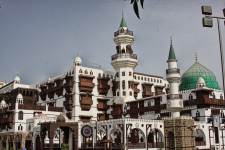
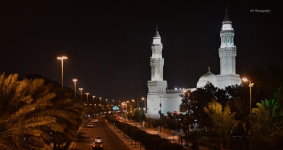
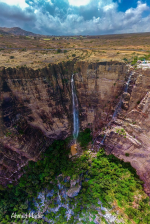
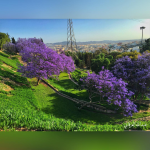
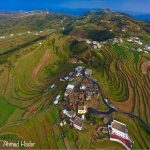

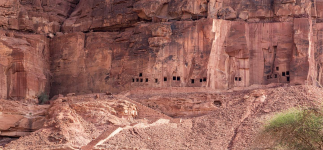
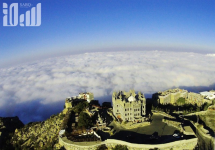
If you love to diving and snorkeling and coral reefs and in general seawater life - Red Sea (Hejazi coastline) is a paradise - although our waters are infested with all kind of deadly sharks.
Even Herge knew that almost 100 years ago:

David Attenborough once made - some 10-15 years ago a fantastic documentary about the seawater life and coastlines of KSA. I don't remember the title of the documentary.
I have not posted photos and videos of Makkah and Madinah as many people are familiar with those two cities.
I have not covered Jeddah much either although that is in many ways a great ancient city with one of the most beautiful historical quarters - that has undergone great renovation and restoration in recent years.
It is also a food paradise and in particular a seafood paradise:
Also you will feel at home in KSA because we have Pakistanis everywhere in KSA. Almost 3 million people and many locals have Pakistani or South Asian origins too, in particular in Hejaz. This is one of the main melting pots of the Muslim world actually as I explained. Due to Hajj and Umrah for the past 1400 years and migrations (economic) in the past many centuries. Many people ended up staying before modern day passports even became a thing and intermarried with locals etc. That is why you cannot find a single Hejazi that is 100% pure Arab - at least it is very rare. After all we are all mixed anyway but I am even talking about last 10 generations.
Last edited:

_Arabia_
Trusted Member
Looks like KSA/GCC relations with EU (economic, political, military, people to people) will only keep increasing:
Farhan is a very talented and capable foreign minister (speaks numerous languages and is highly educated) but he needs to change his appearance a bit. Not sure if he is deliberately trying to emulate the "Hitler look" or whatever but he should stop this. He already has a peculiar look to put it mildly.
Looks better with short hair and in Western clothing:

Al-Jubeir on the other hand looks better in traditional clothing due to his baldness:
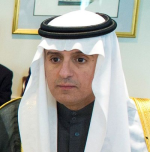
MBS also went from looking like your average Egyptian dude in his younger days:
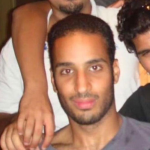
to unrecognizable.
Not sure what is going on but many Al-Saud members age badly and end up looking nothing like their younger selves.
A young King Salman:
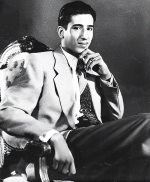
There are exceptions among them of course as well but noticed this with King Salman and MbS in particular. Not the case with other sons of King Abdulaziz and their off-spring. Or in particular the sons of King Faisal (ra).
Prince Turki, for a guy in his 80's is keeping up rather good in comparison:
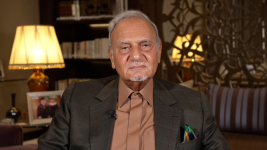
And this is MbS's full blood brother (younger), KBS. Our defense minister. They look nothing alike.
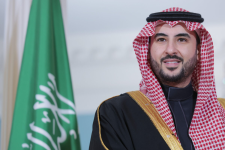
Saudi Arabian/Arab females on the other hand age much better, I have noticed.
Farhan is a very talented and capable foreign minister (speaks numerous languages and is highly educated) but he needs to change his appearance a bit. Not sure if he is deliberately trying to emulate the "Hitler look" or whatever but he should stop this. He already has a peculiar look to put it mildly.
Looks better with short hair and in Western clothing:
Al-Jubeir on the other hand looks better in traditional clothing due to his baldness:
MBS also went from looking like your average Egyptian dude in his younger days:
to unrecognizable.
Not sure what is going on but many Al-Saud members age badly and end up looking nothing like their younger selves.
A young King Salman:
There are exceptions among them of course as well but noticed this with King Salman and MbS in particular. Not the case with other sons of King Abdulaziz and their off-spring. Or in particular the sons of King Faisal (ra).
Prince Turki, for a guy in his 80's is keeping up rather good in comparison:
And this is MbS's full blood brother (younger), KBS. Our defense minister. They look nothing alike.
Saudi Arabian/Arab females on the other hand age much better, I have noticed.
Last edited:


The resemblance in some of the pictures where he is wearing a suit is just incredibleNot sure if he is deliberately trying to emulate the "Hitler look" or whatever but he should stop this. He already has a peculiar look to put it mildly.

_Arabia_
Trusted Member
It is uncanny indeed. What is even "worse", he was actually born in Germany (Frankfurt am Main).The resemblance in some of the pictures where he is wearing a suit is just incredible

Faisal bin Farhan Al Saud - Wikipedia
Peculiar looking individual, nonetheless.
This reminds me of another occurrence of resemblance with another German.
This time around the patriarch of the Rothschild family.

Mayer Amschel Rothschild - Wikipedia
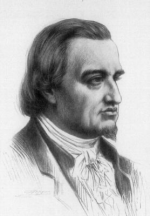
The resemblance to numerous House of Saud family members is truly uncanny. Among them a certain well-respected king, no less.
I keep forgetting that Hitler was actually Austrian, not German. Although South Germans and Austrians are practically closer to each other on almost every front than South Germans and North Germans. If you look past the passport.
Her husband was determined with his friends and companions, so they gathered in his majlis, while she was in the kitchen preparing a dinner feast for them in appreciation of her husband. And during their sitting, they talked about the virtue of polygamy, and they advised their friend who had invited them to get married and take multiple wives.
So she put on her abaya and took a whip and entered upon them in the majlis and trampled them, including her husband among them.
What happened with @Falcon29
 ? Hopefully it is a short ban. We need as many Arab users around here as possible.
First confirmed Saudi Arabian martyr/dead during the conflict.
Last edited:
_Arabia_
Trusted Member
More rainfall across much of KSA in recent days.
The abnormal high amount of rainfall is actually going to become a more common thing by each year. KSA is predicted to have a lot higher annual average rainfall in the upcoming years (even more so decades from now on) than the annual average rainfall for the past few decades.
The climate is a strange thing. Constantly changing. Much of KSA was a lush savannah just 8.000-10.000 years ago.

 news.miami.edu
According to this recent data extreme rainfall just 400 years ago was 5 times more extreme than extreme weather events nowadays. Which is crazy to think about.
Lions lived in Arabia less than 100 years ago after all.
Great news for our many farmers.
The abnormal high amount of rainfall is actually going to become a more common thing by each year. KSA is predicted to have a lot higher annual average rainfall in the upcoming years (even more so decades from now on) than the annual average rainfall for the past few decades.
The climate is a strange thing. Constantly changing. Much of KSA was a lush savannah just 8.000-10.000 years ago.
Study reveals Arabia's rainfall was five times more extreme 400 years ago
As the Middle East rapidly urbanizes, wide variability of Late Holocene rains should be considered in flash flood preparedness and future hydroclimate trajectories.
news.miami.edu
According to this recent data extreme rainfall just 400 years ago was 5 times more extreme than extreme weather events nowadays. Which is crazy to think about.
Lions lived in Arabia less than 100 years ago after all.
Great news for our many farmers.
Omg no way!What is even "worse", he was actually born in Germany (
We might have to do a genetic test ……
_Arabia_
Trusted Member
My predictions about what will occur for what it is worth.
KSA will expand those two existing oil (and gas - NGL etc. ) pipelines:
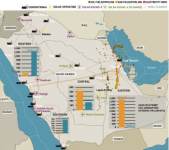

 en.wikipedia.org
 en.wikipedia.org
Potentially construct new ones as well as linking up with Saudi Arabian controlled Hadhramaut - direct access to the Arabian Sea.
A lot of this enormous infrastructure in KSA is actually constructed underground:
Same with the enormous project of desalination water pipelines (underground) that connects with most of KSA.
That infrastructure cannot be destroyed by any missiles or drones.
Hadhramaut and Al-Mahra joining KSA would be the best somewhat realistic geopolitical development in the foreseeable future.
KSA will expand those two existing oil (and gas - NGL etc. ) pipelines:
Trans-Arabian Pipeline - Wikipedia
East–West Crude Oil Pipeline - Wikipedia
Potentially construct new ones as well as linking up with Saudi Arabian controlled Hadhramaut - direct access to the Arabian Sea.
A lot of this enormous infrastructure in KSA is actually constructed underground:
Same with the enormous project of desalination water pipelines (underground) that connects with most of KSA.
That infrastructure cannot be destroyed by any missiles or drones.
Hadhramaut and Al-Mahra joining KSA would be the best somewhat realistic geopolitical development in the foreseeable future.
_Arabia_
Trusted Member
This is a post intended for fellow Arabs and other native inhabitants of the Arab world - the cradle of civilization.
Practically all Semitic and non-Semitic civilizations and cultures native to the Arab world, which are the oldest in the world, were all created by our ancestors.
In fact people from KSA and other Arabians have in fact the closest genetic kinship to the Natufians (world's oldest culture, first Neolithic culture in the world first builders of cities, first agriculturists in the world, first large-scale domestications of animals etc.).
All confirmed by modern-day DNA tests.
 en.wikipedia.org
en.wikipedia.org
 en.wikipedia.org
Basal Eurasian is a proposed lineage of anatomically modern humans with reduced, or zero, Neanderthal admixture (ancestry) compared to other ancient non-Africans. They diverged from other Eurasians after the Out-of-African migration and represent a sister lineage to other Eurasians. Basal Eurasians originate from the Southern Middle East, specifically from Prehistoric Arabia, or North Africa, and are said to have contributed ancestry to various West Eurasian, South Asian, and Central Asian as well as African groups.<a href="https://en.wikipedia.org/wiki/Basal_Eurasian#cite_note-1"><span>[</span>1<span>]</span></a><a href="https://en.wikipedia.org/wiki/Basal_Eurasian#cite_note-:0-2"><span>[</span>2<span>]</span></a>
This Basal Eurasian component is also proposed to explain the lower archaic admixture among modern West Eurasians compared with East Eurasians, although alternative explanations without need of such Basal admixture exist as well.<a href="https://en.wikipedia.org/wiki/Basal_Eurasian#cite_note-3"><span>[</span>3<span>]</span></a><a href="https://en.wikipedia.org/wiki/Basal_Eurasian#cite_note-:0-2"><span>[</span>2<span>]</span></a> Basal Eurasian ancestry had likely admixed into West Eurasian groups present in West Asia as early as 26,000 years ago, prior to the Last Glacial Maximum, with this ancestry being subsequently spread by later migrations, such as those of the Anatolian Neolithic Farmers into Europe during the Holocene.<a href="https://en.wikipedia.org/wiki/Basal_Eurasian#cite_note-:2-4"><span>[</span>4<span>]</span></a>
Description
A 2014 study by Lazaridis et al. demonstrated that modern Europeans can be modelled as an admixture of three ancestral populations; Ancient North Eurasians (ANE), Western Hunter-Gatherers (WHG), and Early European Farmers (EEF).<a href="https://en.wikipedia.org/wiki/Basal_Eurasian#cite_note-FOOTNOTELazaridis_et_al.2014-5"><span>[</span>5<span>]</span></a> This same study showed that EEFs harbour ancestry from a hypothetical non-African 'ghost' population which the authors name 'Basal Eurasians'. This group, who have not yet been sampled from ancient remains, are thought to have diverged from all non-African populations c. 60,000 to 100,000 years ago, before non-Africans admixed with Neanderthals (c. 50,000 to 60,000 years ago) and diversified from each other.<a href="https://en.wikipedia.org/wiki/Basal_Eurasian#cite_note-FOOTNOTEKamm_et_al.2020-6"><span>[</span>6<span>]</span></a><a href="https://en.wikipedia.org/wiki/Basal_Eurasian#cite_note-FOOTNOTEBergström_et_al.2021-7"><span>[</span>7<span>]</span></a><a href="https://en.wikipedia.org/wiki/Basal_Eurasian#cite_note-FOOTNOTEValliniPagani2022-8"><span>[</span>8<span>]</span></a><a href="https://en.wikipedia.org/wiki/Basal_Eurasian#cite_note-FOOTNOTEFerreira_et_al.2021-9"><span>[</span>9<span>]</span></a><a href="https://en.wikipedia.org/wiki/Basal_Eurasian#cite_note-FOOTNOTELazaridis_et_al.2016-10"><span>[</span>10<span>]</span></a>
A 2016 study by Lazaridis et al. found that populations with higher levels of Basal Eurasian ancestry have lower levels of Neanderthal ancestry, which suggests that Basal Eurasians had lower levels of Neanderthal ancestry compared with other non-Africans. A 2021 study by Ferreira et al. suggested that Basal Eurasians diverged from other Eurasians between 50,000 and 60,000 years ago, and lived somewhere in the Arabian peninsula, specifically the Persian Gulf region, shortly before proper Eurasians admixed with a Neanderthal population, in a region stretching from the Levant to northern Iran.<a href="https://en.wikipedia.org/wiki/Basal_Eurasian#cite_note-FOOTNOTEKamm_et_al.2020-6"><span>[</span>6<span>]</span></a><a href="https://en.wikipedia.org/wiki/Basal_Eurasian#cite_note-FOOTNOTEBergström_et_al.2021-7"><span>[</span>7<span>]</span></a><a href="https://en.wikipedia.org/wiki/Basal_Eurasian#cite_note-FOOTNOTEValliniPagani2022-8"><span>[</span>8<span>]</span></a><a href="https://en.wikipedia.org/wiki/Basal_Eurasian#cite_note-FOOTNOTEFerreira_et_al.2021-9"><span>[</span>9<span>]</span></a><a href="https://en.wikipedia.org/wiki/Basal_Eurasian#cite_note-FOOTNOTELazaridis_et_al.2016-10"><span>[</span>10<span>]</span></a>
Vallini et al. 2024 argues that the Basal Eurasian lineage diverged from other Eurasians soon after the Out-of-Africa migration, and subsequently became isolated, until it started to mix with other populations in the Middle East since around 25,000 years ago. These different Middle Eastern populations would later spread Basal Eurasian ancestry via the Neolithic Revolution to all of Western Eurasia.<a href="https://en.wikipedia.org/wiki/Basal_Eurasian#cite_note-:0-2"><span>[</span>2<span>]</span></a>
In modern populations, Neanderthal ancestry is around 10% to 20% lower in West Eurasians than East Eurasians, with intermediate levels found in South and Central Asian populations. Although a scenario involving multiple admixture events between modern humans and Neanderthals is an alternative possibility, the most likely explanation for this is that Neanderthal ancestry in West Eurasians and South and Central Asians was diluted by admixture with Basal Eurasian groups.<a href="https://en.wikipedia.org/wiki/Basal_Eurasian#cite_note-FOOTNOTEBergström_et_al.2021-7"><span>[</span>7<span>]</span></a>
Possible geographic origin
The earliest evidence of Basal Eurasian ancestry is found in individuals from Dzudzuana Cave [Wikidata] in Georgia dating to 26,000 years ago which have around 30% Basal Eurasian ancestry, with the rest being West Eurasian.<a href="https://en.wikipedia.org/wiki/Basal_Eurasian#cite_note-:2-4"><span>[</span>4<span>]</span></a>
Basal Eurasians may have originated in a region stretching from North Africa to the Middle East, before admixing with West-Eurasian populations.<a href="https://en.wikipedia.org/wiki/Basal_Eurasian#cite_note-FOOTNOTEKamm_et_al.2020-6"><span>[</span>6<span>]</span></a><a href="https://en.wikipedia.org/wiki/Basal_Eurasian#cite_note-FOOTNOTEBergström_et_al.2021-7"><span>[</span>7<span>]</span></a><a href="https://en.wikipedia.org/wiki/Basal_Eurasian#cite_note-FOOTNOTEValliniPagani2022-8"><span>[</span>8<span>]</span></a><a href="https://en.wikipedia.org/wiki/Basal_Eurasian#cite_note-FOOTNOTEFerreira_et_al.2021-9"><span>[</span>9<span>]</span></a><a href="https://en.wikipedia.org/wiki/Basal_Eurasian#cite_note-FOOTNOTELazaridis_et_al.2016-10"><span>[</span>10<span>]</span></a> North Africa has been described as a strong candidate for the location of the emergence of Basal Eurasians by Loosdrecht et al. in 2018.<a href="https://en.wikipedia.org/wiki/Basal_Eurasian#cite_note-FOOTNOTEvan_de_Loosdrecht_et_al.2018-11"><span>[</span>11<span>]</span></a>
Ferreira et al. in 2021 argued for a point of origin for Basal Eurasians into the Middle East, specifically in the Persian Gulf region on the Arab peninsula. As Basal Eurasians had low levels of Neanderthal ancestry, genetic and archaeological evidence for interactions between modern humans and Neanderthals may allow certain areas, such as the Levant, to be ruled out as possible sources for Basal Eurasians. In other areas, such as southern Southwest Asia, there is currently no evidence for an overlap between modern human and Neanderthal populations.<a href="https://en.wikipedia.org/wiki/Basal_Eurasian#cite_note-FOOTNOTEFerreira_et_al.2021-9"><span>[</span>9<span>]</span></a> Vallini et al. 2024 suggests a homeland for Basal Eurasians in the Arabian Peninsula, with a 'Common Eurasian Hub' in the Iranian Plateau, where they diverged into 'Ancient West Eurasians' and 'Ancient East Eurasians'.<a href="https://en.wikipedia.org/wiki/Basal_Eurasian#cite_note-:0-2"><span>[</span>2<span>]</span></a>
Estimated Basal Eurasian ancestry in ancient and modern populations
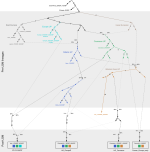
An admixture graph model showing Basal Eurasian branch according to Allentoft et al. 2024
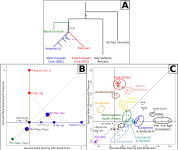
The phylogenetic position of Basal Eurasians in a wider Eurasian context<a href="https://en.wikipedia.org/wiki/Basal_Eurasian#cite_note-:0-2"><span>[</span>2<span>]</span></a>
An estimation for Holocene-era Near Easterners (e.g., Mesolithic Caucasus hunter-gatherers, Mesolithic and Neolithic Iranians, and Natufians) suggests that they formed from a combination of Basal Eurasian ancestry, and Western Hunter-Gatherer-related (WHG) and or Ancient North Eurasians-related (ANE) ancestries respectively.<a href="https://en.wikipedia.org/wiki/Basal_Eurasian#cite_note-FOOTNOTEvan_de_Loosdrecht_et_al.2018-11"><span>[</span>11<span>]</span></a>
The Mesolithic and Neolithic Iranian lineage is inferred to derived between 38–48% ancestry from Basal Eurasians respectively, with the remainder ancestry being made up by Ancient North Eurasian or Eastern Hunter-Gatherer (EHG) like ancestry, while Natufians derived a mean average of 50% Basal and 50% 'unknown hunter-gatherer' ancestry being closer to Western Hunter-Gatherers (WHG).<a href="https://en.wikipedia.org/wiki/Basal_Eurasian#cite_note-12"><span>[</span>12<span>]</span></a><a href="https://en.wikipedia.org/wiki/Basal_Eurasian#cite_note-13"><span>[</span>13<span>]</span></a><a href="https://en.wikipedia.org/wiki/Basal_Eurasian#cite_note-14"><span>[</span>14<span>]</span></a><a href="https://en.wikipedia.org/wiki/Basal_Eurasian#cite_note-:1-15"><span>[</span>15<span>]</span></a> Alternatively, Mesolithic and Neolithic Iranians derive most of their ancestry from a deep West Eurasian source (WEC2; c. 72%) with c. 18% Basal Eurasian and c. 10% Ancient East Eurasian admixture.<a href="https://en.wikipedia.org/wiki/Basal_Eurasian#cite_note-16"><span>[</span>16<span>]</span></a>
It has been found that the "models of genetic history of West Asian human populations who are modeled as a mixture of 'basal Eurasians' and West European hunter–gatherers" is in agreement with the genomic data on 'East Mediterranean Dogs', who "are modeled as a mixture of a basal branch (splitting deeper than the divergence of the Asian and European dogs) and West European dogs".<a href="https://en.wikipedia.org/wiki/Basal_Eurasian#cite_note-17"><span>[</span>17<span>]</span></a>
The Ancient North African Iberomaurusian (Taforalt) individuals were found to have harbored ~65% West Eurasian-like ancestry and considered likely direct descendants of such "Basal Eurasian" population. However they were shown to be genetically closer to Holocene-era Iranians and Levantine populations, which already harbored increased archaic (Neanderthal) admixture.<a href="https://en.wikipedia.org/wiki/Basal_Eurasian#cite_note-FOOTNOTEvan_de_Loosdrecht_et_al.2018-11"><span>[</span>11<span>]</span></a>
Early European Farmers (EEFs), who had some Western European Hunter-Gatherer-related ancestry and originated in the Near East, also derive approximately 30% (to up to 44%) of their ancestry from this hypothetical Basal Eurasian lineage.<a href="https://en.wikipedia.org/wiki/Basal_Eurasian#cite_note-FOOTNOTELazaridis_et_al.2014-5"><span>[</span>5<span>]</span></a><a href="https://en.wikipedia.org/wiki/Basal_Eurasian#cite_note-18"><span>[</span>18<span>]</span></a> An Upper Paleolithicspecimen from Kotias Klde cave in the Caucasus (Caucasus_25,000BP) had around 24% Basal Eurasian and 76% Upper Paleolithic European ancestry.<a href="https://en.wikipedia.org/wiki/Basal_Eurasian#cite_note-:1-15"><span>[</span>15<span>]</span></a>
Among modern populations, Basal-like ancestry peaks among Arabs (such as Qataris) at c. 45%, and among Iranian populations at c. 35%, and is also found in significant amounts among modern Northern Africans, in accordance with the high affinity towards the 'Arabian branch' of Eurasian diversity, which expanded into Northern and Northeastern Africa between 30 and 15 thousand years ago. Modern populations of the Levant derive between 35-38% ancestry from Basal Eurasians, modern Anatolians and populations from the Caucasus derive between 25-30% ancestry from Basal Eurasians, and modern Europeans derive around or less than 20% ancestry from Basal Eurasians.<a href="https://en.wikipedia.org/wiki/Basal_Eurasian#cite_note-FOOTNOTEFerreira_et_al.2021-9"><span>[</span>9<span>]</span></a>
Modern Bedouins and Yemenis are considered to represent direct descendants of the Basal Eurasians, carrying the highest amount of indigenous 'Arabian ancestry', and being basal to all modern Eurasian populations without displaying higher 'African-associated' admixture, and thus "are among the best genetic representatives of the autochthonous population on the Arabian Peninsula".<a href="https://en.wikipedia.org/wiki/Basal_Eurasian#cite_note-19"><span>[</span>19<span>]</span></a>
en.wikipedia.org
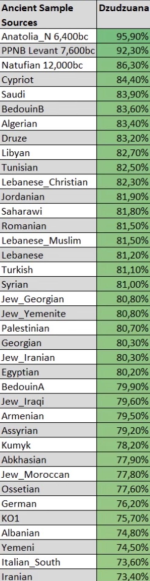
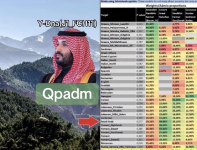
Great combination of admixture as well from our part.
In other words - Basal Eurasian ancestry is a major ancestral component in Levantine, Arabian, Anatolian, Iranian, and other Neolithic Near Eastern populations.
Levantine ancient Neolithic farmers (which Saudi Arabians have the closest genetic affinity to of all people) are the earliest Neolithic peoples and influenced the Anatolian Neolithic farmers greatly genetically.
So once again, like throughout most of history, it was Arabians/Arabs that influenced everyone else genetically in the region and from there on the entire Eurasian continent which is also confirmed by haplogroups, human migrations, the birth of civilization, advanced cultures and now modern-day DNA.
Pretty amazing, if you ask me.
Even fairly recent times (3000 years ago), Semitic speaking Arabians influenced Horn of Africa greatly genetically to the extend that almost 50% of their DNA derives from Arabians. We are talking about the cradle of African culture (Horn of Africa), one of the most populous regions of Africa and also the apparent birthplace of humans as a whole.
Practically all Semitic and non-Semitic civilizations and cultures native to the Arab world, which are the oldest in the world, were all created by our ancestors.
In fact people from KSA and other Arabians have in fact the closest genetic kinship to the Natufians (world's oldest culture, first Neolithic culture in the world first builders of cities, first agriculturists in the world, first large-scale domestications of animals etc.).
All confirmed by modern-day DNA tests.
Natufian culture - Wikipedia
Natufian culture - Wikipedia
Basal Eurasian - Wikipedia
Basal Eurasian
Basal Eurasian is a proposed lineage of anatomically modern humans with reduced, or zero, Neanderthal admixture (ancestry) compared to other ancient non-Africans. They diverged from other Eurasians after the Out-of-African migration and represent a sister lineage to other Eurasians. Basal Eurasians originate from the Southern Middle East, specifically from Prehistoric Arabia, or North Africa, and are said to have contributed ancestry to various West Eurasian, South Asian, and Central Asian as well as African groups.<a href="https://en.wikipedia.org/wiki/Basal_Eurasian#cite_note-1"><span>[</span>1<span>]</span></a><a href="https://en.wikipedia.org/wiki/Basal_Eurasian#cite_note-:0-2"><span>[</span>2<span>]</span></a>
This Basal Eurasian component is also proposed to explain the lower archaic admixture among modern West Eurasians compared with East Eurasians, although alternative explanations without need of such Basal admixture exist as well.<a href="https://en.wikipedia.org/wiki/Basal_Eurasian#cite_note-3"><span>[</span>3<span>]</span></a><a href="https://en.wikipedia.org/wiki/Basal_Eurasian#cite_note-:0-2"><span>[</span>2<span>]</span></a> Basal Eurasian ancestry had likely admixed into West Eurasian groups present in West Asia as early as 26,000 years ago, prior to the Last Glacial Maximum, with this ancestry being subsequently spread by later migrations, such as those of the Anatolian Neolithic Farmers into Europe during the Holocene.<a href="https://en.wikipedia.org/wiki/Basal_Eurasian#cite_note-:2-4"><span>[</span>4<span>]</span></a>
Description
A 2014 study by Lazaridis et al. demonstrated that modern Europeans can be modelled as an admixture of three ancestral populations; Ancient North Eurasians (ANE), Western Hunter-Gatherers (WHG), and Early European Farmers (EEF).<a href="https://en.wikipedia.org/wiki/Basal_Eurasian#cite_note-FOOTNOTELazaridis_et_al.2014-5"><span>[</span>5<span>]</span></a> This same study showed that EEFs harbour ancestry from a hypothetical non-African 'ghost' population which the authors name 'Basal Eurasians'. This group, who have not yet been sampled from ancient remains, are thought to have diverged from all non-African populations c. 60,000 to 100,000 years ago, before non-Africans admixed with Neanderthals (c. 50,000 to 60,000 years ago) and diversified from each other.<a href="https://en.wikipedia.org/wiki/Basal_Eurasian#cite_note-FOOTNOTEKamm_et_al.2020-6"><span>[</span>6<span>]</span></a><a href="https://en.wikipedia.org/wiki/Basal_Eurasian#cite_note-FOOTNOTEBergström_et_al.2021-7"><span>[</span>7<span>]</span></a><a href="https://en.wikipedia.org/wiki/Basal_Eurasian#cite_note-FOOTNOTEValliniPagani2022-8"><span>[</span>8<span>]</span></a><a href="https://en.wikipedia.org/wiki/Basal_Eurasian#cite_note-FOOTNOTEFerreira_et_al.2021-9"><span>[</span>9<span>]</span></a><a href="https://en.wikipedia.org/wiki/Basal_Eurasian#cite_note-FOOTNOTELazaridis_et_al.2016-10"><span>[</span>10<span>]</span></a>
A 2016 study by Lazaridis et al. found that populations with higher levels of Basal Eurasian ancestry have lower levels of Neanderthal ancestry, which suggests that Basal Eurasians had lower levels of Neanderthal ancestry compared with other non-Africans. A 2021 study by Ferreira et al. suggested that Basal Eurasians diverged from other Eurasians between 50,000 and 60,000 years ago, and lived somewhere in the Arabian peninsula, specifically the Persian Gulf region, shortly before proper Eurasians admixed with a Neanderthal population, in a region stretching from the Levant to northern Iran.<a href="https://en.wikipedia.org/wiki/Basal_Eurasian#cite_note-FOOTNOTEKamm_et_al.2020-6"><span>[</span>6<span>]</span></a><a href="https://en.wikipedia.org/wiki/Basal_Eurasian#cite_note-FOOTNOTEBergström_et_al.2021-7"><span>[</span>7<span>]</span></a><a href="https://en.wikipedia.org/wiki/Basal_Eurasian#cite_note-FOOTNOTEValliniPagani2022-8"><span>[</span>8<span>]</span></a><a href="https://en.wikipedia.org/wiki/Basal_Eurasian#cite_note-FOOTNOTEFerreira_et_al.2021-9"><span>[</span>9<span>]</span></a><a href="https://en.wikipedia.org/wiki/Basal_Eurasian#cite_note-FOOTNOTELazaridis_et_al.2016-10"><span>[</span>10<span>]</span></a>
Vallini et al. 2024 argues that the Basal Eurasian lineage diverged from other Eurasians soon after the Out-of-Africa migration, and subsequently became isolated, until it started to mix with other populations in the Middle East since around 25,000 years ago. These different Middle Eastern populations would later spread Basal Eurasian ancestry via the Neolithic Revolution to all of Western Eurasia.<a href="https://en.wikipedia.org/wiki/Basal_Eurasian#cite_note-:0-2"><span>[</span>2<span>]</span></a>
In modern populations, Neanderthal ancestry is around 10% to 20% lower in West Eurasians than East Eurasians, with intermediate levels found in South and Central Asian populations. Although a scenario involving multiple admixture events between modern humans and Neanderthals is an alternative possibility, the most likely explanation for this is that Neanderthal ancestry in West Eurasians and South and Central Asians was diluted by admixture with Basal Eurasian groups.<a href="https://en.wikipedia.org/wiki/Basal_Eurasian#cite_note-FOOTNOTEBergström_et_al.2021-7"><span>[</span>7<span>]</span></a>
Possible geographic origin
The earliest evidence of Basal Eurasian ancestry is found in individuals from Dzudzuana Cave [Wikidata] in Georgia dating to 26,000 years ago which have around 30% Basal Eurasian ancestry, with the rest being West Eurasian.<a href="https://en.wikipedia.org/wiki/Basal_Eurasian#cite_note-:2-4"><span>[</span>4<span>]</span></a>
Basal Eurasians may have originated in a region stretching from North Africa to the Middle East, before admixing with West-Eurasian populations.<a href="https://en.wikipedia.org/wiki/Basal_Eurasian#cite_note-FOOTNOTEKamm_et_al.2020-6"><span>[</span>6<span>]</span></a><a href="https://en.wikipedia.org/wiki/Basal_Eurasian#cite_note-FOOTNOTEBergström_et_al.2021-7"><span>[</span>7<span>]</span></a><a href="https://en.wikipedia.org/wiki/Basal_Eurasian#cite_note-FOOTNOTEValliniPagani2022-8"><span>[</span>8<span>]</span></a><a href="https://en.wikipedia.org/wiki/Basal_Eurasian#cite_note-FOOTNOTEFerreira_et_al.2021-9"><span>[</span>9<span>]</span></a><a href="https://en.wikipedia.org/wiki/Basal_Eurasian#cite_note-FOOTNOTELazaridis_et_al.2016-10"><span>[</span>10<span>]</span></a> North Africa has been described as a strong candidate for the location of the emergence of Basal Eurasians by Loosdrecht et al. in 2018.<a href="https://en.wikipedia.org/wiki/Basal_Eurasian#cite_note-FOOTNOTEvan_de_Loosdrecht_et_al.2018-11"><span>[</span>11<span>]</span></a>
Ferreira et al. in 2021 argued for a point of origin for Basal Eurasians into the Middle East, specifically in the Persian Gulf region on the Arab peninsula. As Basal Eurasians had low levels of Neanderthal ancestry, genetic and archaeological evidence for interactions between modern humans and Neanderthals may allow certain areas, such as the Levant, to be ruled out as possible sources for Basal Eurasians. In other areas, such as southern Southwest Asia, there is currently no evidence for an overlap between modern human and Neanderthal populations.<a href="https://en.wikipedia.org/wiki/Basal_Eurasian#cite_note-FOOTNOTEFerreira_et_al.2021-9"><span>[</span>9<span>]</span></a> Vallini et al. 2024 suggests a homeland for Basal Eurasians in the Arabian Peninsula, with a 'Common Eurasian Hub' in the Iranian Plateau, where they diverged into 'Ancient West Eurasians' and 'Ancient East Eurasians'.<a href="https://en.wikipedia.org/wiki/Basal_Eurasian#cite_note-:0-2"><span>[</span>2<span>]</span></a>
Estimated Basal Eurasian ancestry in ancient and modern populations
An admixture graph model showing Basal Eurasian branch according to Allentoft et al. 2024
The phylogenetic position of Basal Eurasians in a wider Eurasian context<a href="https://en.wikipedia.org/wiki/Basal_Eurasian#cite_note-:0-2"><span>[</span>2<span>]</span></a>
An estimation for Holocene-era Near Easterners (e.g., Mesolithic Caucasus hunter-gatherers, Mesolithic and Neolithic Iranians, and Natufians) suggests that they formed from a combination of Basal Eurasian ancestry, and Western Hunter-Gatherer-related (WHG) and or Ancient North Eurasians-related (ANE) ancestries respectively.<a href="https://en.wikipedia.org/wiki/Basal_Eurasian#cite_note-FOOTNOTEvan_de_Loosdrecht_et_al.2018-11"><span>[</span>11<span>]</span></a>
The Mesolithic and Neolithic Iranian lineage is inferred to derived between 38–48% ancestry from Basal Eurasians respectively, with the remainder ancestry being made up by Ancient North Eurasian or Eastern Hunter-Gatherer (EHG) like ancestry, while Natufians derived a mean average of 50% Basal and 50% 'unknown hunter-gatherer' ancestry being closer to Western Hunter-Gatherers (WHG).<a href="https://en.wikipedia.org/wiki/Basal_Eurasian#cite_note-12"><span>[</span>12<span>]</span></a><a href="https://en.wikipedia.org/wiki/Basal_Eurasian#cite_note-13"><span>[</span>13<span>]</span></a><a href="https://en.wikipedia.org/wiki/Basal_Eurasian#cite_note-14"><span>[</span>14<span>]</span></a><a href="https://en.wikipedia.org/wiki/Basal_Eurasian#cite_note-:1-15"><span>[</span>15<span>]</span></a> Alternatively, Mesolithic and Neolithic Iranians derive most of their ancestry from a deep West Eurasian source (WEC2; c. 72%) with c. 18% Basal Eurasian and c. 10% Ancient East Eurasian admixture.<a href="https://en.wikipedia.org/wiki/Basal_Eurasian#cite_note-16"><span>[</span>16<span>]</span></a>
It has been found that the "models of genetic history of West Asian human populations who are modeled as a mixture of 'basal Eurasians' and West European hunter–gatherers" is in agreement with the genomic data on 'East Mediterranean Dogs', who "are modeled as a mixture of a basal branch (splitting deeper than the divergence of the Asian and European dogs) and West European dogs".<a href="https://en.wikipedia.org/wiki/Basal_Eurasian#cite_note-17"><span>[</span>17<span>]</span></a>
The Ancient North African Iberomaurusian (Taforalt) individuals were found to have harbored ~65% West Eurasian-like ancestry and considered likely direct descendants of such "Basal Eurasian" population. However they were shown to be genetically closer to Holocene-era Iranians and Levantine populations, which already harbored increased archaic (Neanderthal) admixture.<a href="https://en.wikipedia.org/wiki/Basal_Eurasian#cite_note-FOOTNOTEvan_de_Loosdrecht_et_al.2018-11"><span>[</span>11<span>]</span></a>
Early European Farmers (EEFs), who had some Western European Hunter-Gatherer-related ancestry and originated in the Near East, also derive approximately 30% (to up to 44%) of their ancestry from this hypothetical Basal Eurasian lineage.<a href="https://en.wikipedia.org/wiki/Basal_Eurasian#cite_note-FOOTNOTELazaridis_et_al.2014-5"><span>[</span>5<span>]</span></a><a href="https://en.wikipedia.org/wiki/Basal_Eurasian#cite_note-18"><span>[</span>18<span>]</span></a> An Upper Paleolithicspecimen from Kotias Klde cave in the Caucasus (Caucasus_25,000BP) had around 24% Basal Eurasian and 76% Upper Paleolithic European ancestry.<a href="https://en.wikipedia.org/wiki/Basal_Eurasian#cite_note-:1-15"><span>[</span>15<span>]</span></a>
Among modern populations, Basal-like ancestry peaks among Arabs (such as Qataris) at c. 45%, and among Iranian populations at c. 35%, and is also found in significant amounts among modern Northern Africans, in accordance with the high affinity towards the 'Arabian branch' of Eurasian diversity, which expanded into Northern and Northeastern Africa between 30 and 15 thousand years ago. Modern populations of the Levant derive between 35-38% ancestry from Basal Eurasians, modern Anatolians and populations from the Caucasus derive between 25-30% ancestry from Basal Eurasians, and modern Europeans derive around or less than 20% ancestry from Basal Eurasians.<a href="https://en.wikipedia.org/wiki/Basal_Eurasian#cite_note-FOOTNOTEFerreira_et_al.2021-9"><span>[</span>9<span>]</span></a>
Modern Bedouins and Yemenis are considered to represent direct descendants of the Basal Eurasians, carrying the highest amount of indigenous 'Arabian ancestry', and being basal to all modern Eurasian populations without displaying higher 'African-associated' admixture, and thus "are among the best genetic representatives of the autochthonous population on the Arabian Peninsula".<a href="https://en.wikipedia.org/wiki/Basal_Eurasian#cite_note-19"><span>[</span>19<span>]</span></a>
Basal Eurasian - Wikipedia
Great combination of admixture as well from our part.
In other words - Basal Eurasian ancestry is a major ancestral component in Levantine, Arabian, Anatolian, Iranian, and other Neolithic Near Eastern populations.
Levantine ancient Neolithic farmers (which Saudi Arabians have the closest genetic affinity to of all people) are the earliest Neolithic peoples and influenced the Anatolian Neolithic farmers greatly genetically.
So once again, like throughout most of history, it was Arabians/Arabs that influenced everyone else genetically in the region and from there on the entire Eurasian continent which is also confirmed by haplogroups, human migrations, the birth of civilization, advanced cultures and now modern-day DNA.
Pretty amazing, if you ask me.
Even fairly recent times (3000 years ago), Semitic speaking Arabians influenced Horn of Africa greatly genetically to the extend that almost 50% of their DNA derives from Arabians. We are talking about the cradle of African culture (Horn of Africa), one of the most populous regions of Africa and also the apparent birthplace of humans as a whole.
Last edited:


ChineseTiger1986
Trusted Member


Well, Arabs are the basal eurasians, whereas we Chinese are the east eurasians.
The Europeans are west eurasians, which are de facto a mixture of east eurasians and basal eurasians.
The east eurasian haplogroup k derived from the basal eurasian somewhere around 60,000 years ago in the middle east.
The Europeans are west eurasians, which are de facto a mixture of east eurasians and basal eurasians.
The east eurasian haplogroup k derived from the basal eurasian somewhere around 60,000 years ago in the middle east.
mythbuster
Trusted Member
I don't know about east Asian or Chinese , however I can tell you something about middle east.....if you check the dna of Arab countries you will hardly find more than 30% semetic genes in them , they are mixture of many different genes including black African...just look at their faces and bodies you will get your answer.....the true/original Semites resembled closely with EuropeansWell, Arabs are the basal eurasians, whereas we Chinese are the east eurasians.
The Europeans are west eurasians, which are de facto a mixture of east eurasians and basal eurasians.
The east eurasian haplogroup k derived from the basal eurasian somewhere around 60,000 years ago in the middle east.
ChineseTiger1986
Trusted Member
I don't know about east Asian or Chinese , however I can tell you something about middle east.....if you check the dna of Arab countries you will hardly find more than 30% semetic genes in them , they are mixture of many different genes including black African...just look at their faces and bodies you will get your answer.....the true/original Semites resembled closely with Europeans
The problem is most Chinese haplogroup O is a downstream subclade of the haplogroup K.
And haplogroup K originated in the middle east, was the long lost brother clade to the ancestor of the Arabs haplogroup J and the Cro-magnon (European hunter gatherers) haplogroup I.
Many Pakistanis and Indo-Europeans belong to the haplogroup R, another downstream subclade of the haplogroup K.
Users who are viewing this thread
Total: 5 (members: 0, guests: 5)
Pakistan Defence Latest


Country Watch Latest

Latest Posts
-
 Azerbaijan’s school hijab ban: What’s behind it, and what’s next? (10 Viewers)
- Latest: Oldenwisdom...قول بزرگ
-

-
-

-
