
MNZGamerX
Registered Member

The echoes of 1971 are not proof that Balochistan will become another Bangladesh. They are proof that Pakistan has yet to learn what East Pakistan was trying to tell it in the first place: that a state cannot indefinitely draw wealth from a people it refuses to hear.
By Sayed Anwar and Dr. Muhammad Akram Zaheer
Jul 23, 2026
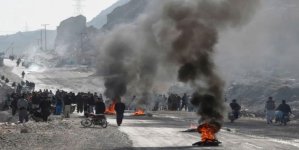
Every time Quetta buries its soldiers, the same question resurfaces in Islamabad: is Balochistan becoming another East Pakistan? The question has haunted Pakistani strategists since the province’s first insurgency broke out in 1948, months after the state itself was born. This year the question has resurfaced often.
In July 2026 alone, coordinated assaults across Balochistan killed dozens of security personnel within days. Earlier, in late January and February, the Balochistan Liberation Army (BLA) launched “Operation Herof 2.0,” a wave of suicide bombings and prison breaks that Islamabad met with a counteroffensive claiming over 200 militant deaths. The BLA has since opened a maritime front, and 2025 alone saw more than 250 recorded attacks in the province, a sharp rise from the year before. Against this backdrop, the East Pakistan analogy writes itself. But does it hold?
The Case for the Parallel
The structural echoes are real, and they are the reason the comparison refuses to die. Both Balochistan and East Pakistan were peripheries governed from a center that treated them as resource pools rather than partners. Bengali-speaking East Pakistan generated the jute revenue that built Karachi’s early economy while receiving a fraction of it back in development spending. Balochistan today produces the natural gas that heats homes in Punjab, hosts the Reko Diq copper and gold reserves, and anchors the Gwadar port at the heart of the China-Pakistan Economic Corridor, yet remains Pakistan’s poorest province by nearly every human development metric. The grievance, in both cases, is not poverty in isolation but poverty amid visible extraction.
Both also faced a demographic anxiety about being outnumbered in their own home. Bengalis watched West Pakistani bureaucrats, businessmen, and military officers dominate a state whose population they themselves made up the majority of. Baloch nationalists today voice a parallel fear, that Punjabi settlement, security force presence, and CPEC-linked migration will turn them into a minority in Balochistan itself, a province that already has one of the country’s lowest population densities and weakest political representation in federal institutions.
Language and identity politics followed a similar arc. The 1948 refusal to recognize Bengali as a state language alongside Urdu became the spark that lit Bengali nationalism; Baloch nationalists cite decades of cultural suppression, enforced disappearances, and the sidelining of Baloch political parties as their own slow-burning equivalent. And in both provinces, the state’s response leaned heavily on the military rather than negotiation, a pattern that hardened separatist sentiment rather than dissolving it.
General Yahya Khan’s 1971 crackdown radicalized a movement that had, until then, largely operated within electoral politics. Islamabad’s current counterinsurgency posture in Balochistan, including mass arrests, enforced disappearances documented for years by human rights groups, and heavy-handed cordon operations, risks the same effect on a younger, more networked generation of Baloch activists.
The Case Against the Parallel
The differences, however, are not cosmetic. They are structural, and they matter more than the similarities.
East Pakistan held the numbers. Bengalis made up a majority of Pakistan’s total population in 1971, and the Awami League won an outright parliamentary majority in the 1970 general election, a democratic mandate the center refused to honor. That refusal, not the insurgency itself, triggered the war. Balochistan carries no equivalent demographic weight. It is Pakistan’s largest province by land but its smallest by population, home to under 6 percent of the national total. There is no electoral pathway by which Baloch nationalism could translate grievance into a parliamentary majority capable of forcing Islamabad’s hand the way Sheikh Mujibur Rahman did.
Geography cuts the other way too. East Pakistan sat a thousand miles from West Pakistan, separated by hostile Indian territory, making sustained military logistics nearly impossible once war broke out. Balochistan is contiguous with the Pakistani heartland, crossed by highways and rail lines the army has spent decades building precisely to project force into the province. There is no equivalent of the 1971 geographic trap.
External patronage differs just as sharply. India’s decisive intervention, arming, training, and eventually deploying troops alongside the Mukti Bahini (freedom fighters), was the single factor that converted a civil war into secession within nine months. No comparable state sponsor exists for Baloch separatism today. Pakistan routinely accuses India of backing the BLA, a claim New Delhi denies and that lacks the kind of open, documented material support Indira Gandhi's government provided in 1971.
China’s deep financial stake in CPEC and Gwadar, meanwhile, gives Beijing every incentive to press Islamabad toward stabilizing Balochistan rather than allowing it to fracture. Furthermore, the Cold War era geopolitical situation varies greatly from today. The current world is not dominated by a bipolar order when the process of decolonization produces new internationally recognized states. And Balochistan’s separatist movements deeply lack the diplomatic credentials needed for being a de facto state unlike East Pakistan.
Finally, the Baloch insurgency itself remains fragmented. The BLA, the Balochistan Liberation Front, and smaller factions have never unified under a single political leadership comparable to the Awami League, nor have they built the kind of civil administrative infrastructure that Bangladesh’s independence movement developed in exile. Insurgency without a governing shadow-state rarely converts into statehood.
Where This Leaves the Question
Balochistan is not East Pakistan in miniature. It lacks the demographic mass, the geographic separation, and the external sponsor that made 1971 possible, including favorable geopolitics for a sustainable secession. What it does share is the underlying logic that produced 1971: extraction without representation, security responses substituting for political ones, and a state slower to hear grievances than to deploy force. That logic does not guarantee secession, but it guarantees instability, and instability compounds.
Islamabad’s own strategists are not unaware of this. Voices within Pakistan’s establishment have periodically floated political outreach, provincial autonomy packages, and development spending tied to Gwadar. But these initiatives have historically been announced faster than they are implemented, and trust, once spent, does not rebuild on the same timeline as roads or ports.
The honest answer is that Balochistan need not become another East Pakistan to become a permanent crisis. Pakistan does not need to lose the province to be weakened by it. A low-intensity insurgency that drags on for another generation can still bleed a state of investment, deter the very CPEC capital Islamabad is counting on, and keep Balochistan’s development perpetually hostage to its security situation. That outcome requires no Indian tanks, no exiled government, and no parliamentary majority. It only requires the status quo to continue.
And secession would embolden other provincial grievances, from Sindh to Pashtun areas, risking a cascading fragmentation rather than a clean break. Afghanistan, already gripped by conflict and refugee crisis, could see fresh spillover across a newly unstable border.
India’s own secessionist movements, from Kashmir to the Northeast, would draw fresh oxygen. It would destabilize Iran’s own restive Baloch population next door. China and India would compete for footholds on the Arabian Sea, tipping South Asia toward broader destabilization, setting the stage for greater humanitarian and refugee crisis.
The echoes of 1971 are not proof that Balochistan will become another Bangladesh. They are proof that Pakistan has yet to learn what East Pakistan was trying to tell it in the first place: that a state cannot indefinitely draw wealth from a people it refuses to hear. Fifty-five years on, the message has changed its messenger, not its meaning. Whether Islamabad finally listens, or once again waits for an answer written in blood, will decide whether Balochistan remains a warning or becomes a verdict.
By Sayed Anwar and Dr. Muhammad Akram Zaheer
Jul 23, 2026
Every time Quetta buries its soldiers, the same question resurfaces in Islamabad: is Balochistan becoming another East Pakistan? The question has haunted Pakistani strategists since the province’s first insurgency broke out in 1948, months after the state itself was born. This year the question has resurfaced often.
In July 2026 alone, coordinated assaults across Balochistan killed dozens of security personnel within days. Earlier, in late January and February, the Balochistan Liberation Army (BLA) launched “Operation Herof 2.0,” a wave of suicide bombings and prison breaks that Islamabad met with a counteroffensive claiming over 200 militant deaths. The BLA has since opened a maritime front, and 2025 alone saw more than 250 recorded attacks in the province, a sharp rise from the year before. Against this backdrop, the East Pakistan analogy writes itself. But does it hold?
The Case for the Parallel
The structural echoes are real, and they are the reason the comparison refuses to die. Both Balochistan and East Pakistan were peripheries governed from a center that treated them as resource pools rather than partners. Bengali-speaking East Pakistan generated the jute revenue that built Karachi’s early economy while receiving a fraction of it back in development spending. Balochistan today produces the natural gas that heats homes in Punjab, hosts the Reko Diq copper and gold reserves, and anchors the Gwadar port at the heart of the China-Pakistan Economic Corridor, yet remains Pakistan’s poorest province by nearly every human development metric. The grievance, in both cases, is not poverty in isolation but poverty amid visible extraction.
Both also faced a demographic anxiety about being outnumbered in their own home. Bengalis watched West Pakistani bureaucrats, businessmen, and military officers dominate a state whose population they themselves made up the majority of. Baloch nationalists today voice a parallel fear, that Punjabi settlement, security force presence, and CPEC-linked migration will turn them into a minority in Balochistan itself, a province that already has one of the country’s lowest population densities and weakest political representation in federal institutions.
Language and identity politics followed a similar arc. The 1948 refusal to recognize Bengali as a state language alongside Urdu became the spark that lit Bengali nationalism; Baloch nationalists cite decades of cultural suppression, enforced disappearances, and the sidelining of Baloch political parties as their own slow-burning equivalent. And in both provinces, the state’s response leaned heavily on the military rather than negotiation, a pattern that hardened separatist sentiment rather than dissolving it.
General Yahya Khan’s 1971 crackdown radicalized a movement that had, until then, largely operated within electoral politics. Islamabad’s current counterinsurgency posture in Balochistan, including mass arrests, enforced disappearances documented for years by human rights groups, and heavy-handed cordon operations, risks the same effect on a younger, more networked generation of Baloch activists.
The Case Against the Parallel
The differences, however, are not cosmetic. They are structural, and they matter more than the similarities.
East Pakistan held the numbers. Bengalis made up a majority of Pakistan’s total population in 1971, and the Awami League won an outright parliamentary majority in the 1970 general election, a democratic mandate the center refused to honor. That refusal, not the insurgency itself, triggered the war. Balochistan carries no equivalent demographic weight. It is Pakistan’s largest province by land but its smallest by population, home to under 6 percent of the national total. There is no electoral pathway by which Baloch nationalism could translate grievance into a parliamentary majority capable of forcing Islamabad’s hand the way Sheikh Mujibur Rahman did.
Geography cuts the other way too. East Pakistan sat a thousand miles from West Pakistan, separated by hostile Indian territory, making sustained military logistics nearly impossible once war broke out. Balochistan is contiguous with the Pakistani heartland, crossed by highways and rail lines the army has spent decades building precisely to project force into the province. There is no equivalent of the 1971 geographic trap.
External patronage differs just as sharply. India’s decisive intervention, arming, training, and eventually deploying troops alongside the Mukti Bahini (freedom fighters), was the single factor that converted a civil war into secession within nine months. No comparable state sponsor exists for Baloch separatism today. Pakistan routinely accuses India of backing the BLA, a claim New Delhi denies and that lacks the kind of open, documented material support Indira Gandhi's government provided in 1971.
China’s deep financial stake in CPEC and Gwadar, meanwhile, gives Beijing every incentive to press Islamabad toward stabilizing Balochistan rather than allowing it to fracture. Furthermore, the Cold War era geopolitical situation varies greatly from today. The current world is not dominated by a bipolar order when the process of decolonization produces new internationally recognized states. And Balochistan’s separatist movements deeply lack the diplomatic credentials needed for being a de facto state unlike East Pakistan.
Finally, the Baloch insurgency itself remains fragmented. The BLA, the Balochistan Liberation Front, and smaller factions have never unified under a single political leadership comparable to the Awami League, nor have they built the kind of civil administrative infrastructure that Bangladesh’s independence movement developed in exile. Insurgency without a governing shadow-state rarely converts into statehood.
Where This Leaves the Question
Balochistan is not East Pakistan in miniature. It lacks the demographic mass, the geographic separation, and the external sponsor that made 1971 possible, including favorable geopolitics for a sustainable secession. What it does share is the underlying logic that produced 1971: extraction without representation, security responses substituting for political ones, and a state slower to hear grievances than to deploy force. That logic does not guarantee secession, but it guarantees instability, and instability compounds.
Islamabad’s own strategists are not unaware of this. Voices within Pakistan’s establishment have periodically floated political outreach, provincial autonomy packages, and development spending tied to Gwadar. But these initiatives have historically been announced faster than they are implemented, and trust, once spent, does not rebuild on the same timeline as roads or ports.
The honest answer is that Balochistan need not become another East Pakistan to become a permanent crisis. Pakistan does not need to lose the province to be weakened by it. A low-intensity insurgency that drags on for another generation can still bleed a state of investment, deter the very CPEC capital Islamabad is counting on, and keep Balochistan’s development perpetually hostage to its security situation. That outcome requires no Indian tanks, no exiled government, and no parliamentary majority. It only requires the status quo to continue.
And secession would embolden other provincial grievances, from Sindh to Pashtun areas, risking a cascading fragmentation rather than a clean break. Afghanistan, already gripped by conflict and refugee crisis, could see fresh spillover across a newly unstable border.
India’s own secessionist movements, from Kashmir to the Northeast, would draw fresh oxygen. It would destabilize Iran’s own restive Baloch population next door. China and India would compete for footholds on the Arabian Sea, tipping South Asia toward broader destabilization, setting the stage for greater humanitarian and refugee crisis.
The echoes of 1971 are not proof that Balochistan will become another Bangladesh. They are proof that Pakistan has yet to learn what East Pakistan was trying to tell it in the first place: that a state cannot indefinitely draw wealth from a people it refuses to hear. Fifty-five years on, the message has changed its messenger, not its meaning. Whether Islamabad finally listens, or once again waits for an answer written in blood, will decide whether Balochistan remains a warning or becomes a verdict.


