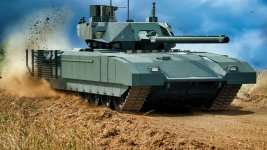
Armament of the Russian Army

The Russian electronic warfare system “Peroed”, designed to combat drones, was upgraded to the “Peroed-M” version and put into mass production. Reportedly, the complex has proven itself well in tests at Russian military institutes and in real conditions. Today, this is the most effective complex for detecting and suppressing FPV drones. The group of Moscow companies "SOZ" modified the ultra-sensitive Burdock radars and combined them with portable mobile electronic warfare units; this became the basis of the Peroed-M electronic warfare complex. The complex operates at frequencies from 900 MHz to 5.8 GHz, including non-standard frequencies that are now being used for FPV drones. The complex uses a narrow scanning beam, which reduces the risk of detection. The complex consists, characteristics on the screen, of a phased wearable radar "Repeynik" or an object-based radar "Repeynik-K", an automatic turret "SOZ REB" and an automatic turret "Peroed-M", used to suppress drones. For safety, the radar, electronic warfare units and the operator’s work area are separated from each other by hundreds of meters, which excludes direct detection of operators. The complex is capable of detecting up to 256 drones, depending on their size, at a range of up to 15 km and an altitude of up to 5 km and suppressing them at a distance of up to 2500 meters. Compact dimensions and modular division into two blocks of 15 and 10.5 kg provide the ability to attach to special equipment and ensure the secrecy of movement of combat crews. The complex deploys in 5 minutes and can operate for up to 8 hours, controlled by one person.

To view this content we will need your consent to set third party cookies.
For more detailed information, see our cookies page.
 

Russia's latest T-14 Armata tank enters service​


1710904505001.jpeg


Russia's Rostec Corporation CEO Sergey Chemezov confirmed for RIA Novosti on Monday that the latest Russian T-14 Armata tank entered its military service.

"In the army, of course, it is in service," Chemezov told the news agency, following reports from the previous year that alleged the fact. The tank's main features include an unmanned turret, the Afganit active protection system and a 125-millimeter 2A82-1M gun with a range of up to eight kilometers.

The news agency reported in April of 2023 that the tank entered the Ukrainian battlefield, citing sources familiar with the matter.

https://breakingthenews.net/Article/Russia's-latest-T-14-Armata-tank-enters-service/61611413


The Russian “Rostec” corporation announced the entry of the advanced “T-14 Armata” tank into service in the Russian army, representing a qualitative leap in its combat capabilities.

The Sky News Arabia website reported that the General Director of the Corporation, Sergei Chemezov, confirmed the start of delivering tanks to the armed forces, describing them as “the most modern tank in the world.”

1710904719434.jpeg

The T-14 Armata tank is distinguished by its revolutionary design that provides a high level of protection for the crew, with advanced combat capability thanks to its integrated electronic system and unmanned turret.

The “Armata” tank is armed with a 125 mm smoothbore gun, and is equipped with the “Afganit” active protection system and the fourth generation “Malachite” dynamic armor system.

This tank is expected to make a big difference on the battlefield, as it enhances the capabilities of the Russian army and allows it to effectively confront modern threats.
Technical specifications of the “Armata” tank

Speed: up to 90 km/h.
Crew: 3 people.
Tank weight: 48 tons.
Tank width: 3.9 metres.
Tank length with gun: 10.8 metres.
Tank height: 2.7 meters.

Armament of the “Armata” tank

Self-priming 125 mm smoothbore main gun.
Remote-controlled 12.7 mm anti-aircraft machine gun with a range of 1.5 km.
A 7.62 mm machine gun is mounted with the main gun to deal with infantry soldiers.
 

Russia's latest T-14 Armata tank enters service​

Even though T-14 may past state trials, I don't think it will go into production, at least as it is anytime soon. Lessons learned from the Ukraine war, aside from the high unit cost, demands changes to be made.

The premise of the T-14 armata's notable unmanned turret design, together with the Afghanit APS system - a evolution from the Dzord predecessor - originates from the object 195, which is a 90s design still developed with direct mechanized engagement in mind.

The reality in Ukraine today, however, proved that the primary threat to armoured vehicles have turned toward rear, back, and top attacks, with the advent and proliferation of NLAW, Javelin, MMP, BONUS, and more importantly suicide drones and loitering munitions. In this sense, the lightly protected unmanned turret, and Afghanit - which can only offer protection in a frontal arc - have become inadequate.

The greatest contribution that T-14 program have offered is the 2A82 gun, which offers increased lethality both against armour and soft targets, is a future-proof gun, as well as the first integrated powerpack with automatic transmission indigenously made by Soviet-Russian manufacturer. Both of which can be implemented to modified T-80/90 platforms, which given the current circumstance, is a more realistic option.
Ws4X86R.png
 
Even though T-14 may past state trials, I don't think it will go into production, at least as it is anytime soon. Lessons learned from the Ukraine war, aside from the high unit cost, demands changes to be made.

The premise of the T-14 armata's notable unmanned turret design, together with the Afghanit APS system - a evolution from the Dzord predecessor - originates from the object 195, which is a 90s design still developed with direct mechanized engagement in mind.

The reality in Ukraine today, however, proved that the primary threat to armoured vehicles have turned toward rear, back, and top attacks, with the advent and proliferation of NLAW, Javelin, MMP, BONUS, and more importantly suicide drones and loitering munitions. In this sense, the lightly protected unmanned turret, and Afghanit - which can only offer protection in a frontal arc - have become inadequate.

The greatest contribution that T-14 program have offered is the 2A82 gun, which offers increased lethality both against armour and soft targets, is a future-proof gun, as well as the first integrated powerpack with automatic transmission indigenously made by Soviet-Russian manufacturer. Both of which can be implemented to modified T-80/90 platforms, which given the current circumstance, is a more realistic option.
Ws4X86R.png
The Russian “Rostec” corporation announced the entry of the advanced “T-14 Armata” tank into service in the Russian army..
 
The Russian “Rostec” corporation announced the entry of the advanced “T-14 Armata” tank into service in the Russian army..
I'm not denying that it will "enter service", I'm just suggesting that it may not be the focus of production as it is anytime soon.
 
I'm not denying that it will "enter service", I'm just suggesting that it may not be the focus of production as it is anytime soon.
They say it has already entered service..
 
Heavy-duty FAB-3000 bombs began to be made in Russia, review. The Russian Minister of Defense visited enterprises of the military-industrial complex in the Nizhny Novgorod region, where he got acquainted with the production process of the Russian heavy-duty bomb FAB-3000. In the video you can also see the production of Russian aerial bombs FAB-1500 and FAB-500T, we previously showed this plant, the video can be found in the “Russian Military Factories” playlist. The plant's management reported that it had restored the mass production of FAB-3000 aerial bombs, increased the production of FAB-500 aerial bombs many times over, and also doubled the production of FAB-1500-M54 bombs. Such results were achieved thanks to the reactivation of capacities, technical re-equipment and modernization of production lines; the plant also hired about 1000 more people.

As reported, FAB-3000 bombs will also be equipped with flight planning and correction modules (UMPC). Most likely, the correction module will be equipped with an accelerator to avoid the aircraft entering the air defense zone. It is worth noting that the bomb can be carried by a Tu-22M3 bomber and theoretically by a Su-34 aircraft. The FAB-3000 air bomb was put into service in 1954 and is intended to destroy industrial and other large objects. You can see the bomb's structure on the screen. Typically, a bomb is dropped from a height of up to 16 thousand meters at a flight speed of up to 1200 km/h. The radius of complete destruction of the FAB-3000 bomb is about 46 meters, the fragmentation field when crushing the body and destroying the target is 260 meters. The enemy within a radius of up to 158 meters receives severe concussions. The total mass of the bomb is 3067 kg, it is loaded with 1387 kg of TNT and has 3 fuses.

To view this content we will need your consent to set third party cookies.
For more detailed information, see our cookies page.
 
MANPADS Verba of Russia review and design of the complex. A Russian serviceman showed how the fourth generation Verba MANPADS works, which will be shown below. The 9K333 Verba man-portable anti-aircraft missile system was developed by JSC Mechanical Engineering Design Bureau and entered service in 2015. The Verba MANPADS is a further development of the Igla-S MANPADS and is up to 1.5-2 times more effective than it. The 9K333 Verba complex includes a 9M336 high-explosive fragmentation anti-aircraft missile, a 9P521 launcher and a 1L229V ground radio interrogator. Additionally, a removable night vision sight 1PN97M "Mowgli-2M" and a small-sized radar 1L122 "Garmon" with a laptop can be used; the radar provides target detection at a range of up to 80 kilometers.

The Verba MANPADS almost does not respond to heat traps and other interference. This is achieved thanks to a particularly sensitive three-spectral missile homing head, operating in the ultraviolet and two infrared ranges. The Verba MANPADS can destroy not only helicopters and airplanes, but also UAVs and cruise missiles. The Verba MANPADS is superior not only to the Igla-S MANPADS, but also to the American FIM-92 Stinger. For comparison: the Igla-S MANPADS hits air targets at altitudes of up to 3.5 kilometers, the Stinger MANPADS up to 3.8, and the Verba MANPADS up to 4.5 kilometers. In addition, the lower limit of the target acquisition height for the Stinger MANPADS is 180 meters, and the Verba MANPADS begins to operate from ten meters. The Verba MANPADS is capable of hitting targets at a range of up to 6400 meters and target flight speeds of up to 500 m/s, the MANPADS reaction time is 8 seconds, and the weight is 17.25 kg. The cost of the Verba MANPADS is supposedly about 150 thousand dollars, and it is supplied only to Armenia.

To view this content we will need your consent to set third party cookies.
For more detailed information, see our cookies page.
 
Russian repair units have published an episode of the installation of a turret with a 30-mm 2A72 cannon from a Russian BTR-82A armored personnel carrier on a Ukrainian abandoned BWP-1 infantry fighting vehicle. The BWP-1 infantry fighting vehicle is a Polish copy of the Soviet BMP-1 infantry fighting vehicle, it was produced since 1967 and was subsequently modernized. Ukraine received about a hundred of these machines from Poland.

To view this content we will need your consent to set third party cookies.
For more detailed information, see our cookies page.
 
Russia continues to modernize its missiles. The P-800 Oniks supersonic cruise missile, part of the Bastion coastal missile systems, has been modernized by Russia. The new version of the Onyx missile has received more technologically advanced homing heads that are capable of attacking enemy targets more effectively, striking with a minimal deflection angle. Work is also underway to ensure the invulnerability of Onyx missiles to electronic warfare. Reportedly, the new characteristics of the missiles have already been confirmed during their tests. P-800 Onyx missiles were originally intended to destroy enemy ships, but thanks to innovations they have become an effective means of attacking ground targets. The Onyx anti-ship missile was developed back in the 80s of the last century, but entered service only in 2002. One complex with four Bastion launchers is capable of defending a coastline over 600 km long. The missile's flight range is up to 600 kilometers; the modernized version of the Oniks-M missile is capable of hitting targets at a range of up to 800 kilometers. Onyx missiles are in service with surface ships and submarines of the Russian Navy, are used in Bastion coastal missile systems, and are also silo-based.

To view this content we will need your consent to set third party cookies.
For more detailed information, see our cookies page.
 
Footage of the operation of the Russian military mobile field bathhouse PPB-32VU. The PPB-32 VU mobile field bathhouse entered service with the troops in 2022 and is placed on the chassis of the Ural 532362 truck; the Kamaz 6350 PPB-32VK truck can also be used. The field bathhouse was manufactured by the Vyazemsky Machine-Building Plant and is intended for washing military personnel in the field outside their permanent deployment points. The field bath consists of several compartments, a dressing room, a washing compartment, an aggregate compartment with a diesel and heating unit, a boiler compartment and compartments for storing clean and dirty linen. Detailed technical information on the screen. The PPB-32 VU field bathhouse in the basic configuration allows 32 military personnel to wash themselves within an hour, the water consumption per person is 10 liters, the water supply in the bathhouse is 5000 liters. The sauna can be deployed in 90 minutes in winter and an hour in summer and can operate for 8 hours without refueling. The bathhouse is serviced by 2 people.

To view this content we will need your consent to set third party cookies.
For more detailed information, see our cookies page.
 
The Russian remote-controlled combat module "Dym-2" was proposed to be installed on armored vehicles to protect them from drones. Alexander Rogatkin reported this. The Dym-2 robotic combat module was first reported in 2020; it was developed by the ALFA-PRIBOR company and is intended to protect the launch positions of Yars ballistic missiles. The robot guard can work according to operator commands or act fully automatically. It is proposed to additionally equip the Dym-2 combat modules with radars and install them on armored personnel carriers; how this could be implemented is not reported. The module is large enough, it is more convenient to use it for guarding objects or protecting ships. The controlled combat module "Dym-2" is equipped with a camera, thermal imaging sight, loudspeaker and monitor. Armament, 8 salvo blocks, each block contains 10 machine gun barrels of 5.45 caliber, the rubber plug is knocked down by the first blank cartridge when fired. The installation also has 12 guides for grenade launchers. Typically, the combat module "Dym-2" is used to protect objects of the highest category.

To view this content we will need your consent to set third party cookies.
For more detailed information, see our cookies page.
 
The crew of the Russian T-72B tank showed homemade protection against drones. Currently, there is no full-fledged factory protection of Russian tanks from drones; the rear part of the tanks is especially vulnerable, so tank crews are forced to install the protection themselves. The tank's turret does not rotate, since it is designed to operate from indirect firing positions, like an artillery mount.

To view this content we will need your consent to set third party cookies.
For more detailed information, see our cookies page.
 
A Russian mechanic shared his impressions of the first captured Ukrainian infantry fighting vehicle, Marder 1A3, made in Germany. The Marder infantry fighting vehicle was adopted by Germany in 1971, Ukraine received the Marder 1A3 infantry fighting vehicle, this is a modification from 1989, with increased armor by 1600 kg, technical information about it is on the channel. According to the mechanic, due to the lack of lugs on the tracks, instead of them there are rubber pads, as well as the weight, the Marder 1A3 infantry fighting vehicle is suitable for use only on hard-surfaced soils.

To view this content we will need your consent to set third party cookies.
For more detailed information, see our cookies page.
 

Users who are viewing this thread

Pakistan Defence Latest

Country Watch Latest

Latest Posts

Back
Top