MNZGamerX
Trusted Member

Staggered arrivals of PM’s Defence Adviser Brig (retd) AKM Shamsul Islam and Gen Waqar-uz-Zaman and separate guards of honour for them expose growing military-civilian leadership tensions
by Chandan Nandy
November 15, 2026
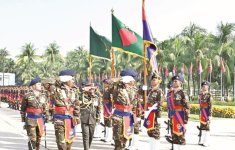
A carefully choreographed split in military protocol during a major Artillery Corps parade in Chittagong has laid bare a yawning distance between Prime Minister Tarique Rahman and Chief of Army Staff General Waqar-uz-Zaman, signalling deepening friction at the highest levels of Bangladesh’s civil-military leadership.
What was meant to be a routine display of regimental tradition at the Artillery Centre and School in Halishahar on November 5 instead became an unmistakable study in political estrangement.
Prime Minister’s Armed Forces Division Adviser, Retired Brigadier (retd) AKM Shamsul Islam—himself a decorated officer from the Regiment of Artillery—attended the ceremonial event as the chief representative of the executive branch.
Yet, in a striking departure from established military custom, Gen Zaman was conspicuously absent throughout the adviser’s visit.
Multiple military and diplomatic observers familiar with the proceedings said the schedule was deliberately staggered to prevent the two men from sharing the parade ground.
Brig (retd) Shamsul Islam arrived first, reviewed the parade, and was accorded a formal guard of honour.
Only after the Prime Minister’s Defence Adviser had concluded his engagements and departed the venue did Gen Zaman arrive at the cantonment.
Upon his arrival, the Army chief was presented with a separate, standalone guard of honour—a visual and procedural bifurcation that seasoned defense analysts describe as virtually unprecedented for a ceremonial event of this stature.
The rift between the Army leadership and the Tarique Rahman-led government came to the fore in September, mainly over the issue the transfers and postings of a few officers of the rank of Major General, Brigadier, Colonel and Lieutenant Colonel.
These orders were issued without the knowledge of Gen Zaman.
This was followed by the non-issuance of a GO or Government Order for Gen Zaman’s visit to Australia and the US, in October.
It was only after Gen Zaman had boarded the aircraft for departure to Australia that the GO was issued by the government.
Since his return from the US on October 17, Gen Zaman has not paid his customary visit to President Mirza Fakhrul Islam Alamgir, signalling that not everything is in order between the civilian and military leaderships.
In Bangladesh’s military protocol, the presence of the Prime Minister’s Defence Adviser at a corps-level parade—particularly one belonging to the adviser’s own parent regiment—would normally warrant the Army Chief receiving him and standing alongside him on the saluting dais.
By staging back-to-back, isolated guards of honour, Army Headquarters sent a clear message of institutional separation from the Prime Minister’s Office.
The chill extended well beyond ceremonial choreography into the substance of the Army Chief’s remarks.
Addressing officers and troops following his inspection, General Waqar-uz-Zaman delivered a formal speech focusing on regimental professionalism, modernisation, and operational readiness.
Notably, however, he did not once mention Prime Minister Tarique Rahman or Defence Adviser Brig (retd) Shamsul Islam by name—omitting the customary acknowledgments typically extended to the civilian head of government and the defence establishment’s political leadership during flagship military ceremonies.
For political watchers in Dhaka, the Chittagong episode underscores a widening gulf between the elected administration and the cantonment.
Since Tarique Rahman assumed office, relations between the Prime Minister’s secretariat and Army Headquarters have been marked by quiet tension over command autonomy, institutional boundaries, and the military’s role in domestic governance.
While senior generals have publicly emphasised “professionalism” and non-interference in partisan politics, the pointed avoidance of joint public appearances with the Prime Minister’s top defence aide suggests that behind-the-scenes disagreements remain unresolved.
Shamsul Islam, appointed as the Prime Minister’s key interlocutor with the Armed Forces Division, carries significant institutional weight given his artillery background and proximity to the premier.
His solo appearance at the Chittagong parade—and the Army Chief’s decision to wait until his departure before stepping onto the same parade ground—highlights the degree to which the bridge between the Prime Minister’s Office and the military high command has narrowed.
Neither the Prime Minister’s Office nor the Inter-Services Public Relations (ISPR) directorate has issued an official explanation for the staggered scheduling in Chittagong, describing the engagements as part of routine institutional calendars.
Yet in a political environment where symbolism often speaks louder than policy statements, the sight of two separate guards of honour—and an Army Chief’s silence on the nation’s elected leadership—has left little doubt about the growing distance between Dhaka’s civilian seat of power and its military chief.
by Chandan Nandy
November 15, 2026
A carefully choreographed split in military protocol during a major Artillery Corps parade in Chittagong has laid bare a yawning distance between Prime Minister Tarique Rahman and Chief of Army Staff General Waqar-uz-Zaman, signalling deepening friction at the highest levels of Bangladesh’s civil-military leadership.
What was meant to be a routine display of regimental tradition at the Artillery Centre and School in Halishahar on November 5 instead became an unmistakable study in political estrangement.
Prime Minister’s Armed Forces Division Adviser, Retired Brigadier (retd) AKM Shamsul Islam—himself a decorated officer from the Regiment of Artillery—attended the ceremonial event as the chief representative of the executive branch.
Yet, in a striking departure from established military custom, Gen Zaman was conspicuously absent throughout the adviser’s visit.
Multiple military and diplomatic observers familiar with the proceedings said the schedule was deliberately staggered to prevent the two men from sharing the parade ground.
Brig (retd) Shamsul Islam arrived first, reviewed the parade, and was accorded a formal guard of honour.
Only after the Prime Minister’s Defence Adviser had concluded his engagements and departed the venue did Gen Zaman arrive at the cantonment.
Upon his arrival, the Army chief was presented with a separate, standalone guard of honour—a visual and procedural bifurcation that seasoned defense analysts describe as virtually unprecedented for a ceremonial event of this stature.
The rift between the Army leadership and the Tarique Rahman-led government came to the fore in September, mainly over the issue the transfers and postings of a few officers of the rank of Major General, Brigadier, Colonel and Lieutenant Colonel.
These orders were issued without the knowledge of Gen Zaman.
This was followed by the non-issuance of a GO or Government Order for Gen Zaman’s visit to Australia and the US, in October.
It was only after Gen Zaman had boarded the aircraft for departure to Australia that the GO was issued by the government.
Since his return from the US on October 17, Gen Zaman has not paid his customary visit to President Mirza Fakhrul Islam Alamgir, signalling that not everything is in order between the civilian and military leaderships.
In Bangladesh’s military protocol, the presence of the Prime Minister’s Defence Adviser at a corps-level parade—particularly one belonging to the adviser’s own parent regiment—would normally warrant the Army Chief receiving him and standing alongside him on the saluting dais.
By staging back-to-back, isolated guards of honour, Army Headquarters sent a clear message of institutional separation from the Prime Minister’s Office.
The chill extended well beyond ceremonial choreography into the substance of the Army Chief’s remarks.
Addressing officers and troops following his inspection, General Waqar-uz-Zaman delivered a formal speech focusing on regimental professionalism, modernisation, and operational readiness.
Notably, however, he did not once mention Prime Minister Tarique Rahman or Defence Adviser Brig (retd) Shamsul Islam by name—omitting the customary acknowledgments typically extended to the civilian head of government and the defence establishment’s political leadership during flagship military ceremonies.
For political watchers in Dhaka, the Chittagong episode underscores a widening gulf between the elected administration and the cantonment.
Since Tarique Rahman assumed office, relations between the Prime Minister’s secretariat and Army Headquarters have been marked by quiet tension over command autonomy, institutional boundaries, and the military’s role in domestic governance.
While senior generals have publicly emphasised “professionalism” and non-interference in partisan politics, the pointed avoidance of joint public appearances with the Prime Minister’s top defence aide suggests that behind-the-scenes disagreements remain unresolved.
Shamsul Islam, appointed as the Prime Minister’s key interlocutor with the Armed Forces Division, carries significant institutional weight given his artillery background and proximity to the premier.
His solo appearance at the Chittagong parade—and the Army Chief’s decision to wait until his departure before stepping onto the same parade ground—highlights the degree to which the bridge between the Prime Minister’s Office and the military high command has narrowed.
Neither the Prime Minister’s Office nor the Inter-Services Public Relations (ISPR) directorate has issued an official explanation for the staggered scheduling in Chittagong, describing the engagements as part of routine institutional calendars.
Yet in a political environment where symbolism often speaks louder than policy statements, the sight of two separate guards of honour—and an Army Chief’s silence on the nation’s elected leadership—has left little doubt about the growing distance between Dhaka’s civilian seat of power and its military chief.