Navigation
Install the app
How to install the app on iOS
Follow along with the video below to see how to install our site as a web app on your home screen.
Note: This feature may not be available in some browsers.
More options
Style variation
You are using an out of date browser. It may not display this or other websites correctly.
You should upgrade or use an alternative browser.
You should upgrade or use an alternative browser.
AWACS
- Thread starter Hussain
- Start date
More options
Who Replied?





Hussain
Trusted Member
- Thread starter
- #47
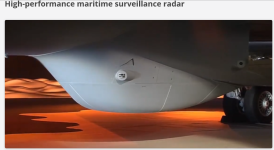
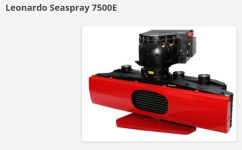
The Seaspray 7500E multi-mode radar combines a state-of-the-art Active Electronically Scanned Array (AESA) with a Commercial Off-The-Shelf (COTS) processor.
KEY FEATURES
AESA technology and flexible waveform generation capability enables Seaspray 7500E to deliver peak performance in all modes. Using multiple low power, solid state Transmit/Receive Modules (TRM) makes the Seaspray 7500E radar more reliable than conventional radar systems.
This results in a significant cost benefit over the life of the system. Superior performance in detecting small targets, such as Fast Inshore Attack Craft (FIAC) in high sea states, through use of Composite Electronic and Mechanical Scanning (CEMS).
Interleaved modes by virtue of its ability to changewaveforms pulse-to-pulse. For instance, surface surveillance and weather detection can be provided simultaneously. Effectively two radars within one system.
FLIR Systems Star Safire 380HD electro-optical turret
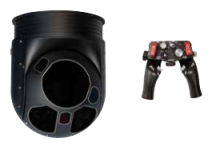
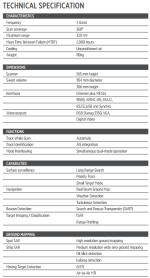
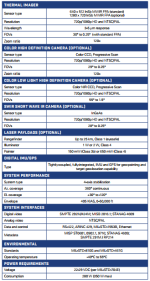
The FLIR Star SAFIRE 380-HD provides superior image stabilization, ultra long range imaging performance, and true metadata embedded in the digital video. The Star SAFIRE 380-HD is fully hardened for military fixed-wing and helicopter operations so it can operate continuously in all conditions–even while sitting on the tarmac with no airflow.
Single LRU full HD multi-sensor imaging system
The Star SAFIRE 380-HD is the only all-digital, full HD system in a single LRU for ease of installation and integration; no junction boxes required. In addition, the sensor and geospatial data is fully embedded within the digital video stream, so there is no need for dedicated ports or external boxes.
High definition color in low light
The Star SAFIRE 380-HD extends full color imaging into the dark with full high definition clarity along with an expanded wide dynamic range. The system combines important spectral information from IR and color or SWIR sensors for enhanced results, which is extremely valuable when limited to single video channel downlinks.
SWIR band sensor
The optional SWIR, short wave infrared, payload provides expanded multi-spectral day and night imaging enabling you to see more than ever before. The Star SAFIRE 380-HD provides full high definition mega-pixel resolution imagery from all sensors for superior range and imaging performance.
Hussain
Trusted Member
- Thread starter
- #48
Countermeasures
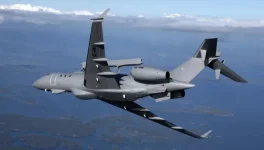
GlobalEye is equipped with an advanced self-protection system based on the latest technology developed by Saab.
The self-protection system integrates a suite of sensors and countermeasures dispensers. The autonomously operated system can also be controlled by the pilot.
RADAR-WARNING FUNCTION (RWS-300)
The radar-warning function features a compact, wide-band, high-sensitivity solution with high probability of intercept (POI). The addition of an optional digital receiver (DRx) transforms the radar-warning functionality into a full-fledged ESM system.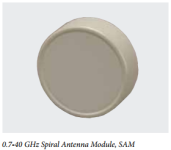
- High sensitivity with full capability to simultaneously handle pulsed and CW radars.
- Internal wide-band IFM.
- Digital video processor provides high-accuracy DF, pulse-on-pulse handling and intra-pulse measurements.
- Near 100 % POI.
- Frequency coverage 0.7–40 GHz (pulsed signals), 0.7–18 GHz (CW signals).
- Spatial coverage 360° AZ over the full frequency range with four antennas. Full spherical coverage can be achieved with six sensors.
- Option: digital receiver enhancing sensitivity, emitter identification, simultaneous CW handling capability and DF performance.
- Use of INS dramatically improves range measurements, minimises symbol “duplication” or “splitting” under dynamic platform manoeuvring and enables intercepted weapon-system localisation.
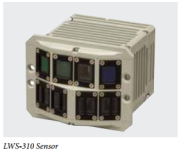
LASER-WARNING FUNCTION (RWS-310)
The laser-warning functionality is achieved by using four (4) LWS-310 sensors and a processor card in the electronic-warfare controller (EWC). It features high sensitivity, excellent threat coverage and exceptional probability of intercept (POI) for both single and multi-pulse emissions. A unique feature of this system is that it not only classifies laser emissions, but can also identify laser emission through a user-programmable threat library.
- Wavelength coverage of 0.5-1.7 µm.
- Threat classification and direction-finding indication of laser range finders, designators, lasers used for missile guidance and dazzler lasers.
- Identifies specific lasers if threat-library information is available.
- High sensitivity to detect missile-guidance lasers.
- High POI.
- Low false-alarm rate.
- Spatial coverage 360° AZ with four sensors including good sensor overlap.
- Direction-finding to allow appropriate manoeuvring to break operator’s line of sight and counter threats.
- Provision for up to six (6) sensors for improved large platform coverage.
MISSILE-APPROACH WARNING FUNCTION (MAW-300)
A unique optical design, incorporating filter technology with purpose-built image intensifier tubes and photon-counting focal-plane array processors, ensures high sensitivity equating to long detection range. Each sensor uses a dedicated digital signal processor making use of a distributed, hierarchical data-processing architecture to ensure optimal utilisation of information in real time.
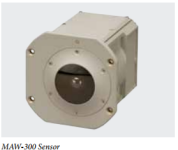
Digitisation and pre-processing functions are performed at the detector using an advanced focal-plane processor. Each sensor’s data is transferred to a dedicated digital signal processor (MAW controller), resident in the EWC, which performs equalisation, segmentation and feature extraction.
Each sensor processor can detect and process multiple potential targets, passing the spatial and temporal feature data to the processor card in the EWC. There, the spatial data is integrated with real-time INS information to compensate for platform movement, attitude and altitude. The MAW controller then executes neural-net pattern-recognition algorithms to ensure accurate operation with very low false-alarm rates.
The missile-approach warning system is in production for numerous platforms. It has been field tested and approved against various missiles including live missile firings under in-flight dynamic conditions.
- Passive ultra-violet (UV) based sensors, which operates in the solar-blind UV spectrum.
- Neural-net classifiers using both temporal and accurate spatial information as well as compensation of own platform movement, ensures low false-alarm rates.
- Reaction time optimised by keeping missile time to impact constant, irrespective of range to ensure enhanced flare countermeasures effectiveness.
- Inhibits warning against diverging missiles.
- Direction accuracy suitable for cueing DIRCM and dispensing of countermeasures decoys in correct direction.
- Spatial coverage of 110° conical per sensor limits unprotected “hole” below platform and allows good sensor overlap.
- Spatial coverage of 360° AZ with 4 sensors. Full spherical coverage can be achieved with six sensors.
- Provision to add up to eight sensors to ensure hemispherical or full spherical coverage.
- Multi-threat capability allows tracking of multiple targets simultaneously.
- Near 100 % probability of warning.
- Compact, light-weight, low-power, no-cooling, skin-mounted sensors.
COUNTERMEASURES-DISPENSING FUNCTION (BOP-L SERIES)
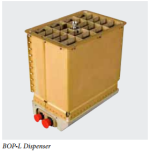
The BOP-L dispensers are controlled via a fully integrated Chaff and Flare Dispenser
Controller that resides in the Electronic Warfare Controller, EWC. This allows for automatic dispensing under the control of the EWC upon threat identification. The system can handle mixed payloads per dispenser, i.e. chaff and flares mixed in each dispenser. Semi-automatic and manual firing capability is also provided.
User-defined dispensing programs/sequences are selected by the EWC per identified threat.
The dispensing techniques can be defined in the Threat Library for the EWC and uploaded
to the system on the flight-line. The jettison of all payloads is possible in all modes of operation under emergency conditions.
- Numerous safety features inherent in design (functional and personal safety).
- Modular and compact design.
- User-programmable dispensing sequences.
- Low weight.
- Payload mix recognition, misfire detection and compensation.
- Programmable back-up mode in the event of system degradation.
- Easy installation and removal.
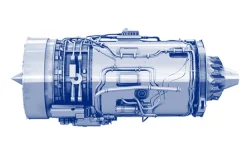
The BR710 is a 2-shaft, high-bypass-ratio engine with a single-stage low pressure (LP) compressor and 10-stage high pressure (HP) compressor, driven by a 2-stage HP turbine and 2-stage LP turbine respectively. The engine features a single low emissions annular combustor with 20 burners. Long life on wing, low fuel burn and excellent environmental performance contribute to low operating costs with maximum reliability.
| Specification | BR710 |
| Thrust (lbf) | 15,550 |
| Bypass ratio | 4.2 |
| Pressure ratio | 24 |
| Length (in) | 89 |
| Diameter (in) | 48 |
| Basic weight (lb) | 4,640 |
| Compressor | 1LP, 10HP |
| Turbine | 2HP, 2LP |
| Applications | Gulfstream G500 / G550, Bombardier Global 5000 / 6000 |
Source: rolls-royce.com
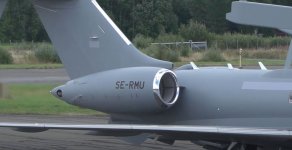
GlobalEye performance
The GlobalEye platform ensures a maximum mission endurance of more than 11 hours. It allows for operations from short runways in small airports.SPEED (MACH)
- Top speed 0.89
- High-speed cruise 0.88
- Typical cruise speed 0.85
AIRFIELD PERFORMANCE
- Takeoff distance(SL, ISA, MTOW) 1,974 m
- Landing distance(MTOW) 682 m
OPERATING ALTITUDE
- Maximum operating altitude 15,545 m
- Initial cruise altitude (MTOW) 12,497 m
ENGINES
- Rolls-Royce BR710A2-20 turbofans
- Thrust: 14,750 lbf (65.6kN)
- Flat rated to ISA + 20°C





Hussain
Trusted Member
- Thread starter
- #52
Not GolbalEye, but Erieye
View attachment 91560
1) Country X = Saudi
2) Poland is also an operator
Poland receives second Saab 340 AEW&C aircraft from Sweden
12 June 20243) Ukraine is a potential customer, waiting US Approval
Delay in ASC 890 aircraft transfer to Ukraine: Aviation expert reveals reason
November 01, 20244) Sweden will be taking delivery of 3 GlobalEye's.
5) France and Canada are reportedly interested in GlobalEye
6) Greece, whose current Erieye is based on the EMB145H, 4 units, is looking for additional units.
Hussain
Trusted Member
- Thread starter
- #53
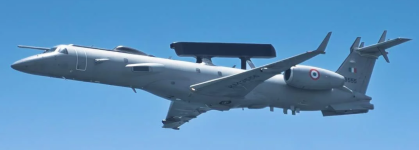
IAF Netra based on Embraer R99 which is the Mil designation for the Embraer 145
Currently 2 Mk1 aircrafts are operational, plus one that is used by DRDO for R&D. A further order has been placed for 6 more units, which will be more advance than the current fleet - Mk1A.
Range:
Mk1 - 240km
Mk1A - 450km
Hussain
Trusted Member
- Thread starter
- #54
View attachment 87305Sikorsky HR2S-1W - an AEW variant of the CH-37 Mojave.

Hussain
Trusted Member
- Thread starter
- #55
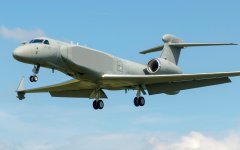
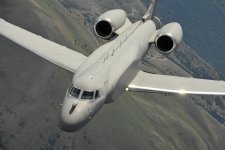
Italian Air Force G-550 CAEW
The CAEW aircraft (Conformal Airborne Early Warning, Italian designation E-550A) is the most advanced multi-sensor system with functions of airborne surveillance, command, control, and communications in service with European air forces.
The AEW-BM&C capability (Airborne Early Warning, Battlefield Management & Communication) is now an essential tool to ensure an adequate extension of the national airspace surveillance capability (Homeland Defence/Security).
At the core of CAEW is the installation of the Elta EL/W-2085 electronically scanned radar system on the airframe, integrated with additional electronic systems (COMINT, ELINT, ESM, IFF, RWR) to provide high situational awareness in real-time, with a 360° coverage and long-range capability.
The mission system has both Maritime Patrol and Battlefield Management capabilities, thanks to its compatibility with ground or sea surface personnel’s Rover systems (transmitting images, including video, for interpreting the operational environment).
With the ability to carry almost 19 tons of fuel, it can remain on target for an extended period based on mission parameters, with significant maximum flight altitudes and transfer speeds. It is designed and built in Israel on the basis of the Gulfstream G-550 business jet twin-engine.
Technical specifications:
Wingspan: 28.5 m
length: 29.4 m
height: 7.9 m
maximum take-off weight: 41,300 kg
maximum speed: 941 km/h
propulsion system: 2 Rolls-Royce BR710C4-11 turbofan engines, each with 68.44 kN thrust
range: 12,500 km
crew: 2 pilots plus additional system operators
payload: 2,800 kg.
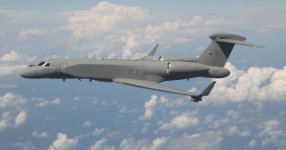
The CAEW aircraft (Conformal Airborne Early Warning, Italian designation E-550A) is the most advanced multi-sensor system with functions of airborne surveillance, command, control, and communications in service with European air forces.
The AEW-BM&C capability (Airborne Early Warning, Battlefield Management & Communication) is now an essential tool to ensure an adequate extension of the national airspace surveillance capability (Homeland Defence/Security).
At the core of CAEW is the installation of the Elta EL/W-2085 electronically scanned radar system on the airframe, integrated with additional electronic systems (COMINT, ELINT, ESM, IFF, RWR) to provide high situational awareness in real-time, with a 360° coverage and long-range capability.
The mission system has both Maritime Patrol and Battlefield Management capabilities, thanks to its compatibility with ground or sea surface personnel’s Rover systems (transmitting images, including video, for interpreting the operational environment).
With the ability to carry almost 19 tons of fuel, it can remain on target for an extended period based on mission parameters, with significant maximum flight altitudes and transfer speeds. It is designed and built in Israel on the basis of the Gulfstream G-550 business jet twin-engine.
Technical specifications:
Wingspan: 28.5 m
length: 29.4 m
height: 7.9 m
maximum take-off weight: 41,300 kg
maximum speed: 941 km/h
propulsion system: 2 Rolls-Royce BR710C4-11 turbofan engines, each with 68.44 kN thrust
range: 12,500 km
crew: 2 pilots plus additional system operators
payload: 2,800 kg.
Hussain
Trusted Member
- Thread starter
- #56
Beijing ups AEW&C game with emergence of KJ-3000
By Greg Waldron30 December 2024

Artist's rendering of China's KJ-3000 AEW&C aircraft. Photo: 跨过海峡解放台湾/Weibo
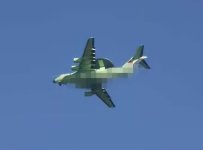 The KJ-3000 AEW&C aircraft during its recent flight.
Photo: Chinese social media
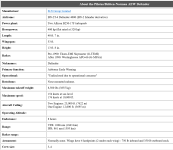
Beijing is taking steps to advance its airborne early warning and control (AEW&C) capabilities, with the emergence of the long-rumoured Xian KJ-3000.
Images have appeared on Chinese social media showing a large, four-engined AEW&C aircraft derived from China’s homegrown strategic transport, the Y-20.
The aircraft appears to be powered by four indigenous Shenyang WS-20 high-bypass turbofans. The new engine – which also powers new examples of the Y-20B transport – should be more efficient than the Y-20’s legacy powerplant, the Soloviev D-30KP-2.
The thick line across the underside of the aircraft’s overhead-mounted radome suggests that it contains two active electronically scanned array (AESA) radars, and likely needs to rotate to ensure full coverage.
There is speculation that the aircraft’s fuselage boasts side-mounted AESA radars. These are a feature of another advanced Chinese AEW&C aircraft, the KJ-700, a derivative of the Shaanxi Y-9 tactical transport that has entered People’s Liberation Army Air Force (PLAAF) service in small numbers.
When it enters service the KJ-3000 will become the PLAAF’s second jet-powered AEW&C aircraft after the KJ-2000, a derivative of the Ilyushin Il-76.
While the KJ-2000 is understood to be the PLAAF’s most capable AEW&C type, with a non-rotating, three-sided AESA array, there are only four operational examples.
Indeed, the KJ-3000 has long been seen as the eventual replacement for the PLAAF’s small KJ-2000 fleet.
With its efficient engines the KJ-3000 is likely to have a clear endurance advantage over the KJ-2000. Moreover, the limited available imagery makes it clear that the type has an air-to-air refuelling probe, something lacking in the KJ-2000.
It is also probable that the WS-20 engine has superior electrical generation capabilities compared with its Russian made predecessor. This is a key consideration given the power of the KJ-3000’s sensors and the high degree of energy-intensive computing required for an advanced AEW&C capability. In a conflict, the KJ-3000 will be called on detect difficult targets such as stealth aircraft and a dizzying array of unmanned systems and decoys, as it also directs a broad spectrum of joint Chinese capabilities.
While China’s KJ-200 and KJ-500 platforms are understood to be very capable, they are turboprops with limited operating ceilings. A large jet such as the KJ-3000 will be able to operate at greater altitudes, giving its radar arrays greater coverage, and allowing it to operate further away from adversary fighters.
The ability to operate further back could help counter advances in adversary air-to-air capabilities. The US Navy’s Raytheon AIM-174B air-to-air missile, a derivative of the ship-launched SM-6, has been deployed with the Boeing F/A-18E/F Super Hornet. Should a conflict occur, a clear target set for this weapon will be Chinese intelligence, surveillance and reconnaissance assets, including slow-moving AEW&C aircraft.
In its recent assessment of Chinese military power, the US Department of Defense did not mention the KJ-3000 or the KJ-700. It did state, however, that the KJ-500 continues to join the PLAAF.
“These aircraft amplify the PLAAF’s ability to detect, track, and target threats in varying conditions, in large volumes, and at greater distances,” says the report.
“It extends the range of the PLA’s [integrated air defence] network. Furthermore, [the People’s Republic of China] has produced at least one KJ-500 with an aerial refuelling probe, which will improve the aircraft’s ability to provide persistent AEW&C coverage.”
The air-to-air refuelling capability of the KJ-3000, which is likely to be far more capable AEW&C platform than the KJ-500, will certainly get the Pentagon’s attention.
The KJ-3000 builds on remarks made in July 2021 by Lu Jun, chief designer of the KJ-500. He envisaged an AEW&C network made up of traditional platforms and smaller aircraft, with the assets working together to build an “information network”.
In his view the smaller AEW&C aircraft are more capable of dealing with targets such as stealth aircraft and UAVs.
As with all Chinese defence programmes the development status of the KJ-3000 is not clear – apart from the fact that it is in flight testing. Given China’s rapid advances with the Y-20 platform and WS-20, not to mention its growing prowess with AESA radars, the KJ-3000’s arrival in PLAAF service can be expected within the coming years, with imagery on Chinese social media marking its progress.
Hussain
Trusted Member
- Thread starter
- #59
UK Ministry of Defence Investigating Future Carrier Based Airborne Early Warning Capabilities
Published on: April 10, 2025by Kai Greet

820 NAS Merlin and Merlin Crowsnest land on deck HMS Prince of Wales. (UK MoD/Crown Copyright)
The UK MoD issued a request for information for a new airborne surveillance system capable of operating from Queen Elizabeth class aircraft carriers.
With the Royal Navy’s present airborne early warning (AEW) platform, the Merlin Crowsnest, still due for withdrawal at the end of 2029, the UK Ministry of Defence (MoD) is seeking a solution that will allow the AEW role to be sustained. In the request for information (RFI) listing, the MoD’s objective is stated as to understand the capacity and capability of the industrial base to support this capability requirement.The deadline for industry submissions is May 6, 2025, and the follow-on tender process is expected by Jan 1, 2026. The eventual contract is then expected to run for a five-year period from approximately Jan 1, 2027, to May 1, 2032.
Providing an AEW capability for the Queen Elizabeth class aircraft carriers and their carrier strike groups (CSG) has been a hotly debated topic ever since the carriers were first ordered. Without catapults and arresting wires, the Royal Navy carriers are unable to operate aircraft like the E-2D Hawkeye, which is flown from U.S. Navy and French Navy carriers.
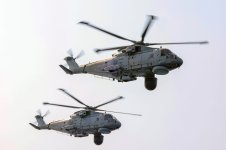
Two Merlin HM2s fitted with the Crowsnest AEW system, shown in the deployed position. (Image credit: UK MoD/Crown Copyright)
Merlin Crowsnest had a protracted development process. Initial proposals in the early 2010s led to flight trials of two systems by 2014, with Thales’ proposal using a side-mounted radar in an inflatable radome, derived from those used on the Sea King ASaC7, selected the following year. The radar is mechanically scanned, and is an updated model of the Searchwater 2000 radar originally employed by the Nimrod MR2.
It wasn’t until 2021 that the first airframe entered service, just in time to deploy with the Carrier Strike Group 21 deployment. However, initial operating capability (IOC) was not declared until 2023, a full five years after the last Sea King ASaC7 was withdrawn.
Vigilance, the rival system offered by Lockheed Martin, would have seen the Merlin equipped with smaller, static pods mounted on both sides of the aircraft containing active electronically scanned array (AESA) radars. A version using arrays derived from the F-35 Lightning II’s AN/APG-81 was built alongside one using the Elta EL/M-2052.
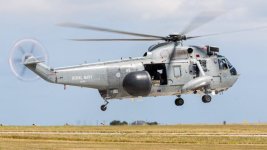
A Royal Navy Sea King ASaC7. The first RN AEW Sea Kings were developed urgently due to a lack of AEW cover during the Falklands War leading to multiple ships suffering from missile attack. The radar system was continually upgraded and eventually evolved into Merlin Crowsnest. (Image credit: Author)
Future AEW capabilities are widely expected to be provided by unmanned aircraft. New short take-off and landing (STOL) UAVs like the Gray Eagle STOL/Mojave from General Atomics could, to a degree, negate the disadvantage of not having catapults and arresting wires. While UAVs of this type are not much faster than helicopters, they can operate at much higher altitudes and extend the radar horizon of the task group significantly.
Advanced radar systems can be integrated onto these UAVs in pods, but weight limitations for STOL are a consideration that must be taken into account.
If funding would allow, the Royal Navy’s preferred option would seem to be the retrofitting of the carriers to accommodate electromagnetic catapults and arresting wires. This would not be a full conversion of the ships from STOVL to CATOBAR, but a hybrid option. Various proposals exist, ranging from short catapults for drone launches only, through to large systems suitable for manned fighter aircraft.
These would then allow larger unmanned platforms with greater payload capacity, potentially even jet-powered with increased speed and altitude performance.
The RN has ambitious plans for the QEC aircraft carriers and the Future Maritime Aviation Force (FMAF)https://t.co/CoHLjV4rXN pic.twitter.com/OllUggo3km
— Navy Lookout (@NavyLookout) June 3, 2023
An additional option, though perhaps further into the future, is the provision of AEW from platforms that are not organically generated by the carrier or task group. Systems like the Airbus Zephyr, which are sometimes referred to as pseudo-satellites, are electronically driven using solar cells for electricity generation. They can stay airborne for days, weeks, or even months, at a time, operating at altitudes in excess of 70,000 feet.
Currently, the major limitation of these designs is the payload capacity. Most of the airframe’s weight allowance is taken up by the large number of batteries required to sustain flight overnight, meaning the usable payload is only a few kilograms – nowhere near enough for an AEW radar system.
Reprieve for Crowsnest
Regardless of the option chosen, having the system procured, delivered, and declared operational by 2029 is an extremely ambitious target, and the natural fallback option is to extend the service life of Merlin Crowsnest to compensate.On the face of it, this is a simple proposition, as the Merlin itself is currently expected to stay in Royal Navy service until 2040. However, the limited Merlin HM2 fleet is already stretched under the combined weight of its anti-submarine warfare, airborne early warning, and general maritime helicopter tasks.
A life extension will be required to keep the airframes not only up to date but generally airworthy, and as the helicopters rotate through this lengthy process the total fleet numbers will drop even further. One saving grace could be the introduction of the Leonardo Proteus rotary wing UAS (RWUAS), which is expected to begin flight trials this year. Proteus could not completely replace the Merlin, but it could provide the additional mass required to cover gaps in ASW provision.
rumours of T26-Merlin being sold as a package deal confirmed?
Naval News: What we’re seeing here is the configuration for the Royal Norwegian Navy, I see a Merlin helicopter with Norwegian crest on it …
1/2 https://t.co/8wpoZQxY8u pic.twitter.com/GaxiBFYJ1y
— David (@Davidfrigate) April 7, 2025
With current funding limitations, it is unlikely that any follow-on order for additional Merlins will arise, despite the prospect of new-build maritime variant Merlins being ordered by Norway alongside Type 26 frigates.
The Strategic Defence Review, reportedly due to be published imminently, is predicted to offer a scathing summary of the UK’s deteriorating defence capabilities. However, many commentators have warned against expecting any announcements of major capital expenditure in the review.
Hussain
Trusted Member
- Thread starter
- #60
Indonesian Aerospace AWACS program
https://defencepk.com/forums/threads/indonesian-aerospace-awacs-program.12397/
Users who are viewing this thread
Total: 2 (members: 0, guests: 2)
Pakistan Defence Latest
-
-
-

-
 PTI Murad Saeed in Afghanistan, was 'controlling KP govt' from there: Rana Sanaullah (4 Viewers)
- Latest: Starlord

Country Watch Latest
-
-

-

-
-
Turkey, Pakistan, Qatar, and Indonesia forge ‘Badr’ Pact to Jointly Produce Weapons (9 Viewers)
- Latest: Batman
Latest Posts
-
-
Türkiye - Azerbaijan | Strategic Partnership, Regional Alliance, Military Cooperation - News & Updates (54 Viewers)
- Latest: hyperman
-
-
-