Azerbaijan's Middle Corridor: Key link in global trade between Asia & Europe

冖_冖

Registered Member
Joined
May 31, 2024
Messages
1,759
Reaction score
611
Reputation
604.7
Country of Origin
Country of Residence

Azerbaijan's Middle Corridor: Key link in global trade between Asia & Europe​

19 September 2024 09:00 (UTC+04:00)

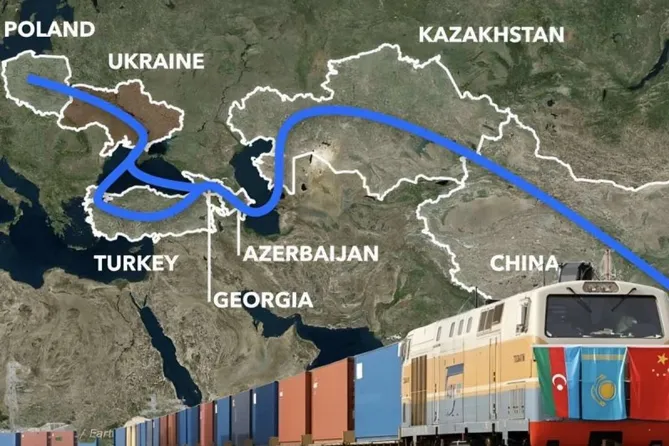
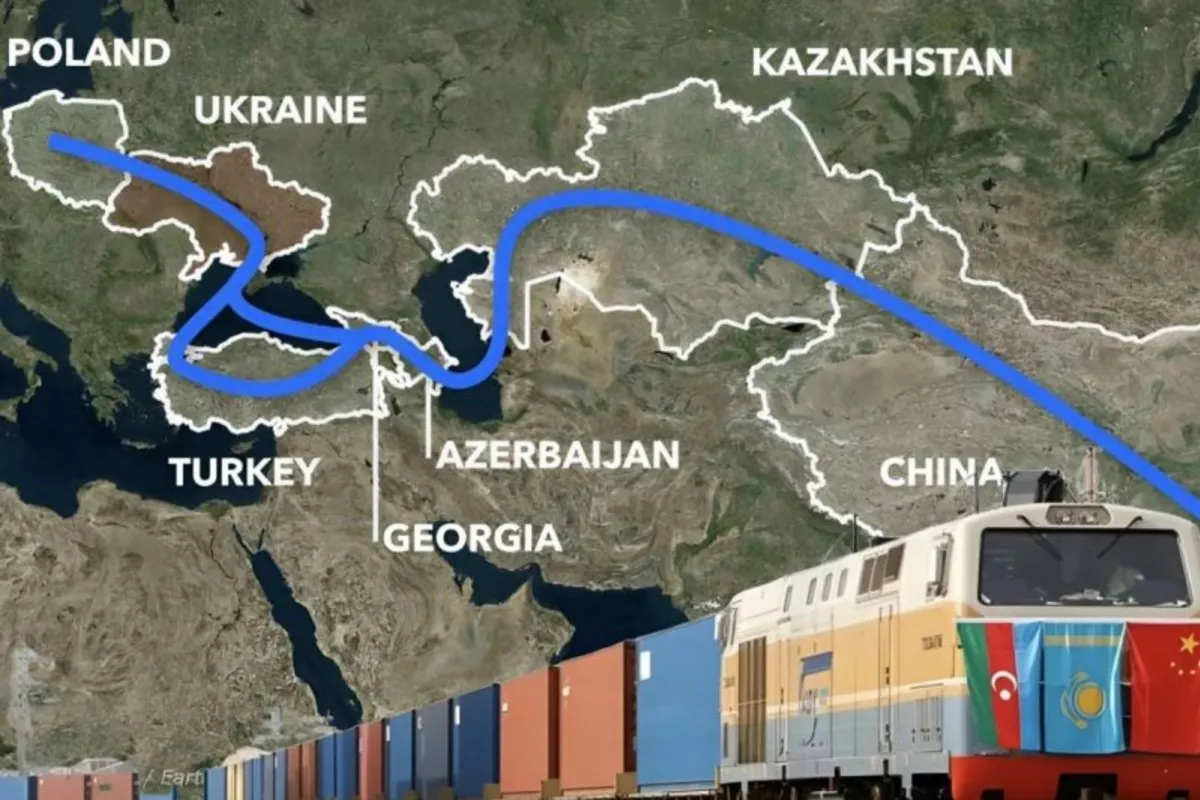
The Trans-Caspian International Transport Route, commonly referred to as the Middle Corridor, is a significant logistics initiative that commences at the China-Kazakhstan border and traverses Kazakhstan, the Caspian Sea, Azerbaijan, and Georgia, ultimately reaching Europe. This strategic corridor establishes Azerbaijan as a pivotal transport hub within the Eurasian region, enhancing connectivity and facilitating trade across multiple borders.

Expanding railway routes in the Middle Corridor

Significant progress is being made on the Middle Corridor, which is the shortest and most convenient route for cargo transportation from Central Asian countries to Europe and Africa. Currently, Azerbaijan Railways (ADY) and China are discussing ways to increase the number of railway services to Europe. Emil Mammadov, Chairman of Azerbaijan Railways (ADY) JSC, made this announcement during his speech at the "Black and Caspian Freight Forum 2024" on September 18.

Mammadov stated, "For the past year, we have been focused on the maintenance of the Baku-Tbilisi-Kars (BTK) corridor. We have completed work on the main operational and maintenance aspects, and the key connection has been restored, which will be operational from June 2024. As a result, the transmission capacity of the line has increased from 1 million tons to 5 million tons."

This significant increase in carrying capacity further enhances the importance and attractiveness of the Middle Corridor. According to data from the past five years, there has been an increase of over 110% in the volume of cargo transportation along the Middle Corridor. In the first six months of this year, there was a 15% increase in transportation compared to the same period last year, with more than 20% growth in transit transportation.

Mammadov also noted that increasing the number of railway routes to Europe would create opportunities for China to enter the European market. "In terms of the connections between Azerbaijan, the Central Asian region, and Turkey, this is the shortest land route. It enables not only traditional cargo transportation but also continental rail supply. We are discussing with our Chinese partners the possibility of increasing the number of rail routes to Europe, which would provide an additional opportunity for China to access the European market," he added.

Increasing the number of railway routes within the Middle Corridor project would significantly enhance China’s ability to enter and compete in the European market. By improving connectivity and reducing transit times, this expansion not only benefits China but also promotes regional cooperation and economic growth along the corridor. As infrastructure investments and strategic partnerships develop, the Middle Corridor is set to become a key artery for trade between Asia and Europe.

Northern Corridor faces decline amid geopolitical and economic shifts in Eastern Russia

Speaking at the event, Kanat Kobessov, co-chairman of the Supervisory Board of Kazakhstan's NurZhol Company and head of the National Exporters' Association "KazGrain," noted that the Middle Corridor is experiencing a significant increase in cargo flow.

According to him, despite current economic difficulties, global trade is projected to grow each year in the coming years.

"In recent years, the Eurasian region has become an increasingly important part of the global transport system. Three main corridors play a critical role in this process. The Northern Corridor, passing through Eastern Russia, is losing its position due to geopolitical and economic changes. In contrast, the Middle Corridor, which runs through Kazakhstan, is showing active growth. Additionally, the newly formed Southern Corridor connecting Central Asia and Kazakhstan should also be highlighted. The railway connection is vital for developing this infrastructure, and it is expected that new routes will be added to expand the railway network," he stated.

It should be noted that the Northern Corridor through Eastern Russia represents a significant opportunity for enhancing trade and economic cooperation across continents. With ongoing investments and strategic initiatives, it aims to become a vital link in the global supply chain, promoting sustainable economic growth while addressing environmental concerns.

Geographic significance:
- The Northern Corridor primarily runs through Eastern Russia, linking key cities and regions, and extending towards Europe and Asia.
- It connects the Arctic Sea routes with rail and road networks, promoting trade with both neighboring countries and global markets.

Transport infrastructure:
- Railways: The Trans-Siberian Railway plays a crucial role, facilitating efficient freight transport across vast distances. Ongoing upgrades aim to improve capacity and speed.
- Roads: Major highways and new road projects enhance connectivity between remote areas and urban centers, ensuring smoother logistics operations.
- Ports: Development of Arctic ports like Murmansk and Vladivostok enables year-round shipping, crucial for trade with Europe and Asia.

Economic impact:
- The Northern Corridor enhances trade routes, making Eastern Russia a pivotal hub for the export of natural resources, including oil, gas, and minerals.
- It opens up opportunities for economic collaboration with countries along the route, boosting local economies and industries.

Strategic initiatives- Belt and Road Initiative: The Northern Corridor is aligned with China’s Belt and Road Initiative, aiming to create efficient trade routes between Asia and Europe. Regarding the "One Belt, One Road" initiative, it is important to note that Azerbaijan was the first country in the Caucasus region to support this initiative proposed by China. In this context, Azerbaijan serves as a logistics center, hub, and bridge in the implementation of the "One Belt, One Road" strategy.

Investment projects: Various infrastructure projects are underway to modernize the transport network, supported by both Russian and international investments.

Despite these favorable conditions, the Northern Corridor faces several challenges:

- Harsh climatic conditions and remote geography pose challenges to infrastructure development and maintenance.

- Political and economic factors, including sanctions and international relations, can impact trade dynamics.

Azerbaijan's Middle Corridor has emerged as a key transit route

It should be noted that the Middle Corridor was established in February 2014 with the participation of relevant structures from Azerbaijan, Kazakhstan, and Georgia. Later, Ukraine, Romania, and Poland joined the project. Currently, the route begins at the China-Kazakhstan border and extends to Europe through Kazakhstan, the Caspian Sea, Azerbaijan, and Georgia. A single tariff has been implemented along the entire route, and the "single window" principle is applied.

With its unique geographical position, Azerbaijan serves as a bridge connecting Central Asia with the South Caucasus, the Black Sea, Eastern Europe, and the Mediterranean basin. Azerbaijan's strategic role as a transit corridor between Europe and Asia supports the efforts of Asian countries to diversify trade routes and enhance regional connectivity.

Cooperation in transport connections between Azerbaijan and Central Asian countries has gained new significance, with the Middle Corridor emerging as an important and successfully developing transport and logistics route.

In 2023, approximately 2.8 million tons of cargo were transported through the Middle Corridor, marking an 86 percent increase from 2022. In 2024, the volume of cargo transportation is expected to exceed 4 million tons, with plans to send around 250 container block trains through the corridor by the end of the year.

Notably, in the first six months of 2024, the volume of cargo transported on the Trans-Caspian International Transport Route (Middle Corridor) increased by 65 percent, reaching 2.1 million tons.

The Middle Corridor is experiencing active growth as it establishes itself as a vital trade route connecting Asia and Europe. With ongoing investments in infrastructure and strategic partnerships, it offers significant opportunities for economic development, enhancing trade efficiency while addressing sustainability concerns. Its expansion not only supports Azerbaijan's and others economic ambitions but also strengthens regional cooperation and integration.

Overall, international transport corridors are crucial for the development of the global economy in the context of global integration. These corridors facilitate the establishment and operation of stable international transport links. As an integral part of global economic processes, Azerbaijan plays a leading role in developing international transport corridors and implementing various regional projects.
 
Source:
、
Last edited:
Chinese ships are free to go up the Red sea without any attacks nor disruptions. Floating cargo going cheap without any interruptions. Why would China bother with all this complex logistics? Ukraine Poland are both busted ass countries anyway. Ukraine might not even be there in a few years.
 

Minutes, not maps: making borders work for the Middle Corridor​

14 Jan 2026 · Prosperity​

Freight flows are realigning around new trade routes, but borders remain the weakest link. IRU presented concrete measures to streamline freight flows along the increasingly important Middle Corridor at a major Turkic Week event in Vienna.

The Middle Corridor is responding to shifting global supply chains, geopolitical risks and the demand for resilient land routes. Since 2022, many logistics actors have turned to the Middle Corridor as a viable alternative to traditional maritime routes.

Trade along the Middle Corridor is also evolving. Once dominated by raw materials such as petroleum and minerals, it is now rapidly shifting to container traffic, which has more than tripled in the past 12 months. Over 60% of container traffic consists of Chinese goods bound for Europe.

Speaking at a Turkic Week event in Vienna organised by the Organization of Turkic States and the Organization for Security and Co-operation in Europe, IRU Secretary General Umberto de Pretto said, “Trade along the Middle Corridor is rapidly growing, with freight volumes expected to triple by 2030.

“However, without enhancements to the corridor, including border-crossing procedures, demand for transport is forecast to fall 35% short of the expected growth.

“We are working to strengthen the Middle Corridor, which requires facilitation, predictability and cooperation.”

ots-round-table-on-the-middle-corridor-held-within-the-framework-of-the-turkic-week-in-vienna_12.jpg

Current border challenges​

Despite strong political commitment, border crossings remain the weakest link in the Middle Corridor.

  • Key challenges include:
    • Long waiting times caused by repetitive controls and lack of coordination
    • Insufficient border capacity, especially during peak transit periods
    • Insufficient RoRo capacity at the Caspian Sea
    • Insufficient parking areas and humane conditions for drivers
    • Fragmented procedures and limited mutual recognition between authorities
These bottlenecks undermine reliability, increase costs, and reduce the corridor’s competitiveness.

The solutions​

Investments in roads lose impact if trucks wait for days on end at borders. One day at the border can cost more than hundreds of kilometres on the road.

Real connectivity requires risk-based controls, trust between customs administrations, and internationally harmonised procedures.

ots-round-table-on-the-middle-corridor-held-within-the-framework-of-the-turkic-week-in-vienna_11.jpg


“The TIR system provides a globally recognised framework based on mutual recognition of customs controls, an international guarantee, and sealed, secure cargo movements,” said Umberto de Pretto. “By reducing physical inspections, documentation duplication, and uncertainty for operators, TIR is particularly well-suited for trans-regional corridors like the Middle Corridor.”

TIR now connects China with over 30 countries across Eurasia, slashing transit times and costs by 80% and 50%, respectively. Umberto de Pretto also discussed the growing importance of TIR Green Lanes at border crossings. They provide priority passage for compliant TIR trucks, faster border procedures, and predictable transit times.

All Central Asian countries, as well as Romania, Moldova, China, Mongolia and Saudi Arabia, have implemented priority lanes or windows for TIR.

“Green Lanes are not a privilege; they are incentives for compliance and transparency,” said Umberto de Pretto.

Digitalisation is also essential to scale facilitation across borders. eTIR reduces paper-based delays, driving transparency, security, and interoperability between national customs systems.

“The Middle Corridor’s success will be measured not by maps, but by minutes saved at borders. All that is needed is political will to properly implement TIR to effectively facilitate and secure trade, transforming the Middle Corridor into a predictable, competitive and resilient trade artery that will create jobs, drive progress, prosperity and ultimately peace,” concluded Umberto de Pretto.
 

​

Azerbaijan Advances Logistics Modernization to Boost Transport Corridors​

  • 16 Jan, 15:51
Azerbaijan is actively upgrading its logistics infrastructure, serving as a key link for various international transport corridors passing through its territory, according to an article in the Japanese newspaper Nikkei, The Caspian Post reports.

At the end of 2025, a Nikkei correspondent visited the Baku International Sea Port and assessed the country's logistics potential:

"Azerbaijani officials told Nikkei about 40% of containerized cargo that arrives at Baku port originates in China, ranging from vehicles to garments, while the remaining cargo comes from other Central Asian countries. The volume of goods transported on the return journey to China remains limited and consists mainly of mineral fuels, lubricants, and other related products."

The article highlights that the container turnover at Baku port in 2025 exceeded 107,000 TEU (twenty-foot equivalent units), more than double the 2020 figure.

"Azerbaijan has a target annual capacity of 25 million tons and 500,000 TEU by the end of 2028," Nikkei said.

The newspaper also cites an interview with President Ilham Aliyev for local TV channels, in which he noted China's role in increasing cargo flows and added that Azerbaijan expects goods from China and Central Asian countries to transit via the Zangazur Corridor.

In line with this, Azerbaijan is modernizing its transport and logistics infrastructure:

"Azerbaijan is expanding capacity at its main port and accelerating construction and upgrades along the Trans-Caspian route, including nearly 1,200 km of railways and roads," the article notes.

The article also quotes Hikmat Hajiyev, Assistant to the President and Head of the Foreign Policy Affairs Department of the Presidential Administration, on the prospects created by regional logistics development:

"Our strategy is to make the South Caucasus an area of geopolitical cooperation, not competition and confrontation," Nikkei cites Hajiyev.

Regarding the TRIPP (Trump International Regional Partnership Project), the publication notes the planned timeline.

It says that when the Trump Route for International Peace and Prosperity (TRIPP) is completed, such trucks would travel by road to the southern border Azerbaijan shares with Armenia, skirt along the new railway line on the southern edges of Armenia onward to the Azerbaijani exclave of Nakhchivan and further on to Türkiye.
 

Advancing Middle Corridor Integration: Azerbaijan’s Growing Role as Key Trade Gateway​

12 February 2026
By Fuad Shahbazov
The author is Fuad Shahbazov, a Baku-based policy analyst.

On November 25, the first meeting of the Eurasian Transport Route (ETR) International Association under the chairmanship of Azerbaijan was held in Baku. The association’s meeting came amid intensified debates over the geostrategic importance of the Middle Corridor (TITR) transit route, the need to enhance trade flows between East and West, and the diversification of transport routes to enable the ETR to function at full capacity despite the ongoing global security crisis. On the other hand, the ongoing construction of the Uzbekistan–Kyrgyzstan–China railway will further enhance the ETR’s role, thereby strengthening interconnectivity across Central Asia.

The prevailing geopolitical environment has imparted renewed momentum to the Middle Corridor, alleviating existing logistical constraints and inaugurating a new phase of interconnectivity across Euro‑Asian transportation networks. Since its first steps of establishment in September 2024, Azerbaijan has regarded the ETR as the southern branch of the Middle Corridor connecting China, Kyrgyzstan, Tajikistan, Uzbekistan, Turkmenistan, Azerbaijan, Georgia, and Türkiye. For that purpose, Azerbaijan, in partnership with other stakeholders, shaped the Middle Corridor not only as a vital transcontinental link but as a framework for economic autonomy within the South Caucasus and Central Asian regions. To enhance multimodal transit and trade, the national rail operators of Azerbaijan, Kazakhstan, and Georgia established a joint venture, Middle Corridor Multimodal Ltd, in 2023, with China joining in August 2025.

Over the last five years, Azerbaijan’s pivot toward Central Asia has become a key pillar of its pragmatic foreign policy. In this vein, President Ilham Aliyev’s most recent visit to Uzbekistan, upon the invitation of his counterpart, Shavkat Mirziyoyev, to attend the Seventh Consultative Meeting of the Heads of State of Central Asia, also known as the C5, marked a significant milestone in the comprehensive partnership between Baku and Central Asian nations. The most consequential outcome of the meeting was Azerbaijan’s formal admission into the C5 format, a development widely regarded as the logical progression in the institutional evolution of this grouping. Through this inclusion, Central Asian states reaffirmed Azerbaijan’s function as a strategic gateway facilitating access to global markets.

As such, Azerbaijan’s sustained efforts to develop the trade potential of the Middle Corridor, diversify its economy by concentrating on increasing the country’s transit capacity, and use the leverage of strategically important infrastructure such as the Baku-Tbilisi-Kars (BTK) railway, and the fast upgrade of the Alat Sea Port, encouraged other partnering states to join these efforts. As a result of efforts, in the first eleven months of 2025, Azerbaijan Railways CJSC (ADY) handled 350 block trains from China running through Central Asia, including 128 transit trains. This figure represents a 34% increase compared to the same period last year.

During the same period, a total of 123,992 TEU of containerized cargo was transported, which is approximately 18% higher than the corresponding figure for 2024. As of Alat Sea Port, the latest figures indicate that between January and November 2025, container turnover at the port reached 96952 TEU, a 40.8% increase from the 68868 TEU recorded in the same period in 2024.

In 2025, ADY signed a Memorandum of Understanding (MoU) with China’s Xi’an Port covering several key areas: the optimization of container train operations, the improvement of cargo transit times, the enhancement of the Middle Corridor’s capacity, and the modernization of railway and port infrastructure along the corridor. The agreement paves the way for a more intensive partnership across the Caspian Sea, expanding the functionality of the BTK railway line and its efficient integration with the railway networks of Türkiye and Europe, developing a sustainable transport development plan along the Middle Corridor, and attracting more transit cargo to increase freight volumes.

Azerbaijan’s expanding role in shaping regional connectivity and trade architecture facilitated the incorporation of Uzbekistan, an actor of particular strategic importance, into the Middle Corridor framework as part of broader efforts to consolidate regional alliances. Since 2020, Uzbekistan’s participation in the corridor has been marked by tangible gains, including the adoption of streamlined customs procedures, the development of intermodal transport linkages between Samarkand and Baku, and the deployment of digital customs platforms designed to accelerate transit flows.

While the Middle Corridor continues to serve as a central pillar of Azerbaijan’s revitalized geoeconomic strategy, in the post‑2020 period, Baku articulated plans to establish an additional overland connection. Conceived as part of a broader package of transport initiatives, this project is intended to facilitate the uninterrupted integration of mainland Azerbaijan with its Nakhchivan exclave and, subsequently, extend connectivity to Türkiye via a transit route crossing Armenia. The new route, commonly known as the Zangezur Corridor, gained renewed momentum after August 8 under the new name, the Trump International Route for Peace and Prosperity (TRIPP). Indeed, the realization of the TRIPP route would create competitive advantages for interconnectivity across the Middle Corridor. As Rovshan Rustamov, ADY’s Chairman, emphasized during his speech in the panel discussions in Astana in October 2025, “the BTK and the Zangezur Corridor together will enhance the region’s transit capacity, creating a unified network that supports trade flows.”

The construction of Azerbaijan’s section of the TRIPP route, specifically the Horadiz-Aghband railway, is nearing completion, with full commissioning anticipated by the end of 2026. Designed with an initial throughput capacity of 15 million tons, this line is expected to function as a pivotal artery within the Middle Corridor. Within the same framework, Azerbaijan is preparing to launch the development of the Nakhchivan segment of the grid, as noted by Rashad Nabiyev, Azerbaijani Minister of Digital Development and Transport.

Concurrently, Azerbaijan has intensified investment in digital infrastructure and emerging technologies, aiming to diversify logistics services, modernise domestic communication systems, and dismantle existing barriers. These initiatives are strategically aimed at accelerating the country’s transformation into a transnational digital hub integrated into the Asia–Europe telecommunications corridor.

The current positive development dynamics of the Middle Corridor hold substantial promise for Azerbaijan and other stakeholders, as they foster regional partnership and interconnectivity while further diversifying trade routes and enhancing the economic autonomy of participating countries. Consequently, Azerbaijan’s explicit leadership in the Middle Corridor project highlights its growing role as a central transit and logistics hub in the Eurasian region.
 

Azerbaijan, Georgia discuss bolstering Middle Corridor as key transit route​

Transport Materials 19 February 2026 18:29 (UTC +04:00)


Azerbaijan, Georgia discuss bolstering Middle Corridor as key transit route

Photo: Ivane Abashidze/Linkedin

BAKU, Azerbaijan, February 19. Director of the Georgian Maritime Transport Agency Ivane Abashidze and Consul General of Azerbaijan Fuad Azizov discussed issues related to strengthening the Middle Corridor, the Director of the Georgian Maritime Transport Agency wrote on his social media account, Trend reports.

"During our meeting, we discussed ongoing maritime transport and logistics cooperation between our two countries, as well as the broader perspective for strengthening regional connectivity. Particular attention was given to the strategic importance of the Middle Corridor, which is steadily emerging as a fast, reliable, and indispensable transit route between Europe and Asia," the post reads.

Moreover, it is noted that Georgia and Azerbaijan share not only geographic proximity but a common vision: building a resilient, multimodal corridor that enhances trade efficiency, regional stability, and economic growth.

“The meeting was also attended by Deputy Director of the Maritime Transport Agency, Natia Miminoshvili, and Vice-Consul of Azerbaijan, Mahbuba Namazova. We reaffirmed our readiness to further deepen cooperation and reinforce regional connectivity between our countries,” the publication says.

The Middle Corridor is a transport and trade route that passes through a number of countries in the region and connects Asia with Europe. It serves as an alternative to the traditional Northern and Southern Corridors.

The route begins in China and passes through Central Asian countries such as Kazakhstan, Uzbekistan, and Turkmenistan. It then crosses the Caspian Sea, Azerbaijan, Georgia, and Türkiye, before entering Europe. The Middle Corridor is a land route that bypasses longer sea routes, connecting eastern Asia, including China, with Europe.


Middle Corridor Traffic via Azerbaijan Up 90% in Three Years
  • 18 Feb, 18:36
Cargo transportation along the Middle Corridor through Azerbaijan has increased by 90 per cent over the past three years, highlighting the rapid expansion of Eurasian connectivity.

The figure was announced by Javlon Vakhabov, Director of the International Institute for Central Asia, during a panel discussion titled “Connectivity and Development: The Economic Dimension of C6 Cooperation and Sustainable Growth”, The Caspian Post reports via local media.

“I believe this is a landmark figure - something we did not observe before 2017,” Vakhabov noted.

Trade Between Baku and Tashkent Jumps

He also revealed that bilateral trade between Azerbaijan and Uzbekistan rose by nearly 90 per cent in 2025 alone.

Vakhabov said that Azerbaijan has become the first country in the South Caucasus with which Uzbekistan has elevated relations to the level of an allied partnership. In this regard, Azerbaijan joins Russia and Kazakhstan as one of Uzbekistan’s top strategic partners.

Caspian Sea Turns from Barrier to Bridge

Meanwhile, Shiri Shiriyev, Director of the Center for Strategic Studies under Turkmenistan’s Foreign Ministry, stressed that the development of the Middle Corridor is transforming the Caspian Sea from a natural obstacle into a vital link in regional logistics.

Close coordination, he said, is revitalizing the Trans-Caspian International Transport Route, which offers the shortest route through Türkiye to Europe.

Shiriyev added that Azerbaijan’s participation in the C5 format enables the creation of a more integrated and resilient regional system, where traditional hydrocarbon energy sources coexist with renewable energy projects - creating synergy not only for domestic needs but also for exports to external markets.

German Companies Ready to Invest in Turkmen Railroads, Ports​

By Aygerim Sarymbetova February 15, 2026


The first meeting of the Foreign Ministers of Central Asia and Germany in the "C5+1" format was held in Berlin, on February 11, 2026. / MFA Tajikistan

German logistics companies are set to invest in Turkmenistan’s ports and railways to accelerate cargo deliveries between Asia and Europe via the Trans-Caspian transport corridor, also known as the Middle Corridor.

This initiative was announced in the Berlin Declaration, signed during the first high-level meeting between Central Asian foreign ministers and EU Special Representative for Central Asia, Eduard Stiprais, in Germany on February 11.

The meeting commenced with German President Frank-Walter Steinmeier personally receiving the Central Asian delegation, where discussions covered energy security, critical raw material supplies, and water resource management.

According to German presidential sources, Berlin views the Central Asian states, particularly Turkmenistan, as reliable partners capable of ensuring stability in Eurasia, News Central Asia reported.

The ministerial talks at the German Foreign Ministry produced a comprehensive Berlin Declaration that formally establishes Central Asia as Germany’s “preferred partner” in the region.

“Germany committed €2.7 million for the coordination platform of the Trans-Caspian Corridor. German logistics companies expressed willingness to invest in Turkmen ports and railways to accelerate cargo flows from Asia to Europe. This builds on the broader EU commitment of €10 billion announced at the January 2024 Global Gateway Investors Forum to develop this strategic trade route that bypasses Russia,” according to the declaration.
In February, Turkmenistan and other Central Asian countries will sign a memorandum of cooperation in the field of innovation and space with the German Federal Ministry of Research, Technology and Space, the report noted.

It also added that a €250 million portfolio will support decarbonization and renewable energy development projects across Central Asia through Germany’s Green Initiative.

A business forum featuring 30 of Germany’s largest companies ran parallel to the ministerial meeting. The ministers agreed to support economic activities through government instruments such as export credits and investment guarantees, with particular focus on the chemicals, agriculture, and personnel training sectors in Turkmenistan and across the region.

Transport and logistics, modernization of the railway infrastructure, development of the International Seaport of Turkmenbashi and the participation of German companies in the formation of the East-West transit corridors and the Middle Route between Asia and Europe were among the priority areas.

Germany allocated more than €13 million to Central Asia since 2022 through OSCE programs in the region. Trade between Germany and Central Asia reached $11 billion in 2022, with Kazakhstan accounting for 83% of this volume. Germany’s strategic engagement reflects both economic interests and broader geopolitical goals of strengthening ties with a region traditionally caught between Russian and Chinese spheres of influence.


Baku, Tbilisi, Ashgabat, Tashkent Eye Middle Corridor Expansion

photo: ADY

Baku, Tbilisi, Ashgabat, Tashkent Eye Middle Corridor Expansion
  • 10 Feb, 18:17
A four-party meeting on rail cooperation has been held in Ashgabat, bringing together key railway officials from Azerbaijan, Turkmenistan, Uzbekistan, and Georgia.

The talks involved Azerbaijan Railways Chairman Rovshan Rustamov, Turkmenistan’s Minister of Railway Transport Mammet Akmammedov, Uzbekistan Railways Board Chairman Zufar Narzullayev, and Georgian Railway CEO Lasha Abashidze, The Caspian Post reports via Azerbaijan Railways.

The meeting focused on expanding cooperation in the railway sector, with particular attention to the Middle Corridor, one of the region’s key transit routes.

Participants exchanged views on boosting the competitiveness of the Middle Corridor, increasing cargo volumes, and enhancing efficiency through the digitalization of railway operations, which was highlighted as essential for faster and more reliable freight transportation.

The sides also emphasized the importance of the memorandum of understanding on transport and logistics cooperation signed in August last year in Turkmenbashi. The agreement, concluded between Azerbaijan’s Ministry of Digital Development and Transport, Turkmenistan’s Ministry of Railway Transport, and Uzbekistan’s Ministry of Transport, is expected to play a significant role in deepening regional cooperation.

Following the meeting, the parties signed a protocol covering digitalization, freight transport development along the Middle Corridor, and corridor diagnostics, underscoring a shared commitment to strengthening Eurasian connectivity.
 

1 April 2026

Istanbul Strait Rail Project to Boost Trade Along Trans-Caspian Transport Route​


On March 31, the World Bank approved a $2 billion loan for the Istanbul North Rail Crossing Project (INRAIL), aimed at strengthening railway connectivity across the Istanbul Strait (Bosphorus) and reinforcing Türkiye’s role as a key logistics hub linking Europe, Asia, and the Middle East.

With the Baku-Tbilisi-Kars railway, Turkey serves as a key node in the Trans-Caspian International Transport Route (TITR), also known as the Middle Corridor. The route connects China and Europe via Kazakhstan, the Caspian Sea, the South Caucasus, and Turkey.

Turkey’s major rail corridors passing through Istanbul, including the Middle Corridor, the Iraq Development Road, and the Turkey-EU corridor, are essential for international trade but currently face a significant bottleneck at the Bosphorus.

INRAIL will involve the construction of a 127-kilometer electrified, high-capacity railway line providing a new overland rail crossing of the strait. The project will utilize the rail-ready Yavuz Sultan Selim Bridge and bypass central Istanbul, increasing both freight and passenger capacity while reducing logistics costs and improving reliability across national and intercontinental transport corridors, including the TITR.

Once operational, rail freight capacity across the Bosphorus is expected to increase from approximately 3 million tons per year to as much as 50 million tons, significantly improving transit times, reliability, and predictability for freight operators.

“By removing a critical rail bottleneck at the Istanbul Strait and enhancing the resilience and efficiency of rail infrastructure, Turkey is boosting its competitiveness and reinforcing its role as a logistics hub,” said Humberto Lopez, World Bank Country Director for Turkey. “INRAIL will also generate benefits for the wider region by connecting to international corridors such as the Middle Corridor and the Development Road, facilitating trade between Europe, Central Asia, and the Gulf.”

The project aligns with Kazakhstan and Türkiye’s broader efforts to develop the Middle Corridor.

In July 2025, Kazakhstan’s national railway operator, Kazakhstan Temir Zholy (KTZ), and TCDD Taşımacılık A.Ş. signed a cooperation agreement to enhance freight transportation along the TITR.

The agreement aims to improve the route’s efficiency and competitiveness by launching regular rail services between Kazakhstan and Turkey, increasing freight volumes along the Baku-Tbilisi-Kars railway, and expanding cargo flows between China and Europe.

KTZ has also held discussions with Mersin International Port, part of PSA International, on expanding cooperation to strengthen the Middle Corridor and develop more efficient multimodal logistics links between Asia and Europe.

KTZ Chairman Talgat Aldybergenov reaffirmed both sides’ commitment to ensuring stable freight volumes and highlighted Mersin’s role as a strategic transshipment hub for the corridor.

To further strengthen the logistics chain, Kazakhstan has proposed leveraging the potential of KPMC, a joint venture between KTZ and PSA International, which is already involved in developing multimodal services along the Xi’an-Istanbul route.
 

World Bank approves $372 million project to strengthen Georgia’s role in Middle Corridor​

by Georgia Today June 3, 2026

The World Bank Group’s Board of Executive Directors has approved a USD 372 million project aimed at improving Georgia’s transport infrastructure and strengthening its role in the Trans-Caspian Transport Corridor, a key trade route connecting Europe and Asia.

World Bank says the Trans-Caspian Transport Corridor – Georgia Accessibility and Transport Enhancement (TC-GATE) Project will finance upgrades to rail freight capacity, modernisation of strategic road segments, and reforms designed to improve the efficiency and resilience of Georgia’s transport sector.

“These investments will help Georgia realise its full potential as a critical regional transit hub bridging Europe and Asia, while responding to growing demand along the Trans-Caspian Transport Corridor,” said Rolande Pryce, the World Bank’s Regional Director for the South Caucasus. He noted that modernising key rail and road links and strengthening the institutions that manage them would improve connectivity, create employment opportunities and support economic growth across the region.

The total cost of the TC-GATE Project exceeds USD 750 million. The World Bank is providing USD 372 million, while the remaining funding will be co-financed by the Asian Infrastructure Investment Bank (AIIB) and the Asian Development Bank (ADB), reflecting broad international support for the development of the Middle Corridor.

Georgian Finance Minister Lasha Khutsishvili said the project would strengthen Georgia’s position as a reliable gateway between Europe and Asia and support growing international trade flows.

“Together with our international partners, we are committed to building a modern transport network that will serve the region for decades to come,” Khutsishvili said, adding that the planned upgrades would improve the efficiency of the Middle Corridor and strengthen the resilience of regional connectivity.

A major component of the project focuses on modernising rail freight services. The World Bank said funding will be used to purchase new energy-efficient electric locomotives to replace ageing rolling stock and improve the operational efficiency, governance and financial sustainability of Georgian Railway. The upgrades are expected to increase locomotive availability to 95 percent, improve service reliability and contribute to a 20 percent rise in railway revenues. They are also projected to reduce net emissions by more than 2.3 million tons.

The project will also improve road connectivity in Kakheti through the construction of two new four-lane road sections between Badiauri, Chalaubani and Bakurtsikhe, as well as a new road connecting Gurjaani and Telavi. World Bank says the improvements will cut travel time between Telavi and the Black Sea port of Poti by approximately 43 minutes while improving road safety and climate resilience.

In addition, the project will support the digitisation of road asset management, the introduction of Intelligent Transport Systems through a National Highway Control Center, and measures aimed at ensuring the long-term sustainability of Georgia’s road network.
 

Azerbaijan, Kazakhstan and China Coordinate Logistics Along The Middle Corridor

Source: AI-generated

Azerbaijan, Kazakhstan and China Coordinate Logistics Along The Middle Corridor
26 Oct, 23:12

Azerbaijan, Kazakhstan, and China increasingly seek to strengthen the Middle Corridor as a trans-Eurasian trade and logistics route. China’s proposal to extend Lianyungang Port’s existing logistics chain to Baku, alongside expanding container capacity at Aktau and new multimodal transport agreements, reflects a shift toward integrating previously separate infrastructure projects.

Building on the existing Lianyungang-Khorgos-Aktau “Three Nodes” logistics chain, the proposed extension to Baku could further integrate transport networks across China, Central Asia, and the South Caucasus, strengthening freight connectivity with European markets. It could also create opportunities for Japan and South Korea to diversify their trade and energy routes amid disruptions to traditional supply chains. However, its long-term viability will depend on whether the participating countries can coordinate railway services, port operations, customs procedures, and digital systems to deliver reliable, cost-effective, and commercially competitive freight services.


Users who are viewing this thread

Pakistan Defence Latest

Latest Posts

Back
Top