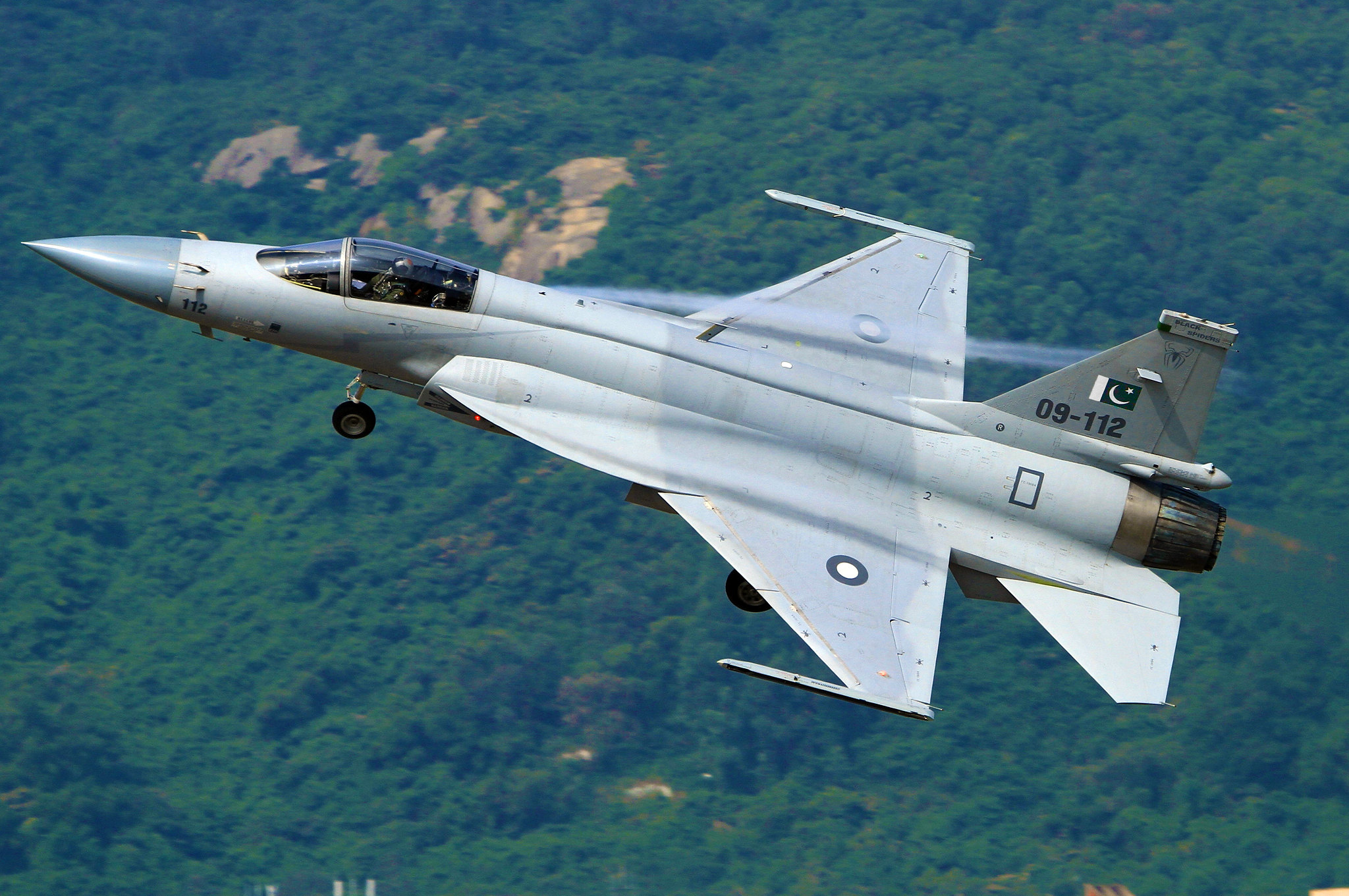
Bangladesh Air Force

If the plan is to rapidly retire the MIGs and J17 have been bought to provide cover to the navy as replacements - then that’s sticking to the strategy.

But why hasn’t the government explained all this.

Whatever the strategy - it needs to be public.

No government will ever disclose military acquisition strategy publicly. Its not just in BD, but everywhere else.

General rule of thumb is - if the acquisition makes sense and will bolster overall security of the country, then the acquisition is most likely going according to plan.
 
No government will ever disclose military acquisition strategy publicly. Its not just in BD, but everywhere else.

General rule of thumb is - if the acquisition makes sense and will bolster overall security of the country, then the acquisition is most likely going according to plan.

Most countries actually make their defence acquisition strategy plain and simple.

E.g. NATO countries must buy exclusively from US approved suppliers. Which boils down to NATO countries plus Australia, New Zealand, Japan and South Korea.

For Bangladesh It was China first with Russia mainly for jets.
 
Bangladesh needed a small number of jets for air cover for the navy.

And the Migs were the only ones on offer.

Khaleda vindictively blocked the second batch meaning BD did not have a viable air force.

And have been hamstrung since.

So, BD went from a sensible strategy under Hasina - to a vindictive strategy under Khaleda - to a bankruptcy strategy under Younus.

Khaleda, the vindictive 8th grader, who celebrated her fake birthday on Mujib’s death anniversary!

An illiterate like her should never have become PM.

Couldn’t even manage a basic SSC pass!
Why are you so concerned about your potential rival nations defence capacity? Stick to your lane mate
 
For Bangladesh It was China first with Russia mainly for jets.
Bangladesh purchasing weapons and equipment from China? That's perfectly fine.

The problem lies in funding!

Bangladesh's economic strength is simply insufficient to support expensive, modern weaponry.

China does offer financial services with extremely low down payments and long-term installment plans. However, this requires a very high level of trust as collateral. Bangladesh's current relationship with China is far from achieving this.

But, there is another route that Bangladesh can consider: the Serbian approach.

The Bangladesh Air Force's existing MiG-29 fighter jets, combined with Chinese weapon conversion modules, Chinese CM-400 missiles, and other advanced missiles, can enhance the air force's combat capabilities. Simultaneously, integrating these with Chinese detection systems and communication command systems can maximize the effectiveness of existing equipment.

These missiles, detection systems, and communication command systems will continue to play a crucial role in the future after Bangladesh's economic development and the purchase of new advanced Chinese weaponry.
 
But, there is another route that Bangladesh can consider: the Serbian approach.

The Bangladesh Air Force's existing MiG-29 fighter jets, combined with Chinese weapon conversion modules, Chinese CM-400 missiles, and other advanced missiles, can enhance the air force's combat capabilities. Simultaneously, integrating these with Chinese detection systems and communication command systems can maximize the effectiveness of existing equipment.

These missiles, detection systems, and communication command systems will continue to play a crucial role in the future after Bangladesh's economic development and the purchase of new advanced Chinese weaponry.

We don't have sufficient Migs to warrant such upgrades. 8 in service, Out of which 2 are UB variant, which are trainers without radar. So essentially only 6 fighters available. That is when they are not in downtime that Migs are infamous for. Besides, they already underwent upgrade a couple of years earlier to extend their life.

If we had around 2 squadron worth, around 32, then upgrading them to prolong their lifespan further instead of buying a new platform would make sense.
 
We don't have sufficient Migs to warrant such upgrades. 8 in service, Out of which 2 are UB variant, which are trainers without radar. So essentially only 6 fighters available. That is when they are not in downtime that Migs are infamous for. Besides, they already underwent upgrade a couple of years earlier to extend their life.

If we had around 2 squadron worth, around 32, then upgrading them to prolong their lifespan further instead of buying a new platform would make sense.
Sorry, I'm not familiar with the current state of the Bangladesh Air Force.

If their situation is as you describe, then purchasing JF-17B3s would be a good option.

However, bulk purchases of JF-17B3s are not cheap. I'm not entirely clear on Bangladesh's current economic capabilities. My main research focus is Pakistan, and I haven't really studied Bangladesh yet.

Generally speaking, the Bangladesh Air Force needs to purchase at least one squadron's worth of fighter jet service packages. This includes fighter jets, ammunition, maintenance, pilot training, spare parts, base upgrades, etc.

Since the Bangladesh Air Force currently doesn't have any 4.5th-Gen fighter jets, there's no corresponding support system. To maximize the effectiveness of these fighter jets, a corresponding support system is needed. This is a significant expense.

I'm not sure if Bangladesh can currently afford this funding. What is certain is that Pakistan certainly cannot provide financial services with extremely low down payments and long-term installment plans. Furthermore, the sales of the JF-17 series fighter jets have been completely transferred to Pakistan, and China is no longer involved.
 
29 May 2026
Beyond the Cockpit: The Political Economy of Bangladesh’s JF-17 Moment
By Arman Ahmed

In May 2026, a Pakistan Air Force C-130J landed quietly in Dhaka carrying a single heavy crate. Inside was a full-scale JF-17 Thunder Block III combat simulator—the first piece of Pakistani military aviation hardware to enter Bangladesh since 1971. That historic symbolism alone should give us pause.

The simulator, delivered during the first formal Air Staff Talks between the two air forces, is being framed as a training tool ahead of a potential procurement of 16 to 48 JF-17 Block III multirole fighters, estimated at between USD 400 and 720 million. Policymakers and defence commentators have focused on the operational logic: the Bangladesh Air Force’s fleet is ageing; its F-7BGs and MiG-29s are approaching end of life; and the Forces Goal 2030 modernisation plan demands credible air power. That operational logic is sound, as far as it goes, but it goes nowhere far enough, for it says nothing of the political alignment this procurement implies, the fiscal obligations it will incur over decades, or what it means to bind Bangladesh’s strategic future to a Sino-Pakistani supply chain at a moment of acute economic fragility.

A fighter jet is never merely a weapons platform. It is a political instrument, an economic commitment, and over the long arc of defence dependency projects a statement of alignment that outlasts governments. Bangladesh is not simply buying an aircraft. It may be buying into a strategic orbit from which exit will be difficult, expensive, and diplomatically consequential.

The Political Dimension

The JF-17 is a Sino-Pakistani product: conceived to reduce Pakistan’s dependence on Western suppliers and jointly manufactured by Pakistan Aeronautical Complex and China’s Chengdu Aircraft Corporation. Its sale to Bangladesh is therefore not a bilateral transaction between Dhaka and Islamabad; in structural terms, it is a trilateral one, with Beijing as the quiet principal.

That matters enormously in the current moment. In August 2024, a student-led mass uprising triggered by protests over public sector job quotas forced Prime Minister Sheikh Hasina to resign after 15 consecutive years in office, ending the Awami League’s long hold on power and ushering in an interim administration led by Nobel laureate Muhammad Yunus. Bangladesh’s relations with Pakistan had been at their lowest ebb under Hasina, partly as a result of Dhaka’s prosecution of individuals accused of collaborating with Pakistani forces during the 1971 Liberation War. That adversarial posture reversed sharply under the Yunus administration. Dhaka simultaneously signaled a deepening tilt towards Beijing, including the acquisition of Chinese SY-400 missile systems. The JF-17 deal, if confirmed, would anchor this realignment in steel and silicon.

Political scientists since James Morrow have argued that arms transfers are rarely neutral commercial transactions. They embed “security for autonomy” trade-offs: the buyer gains capability, but surrenders a degree of strategic independence, which means the practical freedom to reorient foreign policy, realign with new partners, or exit a defence relationship without prohibitive switching costs, to the supplier. The longer the relationship continues through spare parts, training, upgrades, and interoperability standards, the deeper the dependency lasts. Pakistan has explicitly framed its JF-17 export drive as a mechanism to amplify strategic influence in regions previously dominated by Western or Indian-aligned suppliers. Bangladesh would be entering that ecosystem dominated by Sino-Pakistani influences, knowingly or otherwise.

There is also a domestic political reading that cannot be ignored. The simulator arrived from Pakistan for the first time since 1971, the year Bangladesh won its independence from Pakistan through a Liberation War in which Pakistani forces carried out mass atrocities against Bengali civilians, with some estimates placing the death toll at three million. That history of profound rupture shaped decades of bilateral estrangement, a watershed moment in Bangladeshi political memory that significantly changed national identity. Its acceptance, when the previous interim government that has also overseen a rehabilitation of Islamist political actors, sends a signal within Bangladesh’s own contested landscape. Defence procurement, in this reading, is simultaneously foreign policy and domestic political messaging.

The Economic Burden

On the economic side, the analysis grows more troubling. At the very moment Bangladesh is contemplating a defence acquisition of historic scale, during a time when its macro-economic position remains acutely fragile. As of the IMF’s January 2026 Article IV assessment, Bangladesh faces “mounting macro-financial challenges from weak tax revenue and financial sector vulnerabilities.” Gross foreign exchange reserves, which peaked at USD 48 billion in August 2021, collapsed to below USD 20 billion by 2024, a reversal that forced Bangladesh to seek a USD 4.7 billion IMF program in 2023, with repeated delays in tranche disbursements. Inflation stands at roughly 9 per cent, and GDP growth, projected at 4.7 per cent for FY2026, remains well below Bangladesh’s historical trajectory.

Against this backdrop, committing between USD 400 million and USD 720 million to a fighter program through financing mechanisms consistent with Pakistan’s established practice of extending defence lines of credit to partner states and China’s documented use of concessional loans for strategic procurement in South Asia, raises acute questions that have conspicuously failed to enter public debate. Defence economists Jurgen Brauer and Paul Dunne have long argued that military procurement in low- and middle-income countries systematically crowds out productive investment, generates long-term foreign exchange outflows through sustainment costs, and produces scant economic spillover unless accompanied by meaningful technology transfer. The JF-17’s sustainment ecosystem is tightly bound to Chinese avionics, weapons, and logistics chains; Bangladesh’s exchequer will service those chains for decades.

Dependency in Uniform

Political economy theory offers a sharper vocabulary here than the language of bilateral “defence cooperation” typically employed. Dependency theorists, from André Gunder Frank to Immanuel Wallerstein, have observed that peripheral states systematically reproduce their subordination by importing the security architecture of more powerful states, thereby embedding structural relationships that persist long after the initial transaction.

The JF-17 is precisely such an architecture for Bangladesh. Its primary avionics rely on the Chinese KLJ-7A AESA radar; its principal air-to-air weapon is the Chinese PL-15 missile; and its logistics chain runs through Chinese and Pakistani suppliers. Each spare part requisition, every software update, and all future weapons integration will require continued engagement with that chain. A government that decided to reorient Bangladesh’s foreign policy away from Beijing and Islamabad would find its air force progressively degraded. That is what strategic lock-in means in practice: not a formal political commitment, but a maintenance schedule.

What makes Bangladesh’s situation distinctive is the conjuncture. It is a state in economic stress, in political transition, approaching LDC graduation in 2026 and the attendant loss of preferential trade arrangements, while simultaneously reshaping its external alignments. In this environment, a major defence procurement is not an isolated decision; it is a de facto foreign policy instrument with generational consequences. Susan Strange’s concept of “structural power”, the capacity of a state to shape the frameworks within which others must operate, is instructive: Beijing, through the JF-17, is exercising structural power over Bangladesh’s future strategic options, whether or not that is the stated intent of any party at the negotiating table.

What Bangladesh Needs

None of this is an argument against air force modernisation. Bangladesh’s ageing fleet is a legitimate security concern, and no sovereign state should be indefinitely denied the right to defend its airspace. However, the terms of modernisation matter enormously: the financing structure, the technology transfer provisions, the degree of local industrial participation, the interoperability implications with Bangladesh’s existing defence partnerships, and above all, the political conditionalities, implicit or explicit, that accompany the deal.

Bangladesh’s foreign policy has long rested on the principle of “friendship towards all, malice towards none.” A commitment of up to USD 720 million to a Sino-Pakistani aviation system, at a moment of economic fragility and contested realignment, tests that doctrine severely. It also tests the quality of the national conversation. A decision of this magnitude, one that will shape Bangladesh’s strategic posture, fiscal space, and geopolitical relationships for a generation, deserves rigorous parliamentary scrutiny, independent economic analysis, and open public debate.

The simulator has landed. The crate has been opened. The question is whether the debate has begun.
 
The writer spends the entire article suggesting that Bangladesh should not purchase the JF17 because Bangladesh can't afford it, and that the political alignment might be questionable but makes no mention of the Eurofighter the BAF is also looking to buy.

Tough talk for the Sino-Pakistanis but open coffers for the Europeans.

Granted the writer may have wanted to focus exclusively on the JF17 deal, but you can't talk about the cost of air force modernization without at least paying lip service to the most expensive portion of that program.

Reads like a hit piece.
 
The writer spends the entire article suggesting that Bangladesh should not purchase the JF17 because Bangladesh can't afford it, and that the political alignment might be questionable but makes no mention of the Eurofighter the BAF is also looking to buy.

Tough talk for the Sino-Pakistanis but open coffers for the Europeans.

Granted the writer may have wanted to focus exclusively on the JF17 deal, but you can't talk about the cost of air force modernization without at least paying lip service to the most expensive portion of that program.

Reads like a hit piece.

Thanks for the summary.
 
29 May 2026
Beyond the Cockpit: The Political Economy of Bangladesh’s JF-17 Moment
By Arman Ahmed

In May 2026, a Pakistan Air Force C-130J landed quietly in Dhaka carrying a single heavy crate. Inside was a full-scale JF-17 Thunder Block III combat simulator—the first piece of Pakistani military aviation hardware to enter Bangladesh since 1971. That historic symbolism alone should give us pause.

The simulator, delivered during the first formal Air Staff Talks between the two air forces, is being framed as a training tool ahead of a potential procurement of 16 to 48 JF-17 Block III multirole fighters, estimated at between USD 400 and 720 million. Policymakers and defence commentators have focused on the operational logic: the Bangladesh Air Force’s fleet is ageing; its F-7BGs and MiG-29s are approaching end of life; and the Forces Goal 2030 modernisation plan demands credible air power. That operational logic is sound, as far as it goes, but it goes nowhere far enough, for it says nothing of the political alignment this procurement implies, the fiscal obligations it will incur over decades, or what it means to bind Bangladesh’s strategic future to a Sino-Pakistani supply chain at a moment of acute economic fragility.

A fighter jet is never merely a weapons platform. It is a political instrument, an economic commitment, and over the long arc of defence dependency projects a statement of alignment that outlasts governments. Bangladesh is not simply buying an aircraft. It may be buying into a strategic orbit from which exit will be difficult, expensive, and diplomatically consequential.

The Political Dimension

The JF-17 is a Sino-Pakistani product: conceived to reduce Pakistan’s dependence on Western suppliers and jointly manufactured by Pakistan Aeronautical Complex and China’s Chengdu Aircraft Corporation. Its sale to Bangladesh is therefore not a bilateral transaction between Dhaka and Islamabad; in structural terms, it is a trilateral one, with Beijing as the quiet principal.

That matters enormously in the current moment. In August 2024, a student-led mass uprising triggered by protests over public sector job quotas forced Prime Minister Sheikh Hasina to resign after 15 consecutive years in office, ending the Awami League’s long hold on power and ushering in an interim administration led by Nobel laureate Muhammad Yunus. Bangladesh’s relations with Pakistan had been at their lowest ebb under Hasina, partly as a result of Dhaka’s prosecution of individuals accused of collaborating with Pakistani forces during the 1971 Liberation War. That adversarial posture reversed sharply under the Yunus administration. Dhaka simultaneously signaled a deepening tilt towards Beijing, including the acquisition of Chinese SY-400 missile systems. The JF-17 deal, if confirmed, would anchor this realignment in steel and silicon.

Political scientists since James Morrow have argued that arms transfers are rarely neutral commercial transactions. They embed “security for autonomy” trade-offs: the buyer gains capability, but surrenders a degree of strategic independence, which means the practical freedom to reorient foreign policy, realign with new partners, or exit a defence relationship without prohibitive switching costs, to the supplier. The longer the relationship continues through spare parts, training, upgrades, and interoperability standards, the deeper the dependency lasts. Pakistan has explicitly framed its JF-17 export drive as a mechanism to amplify strategic influence in regions previously dominated by Western or Indian-aligned suppliers. Bangladesh would be entering that ecosystem dominated by Sino-Pakistani influences, knowingly or otherwise.

There is also a domestic political reading that cannot be ignored. The simulator arrived from Pakistan for the first time since 1971, the year Bangladesh won its independence from Pakistan through a Liberation War in which Pakistani forces carried out mass atrocities against Bengali civilians, with some estimates placing the death toll at three million. That history of profound rupture shaped decades of bilateral estrangement, a watershed moment in Bangladeshi political memory that significantly changed national identity. Its acceptance, when the previous interim government that has also overseen a rehabilitation of Islamist political actors, sends a signal within Bangladesh’s own contested landscape. Defence procurement, in this reading, is simultaneously foreign policy and domestic political messaging.

The Economic Burden

On the economic side, the analysis grows more troubling. At the very moment Bangladesh is contemplating a defence acquisition of historic scale, during a time when its macro-economic position remains acutely fragile. As of the IMF’s January 2026 Article IV assessment, Bangladesh faces “mounting macro-financial challenges from weak tax revenue and financial sector vulnerabilities.” Gross foreign exchange reserves, which peaked at USD 48 billion in August 2021, collapsed to below USD 20 billion by 2024, a reversal that forced Bangladesh to seek a USD 4.7 billion IMF program in 2023, with repeated delays in tranche disbursements. Inflation stands at roughly 9 per cent, and GDP growth, projected at 4.7 per cent for FY2026, remains well below Bangladesh’s historical trajectory.

Against this backdrop, committing between USD 400 million and USD 720 million to a fighter program through financing mechanisms consistent with Pakistan’s established practice of extending defence lines of credit to partner states and China’s documented use of concessional loans for strategic procurement in South Asia, raises acute questions that have conspicuously failed to enter public debate. Defence economists Jurgen Brauer and Paul Dunne have long argued that military procurement in low- and middle-income countries systematically crowds out productive investment, generates long-term foreign exchange outflows through sustainment costs, and produces scant economic spillover unless accompanied by meaningful technology transfer. The JF-17’s sustainment ecosystem is tightly bound to Chinese avionics, weapons, and logistics chains; Bangladesh’s exchequer will service those chains for decades.

Dependency in Uniform

Political economy theory offers a sharper vocabulary here than the language of bilateral “defence cooperation” typically employed. Dependency theorists, from André Gunder Frank to Immanuel Wallerstein, have observed that peripheral states systematically reproduce their subordination by importing the security architecture of more powerful states, thereby embedding structural relationships that persist long after the initial transaction.

The JF-17 is precisely such an architecture for Bangladesh. Its primary avionics rely on the Chinese KLJ-7A AESA radar; its principal air-to-air weapon is the Chinese PL-15 missile; and its logistics chain runs through Chinese and Pakistani suppliers. Each spare part requisition, every software update, and all future weapons integration will require continued engagement with that chain. A government that decided to reorient Bangladesh’s foreign policy away from Beijing and Islamabad would find its air force progressively degraded. That is what strategic lock-in means in practice: not a formal political commitment, but a maintenance schedule.

What makes Bangladesh’s situation distinctive is the conjuncture. It is a state in economic stress, in political transition, approaching LDC graduation in 2026 and the attendant loss of preferential trade arrangements, while simultaneously reshaping its external alignments. In this environment, a major defence procurement is not an isolated decision; it is a de facto foreign policy instrument with generational consequences. Susan Strange’s concept of “structural power”, the capacity of a state to shape the frameworks within which others must operate, is instructive: Beijing, through the JF-17, is exercising structural power over Bangladesh’s future strategic options, whether or not that is the stated intent of any party at the negotiating table.

What Bangladesh Needs

None of this is an argument against air force modernisation. Bangladesh’s ageing fleet is a legitimate security concern, and no sovereign state should be indefinitely denied the right to defend its airspace. However, the terms of modernisation matter enormously: the financing structure, the technology transfer provisions, the degree of local industrial participation, the interoperability implications with Bangladesh’s existing defence partnerships, and above all, the political conditionalities, implicit or explicit, that accompany the deal.

Bangladesh’s foreign policy has long rested on the principle of “friendship towards all, malice towards none.” A commitment of up to USD 720 million to a Sino-Pakistani aviation system, at a moment of economic fragility and contested realignment, tests that doctrine severely. It also tests the quality of the national conversation. A decision of this magnitude, one that will shape Bangladesh’s strategic posture, fiscal space, and geopolitical relationships for a generation, deserves rigorous parliamentary scrutiny, independent economic analysis, and open public debate.

The simulator has landed. The crate has been opened. The question is whether the debate has begun.
Posted already elsewhere
 
The writer spends the entire article suggesting that Bangladesh should not purchase the JF17 because Bangladesh can't afford it, and that the political alignment might be questionable but makes no mention of the Eurofighter the BAF is also looking to buy.

Tough talk for the Sino-Pakistanis but open coffers for the Europeans.

Granted the writer may have wanted to focus exclusively on the JF17 deal, but you can't talk about the cost of air force modernization without at least paying lip service to the most expensive portion of that program.

Reads like a hit piece.

What's the source of the article? That will reveal a lot about the writer's agenda.
 

Users who are viewing this thread

Back
Top