

MOD EDIT - HINDUTVA PROPAGANDA - but discussion allowed to discuss the agenda behind this fake news.
Naming the four companies after close companions and fathers- and sons-in-law is a sign of growing Islamisation within the rank and file of the Bangladesh Army
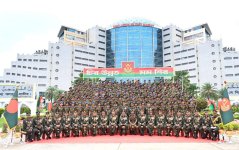
A newly raised Bangladesh Army battalion has named the four companies comprising this unit after the distinguished companions (sahabas) of Prophet Muhammad, testifying to the growing Islamisation of an organisation that draws its inspiration from the 1971 liberation war.
The names of the four companies are: Umar, Abu Bakr, Ali and Usman.
On June 18, 2026, the 2nd Bangladesh Battalion (BD Bn) was formally raised at the Bangladesh Military Academy (BMA), Bhatiary. The battalion was inaugurated by Army Chief General Waker-Uz-Zaman, who was on a Hajj pilgrimage in late May this year.
Bangladesh Army sources said that initially the battalion will begin its functions by using the BMA’s existing infrastructure and facilities. It will gradually be relocated to a separate location in due course.
Growing Islamisation and shifting religious dynamics within the Bangladesh Army have become prominent topics of geopolitical and domestic concern following the August 2024 regime change. Observers point to several visible, institutional, and cultural shifts indicating a more religiously conservative environment within the military
Gen Waker-Uz-Zaman, who became Chief of Army Staff in June 2024, has been widely noted for sporting a beard, a visible religious marker that breaks with the long-standing secular, clean-shaven tradition held by previous heads of the post-liberation Bangladesh Army.
In late 2025, Bangladesh’s International Crimes Tribunal issued arrest warrants and took into custody scores of current and former military officers—predominantly those associated with the previous, secular-leaning Awami League administration.
Critics and regional analysts characterise these purges as an ideological restructuring aimed at replacing secular officers with those more sympathetic to an Islamist vision.
Following the ouster of Sheikh Hasina in early August 2024, the Mohammad Yunus-led interim administration—heavily influenced by fundamentalist groups like the Jamaat-e-Islami—has pushed to erase secularism as a defining pillar of the Bangladesh state.
This broader societal and political shift directly impacts the institutional ethos of the armed forces.
There have been increased reports of a changing strategic landscape with closer ties to Pakistan’s military apparatus.
Intelligence assessments indicate that Pakistan’s Inter-Services Intelligence (ISI) is actively attempting to re-establish influence within Bangladesh to institutionalise radical Islamic networks.
A few days ago, a small band of Bangladeshi soldiers on patrol was videographed with the armed men raising slogans such as Nara-e-Taqbeer, Allahu Akbar, which translates to The slogan is that Allah (God) is the Greatest.
@LeonBlack08 @AbuShalehRumi @Bengal71 e al.
Naming the four companies after close companions and fathers- and sons-in-law is a sign of growing Islamisation within the rank and file of the Bangladesh Army
A newly raised Bangladesh Army battalion has named the four companies comprising this unit after the distinguished companions (sahabas) of Prophet Muhammad, testifying to the growing Islamisation of an organisation that draws its inspiration from the 1971 liberation war.
The names of the four companies are: Umar, Abu Bakr, Ali and Usman.
On June 18, 2026, the 2nd Bangladesh Battalion (BD Bn) was formally raised at the Bangladesh Military Academy (BMA), Bhatiary. The battalion was inaugurated by Army Chief General Waker-Uz-Zaman, who was on a Hajj pilgrimage in late May this year.
Bangladesh Army sources said that initially the battalion will begin its functions by using the BMA’s existing infrastructure and facilities. It will gradually be relocated to a separate location in due course.
Growing Islamisation and shifting religious dynamics within the Bangladesh Army have become prominent topics of geopolitical and domestic concern following the August 2024 regime change. Observers point to several visible, institutional, and cultural shifts indicating a more religiously conservative environment within the military
Gen Waker-Uz-Zaman, who became Chief of Army Staff in June 2024, has been widely noted for sporting a beard, a visible religious marker that breaks with the long-standing secular, clean-shaven tradition held by previous heads of the post-liberation Bangladesh Army.
In late 2025, Bangladesh’s International Crimes Tribunal issued arrest warrants and took into custody scores of current and former military officers—predominantly those associated with the previous, secular-leaning Awami League administration.
Critics and regional analysts characterise these purges as an ideological restructuring aimed at replacing secular officers with those more sympathetic to an Islamist vision.
Following the ouster of Sheikh Hasina in early August 2024, the Mohammad Yunus-led interim administration—heavily influenced by fundamentalist groups like the Jamaat-e-Islami—has pushed to erase secularism as a defining pillar of the Bangladesh state.
This broader societal and political shift directly impacts the institutional ethos of the armed forces.
There have been increased reports of a changing strategic landscape with closer ties to Pakistan’s military apparatus.
Intelligence assessments indicate that Pakistan’s Inter-Services Intelligence (ISI) is actively attempting to re-establish influence within Bangladesh to institutionalise radical Islamic networks.
A few days ago, a small band of Bangladeshi soldiers on patrol was videographed with the armed men raising slogans such as Nara-e-Taqbeer, Allahu Akbar, which translates to The slogan is that Allah (God) is the Greatest.
@LeonBlack08 @AbuShalehRumi @Bengal71 e al.


