Bangladesh plans $2.2b purchase of 20 Chinese J-10 fighter jets

India facing a two-front air challenge? Bangladesh eyes same Chinese fighter jets used by Pakistan in Operation Sindoor​

Bangladesh's reported J-10CE deal may not shift the military balance with India immediately. But it could strengthen China’s footprint on India’s eastern border.
MONEYCONTROL WORLD DESK

JUNE 24, 2026 / 15:59 IST
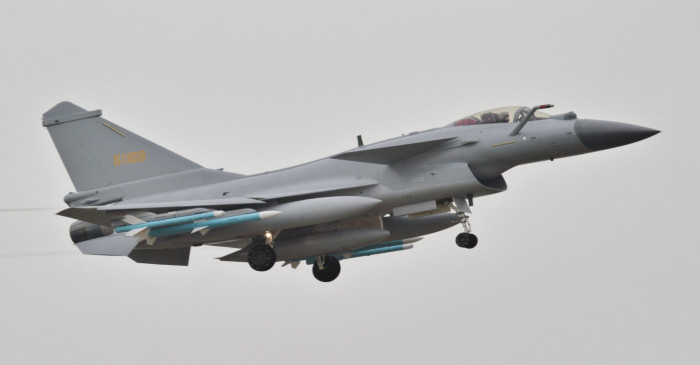
20260624102827_Chinese-Jets-1.jpg

The J-10CE is the export version of China’s Chengdu J-10C Chengdu J-10C, a 4.5-generation multirole fighter designed for air superiority and precision strike missions.

Bangladesh’s reported move to acquire 24 Chinese Chengdu J-10 J-10CE fighter jets is far more than a routine military procurement. If the deal materialises, it will mark one of Dhaka’s most consequential defence decisions in recent years and deepen Chinese military influence in South Asia at a time of rising regional tensions.

According to Dhaka-based publication Daily Waadaa, the Tarique Rahman-led administration is expected to advance the proposal during the prime minister’s visit to China, with officials indicating that a formal agreement could be signed by August. The proposed package, reportedly worth $2.2 billion, includes not just aircraft but also training, maintenance, logistics and long-term sustainment support.

The message is difficult to miss. Bangladesh is not merely buying fighter jets. It is buying deeper strategic dependence on Beijing.

What makes the J-10CE important?

The J-10CE is the export version of China’s Chengdu J-10C Chengdu J-10C, a 4.5-generation multirole fighter designed for air superiority and precision strike missions.

Powered by the WS-10B afterburning turbofan engine, the aircraft can reach speeds close to Mach 1.8. Its delta-wing and canard design gives it strong manoeuvrability in aerial combat, while digital fly-by-wire controls improve handling in high-stress engagements.

The jet can carry around 5,600 kilograms of weapons across 11 hardpoints, including air-to-air missiles, bombs and precision-guided munitions.

Its most significant advantage lies in its electronics. The fighter comes equipped with an AESA radar, allowing it to detect and track multiple targets simultaneously while resisting jamming. It can also fire the long-range PL-15 missile, one of China’s most potent beyond-visual-range air-to-air weapons.

For a relatively small air force like the Bangladesh Air Force Bangladesh Air Force, this platform would be a major capability jump.

Why Bangladesh wants these jets

Bangladesh’s interest in the aircraft is closely tied to its Forces Goal 2030 military modernisation programme.

The Bangladesh Air Force currently operates a limited and ageing fleet, largely composed of approximately 36 obsolete F-7/J-7 fighters and eight MiG-29s of Russian origin. Many of these platforms are nearing the end of their operational utility.

The J-10CE offers Dhaka a relatively affordable pathway to modernisation. Officials cited by Daily Waadaa estimate each aircraft could cost around $40 million, significantly cheaper than Western platforms such as the Dassault Rafale Rafale or F-16 Fighting Falcon F-16, whose prices can exceed $100 million depending on configuration.

But affordability comes with strategic strings attached.

Bangladesh’s growing dependence on China

The deeper concern is not the aircraft itself but what comes after delivery.

Modern fighter jets are not one-time purchases. They require decades of spare parts, software updates, weapons integration, technical servicing and operational support. All of this remains under Beijing’s control.

That means Bangladesh would become even more dependent on China for core defence readiness.

China is already Dhaka’s dominant arms supplier, providing submarines, frigates, armoured vehicles and other military hardware. The J-10CE deal would tighten that dependency further, giving Beijing long-term leverage over Bangladesh’s military planning and operational ecosystem.

For India, that changes the strategic equation in the east.

What it means for India

From a purely military standpoint, Bangladesh’s acquisition is unlikely to significantly alter the air-power balance against India.

The Indian Air Force Indian Air Force’s Eastern Air Command, headquartered in Shillong, maintains roughly four fighter squadrons across Assam and West Bengal. These include Sukhoi Su-30MKI Su-30MKIs and Rafales, giving India an estimated 60 to 70 modern combat aircraft in the eastern sector.

This means India still retains a decisive numerical and technological edge through superior command networks, layered air defence and better operational integration.

However, the geopolitical implications are harder to ignore.

If Bangladesh inducts the J-10CE, India could face the same Chinese fighter platform on both eastern and western fronts.

Pakistan factor raises bigger concerns

The Pakistan angle makes the development more sensitive.

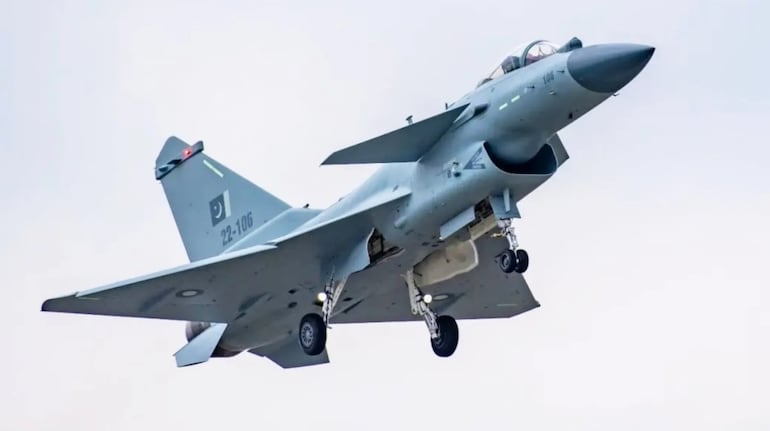
Pakistan already operates 20 J-10CE fighters, with more on order. These jets were deployed during Operation Sindoor, where they were used to challenge Indian platforms including the Su-30MKI, Jaguar and Rafale.

If Bangladesh also inducts the same aircraft, India could face growing interoperability between the Pakistan Air Force Pakistan Air Force and Bangladesh’s military.

That possibility raises questions about intelligence sharing, tactical coordination and Chinese influence across both borders.

For New Delhi, the concern is not that Dhaka can militarily match India. It cannot.

The real concern is that Bangladesh, by leaning further into China’s military ecosystem, risks becoming another node in Beijing’s expanding regional security architecture.

In trying to modernise its air force, Dhaka may be inviting something far larger into its strategic space: long-term Chinese leverage.

And when viewed alongside Pakistan’s growing dependence on Chinese weapons, the pattern becomes clearer. Both Islamabad and Dhaka may be upgrading military hardware, but they are also surrendering increasing strategic autonomy to Beijing. For India, that emerging two-front Chinese footprint will matter far more than the 24 aircraft themselves.

 
Op sindoor was success for them why worry . its just Chinese junk. they can handle it easily
 
No it isn't. It barely spend 1% of its GDP on defense while India spend 2% or more.
Bangladesh is geographically a small country with no nuclear enemies with strong conventional militaries on both sides to face.... Myanmar can cause huge damage to Bangladesh but cannot capture territory and hold for long time.... India too cannot capture or hold Bangladesh territory....

India not only has bigger landmass to protect, more high value targets to defend but also has 2 nuclear and conventional military mammoths to face on east and west.... not to mention conventionally strong army now in the form of Bangladesh.....

So even your 1% of expenditure is more than enough for your requirements but 2% of expenditure is peanuts for the requirements of India 🇮🇳
 
Bangladesh eyes J-10CE fighter jet deal as Dhaka resets foreign policy

Jun 22, 2026

View attachment 202960


Bangladesh is expected to advance plans to acquire 24 Chinese J-10CE multi-role fighter jets during Prime Minister Tarique Rahman's visit to China beginning Monday, as Dhaka and Beijing prepare to deepen cooperation across defense, infrastructure, trade and investment. "We hope to sign the fighter jet purchase agreement by August this year," a senior government official told Daily Waadaa on condition of anonymity. The official said each aircraft is valued at approximately $40 million.

A Chinese delegation visited Dhaka last week to accelerate negotiations, while Bangladeshi officials are expected to hold separate meetings with China's foreign and defense ministers during the visit to finalise key details of the proposed acquisition.

The defense discussions form part of a broader agenda that officials say could significantly elevate Bangladesh-China relations.

Government officials expect the two countries to upgrade ties from a strategic partnership to a "community of shared future," a formulation likely to be reflected in a joint communique following talks between Prime Minister Rahman and Chinese Premier Li Qiang.

Foreign Secretary Asad Alam Siam said up to 17 agreements, memoranda and communiques are expected to be signed during the visit.

Among the major initiatives under discussion is a joint feasibility study for the Teesta River barrage project.

The two sides are also expected to go forward with the plans for the modernization of Mongla Port, Bangladesh's second-largest seaport, which has long struggled with infrastructure constraints and underutilisation.

Bangladesh is also preparing to offer China a 110-acre Special Economic Zone in Mongla, according to government officials.

The industrial park had previously been earmarked for Indian investment and was to be developed by a Mumbai-based company under an earlier memorandum of understanding.

However, a Bangladesh Investment Development Authority official confirmed that Dhaka recently cancelled the agreement, clearing the way for Chinese investors.

The move follows the government's approval last week of an exclusive Chinese industrial park in Chattogram, where Beijing has pledged $500 million in investment.

"Our immediate priority is job creation," the senior official told Waadaa. "Attracting large-scale relocation of Chinese manufacturing to Bangladesh has the potential to generate tens of thousands of local employment opportunities."

Geopolitical balance

Officials acknowledge that the rapid expansion of ties with Beijing is likely to be closely scrutinized in New Delhi. Bangladesh and India share more than 4,000 kilometres of border and remain deeply interconnected through trade, security and transboundary river management.

Analysts have pointed to recent developments—including reported increases in push-in attempts across sections of the border and the widely discussed delay that left Adviser Zahed ur Rahman stranded at New Delhi airport—as indications of growing strains in bilateral relations.

Historically, former prime minister Sheikh Hasina made India the destination of her first major overseas visits, underscoring the importance of the relationship with New Delhi.

In contrast, officials say the current BNP-led administration is pursuing a multi-aligned foreign policy that seeks to maintain active engagement with Washington, Beijing, Moscow and New Delhi simultaneously.

The government has maintained the Agreement on Reciprocal Tariffs with the United States despite criticism from some left-leaning political groups.

Officials say Dhaka is leveraging the U.S. agricultural lobby as a critical building block to deepen economic ties with the world's largest economy by scaling up imports of American soybeans, corn, and cotton.

The outreach has extended to Moscow as well. Foreign Minister Khalilur Rahman visited Russia earlier this month to reaffirm long-standing bilateral ties.

Officials expect Moscow to support Bangladesh's planned bid to join BRICS, the economic grouping in which China plays a leading role.

Officials said Prime Minister Tarique Rahman intends to visit India in the near future in an effort to stabilise relations that deteriorated during the tenure of the Interim Government.

However, they acknowledge that the path toward repairing ties remains complicated.

"India is not making it easy," the senior official said, describing the treatment of Adviser Zahed ur Rahman at New Delhi airport as a "deliberate" diplomatic snub.

Unfortunately, our friends in Bangladesh may be disappointed.

According to an official announcement from the Chinese Ministry of Foreign Affairs: At the invitation of Premier of the State Council Li Qiang, Prime Minister of the People’s Republic of Bangladesh Tarique Rahman will pay an official visit to China from June 24 to 26.

It is currently 16:10 Beijing time on June 25th, and there are no news reports from any of China's official media outlets. According to official Chinese reports, President Xi Jinping inspected local construction work in Shandong yesterday.

This is a very rare move in China's diplomatic arena.
 
To view this content we will need your consent to set third party cookies.
For more detailed information, see our cookies page.
 
To view this content we will need your consent to set third party cookies.
For more detailed information, see our cookies page.
 
To view this content we will need your consent to set third party cookies.
For more detailed information, see our cookies page.
 
Unfortunately, our friends in Bangladesh may be disappointed.

According to an official announcement from the Chinese Ministry of Foreign Affairs: At the invitation of Premier of the State Council Li Qiang, Prime Minister of the People’s Republic of Bangladesh Tarique Rahman will pay an official visit to China from June 24 to 26.

It is currently 16:10 Beijing time on June 25th, and there are no news reports from any of China's official media outlets. According to official Chinese reports, President Xi Jinping inspected local construction work in Shandong yesterday.

This is a very rare move in China's diplomatic arena.

So Xi is snubbing BD PM?
 
It's hard to call it a snub. Under the principle of diplomatic reciprocity, the Bangladeshi prime minister should have been received by China's premier.

Xi Jinping simply doesn't have the capacity to meet with so many foreign leaders.
 
So Xi is snubbing BD PM?
Xi Jinping simply doesn't have the capacity to meet with so many foreign leaders.
According to an official statement from the spokesperson of the Chinese Ministry of Foreign Affairs: Xi Jinping, Li Qiang, and Zhao Leji will meet with him separately.

But, there is currently no official news.
 
According to an official statement from the spokesperson of the Chinese Ministry of Foreign Affairs: Xi Jinping, Li Qiang, and Zhao Leji will meet with him separately.

But, there is currently no official news.
is it a protocol in Chinese system or something unusual?
 
To view this content we will need your consent to set third party cookies.
For more detailed information, see our cookies page.


This is Bangladesh, therefore I will only believe this is true with J10CE's actually "land" in Dhaka !
 
The first press release has been released. Currently, only the official Chinese version is available; there is no official English version yet. If you would like to read the full content, please translate it yourself.
1782398758120.png

My conclusions:
1. The entire text is filled with polite language, containing no substantive content.
2. There is no text involving military matters.
 
Last edited:

Users who are viewing this thread

Back
Top