MNZGamerX
Registered Member

No public vacancy found for her specific OPGA post, while comparable UN legal jobs require defined grades, experience and competitive selection
by Northeast News
September 25, 2026

The appointment of Zaima Rahman, daughter of Bangladesh Prime Minister Tarique Rahman, as a Legal Officer in the Office of the President of the UN General Assembly has raised questions about the recruitment process, particularly because no publicly accessible United Nations vacancy announcement has been found for the specific position she now occupies.
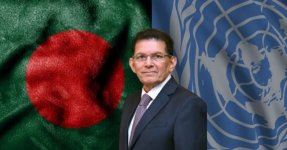
The official website of the Office of the President of the General Assembly lists Zaima Rahman as “Legal Officer — Bangladesh” on the team of the 81st session. Her appointment places her in the office headed by UN General Assembly President Khalilur Rahman, a former Bangladeshi diplomat and UN official.
However, searches of the UN Careers portal and official UN vacancy database have not identified a job announcement specifically for a Legal Officer in the Office of the President of the General Assembly for the 81st session.
That contrasts with the normal UN recruitment process for Legal Officer positions, where the organisation publishes a job-opening number, grade, duty station, responsibilities, educational requirements, professional experience, languages and assessment arrangements.
The absence of a publicly accessible vacancy notice does not, by itself, establish that Zaima’s appointment breached UN rules or that nepotism occurred. The Office of the President of the General Assembly has historically used several staffing mechanisms, including regular UN posts, secondments and other arrangements. What remains unclear is which mechanism was used for Zaima’s appointment, what grade the post carries and how she was selected.
The UN Careers portal has published numerous Legal Officer vacancies during 2026.
For example, a P-3 Legal Officer post in the Office of Legal Affairs in New York, Job Opening 280358, was advertised on July 15, 2026, with a July 22 deadline. The position was in the General Legal Division and reported to senior legal officers and the division director.
Another P-3 Legal Officer position, Job Opening 280304, was advertised in July 2026 for the Registry of the UN Appeals Tribunal in New York. The officer was responsible for legal work connected with appeals brought by current and former UN staff members.
A further P-3 post, Job Opening 271533, was advertised in Nairobi in May 2026 in the Office of Human Resources. Its responsibilities included legal advice on internal-justice matters, disciplinary issues and representation of the Secretary-General before the UN Dispute Tribunal.
The UN also advertised P-3 Legal Officer positions with the UN Environment Programme in Nairobi, including a June 2026 vacancy in its Legal Unit.
At the more senior level, the UN advertised P-4 Legal Officer positions in its Office of Legal Affairs in New York. Job Opening 278022, for example, was posted on May 29, 2026, with a June 15 deadline. Another P-4 Legal Officer position, Job Opening 281232, was advertised in Vienna in July 2026 for the Independent Investigative Mechanism for Afghanistan.
These advertisements demonstrate that “Legal Officer” is not simply an honorary or generic designation within the UN system. Comparable positions are normally attached to defined grades and detailed terms of reference.
The qualifications vary by post, but the published vacancies generally require substantial professional legal experience in addition to a law degree.
The responsibilities can include legal research and analysis, preparation of legal opinions and memoranda, interpretation of UN legal instruments, advice on administrative and international-law questions, drafting and reviewing agreements, and representation before UN judicial or administrative bodies.
For example, the P-3 Legal Officer position in Nairobi’s Office of Human Resources deals with UN standards of conduct, disciplinary matters and internal justice, while the UN Appeals Tribunal position involves appeals arising from decisions affecting UN personnel.
The senior P-4 positions involve still more specialised and complex legal responsibilities.
The UN’s official biography describes Zaima Rahman as a barrister and legal and policy professional with experience in the United Kingdom and Bangladesh.
Her published biography states that she holds an LLB in Law and Politics from Queen Mary University of London and qualified as a barrister in England and Wales through the Honourable Society of the Inner Temple.
It also describes experience involving UK housing, welfare and employment law, legal advisory work in the healthcare sector, pro bono work involving social welfare and education law, and legal work in Bangladesh involving constitutional, corporate and commercial matters, public-private partnerships and taxation.
Those credentials establish that she has a formal legal education and professional legal qualification.
What is not clear from the publicly available UN biography, however, is the length and level of her progressively responsible legal experience, which is an important criterion in many regular UN Legal Officer recruitments.
Nor does the biography identify previous employment in the UN system or extensive professional experience specifically in international law.
This is potentially the most important unanswered question. The official OPGA webpage identifies Zaima simply as “Legal Officer” and does not, on the publicly accessible team listing, specify whether the position is P-2, P-3, P-4 or another category.
That information matters because UN professional posts carry substantially different qualification and remuneration levels.
The International Civil Service Commission’s 2026 salary scale, effective January 1, lists annual base salaries at Step I of:
Consequently, without knowing the grade and contractual status of Zaima’s post, it is not possible to determine what salary or qualification standard applies to her position.
There is another distinction that could prove crucial. Zaima is publicly listed on the Office of the President of the General Assembly, rather than on a page identifying her as a staff member recruited through an ordinary UN Secretariat vacancy.
The OPGA has historically had multiple staffing arrangements. The UN has previously described personnel working in presidential offices as including regular-budget personnel, staff seconded by Member States, UN-system secondees and personnel supported through voluntary contributions.
Therefore, the absence of a UN Careers advertisement cannot by itself be treated as proof that the appointment was irregular.
Instead, it raises a narrower and more verifiable question:
What was the legal and administrative mechanism through which Zaima Rahman was appointed, and was there a competitive selection process?
The recruitment controversy could be resolved relatively quickly if the UN Secretariat or OPGA discloses the formal grade of Zaima Rahman’s position; the terms of reference for the Legal Officer post; whether the position was created specifically for the 81st General Assembly presidency; whether it was publicly advertised; if so, the Job Opening ID and closing date; if not, the authority permitting direct appointment; who nominated or appointed her; whether other candidates were considered; whether she underwent a written examination or competency-based interview; the contractual and funding arrangements for the position; the salary and benefits attached to it; and whether the appointment underwent the applicable UN ethics and conflict-of-interest procedures.
Those questions are particularly relevant because the official OPGA website identifies Khalilur Rahman as the President of the General Assembly for the 81st session, while also presenting Zaima Rahman as a member of his office.
The available evidence establishes that Zaima Rahman holds the title of Legal Officer in the Office of the President of the General Assembly and that she possesses a law degree and professional barrister qualification.
It also establishes that the UN regularly advertises Legal Officer positions with detailed qualification requirements, including P-3 and P-4 positions during 2026.
But the research has not located a public vacancy notice for Zaima’s particular OPGA position. Nor does the public material examined disclose its grade, salary, terms of reference or selection procedure.
Those gaps warrant questions about transparency, but they do not, on their own, establish nepotism or an improper appointment.
The decisive evidence would be the UN’s internal appointment and recruitment documentation. Until that information is made public, the central issue is not simply whether Zaima Rahman is qualified as a lawyer, but whether the process by which she obtained the UN position was consistent with the rules applicable to that particular post.
by Northeast News
September 25, 2026
The appointment of Zaima Rahman, daughter of Bangladesh Prime Minister Tarique Rahman, as a Legal Officer in the Office of the President of the UN General Assembly has raised questions about the recruitment process, particularly because no publicly accessible United Nations vacancy announcement has been found for the specific position she now occupies.
The official website of the Office of the President of the General Assembly lists Zaima Rahman as “Legal Officer — Bangladesh” on the team of the 81st session. Her appointment places her in the office headed by UN General Assembly President Khalilur Rahman, a former Bangladeshi diplomat and UN official.
However, searches of the UN Careers portal and official UN vacancy database have not identified a job announcement specifically for a Legal Officer in the Office of the President of the General Assembly for the 81st session.
That contrasts with the normal UN recruitment process for Legal Officer positions, where the organisation publishes a job-opening number, grade, duty station, responsibilities, educational requirements, professional experience, languages and assessment arrangements.
The absence of a publicly accessible vacancy notice does not, by itself, establish that Zaima’s appointment breached UN rules or that nepotism occurred. The Office of the President of the General Assembly has historically used several staffing mechanisms, including regular UN posts, secondments and other arrangements. What remains unclear is which mechanism was used for Zaima’s appointment, what grade the post carries and how she was selected.
The UN Careers portal has published numerous Legal Officer vacancies during 2026.
For example, a P-3 Legal Officer post in the Office of Legal Affairs in New York, Job Opening 280358, was advertised on July 15, 2026, with a July 22 deadline. The position was in the General Legal Division and reported to senior legal officers and the division director.
Another P-3 Legal Officer position, Job Opening 280304, was advertised in July 2026 for the Registry of the UN Appeals Tribunal in New York. The officer was responsible for legal work connected with appeals brought by current and former UN staff members.
A further P-3 post, Job Opening 271533, was advertised in Nairobi in May 2026 in the Office of Human Resources. Its responsibilities included legal advice on internal-justice matters, disciplinary issues and representation of the Secretary-General before the UN Dispute Tribunal.
The UN also advertised P-3 Legal Officer positions with the UN Environment Programme in Nairobi, including a June 2026 vacancy in its Legal Unit.
At the more senior level, the UN advertised P-4 Legal Officer positions in its Office of Legal Affairs in New York. Job Opening 278022, for example, was posted on May 29, 2026, with a June 15 deadline. Another P-4 Legal Officer position, Job Opening 281232, was advertised in Vienna in July 2026 for the Independent Investigative Mechanism for Afghanistan.
These advertisements demonstrate that “Legal Officer” is not simply an honorary or generic designation within the UN system. Comparable positions are normally attached to defined grades and detailed terms of reference.
The qualifications vary by post, but the published vacancies generally require substantial professional legal experience in addition to a law degree.
The responsibilities can include legal research and analysis, preparation of legal opinions and memoranda, interpretation of UN legal instruments, advice on administrative and international-law questions, drafting and reviewing agreements, and representation before UN judicial or administrative bodies.
For example, the P-3 Legal Officer position in Nairobi’s Office of Human Resources deals with UN standards of conduct, disciplinary matters and internal justice, while the UN Appeals Tribunal position involves appeals arising from decisions affecting UN personnel.
The senior P-4 positions involve still more specialised and complex legal responsibilities.
The UN’s official biography describes Zaima Rahman as a barrister and legal and policy professional with experience in the United Kingdom and Bangladesh.
Her published biography states that she holds an LLB in Law and Politics from Queen Mary University of London and qualified as a barrister in England and Wales through the Honourable Society of the Inner Temple.
It also describes experience involving UK housing, welfare and employment law, legal advisory work in the healthcare sector, pro bono work involving social welfare and education law, and legal work in Bangladesh involving constitutional, corporate and commercial matters, public-private partnerships and taxation.
Those credentials establish that she has a formal legal education and professional legal qualification.
What is not clear from the publicly available UN biography, however, is the length and level of her progressively responsible legal experience, which is an important criterion in many regular UN Legal Officer recruitments.
Nor does the biography identify previous employment in the UN system or extensive professional experience specifically in international law.
This is potentially the most important unanswered question. The official OPGA webpage identifies Zaima simply as “Legal Officer” and does not, on the publicly accessible team listing, specify whether the position is P-2, P-3, P-4 or another category.
That information matters because UN professional posts carry substantially different qualification and remuneration levels.
The International Civil Service Commission’s 2026 salary scale, effective January 1, lists annual base salaries at Step I of:
- P-2: $69,139 gross / $56,046 net
- P-3: $89,257 gross / $71,335 net
- P-4: $109,324 gross / $86,027 net
Consequently, without knowing the grade and contractual status of Zaima’s post, it is not possible to determine what salary or qualification standard applies to her position.
There is another distinction that could prove crucial. Zaima is publicly listed on the Office of the President of the General Assembly, rather than on a page identifying her as a staff member recruited through an ordinary UN Secretariat vacancy.
The OPGA has historically had multiple staffing arrangements. The UN has previously described personnel working in presidential offices as including regular-budget personnel, staff seconded by Member States, UN-system secondees and personnel supported through voluntary contributions.
Therefore, the absence of a UN Careers advertisement cannot by itself be treated as proof that the appointment was irregular.
Instead, it raises a narrower and more verifiable question:
What was the legal and administrative mechanism through which Zaima Rahman was appointed, and was there a competitive selection process?
The recruitment controversy could be resolved relatively quickly if the UN Secretariat or OPGA discloses the formal grade of Zaima Rahman’s position; the terms of reference for the Legal Officer post; whether the position was created specifically for the 81st General Assembly presidency; whether it was publicly advertised; if so, the Job Opening ID and closing date; if not, the authority permitting direct appointment; who nominated or appointed her; whether other candidates were considered; whether she underwent a written examination or competency-based interview; the contractual and funding arrangements for the position; the salary and benefits attached to it; and whether the appointment underwent the applicable UN ethics and conflict-of-interest procedures.
Those questions are particularly relevant because the official OPGA website identifies Khalilur Rahman as the President of the General Assembly for the 81st session, while also presenting Zaima Rahman as a member of his office.
The available evidence establishes that Zaima Rahman holds the title of Legal Officer in the Office of the President of the General Assembly and that she possesses a law degree and professional barrister qualification.
It also establishes that the UN regularly advertises Legal Officer positions with detailed qualification requirements, including P-3 and P-4 positions during 2026.
But the research has not located a public vacancy notice for Zaima’s particular OPGA position. Nor does the public material examined disclose its grade, salary, terms of reference or selection procedure.
Those gaps warrant questions about transparency, but they do not, on their own, establish nepotism or an improper appointment.
The decisive evidence would be the UN’s internal appointment and recruitment documentation. Until that information is made public, the central issue is not simply whether Zaima Rahman is qualified as a lawyer, but whether the process by which she obtained the UN position was consistent with the rules applicable to that particular post.