Navigation
Install the app
How to install the app on iOS
Follow along with the video below to see how to install our site as a web app on your home screen.
Note: This feature may not be available in some browsers.
More options
Style variation
You are using an out of date browser. It may not display this or other websites correctly.
You should upgrade or use an alternative browser.
You should upgrade or use an alternative browser.
Beautiful Pakistan
- Thread starter ghazi52
- Start date
More options
Who Replied?


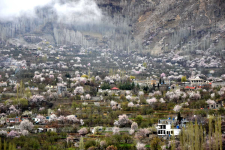
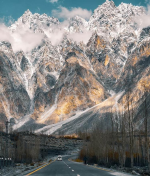
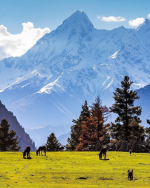
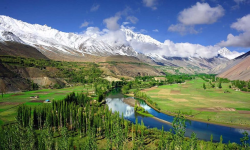

RocketLaw
Trusted Member


April 17, 2026
Not Arabs. Not Indians. Just Pakistanis.
By Dan Qayyum
A country the world has never quite understood is doing what the world's institutions could not. Here is what the world has been missing.
On Wednesday evening, the State Department took the White House podium and named Pakistan as the only mediator in the US-Iran peace process. "The President feels it's important to continue to streamline this communication through the Pakistanis," the Press Secretary said. "They are the only mediators in this process. Other countries have tried to help and we thank them for their effort, but we will continue with Pakistan."
That same afternoon, Pakistan's Field Marshal had landed in Tehran in combat fatigues with a fighter escort, while its Prime Minister had landed in Riyadh at the same hour. Four capitals, one government, one week. The diplomatic achievement is real, historic, and consequential. But this piece is not about the diplomacy. It is about the people behind it. Because the world has been looking at a caricature for decades, and the caricature has never matched the country. This week, the curtain slipped. What the world saw underneath was not what it expected. For Pakistanis, what it saw was what has always been there.

The misidentification
Pakistanis are routinely conflated with Arabs or with Indians. They are neither. This is not a hierarchy. It is a correction that Pakistanis are tired of making.The language is Urdu, not Arabic. The food is not Indian, though it shares roots the way Portuguese food shares roots with Spanish. The humour is self-deprecating in a way that is alien to most Arab cultures and sharper than anything produced on the subcontinent. The social codes run on a specific operating system built from Mughal aesthetics, Sufi spirituality, Punjabi warmth, Pashtun honour, Sindhi hospitality, and Baloch dignity, none of which maps cleanly onto any neighbouring culture.
Pakistanis know this about themselves. The frustration is that the world does not. The Western imagination files Pakistan under "the Muslim world" and assigns it the visual vocabulary of the Arab Gulf, or under "South Asia" and assigns it the cultural vocabulary of India. Both are wrong. Both flatten a country of 240 million people into someone else's story. This piece is an attempt to tell theirs.
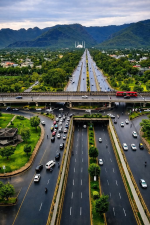
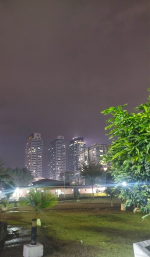
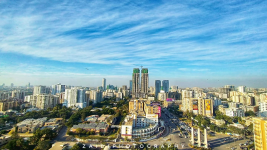
The cities reinforce the misperception most of all, because most outsiders have never seen them. Islamabad is one of the greenest capitals in Asia, a planned city of wide boulevards, Margalla Hills hiking trails, and a cafe culture across F-6 and F-7 that would not look out of place in Melbourne or Lisbon. Lahore is the cultural capital, a city of Mughal architecture, contemporary art galleries, literary festivals, and a food scene that operates around the clock. Karachi is the financial engine, a sprawling, chaotic, cosmopolitan port city of 20 million where Baloch fishermen, Muhajir traders, Pashtun entrepreneurs, and Sindhi artists share the same coastline.
Peshawar is one of the oldest continuously inhabited cities on earth, a living crossroads at the mouth of the Khyber Pass where the bazaars have been trading for over two thousand years. Quetta sits ringed by mountains at the intersection of Baloch, Pashtun, and Hazara cultures, a frontier city whose orchards produce some of the finest fruit in South Asia. None of these cities look like the Pakistan of Western imagination. All of them are the Pakistan that actually exists.

The hospitality, and the honour underneath it
In 2019, the American travel vlogger @Drewbinsky arrived in Pakistan, withdrew $200 from an ATM, and left the country weeks later with the money still in his pocket. "I came to Pakistan and I haven't spent any money," he wrote. "Why? Because nobody will let me. Seriously. This is the world's best hospitality, by a long shot." He described Pakistanis as "aggressively" refusing to let him pay for anything, whether dinners, taxi rides, or gifts. Mark Wiens (@migrationology), the Thai-American food vlogger with tens of millions of subscribers, called Pakistan "one of the most naturally beautiful, hospitable, and delicious countries I've ever travelled to." Joe Hattab (@joe_hattab), a Jordanian travel filmmaker with nearly six million subscribers, has returned three times. Khalid Al Ameri, the Emirati vlogger, said the single biggest lesson from his Pakistan trip was: "Don't always believe what the media tells you about a country. Visit for yourself." A Canadian vlogger named Nolan Saumure was asked point-blank to compare hospitality in India and Pakistan. His answer was instant: "Obviously Pakistan. You go to India and people just look at you as a walking ATM. You go to Pakistan and people are like, come here, sit, take this free food, come sleep at my place."The pattern is consistent. Foreigners arrive expecting danger. They leave talking about kindness. But the word "kindness" does not quite capture what is happening. What drives Pakistani hospitality is not generosity in the Western sense. It is honour. Hosting someone, even a stranger, even with a cup of tea you cannot really afford, is an act of personal dignity. The host is not doing you a favour. They are doing something for themselves: fulfilling a code that says a guest in your presence is your responsibility, your privilege, and your reputation.
This is why Pakistanis will chase you down the street if you leave money on the table. You have not been generous. You have stolen from them the feeling of having given freely. The transaction they wanted was not financial. It was moral. You were supposed to receive. They were supposed to give. By paying, you broke the contract.
This is not a tourism slogan, but how the country actually works, from the chai stall in Peshawar's Qissa Khwani Bazaar to the living rooms of Lahore's old city to the mountain passes of Gilgit-Baltistan where truck drivers will stop, invite you in, and feed you before you have finished asking for directions.

The charity
Pakistani hospitality is personal. Pakistani charity is structural.Pakistan consistently ranks among the highest per-capita charitable giving nations on earth, despite being one of the poorest. Abdul Sattar Edhi built the world's largest private ambulance network from nothing, running over 1,800 ambulances across Pakistan on public donations alone. He owned two sets of clothes. He lived in a single room at his centre in Karachi. He refused every award that came with money he considered unnecessary. When he died in 2016, millions mourned a man who had spent his entire life giving to strangers. Edhi was not an anomaly. He was the principle made visible. The framework is partly religious: zakat and sadaqah are pillars of Islamic practice, and Pakistan's population takes them seriously. But the cultural layer sits on top of the religious one. Giving is not obligation. It is honour. The widely circulated image of a garbage collector donating his daily wages to earthquake relief is not an anomaly. It is the norm operating at its most visible.
This is a country that has lost over 80,000 people to terrorism in the past two decades. More than any Western nation. More than most of the countries that lecture it about extremism. And the response of its people has not been to close ranks, to hoard, or to turn inward. It has been to give more. To rebuild. To bury the dead and then feed the living. The charity is not separate from the grief. It is the answer to it
The humour
If you want to understand Pakistanis, do not read their policy papers. Read their memes.In May 2025, India launched Operation Sindoor, striking targets in Pakistani territory. The Pakistani Air Force responded in the air. The Pakistani public responded online. Within hours, Pakistani social media had produced a volume of self-deprecating, absurdist, genuinely funny content that left Indian commentators unsure whether to be offended or impressed. Dawn, Pakistan's most respected English-language newspaper, published a serious analysis titled "India, Pakistan and the meme-ification of war," calling the output "self-deprecating taunts more in the style of a class clown getting a rise out of riling up his opponent the way they know best." The Lowy Institute, the Australian think tank, published a geopolitical analysis of "
hashtag diplomacy" in the India-Pakistan context, treating the memes as a legitimate form of soft power.
The specific content is worth cataloguing because it reveals a national character that no think tank report ever has.
Girls posted makeup tutorials for "war day," treating it with the same excitement as Eid, asking followers which lipstick shade would work best for the occasion. Someone posted a public service announcement to advancing Indian forces advising them not to take a specific highway because of roadworks, and suggesting an alternative route. Another warned them that if they reached Lahore, under no circumstances should they ask a Lahori for directions, because Lahoris will send you somewhere else on principle. These were not fringe posts. They were mainstream, shared by millions, including by people who were simultaneously watching fighter jets scramble from their rooftops.
Then there is the Dhurandhar phenomenon. India produced a series of blockbuster films designed to portray Pakistan as a hub of terrorism, using real-life incidents and figures as source material. The films were intended to provoke outrage. Instead, Pakistanis turned the soundtracks into choreographed wedding dances. Mehndi nights across the country featured Dhurandhar music, performed with the enthusiasm reserved for the most popular Bollywood numbers. The ruling party, PMLN, posted clips of Iranian and American delegations arriving in Islamabad for the peace talks with Dhurandhar music playing in the background. Indians had expected fury. What they got was a country dancing to their insults. There is no comeback to that. The only response to someone dancing to the song you wrote to humiliate them is silence.
This week, when JD Vance landed in Islamabad for the US-Iran talks, the pattern repeated. AI-generated images showed Vance eating halwa puri for breakfast. Appearing on Nida Yasir's (@NidaYasirARY) morning show. Checking his phone in distress after receiving a PTA tax notification. Asking for directions in Lahore and being told "payen sajjay ho k khabbay." The Friday Times published a piece titled "
JD Vance, Islamabad, and the New Meme Order." The Print, an Indian outlet, covered the phenomenon. The memes travelled globally.
The humour is not a coping mechanism, though it functions as one. It is a cultural signature. Pakistanis have lived with war, terrorism, political instability, economic crisis, and international isolation for most of their national existence. They have learned that the one thing that cannot be bombed, sanctioned, or narratively reframed is laughter. The self-deprecation is the point. It says: we know what you think of us, we know what we have been through, and we choose to laugh anyway. That choice is not weakness. It is the most defiant thing a population under pressure can do.

The cultural weight
Pakistan's cultural exports travel further than its reputation allows.Coke Studio, the music platform that fuses classical Pakistani music with contemporary production, is arguably the most successful cultural export any South Asian country has produced in the last two decades. Its performances are watched obsessively in India, where they are consumed with a kind of reluctant devotion: Indian audiences know the music is extraordinary and know they are not supposed to say so. Nusrat Fateh Ali Khan, the qawwali master from Faisalabad who died in 1997, still fills concert halls and headphones across every continent, a voice so large it transcends language, religion, and geography. His collaborations with Western artists introduced an entire generation to a form of devotional music that predates most of the genres they thought were original.
His tradition is rooted in the shrine culture that remains Pakistan's living spiritual backbone: Data Darbar in Lahore, the dhamaal at Sehwan Sharif, the devotional gatherings at Baba Bulleh Shah's tomb. This is the Pakistan that Western headlines about extremism never show, and it is the Pakistan that has existed continuously for centuries, long before the extremism and long after it recedes.
Urdu poetry is not a literary niche in Pakistan. It is the national register. Taxi drivers in Lahore quote Ghalib. WhatsApp statuses are couplets, not selfies. Mushairas draw crowds the way concerts do elsewhere. Shayari is how Pakistanis talk about love, loss, politics, and God, often in the same breath.
Pakistani television dramas are watched quietly in Indian households, often pirated, always denied. Maria B (@realmariabutt), the Pakistani fashion designer, has her dresses smuggled into Mumbai and Delhi and sold through black market networks because Indian customs will not allow the legal import. Shan Masala, the spice brand from Karachi, sits on kitchen shelves from Bradford to Brooklyn to Bahrain, a quiet ambassador that needs no diplomatic cover.
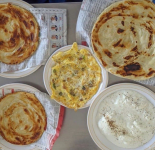
The food scene is its own form of diplomacy. Lahore's food streets are now a genuine destination for international culinary tourism, and the diversity of Pakistani cuisine, from the Peshawari chapli kebab that Mark Wiens called one of the greatest meat dishes he had ever encountered, to the Karachiite bun kebab, to the Hunza valley's apricot-based dishes, to the Balochi sajji, represents a culinary range that most outsiders have never imagined. The food carries the culture in ways that political arguments never can.
The world stage
Riz Ahmed (@rizwanahmed) was born in Wembley to parents from Karachi. He studied at Oxford, won an Emmy for The Night Of, won an Oscar for The Long Goodbye, and has spent his career navigating the space between being British and being Pakistani without ever pretending the two are in conflict. His track Mogambo opens with the line "they put their boots in our ground, I put my roots in their ground." His mixtape Englistan charted the dissonance and the beauty of being both things at once. His new Amazon series Bait, which premiered at Sundance in January and released last month, is the sharpest portrayal of British-Pakistani identity on screen: a struggling actor, Shah Latif, whose life unravels when tabloids report he might be the next James Bond. Racists rage that he is "stealing our culture." His family accuses him of selling out. A stranger on the street mistakes him for Dev Patel. The show, reviewed as "a flawed British-Pakistani family confronting internalised desi toxicity while still retaining a sense of dignity," does what no policy paper ever could: it shows a Pakistani family being funny, flawed, proud, insecure, loving, and recognisably human. The soundtrack features an Urdu cover of Sweet Dreams by Anish Kumar featuring Arooj Aftab. Even the music refuses to be one thing.Zayn Malik (@zaynmalik), from Bradford, the son of a Pakistani father who taught him Urdu and classical Pakistani music, has carried Pakistan in his public identity from One Direction to solo stardom. His collaboration with Pakistani band AUR on Tu Hai Kahan was not a novelty. It was a homecoming. His line, "no matter where I'm from, I carry Pakistan in my heart," is not a sound bite. It is a statement of identity that resonates with every Pakistani diaspora kid who grew up code-switching between two worlds and refusing to choose.
Arooj Aftab (@arooj_aftab) won a Grammy. Sharmeen Obaid-Chinoy won two Oscars. Malala Yousafzai (@Malala) won the Nobel Prize. Sadiq Khan (@SadiqKhan) runs London. Kumail Nanjiani (@kumailn) wrote and starred in one of the most acclaimed comedies of the last decade. The pattern is not accidental. Pakistani women, in particular, are outperforming Pakistani men on the global stage with a consistency that the country's own patriarchal structures have not yet caught up with. The fight against that patriarchy is real, ongoing, and far from won. But it is being led by strong women in media, politics, civil society, and the arts, and it is happening visibly. The country that produced Benazir Bhutto, for all the complications of her legacy, has never lacked women willing to fight for the space they deserve.

The misunderstood
The perception of Pakistan as a hotbed of extremism is the single most persistent and most damaging misread in international affairs. The country has lost over 80,000 people to terrorism. It has fought more counterterrorism operations on its own soil than any NATO member. The extremism it battles is not indigenous in the way the world imagines: it is the product of volatile borders, decades of proxy wars fought on Pakistani territory by larger powers, and a sustained Indian strategy of encirclement through Balochistan and successive Afghan governments. The evidence of that involvement is not a matter of Pakistani claims alone. It has been tested in international courts.The decision to go nuclear was not the act of an irresponsible state. It was the calculated response of a country that had watched its eastern neighbour test a nuclear device in 1974 and understood that conventional deterrence alone would never guarantee its survival. The global narrative that frames Pakistan's nuclear capability as a proliferation risk while treating India's as a strategic necessity is itself a form of bias that Pakistanis experience daily in international coverage. Add to this the sustained lobbying by India and Israel, both of which have invested heavily in framing Pakistan as a failed state and a security threat, and the picture of a country that has been fighting an information war with one hand tied behind its back becomes clearer.
But this piece is not a complaint. It is an introduction.
The people who showed up this week to mediate between two nuclear-armed adversaries, who flew their Field Marshal into a war zone and their Prime Minister to Riyadh on the same morning, who produced a ceasefire framework that the State Department has now publicly validated, these are the same people who chase you down the street to return your money, who dance to the songs written to insult them, who post makeup tutorials during air raids, who gave the world Nusrat and Arooj Aftab and Riz Ahmed and a spice blend that sits in kitchens on every continent.
They are not doing anything different this week. They are only finally being seen as who they are. A people who have absorbed war, terrorism, economic crisis, and decades of narrative assault, and who have responded not with bitterness but with tea, charity, laughter, music, and an insistence on dignity that no amount of external pressure has been able to break.
Not Arabs. Not Indians. Just Pakistanis.
Dan Qayyum is a writer, media strategist, and long-standing advisor to government institutions and media organizations across the region. His work explores the intersections of geopolitics, military doctrine, and regional transformation. His upcoming book, The Other Side of Endurance, examines his own journey through crisis, resilience, and reinvention.
Users who are viewing this thread
Total: 2 (members: 0, guests: 2)
Pakistan Defence Latest
-
 KP govt backs out of counterterrorism commitments during talks: Naqvi (3 Viewers)
- Latest: Distant_Observer
-

-


Country Watch Latest

Latest Posts
-
KP govt backs out of counterterrorism commitments during talks: Naqvi (3 Viewers)
- Latest: Distant_Observer
-

-
 FlyDubai Incident: Pilot was stabbed on flight to Israel - diverted to Saudi Arabia (14 Viewers)
- Latest: PK781
-
-
