Multan-The oldest city in Asian Sub-Continent !!
Multan, one of the oldest cities was built on a mound just east of the Chenab River. It was subdued by Alexander the Great in 326 BC and fell to the Muslims about AD 712. Being commercial hub, it attracted a multitude of Sufi mystics. Being the commercial and military key, it suffered several sacks and sieges over the centuries. It was subject to the Delhi sultanate and the Mughal Empire and was then captured by the Afghans (1779), the Sikhs (1818), and the British (1849). Formerly called Kashtpur, Hanspur Bagpur, Sanb and finally Mulasthan, the name derived from the idol of the sun god temple. large number of Sufi shrines dating from that era. Multan’s ancient skyline is dominated by the grand domes of innumerable tombs — spiritual teachers of all shades of Islam.
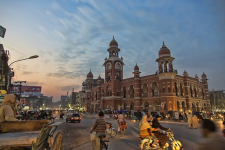
Mausoleum of Shah Rukn-e-Alam
The tomb of Sheikh Rukn-ud-Din Abul Fath (1251–1335) was built between 1320 and 1324 by Ghiyath al-Din, the first ruler of the Tughluq dynasty in the Sultanate of Delhi. The tomb is considered the earliest example of Tughluq architecture.
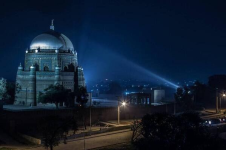
Shrine of Bahauddin Zakariya
Bahauddin Zakariya a scholar saint and poet. was born around 1170 CE near city of Multan. He died in 1268 and his mausoleum in Multan is an octagon, about half the height of the square, which is surmounted by a hemispherical dome.
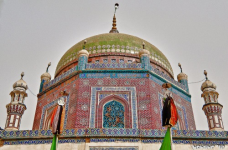
Tomb of Shah Shamsuddin Sabzwari
Shamsuddin Sabzwari arrived in Multan in early 1200C.E, established a dargah and preached Islam to the local population. Shamsuddin Sabzwari died in 1276 and his mausoleum is located in Multan.
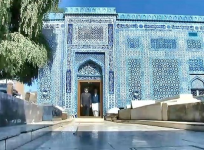
Hazrat Muhammad Shah Yusaf Gardezi
Built in 1152 A.D., the tomb of Sufi saint Sheikh Yusuf Gardezi is perhaps one of the earliest existing buildings in South Asia with enamelled tile work. Located inside the Bohar Gate entrance, the tomb is a rectangular hall and a flat, dome less roof.