Canada hits China-made electric cars with 100% tariff

TruthSeeker

Trusted Member
Joined
Nov 26, 2008
Messages
6,750
Reaction score
7,435
Reputation
806.7
Country of Origin
Country of Residence

Canada hits China-made electric cars with 100% tariff​

13 hours ago, João da Silva

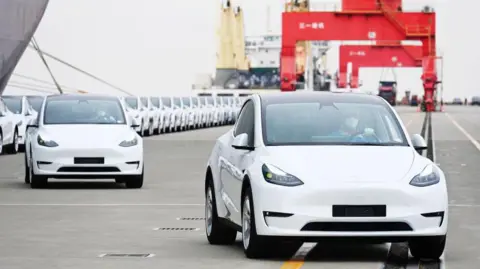
Getty Images Tesla cars waiting to be loaded on board a cargo vessel at Nangang port in Shanghai.
Getty Images
The US and European Union have announced similar duties on Chinese imports
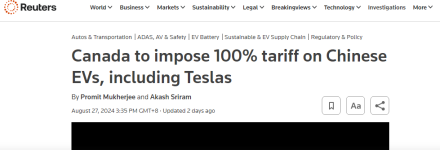
Canada says it will impose a 100% tariff on imports of China-made electric vehicles (EV) after similar announcements by the US and European Union.

The country also plans to impose a 25% duty on Chinese steel and aluminium.

Canada and its Western allies accuse China of subsidising its EV industry, giving its car makers an unfair advantage.

China has called the move "trade protectionism" which "violates World Trade Organization rules".

"We are transforming Canada's automotive sector to be a global leader in building the vehicles of tomorrow, but actors like China have chosen to give themselves an unfair advantage in the global marketplace", said Canadian Prime Minister Justin Trudeau.

Canada's duties on Chinese EVs are due to come into effect on 1 October, while those on steel and aluminium will be implemented from 15 October.

A Chinese Commerce Ministry spokesperson said Canada's actions "seriously undermine the global economic system, and economic and trade rules".

"China urges the Canadian side to immediately correct its erroneous practices," they added.

China is Canada's second-largest trading partner, behind the US.

In May, the US said it would quadruple its tariffs on imports of Chinese EVs to 100%.

That was followed by the EU, which announced plans to impose duties on China-made EVs of up to 36.3%.

Canada's tariffs on Chinese EVs will include those made by Tesla at its Shanghai factory.

"Tesla will almost certainly be lobbying the Canadian government to get some leeway on these tariffs, as they have already with Europe," said Mark Rainford, a China-based car industry commentator.

"If they fail at mitigating the tariff enough, they'll likely look at switching their Canadian imports to either the US or European factories since Canada is their 6th largest market this year and thus not insignificant."

Tesla did not immediately reply to a request for comment from BBC News.

Earlier this month, the EU cut its planned extra tariff on China-made Teslas by more than half, after further investigations requested by Elon Musk's car maker.

Chinese car brands are still not a common sight in Canada but some, like BYD, have taken steps to enter the country's market.

China is the world's largest manufacturer of EVs and its car makers have quickly gained a significant share of the global market.

Meanwhile, Canada has struck deals worth billions of dollars with major European car makers, as it tries to become a key part of the global EV industry.
 

Canada, China reach initial trade deal on electric vehicles, canola

January 16, 20265:49 PM GMT+8Updated 26 mins ago
  • Canada to allow Chinese EV imports at 6.1% tariff, Carney says
  • Says Canada expects China to lower canola tariff
  • Canada welcomes further Chinese investment
BEIJING, Jan 16 (Reuters) - Canada and China have struck an initial trade deal to cut tariffs on electric vehicles and canola, Prime Minister Mark Carney said on Friday, as both nations promised to tear down trade barriers while forging new strategic ties.

The first Canadian prime minister to visit since 2017, Carney sought to rebuild ties with his country's second-largest trading partner after the United States following months of diplomatic efforts.

Canada will initially allow in up to 49,000 Chinese electric vehicles at a tariff of 6.1% on most-favoured nation-terms, Carney said after talks with Chinese leaders, including President Xi Jinping. He did not specify a time period.

"This is a return to levels prior to recent trade frictions, but under an agreement that promises much more for Canadians," he told reporters in Beijing.

"For Canada to build its own competitive EV sector, we will need to learn from innovative partners, access their supply chains, and increase local demand," Carney said.

He pointed to a stronger partnership with China in clean energy storage and production, driving new investments.

Carney said he expected the EV pact would drive "considerable" Chinese investment into Canada's auto sector, create good careers in Canada and speed it towards a net zero future.

Under the new deal, Carney said, Canada expects China will lower tariffs on its canola seed by March 1, to a combined rate of about 15%.

"This change represents a significant drop from current combined tariff levels of 84%," he said, adding that China was a $4-billion canola seed market for Canada.

In addition, Canada expects its canola meal, as well as lobsters, crabs, and peas to be freed from anti-discrimination tariffs from March 1, until at least year-end, he added.
The deals will unlock nearly $3 billion in export orders for Canadian farmers, fish harvesters, and processors as they realise the full potential of the Chinese market Carney said.

"In terms of the way our relationship has progressed in recent months with China, it is more predictable, and you see results coming from that," Carney said in response to media queries whether it was a more predictable and reliable partner than the United States.
 

Canada wants to be 1st in North America to build EV with Chinese knowledge: senior official

Official says Washington had advance warning about Canada's tariff deal with China

CBC News · Posted: Last Updated: January 18

Canada wants to look at joint ventures and investments with Chinese companies within the next three years to build a Canadian electric vehicle with Chinese knowledge, according to a senior Canadian official.

The official, who spoke on the condition they not be named, said the goal is for Canada to become the first country in North America to build this type of EV.

It’s a fundamental error, the official said, to think that U.S. President Donald Trump will not allow Chinese electric vehicles into the United States.

The official also said that Canada kept the Trump administration in the loop and gave it advance warning of its decision on Friday to allow up to 49,000 Chinese EVs into the Canadian market each year at a 6.1 per cent tariff — down from a 100 per cent tariff imposed in 2024.

Canada’s ambassador to the U.S., Kirsten Hillman, was aware of the conversations with Beijing, the official said, adding that once Prime Minister Mark Carney and Chinese President Xi Jinping met, Hillman made sure that U.S. Trade Representative Jamieson Greer was aware. The official said the American reaction was neutral.

Canada didn’t take the U.S. by surprise, the official said. When asked about Canada detouring from matching American tariffs on Chinese EVs, Trump said Carney was doing the right thing.

“That’s what he should be doing. It’s a good thing for him to sign a trade deal. If you can get a deal with China, you should do that," the U.S. president said.

But other officials in Washington sounded more concerned. According to Greer, the deal is "problematic for Canada."

“There’s a reason why we don’t sell a lot of Chinese cars in the United States. It’s because we have tariffs to protect American autoworkers and Americans from those vehicles,” he told CNBC on Friday morning.

U.S. Transportation Secretary Sean Duffy said he thought Canada would look back at this deal and regret bringing Chinese cars into the market.

The federal government is working on an auto policy, expected to be released in February, that it hopes could help grow Canada's 125,000-worker auto industry and eventually “leapfrog” over the U.S.

Trump has insisted the U.S. does not need cars made in Canada, and he has hit this country's auto sector with tariffs on Canadian-made passenger vehicles. The U.S. president has also pushed auto manufacturers to move operations to the United States to avoid tariffs.

Last month, Industry Minister Mélanie Joly said the government would serve automotive giant Stellantis with a notice of default under funding contracts related to projects in Windsor and Brampton, Ont.

The move came after Stellantis revealed last October it was scrapping plans to build a Jeep model at its Brampton plant and move production to the U.S.

The government is also planning to give preferential access to foreign automakers that manufacture vehicles in Canada compared with those who import cars assembled abroad, the official said.

Foreign automakers that won’t manufacture vehicles in Canada will be subject to terms that aren’t as beneficial, the official said.

On Friday, Carney said the deal with China will make some EVs more affordable for Canadians and that it would amount to just a tiny sliver of the Canadian domestic market — about three per cent.
 

BYD plans 20 Canadian dealerships within a year as 6.1% tariff deal opens the floodgates​

Mar 24 2026 - 8:19 am PT

BYD is moving fast to establish a physical retail presence in Canada, with plans to open 20 branded dealerships within its first year in the market. The world’s largest EV maker is already scouting locations in the Greater Toronto Area.

The push comes just two months after Canada slashed its 100% tariff on Chinese-built EVs to 6.1%, a dramatic policy reversal that has unlocked the Canadian market for Chinese automakers for the first time.

According to The Globe and Mail, BYD has hired Dealer Solutions Mergers & Acquisitions, a Markham, Ontario-based automotive retail consultancy, to find dealership locations across the country. The firm’s CEO, Farid Ahmad, confirmed that BYD is targeting approximately 20 stores within its first year of Canadian operations.
 

China’s Chery Lands First EVs in Canada Ahead of Official Launch​

Posted byMatilde Alves24th April 2026

Jaecoo_keredkill_01.webp

Image Credit: 'keredkill' | Reddit

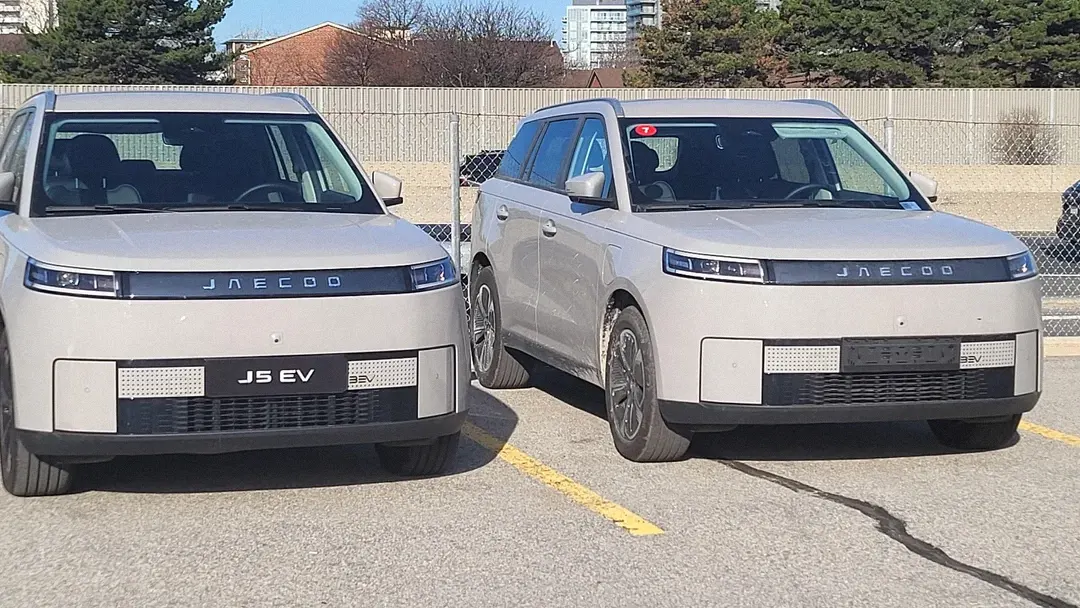
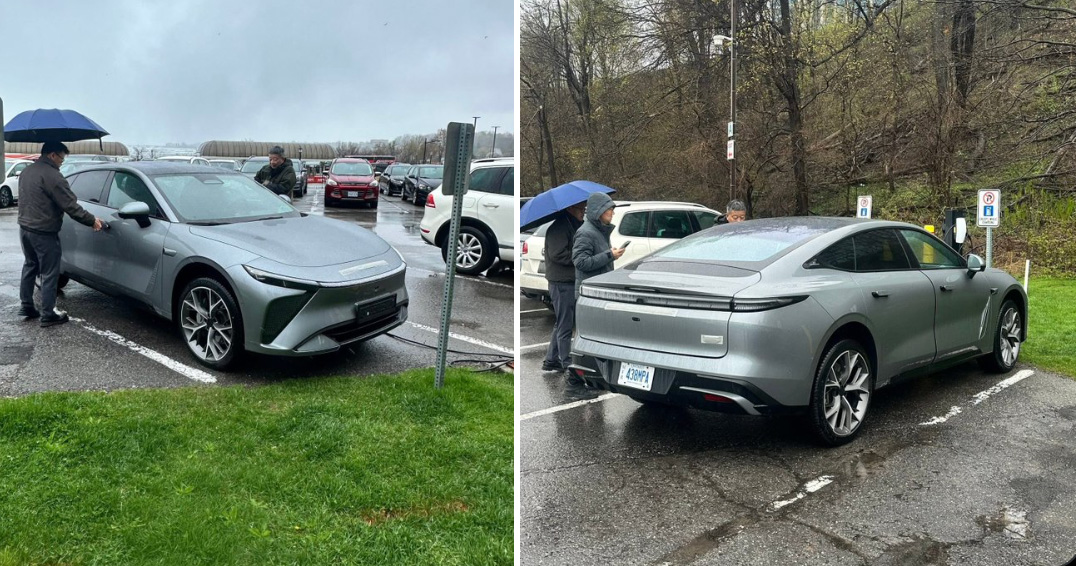
China’s Chery has shipped the first vehicles to Canada, according to pictures shared on social media this week showing several J5 from the sub-brand Omoda & Jaecoo parked in Toronto.

Reddit user ‘keredkill’ shared images on Thursday of four vehicles — two from each brand — parked near Toronto’s Don Valley Parkway.

“I just saw 4 car in a parking lot with the make JAECOO and OMODA,” the user wrote.

They noted that the Omoda-branded vehicles had their logos partially concealed, as though the company was trying to hide the brand identity.

“I had to type guess the brand lol,” they added.

The vehicles displayed license plates bearing the brand names and models.

It is not confirmed whether they are officially registered in Canada, leaving their legal status for road use unclear.

Omoda & Jaecoo is Chery‘s export-focused brand, designed exclusively for overseas markets.

Chery was China’s largest car exporter last year, with over 1.2 million vehicles shipped overseas.

Through Omoda & Jaecoo, Chery already sells vehicles across Europe, South America, the Middle East, and Southeast Asia.

The images mark the first time that Chery‘s vehicles were spotted in Canada.

The Wuhu-headquartered giant is preparing to enter the country this year — alongside companies such as BYD and Geely, after Ottawa and Beijing struck a trade deal that lowered the tariff on Chinese EVs to just 6.1%.

Canadian Preparations​

Chery has been the most active Chinese automaker in laying the groundwork for a Canadian launch.

The company began approaching Canadian staff as early as January.

Recruiters approached auto industry professionals on LinkedIn about roles covering vehicle engineering, electrical architecture, intelligent driving, and regulatory certification — with some messages specifically referencing the Omoda & Jaecoo sub-brand.

Chery has filed trademark applications in Canada for several sub-brands: Exeed, iCar, Lepas, Luxeed, and Omoda & Jaecoo.

In March, the company issued its first official statement on a potential Canadian entry, confirming it is “closely studying” the market and “evaluating partnerships with local stakeholders.”

Advisory firm DSMA, which is brokering discussions between Chinese manufacturers and Canadian dealer groups, said in March that BYD, Chery, and Geely are all targeting Canadian market entry by the end of 2026, with months of certification work still ahead.

Chery Woos Canadian Car Dealers With Trip to Beijing Auto Show
April 24, 2026 at 6:30 PM GMT+8

Chery Automobile Co. brought nearly two dozen representatives of Canadian dealerships to the Beijing auto show this week as it works to establish a sales network in Canada, according to the company’s chairman.
 

China’s Chery Lands First EVs in Canada Ahead of Official Launch​

Posted byMatilde Alves24th April 2026

Jaecoo_keredkill_01.webp

Image Credit: 'keredkill' | Reddit

China’s Chery has shipped the first vehicles to Canada, according to pictures shared on social media this week showing several J5 from the sub-brand Omoda & Jaecoo parked in Toronto.

Reddit user ‘keredkill’ shared images on Thursday of four vehicles — two from each brand — parked near Toronto’s Don Valley Parkway.

“I just saw 4 car in a parking lot with the make JAECOO and OMODA,” the user wrote.

They noted that the Omoda-branded vehicles had their logos partially concealed, as though the company was trying to hide the brand identity.

“I had to type guess the brand lol,” they added.

The vehicles displayed license plates bearing the brand names and models.

It is not confirmed whether they are officially registered in Canada, leaving their legal status for road use unclear.

Omoda & Jaecoo is Chery‘s export-focused brand, designed exclusively for overseas markets.

Chery was China’s largest car exporter last year, with over 1.2 million vehicles shipped overseas.

Through Omoda & Jaecoo, Chery already sells vehicles across Europe, South America, the Middle East, and Southeast Asia.

The images mark the first time that Chery‘s vehicles were spotted in Canada.

The Wuhu-headquartered giant is preparing to enter the country this year — alongside companies such as BYD and Geely, after Ottawa and Beijing struck a trade deal that lowered the tariff on Chinese EVs to just 6.1%.

Canadian Preparations​

Chery has been the most active Chinese automaker in laying the groundwork for a Canadian launch.

The company began approaching Canadian staff as early as January.

Recruiters approached auto industry professionals on LinkedIn about roles covering vehicle engineering, electrical architecture, intelligent driving, and regulatory certification — with some messages specifically referencing the Omoda & Jaecoo sub-brand.

Chery has filed trademark applications in Canada for several sub-brands: Exeed, iCar, Lepas, Luxeed, and Omoda & Jaecoo.

In March, the company issued its first official statement on a potential Canadian entry, confirming it is “closely studying” the market and “evaluating partnerships with local stakeholders.”

Advisory firm DSMA, which is brokering discussions between Chinese manufacturers and Canadian dealer groups, said in March that BYD, Chery, and Geely are all targeting Canadian market entry by the end of 2026, with months of certification work still ahead.

Chery Woos Canadian Car Dealers With Trip to Beijing Auto Show
April 24, 2026 at 6:30 PM GMT+8

Chery Automobile Co. brought nearly two dozen representatives of Canadian dealerships to the Beijing auto show this week as it works to establish a sales network in Canada, according to the company’s chairman.
If everything goes as planned, you are going to see Chinese cars flooding Canda, just like Australia, you can see Chinese brands everywhere nowadays.
 

China’s Chery Lands First EVs in Canada Ahead of Official Launch​

Posted byMatilde Alves24th April 2026

Jaecoo_keredkill_01.webp

Image Credit: 'keredkill' | Reddit

China’s Chery has shipped the first vehicles to Canada, according to pictures shared on social media this week showing several J5 from the sub-brand Omoda & Jaecoo parked in Toronto.

Reddit user ‘keredkill’ shared images on Thursday of four vehicles — two from each brand — parked near Toronto’s Don Valley Parkway.

“I just saw 4 car in a parking lot with the make JAECOO and OMODA,” the user wrote.

They noted that the Omoda-branded vehicles had their logos partially concealed, as though the company was trying to hide the brand identity.

“I had to type guess the brand lol,” they added.

The vehicles displayed license plates bearing the brand names and models.

It is not confirmed whether they are officially registered in Canada, leaving their legal status for road use unclear.

Omoda & Jaecoo is Chery‘s export-focused brand, designed exclusively for overseas markets.

Chery was China’s largest car exporter last year, with over 1.2 million vehicles shipped overseas.

Through Omoda & Jaecoo, Chery already sells vehicles across Europe, South America, the Middle East, and Southeast Asia.

The images mark the first time that Chery‘s vehicles were spotted in Canada.

The Wuhu-headquartered giant is preparing to enter the country this year — alongside companies such as BYD and Geely, after Ottawa and Beijing struck a trade deal that lowered the tariff on Chinese EVs to just 6.1%.

Canadian Preparations​

Chery has been the most active Chinese automaker in laying the groundwork for a Canadian launch.

The company began approaching Canadian staff as early as January.

Recruiters approached auto industry professionals on LinkedIn about roles covering vehicle engineering, electrical architecture, intelligent driving, and regulatory certification — with some messages specifically referencing the Omoda & Jaecoo sub-brand.

Chery has filed trademark applications in Canada for several sub-brands: Exeed, iCar, Lepas, Luxeed, and Omoda & Jaecoo.

In March, the company issued its first official statement on a potential Canadian entry, confirming it is “closely studying” the market and “evaluating partnerships with local stakeholders.”

Advisory firm DSMA, which is brokering discussions between Chinese manufacturers and Canadian dealer groups, said in March that BYD, Chery, and Geely are all targeting Canadian market entry by the end of 2026, with months of certification work still ahead.

Chery Woos Canadian Car Dealers With Trip to Beijing Auto Show
April 24, 2026 at 6:30 PM GMT+8

Chery Automobile Co. brought nearly two dozen representatives of Canadian dealerships to the Beijing auto show this week as it works to establish a sales network in Canada, according to the company’s chairman.

Second Chery Brand Spotted in Toronto as Auto Giant Flies Canadian Dealers to China​

27th April 2026

second-chery-brand-spotted-in-toronto-as-auto-giant-flies-v0-4EaVxO29Bg691uSnnCZ_3LmNWM43gB69QdeWM9_9qIA.jpeg

Image Credit: X | SimplyGregster

A second Chery sub-brand has been spotted on Toronto streets, days after the Chinese automaker flew “nearly two dozen” Canadian dealership representatives to the Beijing Auto Show in what is the most aggressive Chinese-automaker push for the Canadian market.

The Exeed Sterra ES — sold internationally under the Exlantix ES nameplate — was photographed in Toronto over the weekend, marking the second Chery sub-brand sighted in the city in less than two weeks.

The flagship fully electric sedan from Chery‘s premium Exeed brand follows last week’s sighting of four Omoda & Jaecoo vehicles, including the all-electric J5, near Toronto’s Don Valley Parkway.

The pictures were shared on social media by X user ‘SimplyGregster.’
 
If everything goes as planned, you are going to see Chinese cars flooding Canda, just like Australia, you can see Chinese brands everywhere nowadays.

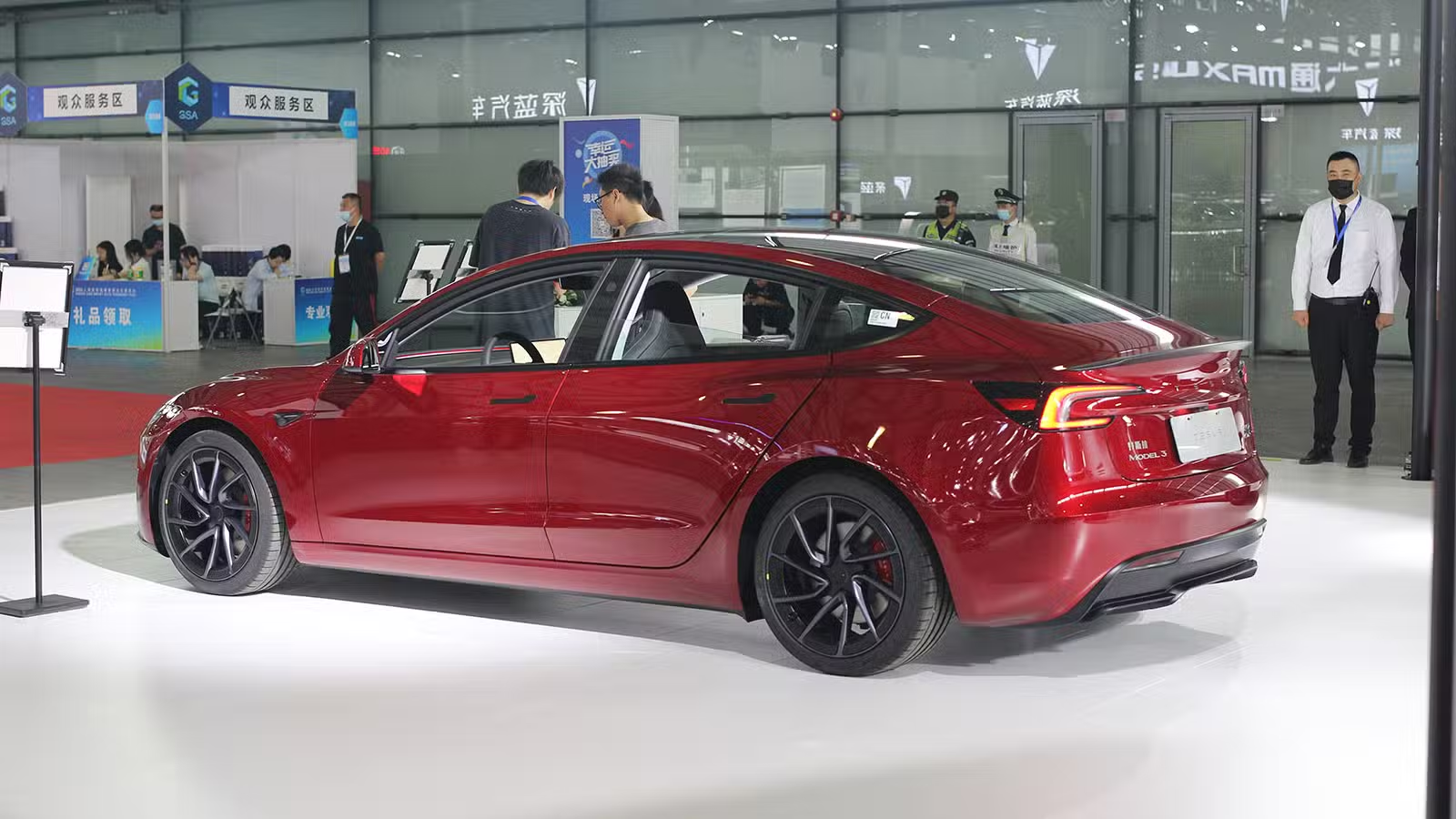
Tesla launches Model 3 RWD in Canada at record-low $39,490 ($29,000 USD) from China​


Tesla, Volvo first to benefit from Canada-China EV deal​

  • Canada will allow up to 49,000 China-made EVs annually at a 6.1 percent tariff, replacing a previous 100 percent duty.

The imported one has LFP batteries while the US made one has NMC 2170 batteries.
 
Last edited:
If everything goes as planned, you are going to see Chinese cars flooding Canda, just like Australia, you can see Chinese brands everywhere nowadays.

Apparently they need all the help they can get

Canada weighs specific EV caps for Tesla, BYD to prevent market dominance​


...

Senior government officials are currently debating how to properly allocate the annual low-tariff quota of 49,000 China-made EVs, according to a Bloomberg report on Thursday.

The quota system could eventually evolve to offer more favorable access to automakers that establish substantial business operations in Canada, Bloomberg reported, citing Canadian government officials familiar with the internal discussions.

The Canadian government hopes this will drive Chinese companies to form joint ventures with trusted Canadian partners, ultimately expanding operations into vehicle assembly.
 

Tesla Canada Sales Surge 150% in Massive April Turnaround​


Almost 25,000 Canadian EV rebates doled out in April​

Preliminary data from that endeavour suggests that some 2,910 EVs made their way from China to Canada in the month of May. Barring a handful of outlier Lotus or other specialty brands, the vast majority of those are surely Tesla vehicles. This means about 12% of the initial six-month 24,500-car quota has been consumed. Global Affairs Canada will reexamine its first-come-first-serve approach to Chinese-built EVs and issue new guidelines in September, ones that prevent one brand from hoovering up the entire allocation of units.
 
Last edited:
Apparently they need all the help they can get

Canada weighs specific EV caps for Tesla, BYD to prevent market dominance​


...

Senior government officials are currently debating how to properly allocate the annual low-tariff quota of 49,000 China-made EVs, according to a Bloomberg report on Thursday.

The quota system could eventually evolve to offer more favorable access to automakers that establish substantial business operations in Canada, Bloomberg reported, citing Canadian government officials familiar with the internal discussions.

The Canadian government hopes this will drive Chinese companies to form joint ventures with trusted Canadian partners, ultimately expanding operations into vehicle assembly.

EV is vastly superior to ICE.

Imagine putting caps for Windows OS for the sake of saving DOS.

Under any kind of thinking, this is more likely because of lobbying, which is a form of corruption.
 

Users who are viewing this thread

Back
Top